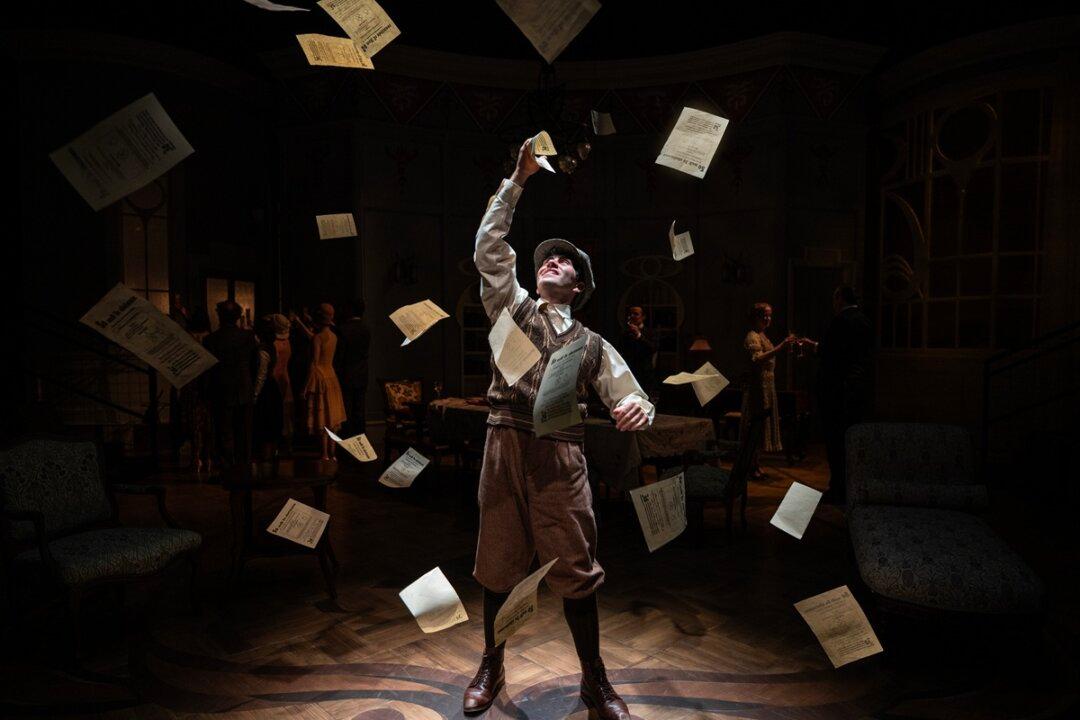
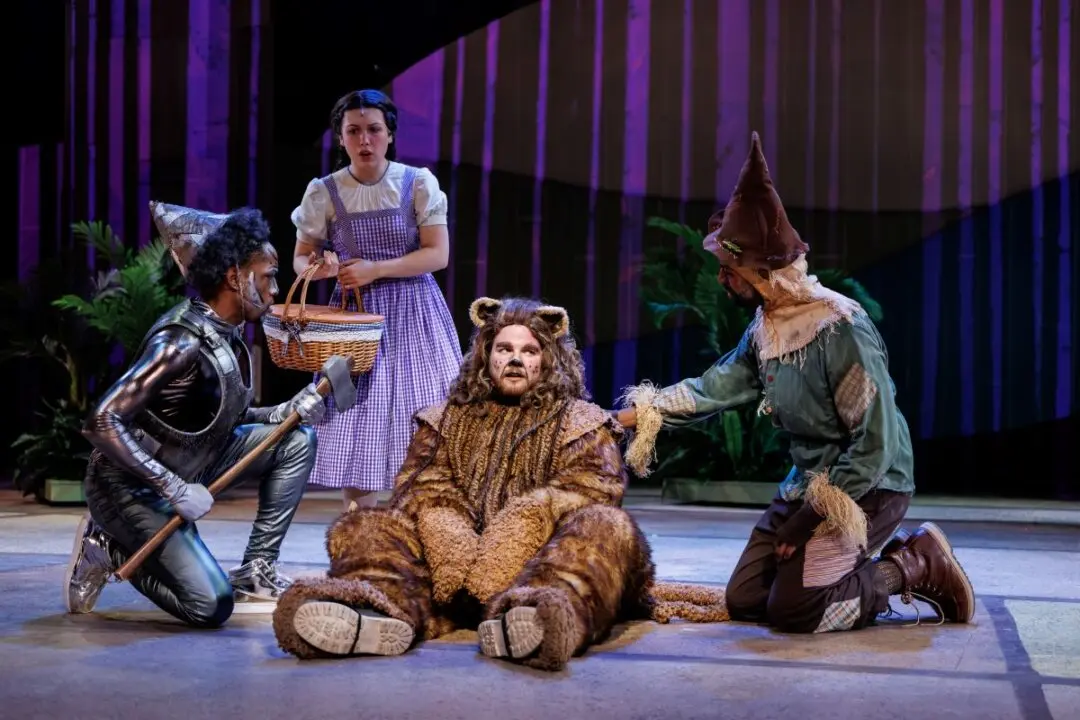
Written by Oscar Wilde (1854–1900) in 1894, the satire premiered in London in 1895. Renowned for his razor-sharp wit, Wilde also wrote the comedies “Lady Windermere’s Fan” (1892) and “An Ideal Husband” (1895), and the darker “The Picture of Dorian Gray” (1890).
Now in a terrific revival by Oak Park Festival Theatre, the comedy is performed in the lush outdoor setting of Austin Gardens in Oak Park, Illinois.

Skewering Victorian Superficiality
The story centers on two young men, Algernon Moncrieff and Jack Worthing, both of whom assume the false name “Ernest” to win over Gwendolyn and Cecily, the women they love. The women believe they can only love a man named ‘Ernest’ because that moniker implies absolute confidence and trust.Gwendolyn does not care if her partner is actually in earnest, meaning honest and sincere; she only cares that he has the name “Ernest.” That is why Jack and Algernon invent fake identities.
The play suggests that society values a person’s name and social standing more than their actual character, as Wilde skewers the superficial codes of the Victorian aristocracy. For the upper class, marriage wasn’t about love; it was a business transaction designed to consolidate land, title, and money.
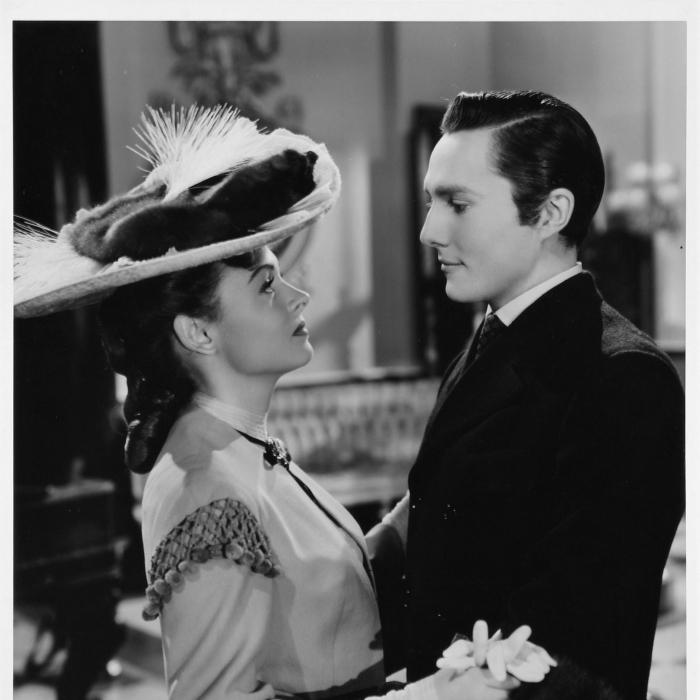
Furthermore, for the elite, a lack of recognizable lineage was an insurmountable social crime, regardless of a person’s actual wealth or virtue. When Jack reveals he was discovered in a handbag at a railway station, Lady Bracknell refuses to let her daughter Gwendolyn “marry into a cloakroom and form an alliance with a parcel.”
One of the play’s funniest scenes highlights the upper class’s rigid standards of politeness. When Gwendolyn and Cecily believe they are engaged to the same man, the fictional Ernest, they hate each other. They cannot get into a physical fight, which would be demeaning for someone of their class, so instead they wage a verbal battle.

Gwendolyn notes that “sugar is not fashionable and cake is rarely seen in the very best houses.” Naturally, Cecily heaps sugar into Gwendolyn’s tea before serving her an enormous slice of cake.
Wilde also parodies the upper crust through Lady Bracknell, who casually dismisses the mass struggle of the poor, viewing health and poverty not as important issues but as matters of personal “duty” or “carelessness.”
In addition, Cecily’s governess, Miss Prism, is supposed to teach Cecily to become a respectable young woman, and tries to make Cecily study boring German grammar and economics. Cecily doesn’t take well to those subjects, as she would rather spend time writing romantic lies in her diary.

A Flawlessly Executed Revival
Director Kathryn Walsh keeps the comedy moving with impeccable timing. Evan Frank’s whimsical set, Phoebe Boynton’s colorful Victorian costumes, and Trent Jones’s warm lighting transport the audience to a genteel 19th-century world. Moreover, the performances do Wilde’s farce proud. Chad Bay as Jack and August Foreman as Algernon portray their characters with great seriousness, which makes their pretense all the funnier.
With its spoof of superficiality, rigid social structures, and deceit, “The Importance of Being Earnest” remains as hilarious today as when Wilde wrote it. Appropriately, Wilde subtitled the play “A Trivial Comedy for Serious People,” hinting that beneath its lighthearted surface lies a sharp satire of Victorian society. Even for the unserious, this comic masterpiece is one one won’t want to miss.