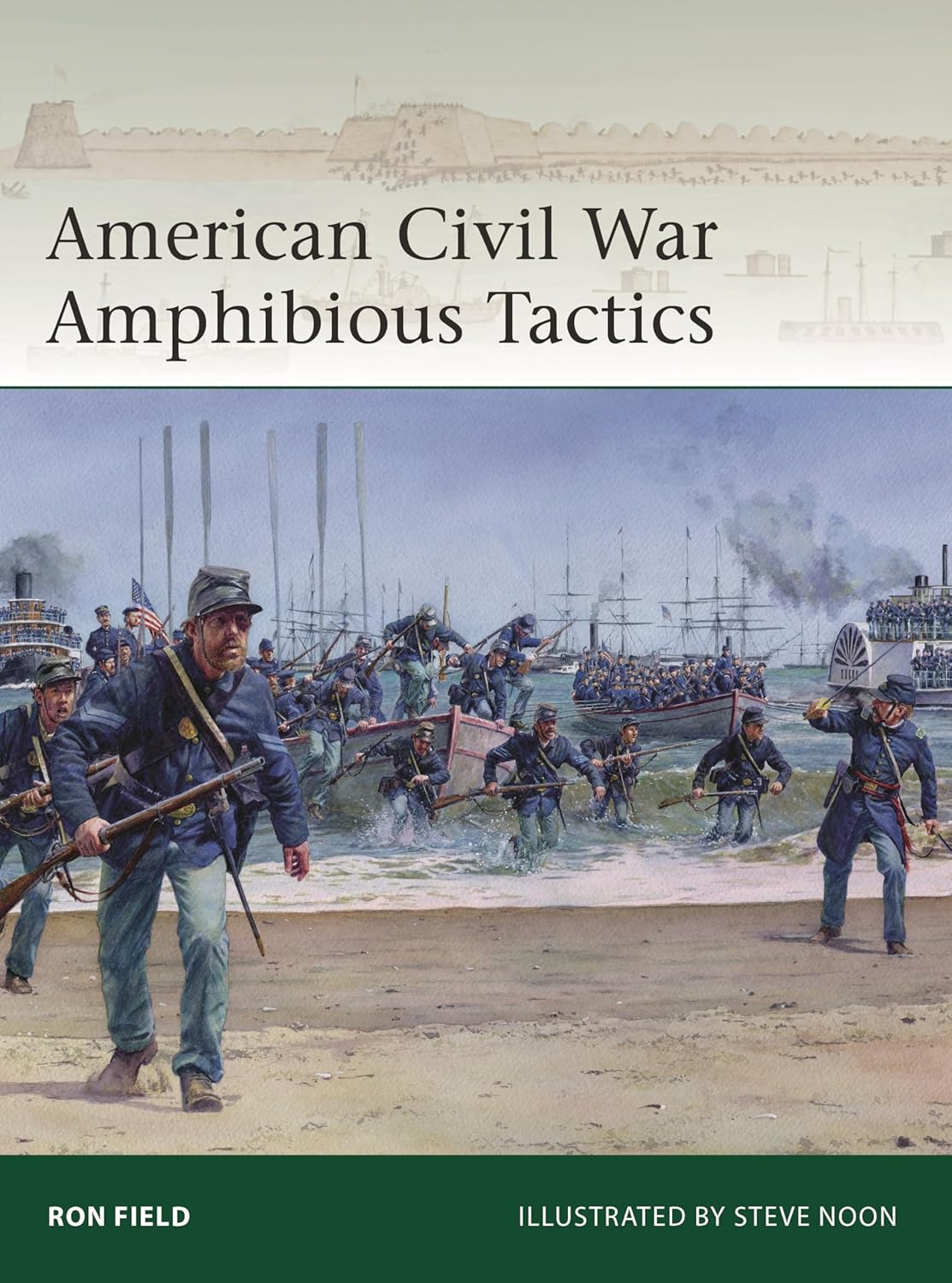
But what about the battles of the in-between? Where land warfare and naval battles meet? British-born Ron Field, historian of the American military, has recently written a study of these battles in his “American Civil War Amphibious Tactics,” He’s highlighted some of the more important Union offensives of the war.
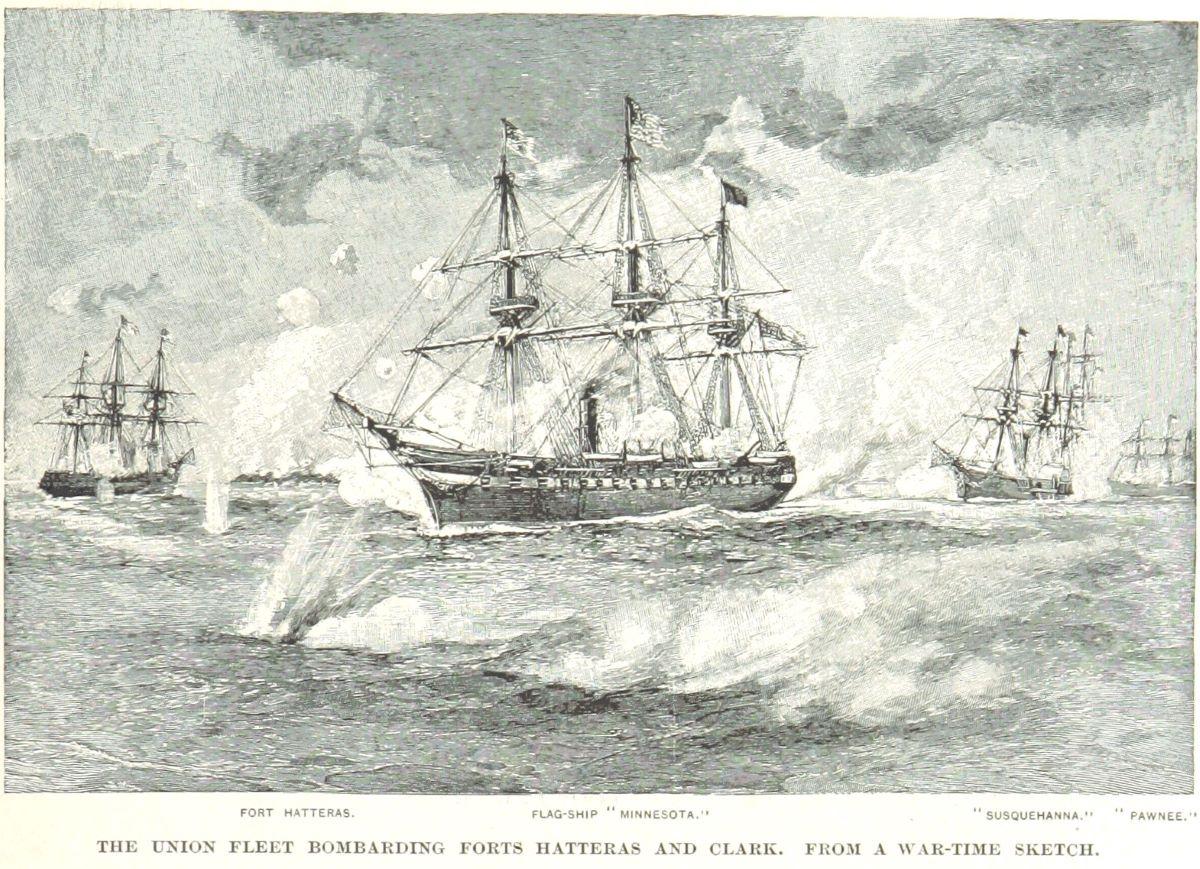
Field begins in August 1861 with the amphibious invasion of Hatteras Inlet, an estuary of North Carolina, and suggests that a Union victory was pivotal for maintaining the waning morale of the Union due to the recent defeat at the First Battle of Bull Run.
The invasion was nearly a disaster as less than half of the troops were able to disembark and arrive at the inlet due to the rough seas. Despite the underwhelming numbers, Field notes that the Confederates, having seen so many vessels, assumed they possessed superior numbers with the invasion, and thus surrendered. The miscalculation was costly as the Confederates lost two forts in the process.
Adding Color
The author pulls several colorful quotes from the journals of soldiers, a rather common, but appreciated theme in the short book. He also thankfully leaves the grammar and spelling as it was written, like the entry of Marine private, Daniel O’Connor, who wrote,“Bang bang was the order of the day for 1 hour and 1/2 we fired as hard as we could throwing shel in to the enemys battery like showers of hail. … We spliced the main brace & drank Uncle Sams health. … We made some splinded shots.”
Invasions and the Forces
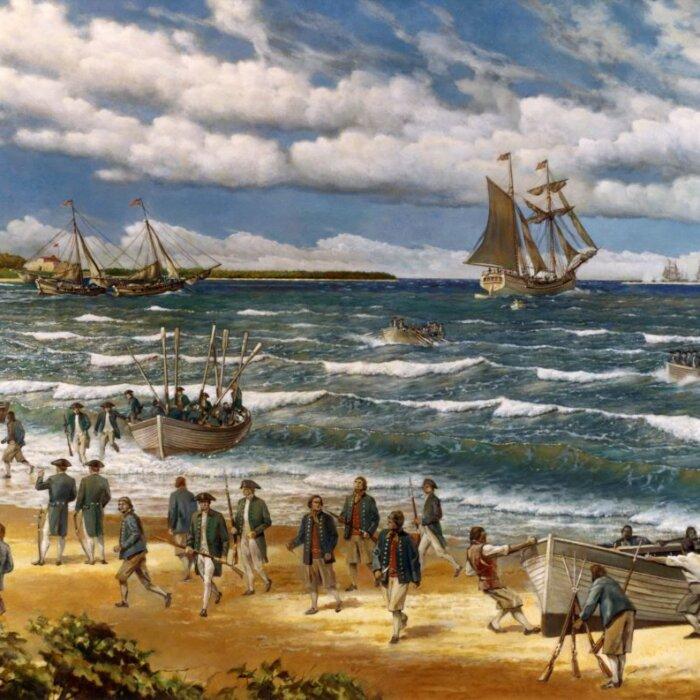
Along with the invasion of Hatteras Inlet, the book follows a number of other Union charges, including the invasion of Roanoke Island and New Bern in February and March 1862, respectively.Regarding Roanoke, the author expressed its importance, stating,
“The capture of Roanoke Island opened up eastern North Carolina to Union invasion. By the summer of 1862, the port cities of Plymouth, Elizabeth City, New Bern, Washington, Edenton, and Hertford in North Carolina, plus Norfolk, Virginia, were under Union control and largely remained so until the end of the Civil War.”
As for the importance of New Bern, the author notes that after its capture, it became the Union’s headquarters in eastern North Carolina.
Field hones in a little closer in his study by presenting several fighting forces for the Union—the First New York Marine Artillery, the Mississippi Marine Brigade, and the Fleet Brigade. The latter combined Marines and sailors during the siege of Charleston, South Carolina.
These groups were somewhat successful, but, at least in the book, far more memorable. The New York force witnessed an approximate 150-man mutiny due to lack of pay and the fact they hadn’t received their enlistment bounty.
Succinct, Yet Detailed
Field’s succinct study of the Union’s amphibious efforts, which included Marines, sailors, and soldiers, details immense heroism and daring, failures, and near disasters. All these elements culminate in Field’s final section about the attack on Fort Fisher near Wilmington, North Carolina.According to the author, these amphibious tactics orchestrated and conducted by the Union Army and Navy laid the groundwork for future American amphibious tactics, including efforts during both world wars, as well as the war in Vietnam.
“American Civil War Amphibious Tactics” is a brief yet interesting military study on moments in the Civil War that often are overlooked. For those interested in this topic, it is a good read with exceptional illustrations. I wish the work included battle maps of the movements of troops and ships, which Osprey typically offers, but that is my singular complaint.