The Long Military and Political Journey to Create the American Flag

In ‘This Week in History,’ after more than a year of use, the Grand Union Flag was replaced by America’s official flag—the Stars and Stripes.
The Long Military and Political Journey to Create the American Flag
An American flag rustles in the brisk wind of an approaching storm during a Flag Day ceremony in Mayer, Ariz., on June 14, 2026. Allan Stein/The Epoch Times
|Updated:
0:00
When the Continental Congress declared independence from Great Britain on July 4, 1776, the newly founded country understandably did not have an official flag. This, however, had not stopped the Americans from hoisting unofficial flags.
Gilbert Barkly, a British spy in Philadelphia, wrote a letter on Jan. 10, 1776, to Sir Grey Cooper, a London politician and financier, noting that colonial ships “have hoisted what they call the Ammerican Flag viz the British Union, with thirteen stripes red and white, for its field, Representing the thirteen United Collonies.”

It was, in fact, the Continental Navy, established on Oct. 13, 1775, that first unfurled this “Ammerican Flag.” On Dec. 3, 1775, more than a month before Barkly’s letter, the Alfred, the flagship of the Continental Navy’s eight-ship squadron, became the first ship to display the flag.
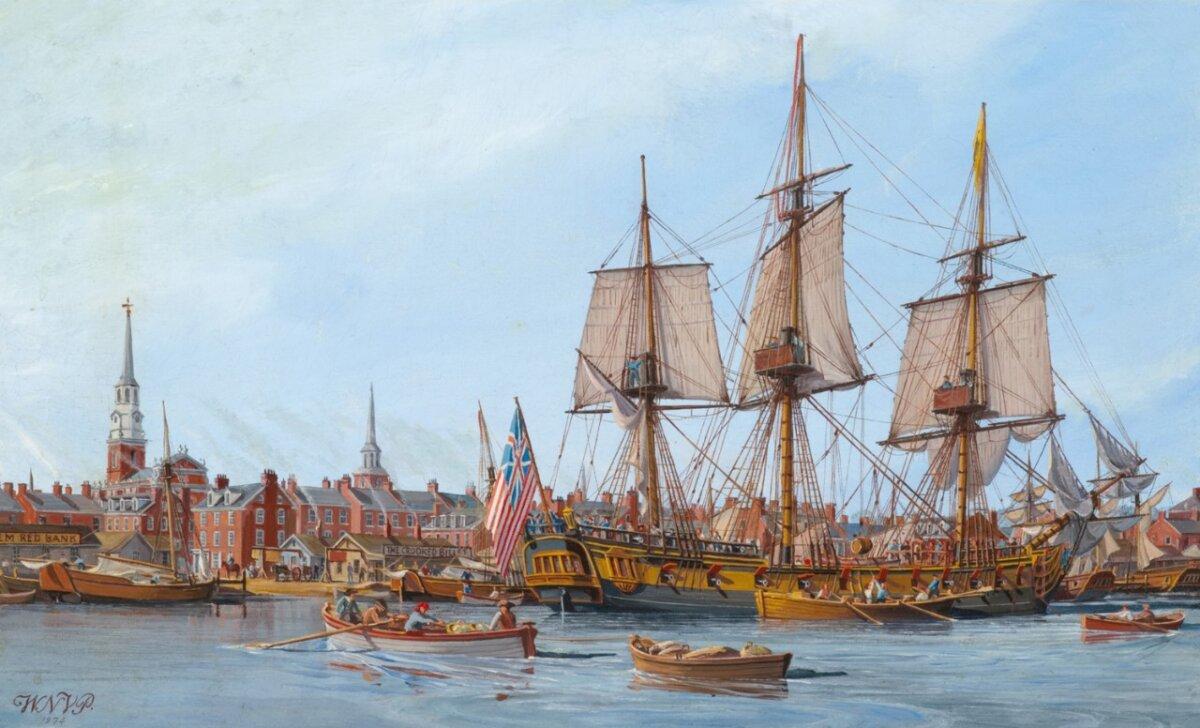
On Jan. 4, the squadron departed the Philadelphia harbor, arriving in The Bahamas in February to conduct the first amphibious invasion by American marines. One of those eight ships was the Andrew Doria, which earned its place in history on Nov. 16, 1776, when it received a salute from the Dutch—the first foreign nation to salute the American flag.
The "Continental Ship Alfred" by W. Nowland Van Powell, depicting Continental Navy Lt. John Paul Jones first hoisting the flag at Philadelphia on Dec. 3, 1775. (Public Domain)
The "Continental Ship Alfred" by W. Nowland Van Powell, depicting Continental Navy Lt. John Paul Jones first hoisting the flag at Philadelphia on Dec. 3, 1775. Public Domain
As for the Continental Army, it first unfurled the flag on New Year’s Day 1776. During the Siege of Boston, Gen. George Washington ordered his soldiers to hoist the flag at the military camp on Prospect Hill. The ensign known as the Grand Union Flag, as well as the Continental Colors, had become a prominent symbol of American determination to not be unjustly treated as well as American optimism toward possible reconciliation.

The Coincidental Flag

The 13 alternating red and white stripes represented the 13 colonies, while the Union Jack at the top left corner represented the relatively recent union between the kingdoms of England and Scotland, which combined England’s St. George’s Cross with Scotland’s St. Andrew’s Cross. Interestingly, this particular flag had actually been around well before the Americans began protesting the tyrannical acts of the British king and parliament.

The flag with 13 red-and-white stripes and Union Jack was created after the passage of the 1707 Acts of Union which merged the two kingdoms into Great Britain. The Grand Union Flag was initially used on the other side of the world by the East India Company (EIC), and the ships that flew this flag were under strict orders that it could only be displayed in eastern waters south of St. Helena in the Atlantic.
In fact, decades before the EIC began flying that flag, they had been flying a flag with 13 red and white stripes with St. George’s Cross in the top left corner. It seems counterintuitive, but it is safe to claim that the Americans had never seen this particular flag until they began hoisting it themselves.
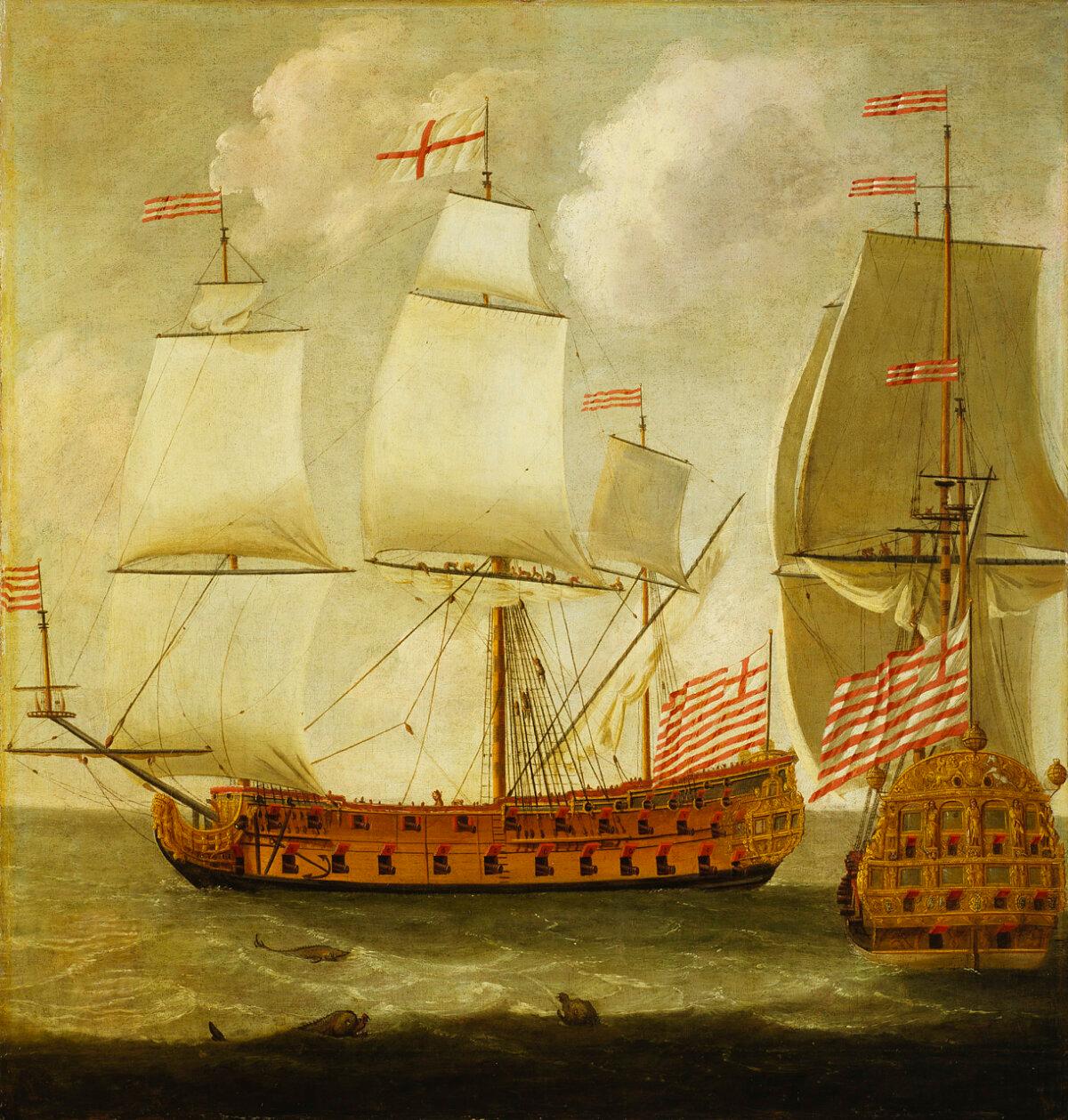
"Two Views of an East Indiaman of the Time of King William III," circa 1685, Isaac Sailmaker. Two views of the 13 stripes on the flags feature St. George's Cross on the upper left corner. (Public Domain)
"Two Views of an East Indiaman of the Time of King William III," circa 1685, Isaac Sailmaker. Two views of the 13 stripes on the flags feature St. George's Cross on the upper left corner. Public Domain
Perhaps American colonial smugglers had encountered the flag while traveling in eastern waters, but historians find this unlikely. It appears the creation of the identical flag was mere happenstance.

The Flag Resolution

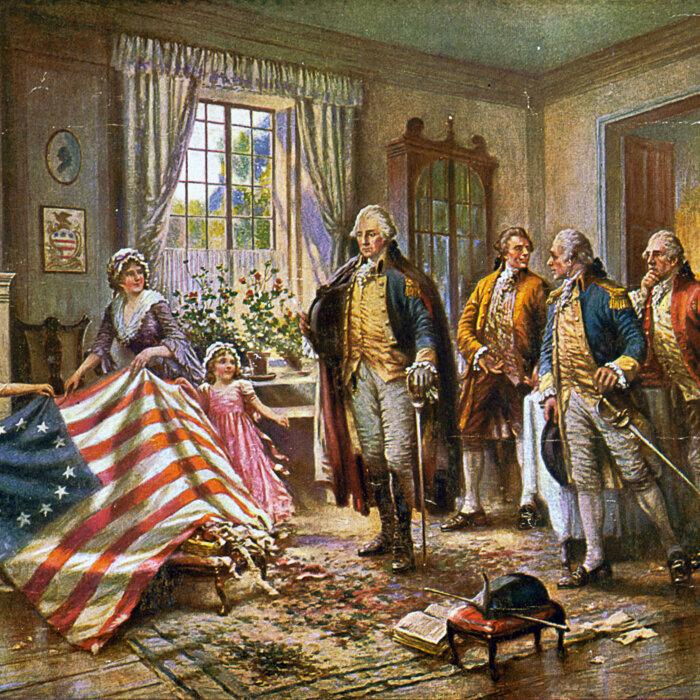
By the time the Americans declared independence, it was evident that half of the Grand Union Flag’s symbolism had worn out its welcome. Legend suggests that Washington, along with Col. George Ross and Robert Morris, met with Philadelphia flagmaker Betsy Ross. The Americans needed a new flag. The preferred design was 13 red and white stripes with 13 six-pointed stars overlaying a field of blue in the top left corner. Betsy Ross supposedly made the significant recommendation of making the stars five-pointed.
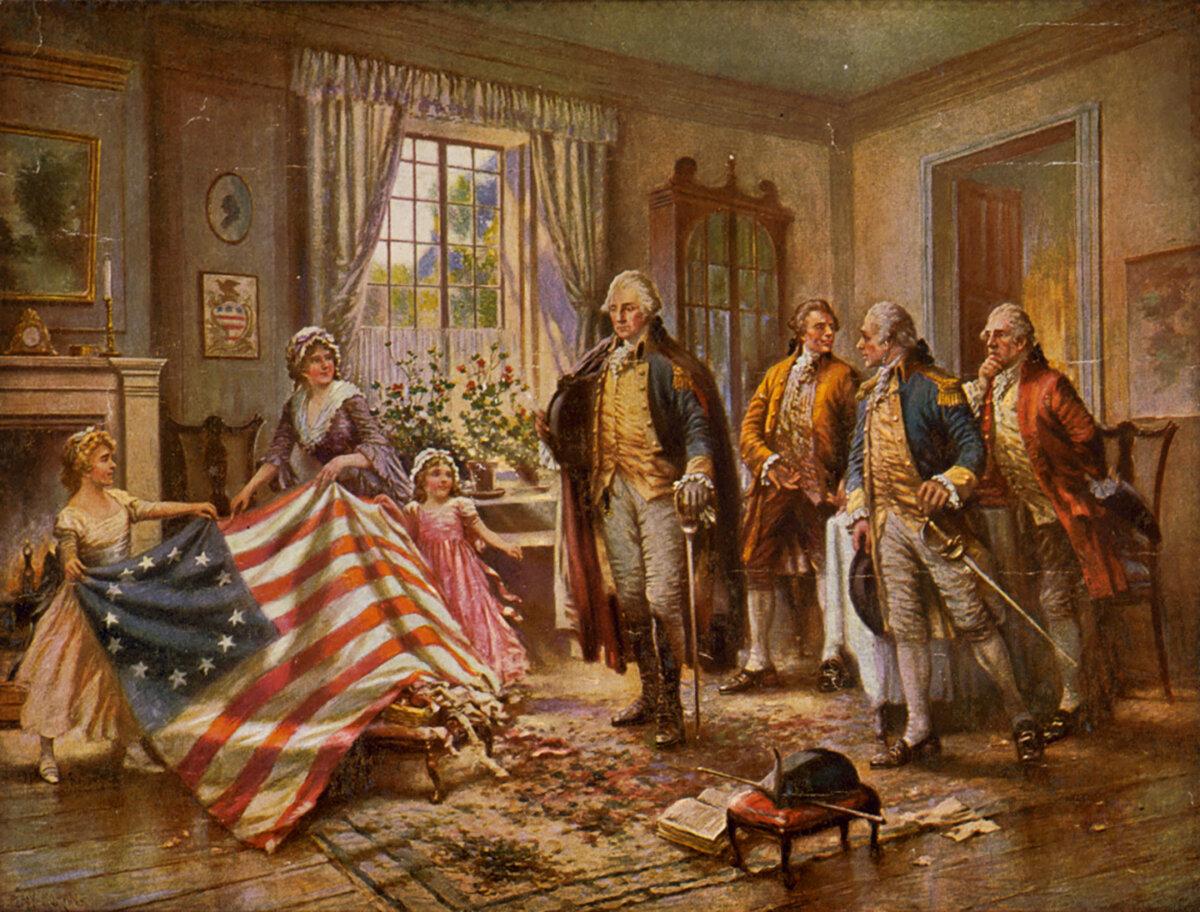
A print of “The Birth of Old Glory,” 1917, after a painting by Edward Percy Moran. Betsy Ross, who is credited with sewing the first United States flag, is depicted showing the flag to George Washington. Library of Congress. (Public Domain)
A print of “The Birth of Old Glory,” 1917, after a painting by Edward Percy Moran. Betsy Ross, who is credited with sewing the first United States flag, is depicted showing the flag to George Washington. Library of Congress. Public Domain
A year later, Ross had completed the flag. Although there is no clear evidence she actually made the ensign, the circumstantial evidence is rather strong. On May 29, 1777, she was paid a handsome sum by the Pennsylvania State Navy Board for her rendered services. On June 14, 1777, the Continental Congress passed the Flag Resolution which “Resolved That the Flag of the united states be 13 stripes alternate red and white, that the Union be 13 stars white in a blue field representing a new constellation.”

Constellations of Choice

The most famous flag of the American Revolution is known as the Betsy Ross Flag with its “new constellation” of 13 five-pointed stars in the shape of a circle. There were other flags created that followed the general pattern, though they took liberties with the constellation and how many points were on the stars.

Francis Hopkinson, a signer of the Declaration of Independence and one who laid claim to the design of the American flag, designed his to have 13 alternating red-and-white stripes and 13 six-pointed stars aligned in alternating rows of three and two. The flag which flew aboard the 36-gun Alliance had alternating white-and-red stripes and a pattern of 13 eight-pointed stars similar to the Hopkinson design.

The Third Maryland Regiment displayed its ensign during the Battle of Cowpens, known as the Cowpens Flag, with 12 five-pointed stars in a circle and one in the middle. On Dec. 4, 1783, three months after the signing of the Treaty of Paris which ended the Revolutionary War, a flag designed by John Shaw in honor of Thomas Mifflin, the president of Congress, was displayed at the Maryland State House in Annapolis. The design had alternating white and red stripes with three rows of eight-pointed stars (four-five-four).

The lithograph “Yankee Doodle 1776” is based on the painting “Spirit of ’76” by Archibald M. Willard, circa 1876. It features the Cowpens flag. (Public Domain)
The lithograph “Yankee Doodle 1776” is based on the painting “Spirit of ’76” by Archibald M. Willard, circa 1876. It features the Cowpens flag. Public Domain
A look at the flags in some of America’s famous paintings display similarities and differences. John Trumbull’s famous paintings—“Surrender of General Burgoyne,” “The Death of General Mercer at the Battle of Princeton,” and “Surrender of Lord Cornwallis”—show a flag with the traditional red-and-white stripes, but with 12 stars in a square with the 13th in the middle. Although Washington had a personal flag of 13 six-pointed stars on a field of blue, the American flag famously displayed in Emanuel Leutze’s “Washington Crossing the Delaware” is of the Betsy Ross design.

An Impractical Design

After the end of the war, the American flag maintained its standard variations of 13 red-and-white stripes and 13 stars on a blue field. That is until Jan. 13, 1794. In 1791 and 1792, Vermont and Kentucky became the 14th and 15th states, respectively. Congress voted to have “the flag of the United States, be fifteen stripes alternate red and white. That the Union be fifteen stars, white in a blue field.” The act took effect on May 1, 1795.

It was assumed that for every new state, a new stripe and a star would be added. This quickly became obvious that such a design was impractical. It may have been why no changes were made to the 15-stripe and 15-star flag for the next 23 years, despite the addition of five more states.

One of the most famous flags in American history—the Fort McHenry Flag—which inspired Francis Scott Key to write “The Star-Spangled Banner” (the National Anthem) had 15-stripes and 15-stars, despite the country having 18 states.
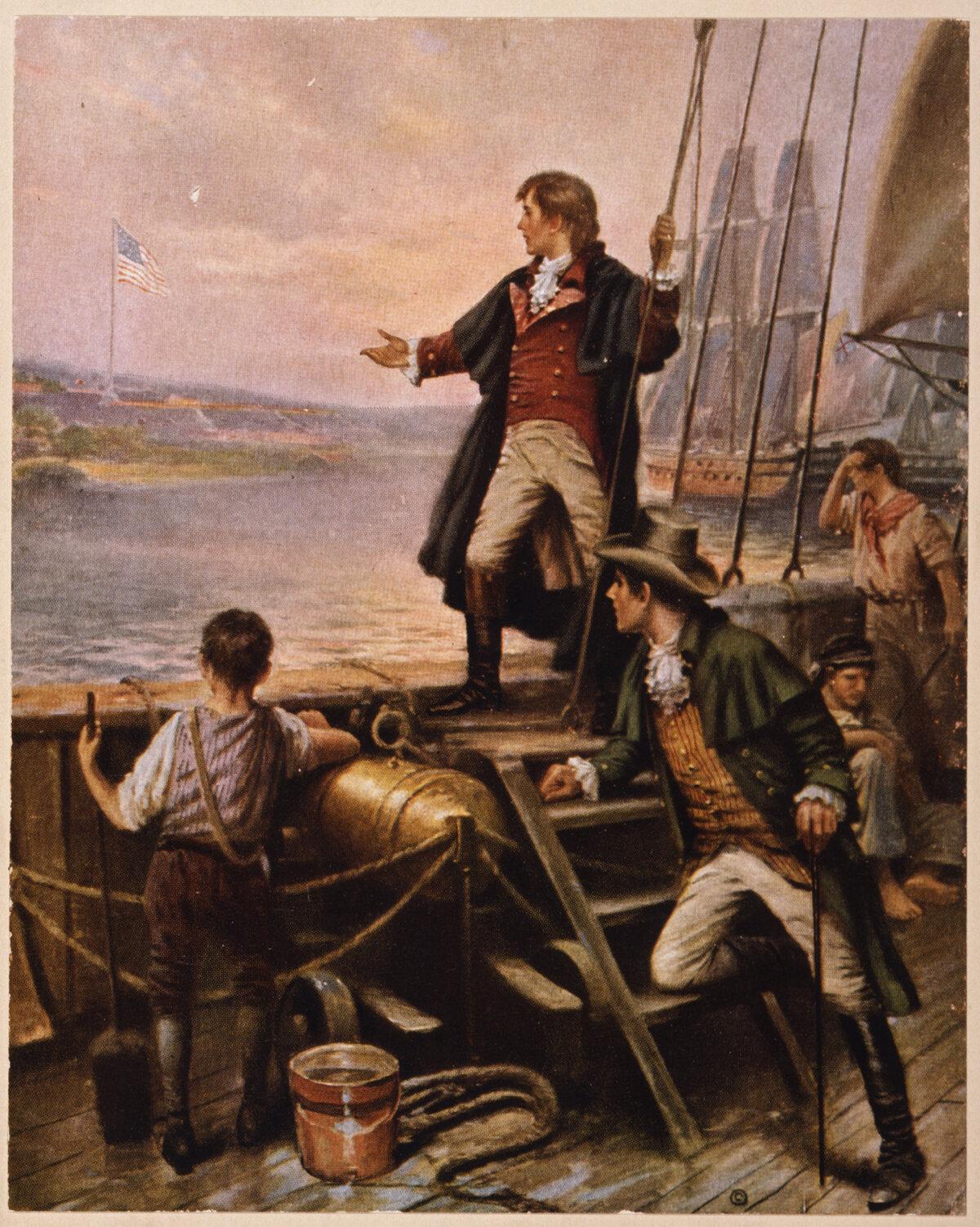
"The Star Spangled Banner," circa 1913, by Percy Moran illustrates Francis Scott Key standing on boat, with right arm stretched out toward the United States flag, with 15 stripes, flying over Fort McHenry, Baltimore, Md. Library of Congress. (Public Domain)
"The Star Spangled Banner," circa 1913, by Percy Moran illustrates Francis Scott Key standing on boat, with right arm stretched out toward the United States flag, with 15 stripes, flying over Fort McHenry, Baltimore, Md. Library of Congress. Public Domain
The situation was rectified by Congress with the passage of the Flag Act, which was signed by President James Monroe on April 4, 1818. That act stipulated that

“The flag of the United States be thirteen horizontal stripes, alternately red and white. That the union be twenty stars white in a blue field. That on the admission of any new state into the Union, one star be added to the union of the flag; and that such addition shall take effect on the fourth day of July then next ensuing.”

It was during this week in history, on July 4, 1818, that the American flag reverted back to 13 stripes from 15, representing the original 13 colonies, and that one star represented each state. As the decades progressed and new states were admitted, each ensuing Fourth of July a star was added. It should be noted that during the Civil War, despite states seceding from the Union, at no time were stars removed from the American flag.

Starting in 1912 with an executive order by President William Howard Taft, the alignment of the stars were specifically arranged with eight rows of six stars each with its point upward. This arrangement was altered with President Dwight D. Eisenhower’s executive order on Jan. 3, 1959, with the admission of Alaska, creating seven rows of seven stars. The last change came the same year via executive order by Eisenhower on Aug. 21, 1959, the same day Hawaii became the 50th state.

It was also during this week in history, on July 4, 1960, that the 50th star was added to the American flag, creating an arrangement of six rows of five stars and five rows of four stars. The current flag is the longest-lasting version in the nation’s history.
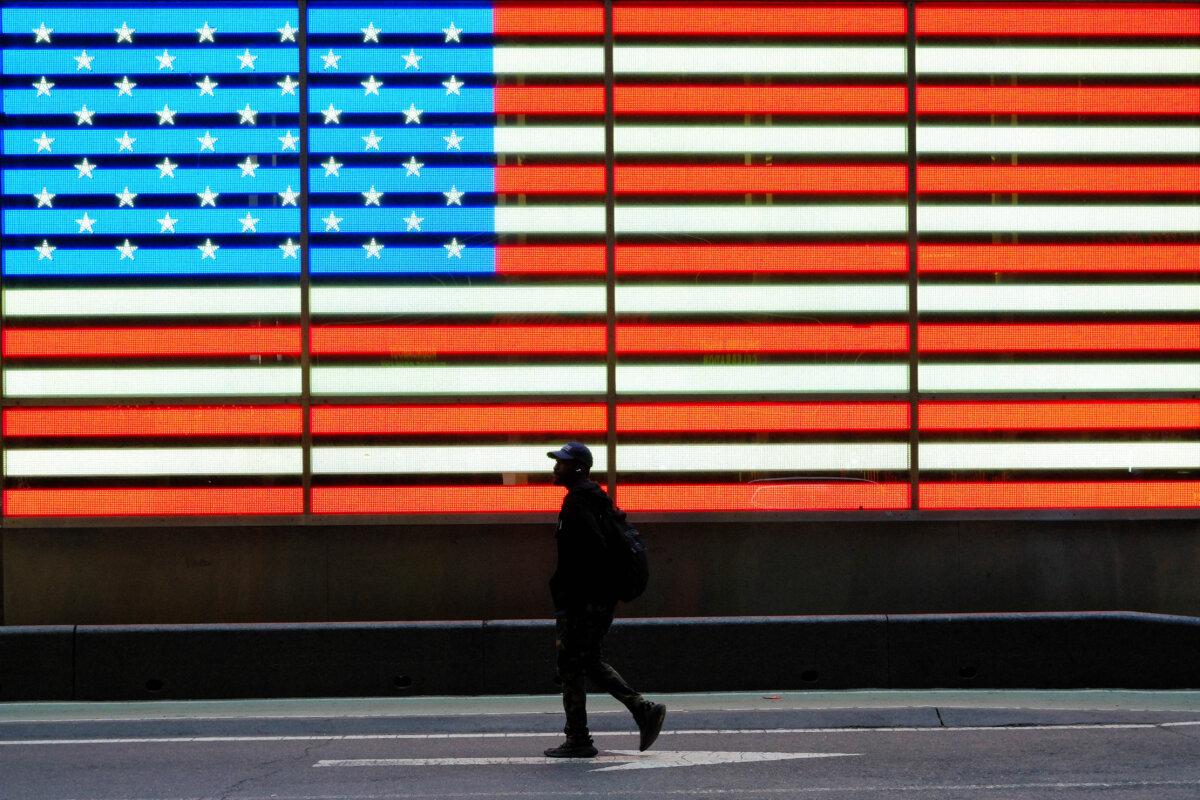

A man walks past a large U.S. flag in Times Square in Manhattan, New York City, on April 24, 2026. (Charly Triballeau/AFP via Getty Images)
A man walks past a large U.S. flag in Times Square in Manhattan, New York City, on April 24, 2026. Charly Triballeau/AFP via Getty Images
Never miss a This Week in History story! Sign up for the American History newsletter here.
What arts and culture topics would you like us to cover? Please email ideas or feedback to [email protected].
Google LogoMark Us Preferred on Google
Dustin Bass
Dustin Bass
Author
Dustin Bass is the creator and host of the “American Tales” podcast and cofounder of “The Sons of History.” He writes two weekly series for The Epoch Times: Profiles in History and This Week in History. He is also an author.