A Majestic ‘Adoration of the Magi’

One of the most magnificent renderings of this story is by Gentile da Fabriano, whose altarpiece is a marvel of technique and composition.
A Majestic ‘Adoration of the Magi’
"Adoration of the Magi," 1423, by Gentile da Fabriano. Tempera on panel; 118 inches by 111 inches. Uffizi Galleries, Florence. Public Domain
|Updated:
0:00

The Adoration of the Magi has been a popular artistic subject since antiquity. The earliest images are found in Roman catacombs that were carved on marble sarcophagi between the second and fourth centuries.
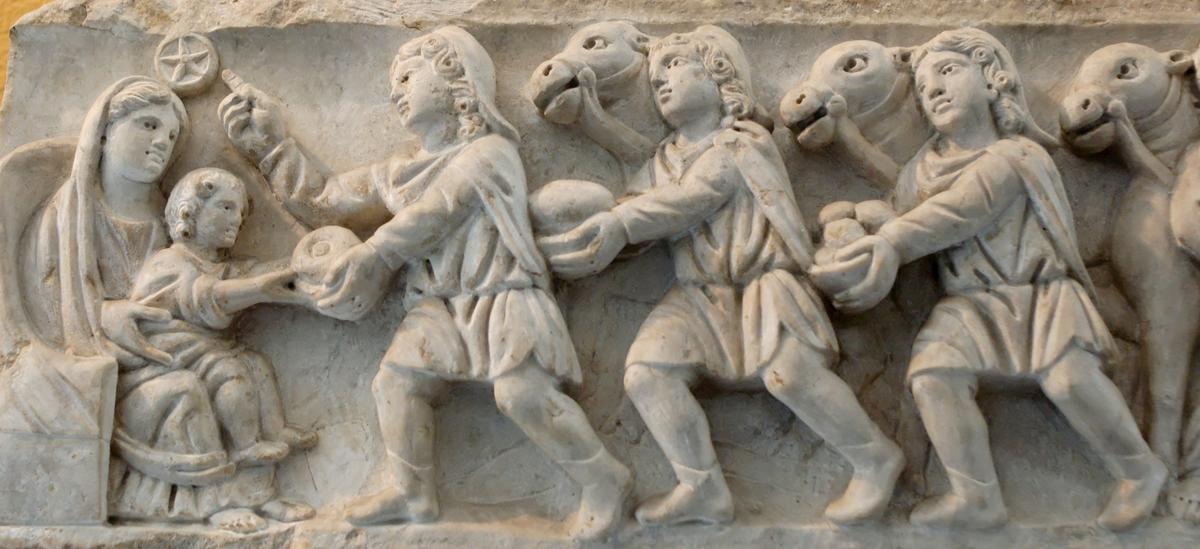
"Adoration of the Magi" panel, 4th century, from a Roman sarcophagus at the cemetery of St. Agnes in Rome. Vatican Museums, Rome. (Public Domain)
"Adoration of the Magi" panel, 4th century, from a Roman sarcophagus at the cemetery of St. Agnes in Rome. Vatican Museums, Rome. Public Domain

Part of the Nativity story, the Adoration of the Magi originates in the Gospel according to Matthew 2:2–12. In it, the Magi are described as mysterious wise men from the East. Interpretation of Psalm 72: 10–11 led eventually to the exaltation of the wise men, or magi, as ideal kings, often named Caspar (or Gaspar), Melchoir (or Melchior), and Balthasar (or Balthazar). Frequently, artists portrayed them at three stages of maturity and of different races—European, Asian and African.

The nature of their gifts was specified at the end of the second century by St. Irenaeus: gold (tribute), frankincense (sacrifice), and myrrh (burial).

The royal and foreign aspects of this biblical story allowed medieval and Renaissance artists to imbue their representations with exotic, lavish imagination. The standard iconography is to show one of the Magi kneeling before the seated Madonna and Child. The lineage of this positioning is from Roman imperial images of defeated barbarians paying tribute to Roman captors.
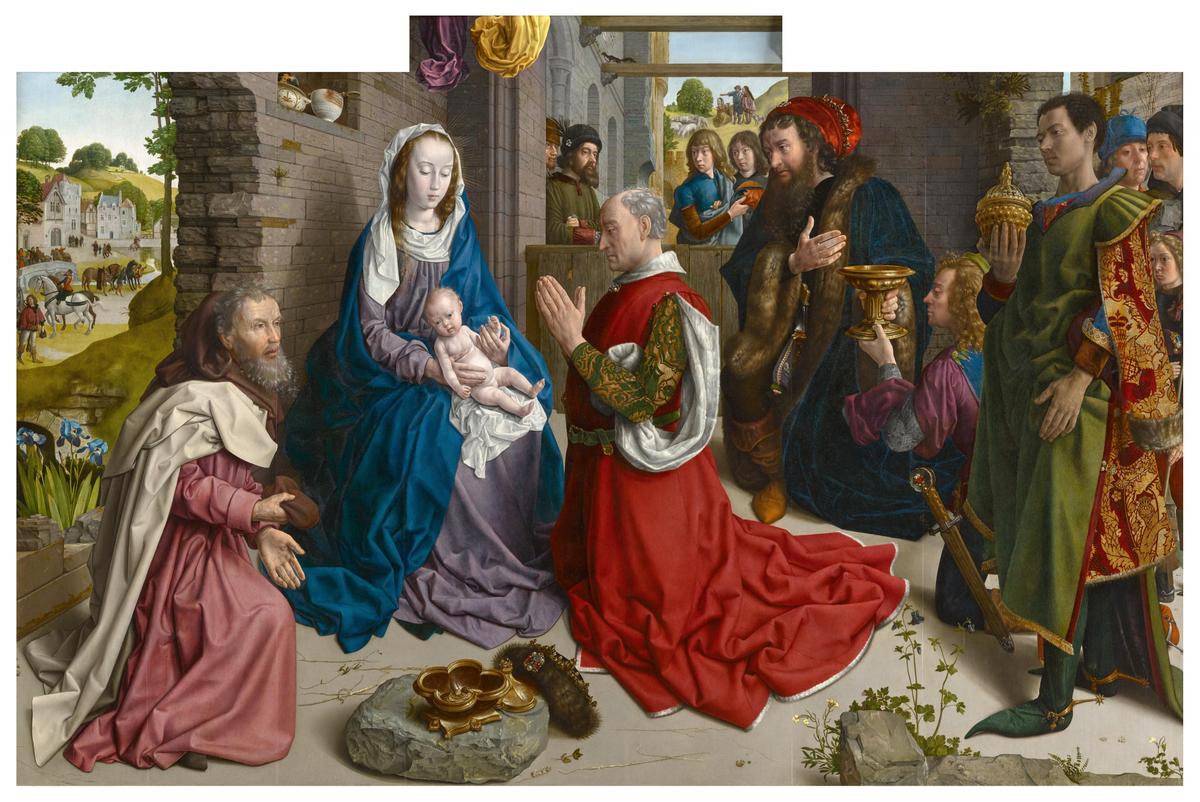
"The Adoration of the Magi" ("Monforte Altar"), 1470–1475, by Hugo van der Goes. Oil on oak panel; 58 inches by 95 inches. Gemäldegalerie, Berlin State Museums. (Public Domain)
"The Adoration of the Magi" ("Monforte Altar"), 1470–1475, by Hugo van der Goes. Oil on oak panel; 58 inches by 95 inches. Gemäldegalerie, Berlin State Museums. Public Domain
One of the most magnificent renderings of this story is by Gentile da Fabriano (circa 1370–1427). Signed and dated to 1423, his “Adoration of the Magi” is displayed at the Uffizi Galleries in Florence, Italy. It was commissioned by the richest man in Florence, banker Palla Strozzi, for his family chapel in the Church of Santa Trinita.

Gentile da Fabriano’s Altarpiece

Gentile di Niccolò di Giovanni di Massio was one of the greatest Italian painters of his day. He was born in the town of Fabriano, hence his artistic name, in the region of Marche. Likely trained in Lombardy, where he was exposed to the arts of the court of Milan and Franco-Flemish styles, he worked throughout the Italian peninsula. Patrons in Brescia, Florence, Orvieto, Rome, Siena, and Venice clamored for his art.
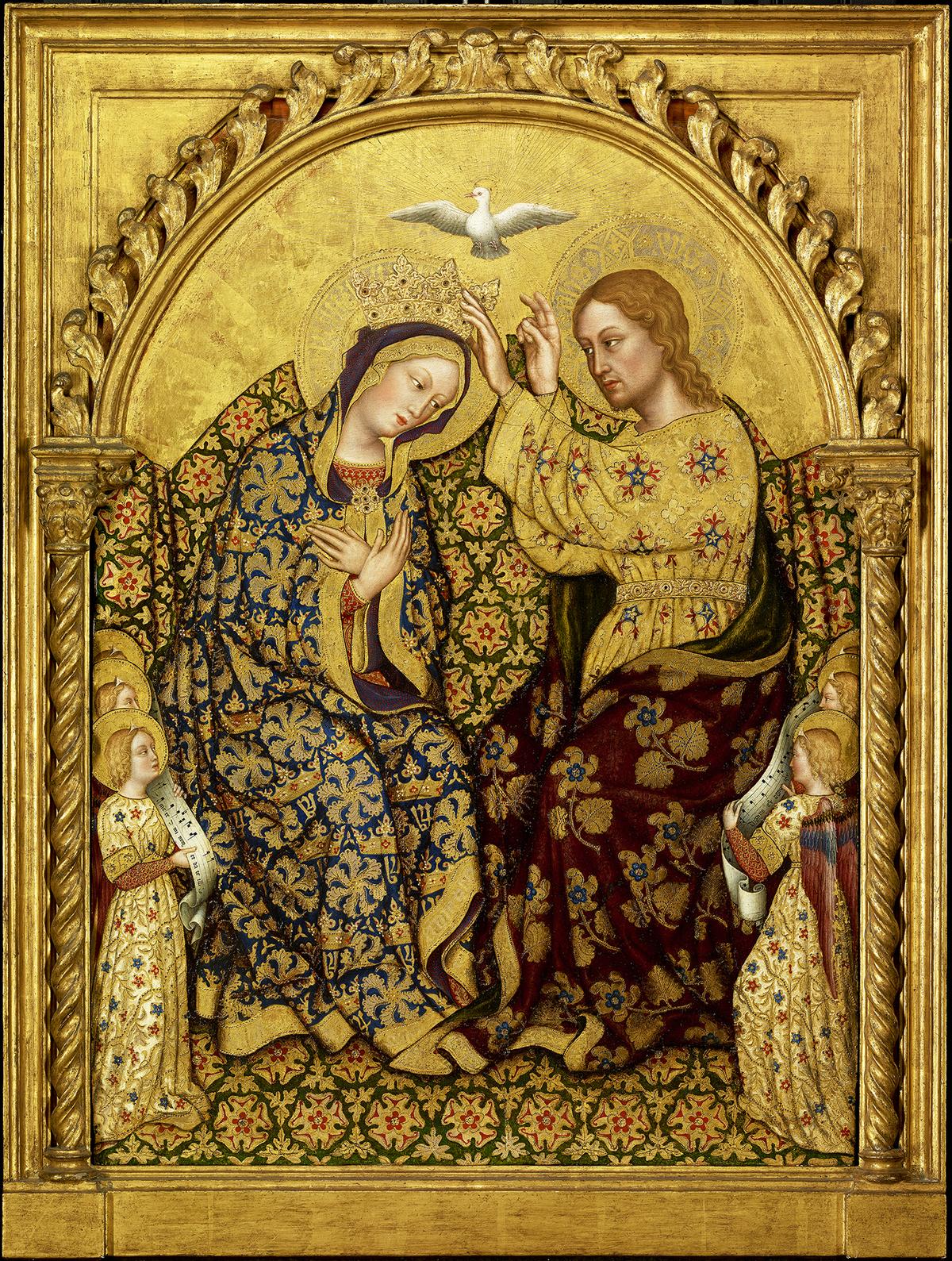
His pictures are in the style of International Gothic. This type of courtly painting trended in Europe from the late 14th to the mid 15th century, especially in France, Italy, and Bohemia. Gentile reigns as a supreme practitioner in this elegant, graceful, and decorative movement. His art is characterized by rich color, realistic details, delicate brushwork, intricate surfaces, and masterful gold decoration.
"Coronation of the Virgin," circa 1420, by Gentile da Fabriano. Tempera and gold leaf on panel; 36 5/8 inches by 25 1/4 inches. Getty Center, Los Angeles. (Public Domain)
"Coronation of the Virgin," circa 1420, by Gentile da Fabriano. Tempera and gold leaf on panel; 36 5/8 inches by 25 1/4 inches. Getty Center, Los Angeles. Public Domain

Gentile worked in Florence during the early 1420s, and most of his most acclaimed surviving works date to this period. Scholars consider “Adoration of the Magi” to be his masterpiece. The altarpiece tells the story of the Magi’s journey to visit the newborn Jesus and their offering of gifts.
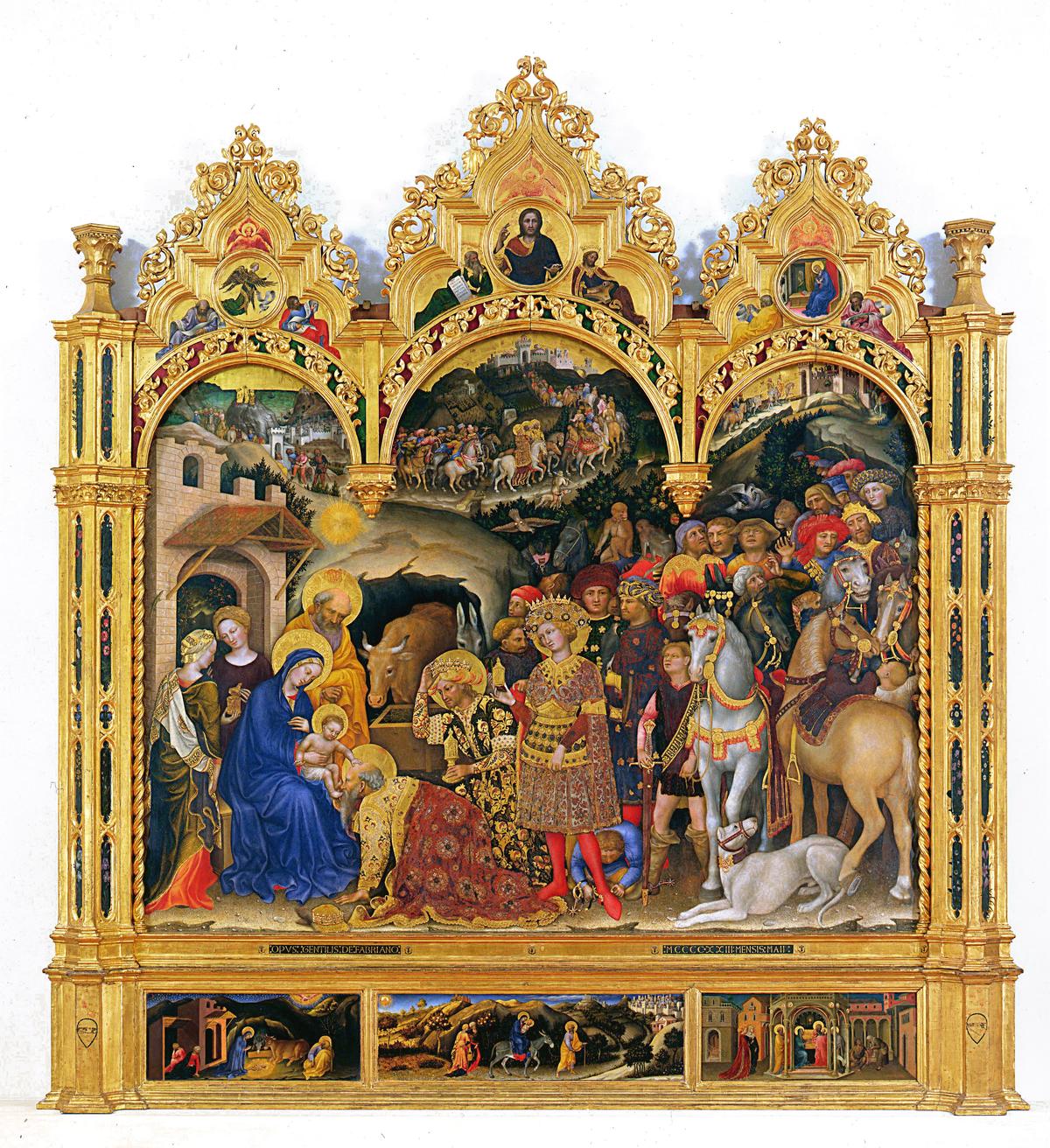
"Adoration of the Magi," 1423, by Gentile da Fabriano. Tempera on panel; 118 inches by 111 inches. Uffizi Galleries, Florence, Italy. (Public Domain)
"Adoration of the Magi," 1423, by Gentile da Fabriano. Tempera on panel; 118 inches by 111 inches. Uffizi Galleries, Florence, Italy. Public Domain

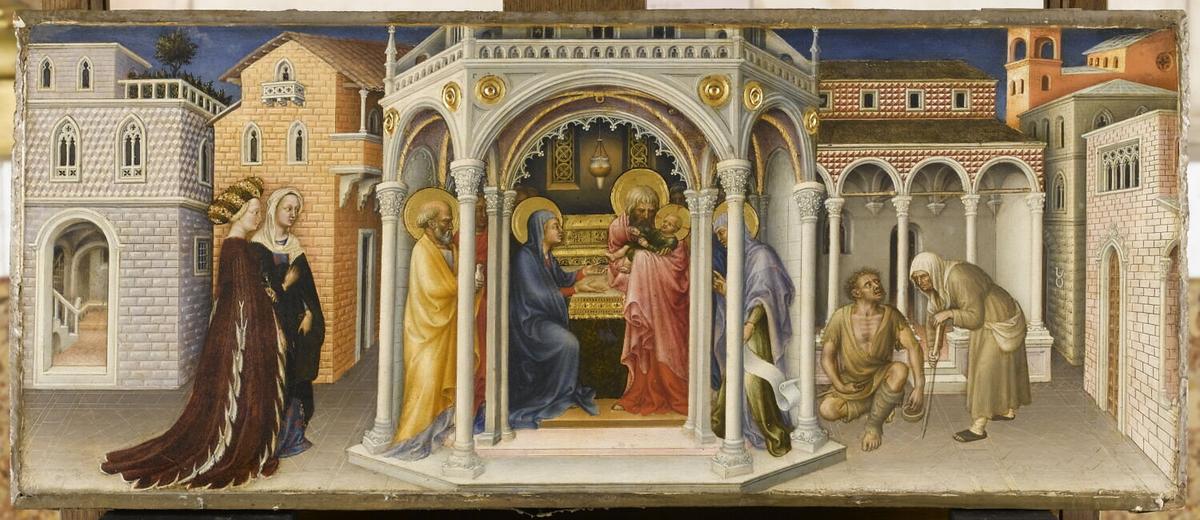
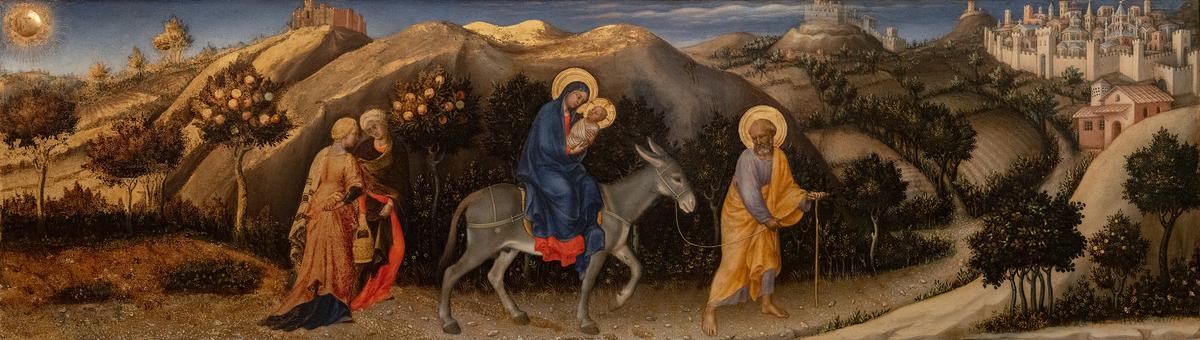
Its predella, a horizontal base of an altarpiece, is divided into three rectangular panels with additional scenes related to Christ’s childhood. They show, in order, the Nativity, the Flight to Egypt, and the Presentation of Jesus at the Temple. The third panel is a 1903 reproduction. The original was removed from the altarpiece during the Napoleonic era and brought to the Louvre in Paris, where it remains.
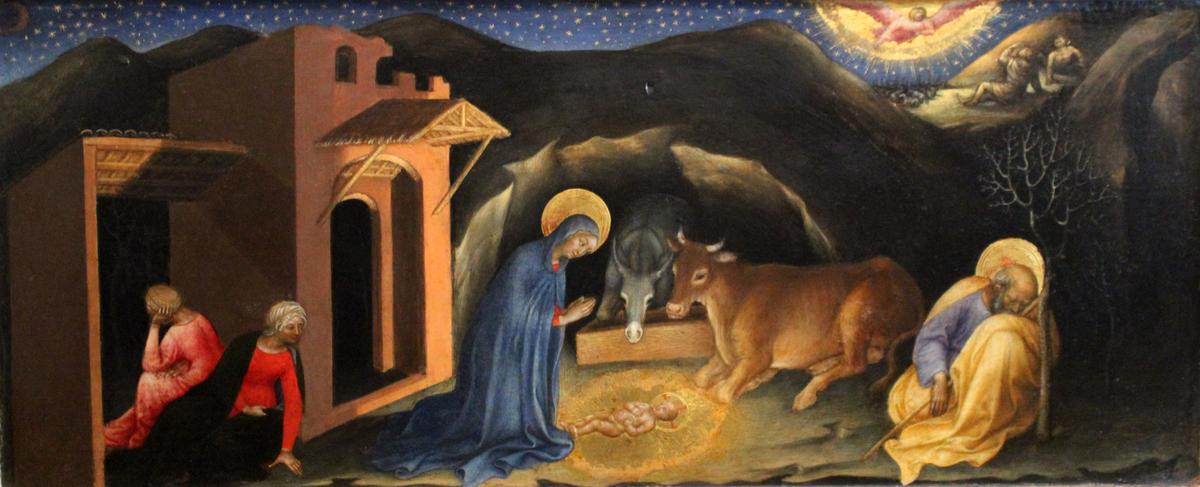
"Nativity" from the left predella panel of "Adoration of the Magi," 1423, by Gentile da Fabriano. (Public Domain)
"Nativity" from the left predella panel of "Adoration of the Magi," 1423, by Gentile da Fabriano. Public Domain
"Flight to Egypt" from the central predella panel of "Adoration of the Magi," 1423, by Gentile da Fabriano. (Public Domain)
"Flight to Egypt" from the central predella panel of "Adoration of the Magi," 1423, by Gentile da Fabriano. Public Domain
"Presentation of Jesus at the Temple" from the right predella panel of "Adoration of the Magi," 1423, by Gentile da Fabriano. (Thierry Le Mage/Louvre Museum)
"Presentation of Jesus at the Temple" from the right predella panel of "Adoration of the Magi," 1423, by Gentile da Fabriano. Thierry Le Mage/Louvre Museum

Gentile’s altarpiece tells multiple narratives. The journey of the Magi starts in the upper left lunette when the kings see the guiding star that will lead them to the Christ Child. The middle background shows their stop at Herod’s palace in Jerusalem. The final vignette depicts their return home.

These three episodes are united by a similar rocky landscape but differentiated by the frame’s arches. The sides of this impressive frame are decorated with botanically accurate flowers that enhance the narratives’ magical settings.

Illuminated Magi

The artist was skilled in creating varied lighting effects, imbuing this altarpiece with a painted atmosphere of divinity that is furthered by gold tooling. His use of “pastiglia,” areas of low relief in gesso that are gilded, is masterful and resembles complex contemporary goldsmith work. These golden details—the kings’ crowns, containers, halos, harnesses, sword hilt, horseman’s spurs, and even a hawk’s talons—result in dazzling three-dimensional effects. The metal leaf would have made the altarpiece even more luminous when it was lit by candles in the Church of Santa Trinita.
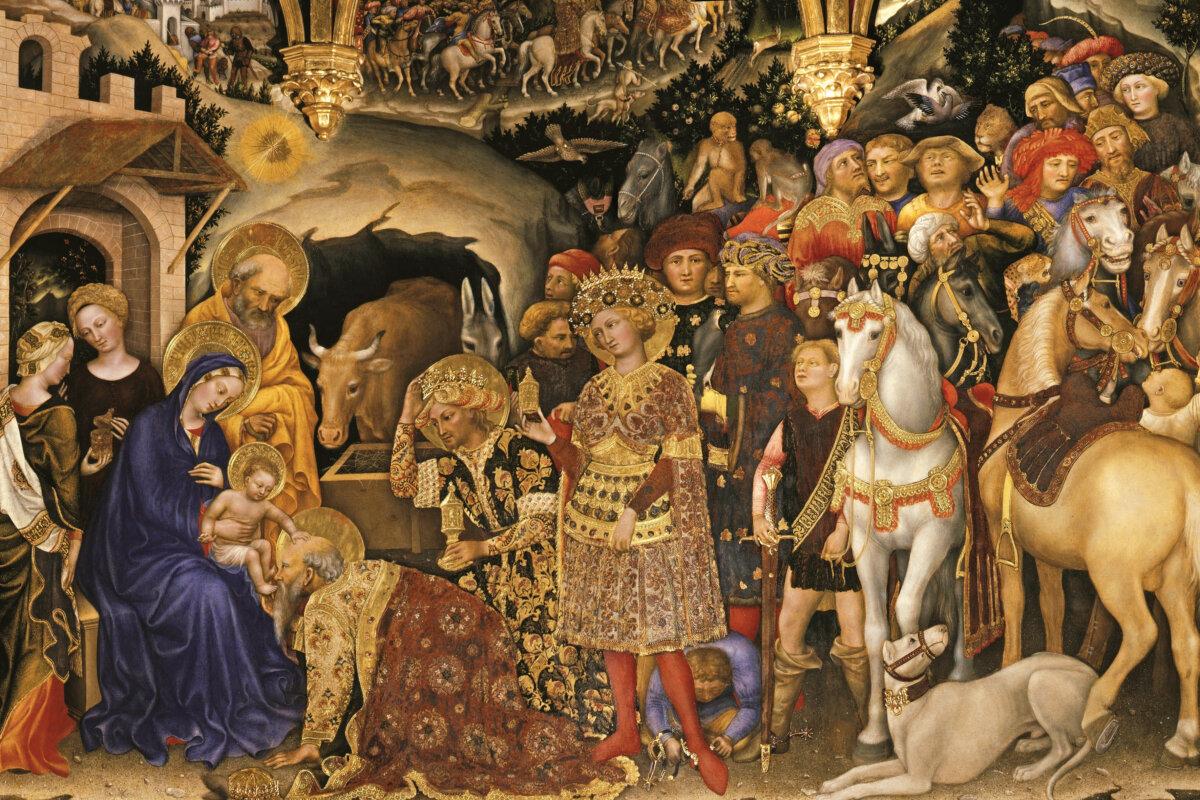
A detail of "Adoration of the Magi," 1423, by Gentile da Fabriano. Tempera on panel. Uffizi Galleries, Florence, Italy. (Public Domain)
A detail of "Adoration of the Magi," 1423, by Gentile da Fabriano. Tempera on panel. Uffizi Galleries, Florence, Italy. Public Domain

The main composition of this densely packed painting shows the Magi paying tribute to the Holy Family. Dressed in sumptuously patterned, fashionable clothes, they are joined by an extensive retinue that includes multiethnic people. Among the animals are the then exotic monkeys and a cheetah.

Included in the colorful procession are portraits of Palla Strozzi, who is the man wearing a turban and holding a falcon, and his son Lorenzo, the boy next to him in the red hat.

The oldest of the Magi, crownless in deference to Christ’s superior status, kneels before him. Jesus is seated on Mary’s lap in front of St. Joseph. The halos of these three holy figures feature Arabic script. Cross-cultural elements like this proliferated in art at the time.
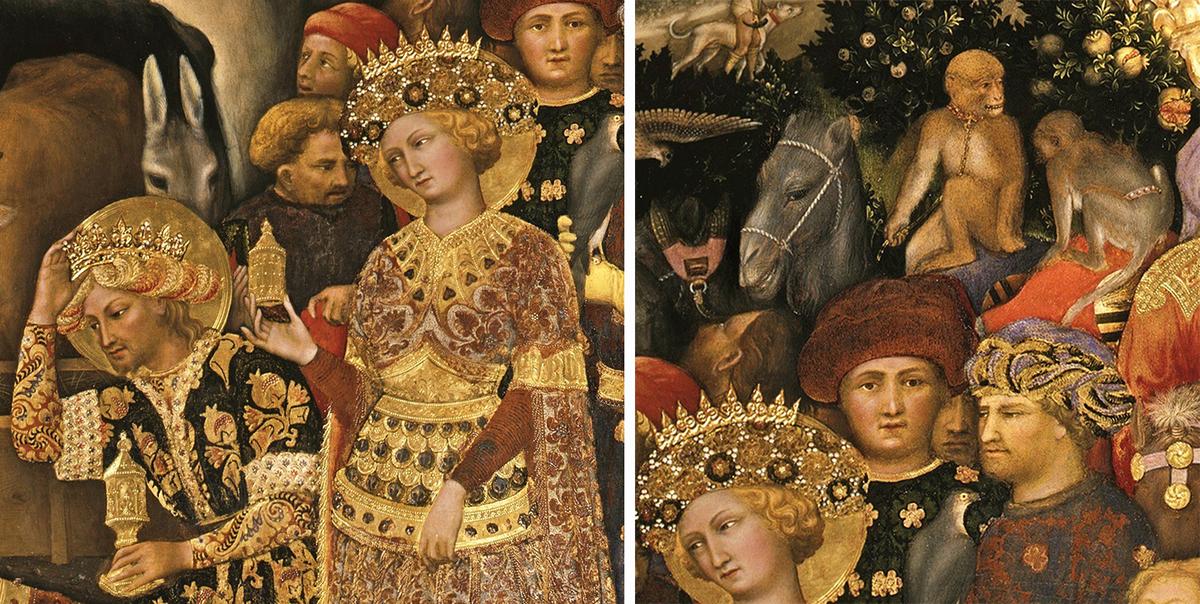
Details of the Magi (L) and Palla Strozzi and his son Lorenzo (R), as well as the monkeys, from "Adoration of the Magi," 1423, by Gentile da Fabriano. Tempera on panel. Uffizi Galleries, Florence, Italy. (Public Domain)
Details of the Magi (L) and Palla Strozzi and his son Lorenzo (R), as well as the monkeys, from "Adoration of the Magi," 1423, by Gentile da Fabriano. Tempera on panel. Uffizi Galleries, Florence, Italy. Public Domain
The Holy Family, along with two female attendants, are situated in front of a wall that looks like a city gate. The maids examine the first king’s offering. In the online exhibition “Jewels in the Uffizi: The Secrets of Depicted Gems,” the museum writes: “The golden vases brought by the Magi for the Messiah, containing, gold, frankincense and myrrh, are three liturgical containers, or more precisely, three pyxes, used for storing the Eucharist, but also scents and anointing oils.”

This king’s tribute of gold is the container itself.

The second king gestures to doff his crown. He holds a more architectural, Gothic pyx that is elevated on a stand. Art historians believe that this one would contain myrrh. The third king stands while his squire removes his spurs. His container is cylindrical, like that of the first Magus, and likely holds frankincense.

Gentile da Fabriano’s “Adoration of the Magi” is a marvel of technique, media, and composition that rewards careful looking with its combination of naturalism and otherworldliness.
What arts and culture topics would you like us to cover? Please email ideas or feedback to [email protected]
Google LogoMark Us Preferred on Google
Michelle Plastrik
Michelle Plastrik
Author
Michelle Plastrik is an art adviser living in New York City. She writes on a range of topics, including art history, the art market, museums, art fairs, and special exhibitions.