Among modern scholars, Dobson’s paintings have been critically acclaimed, especially after two 20th-century exhibitions. Art historians have found similarities between his work and that of such illustrious figures as Caravaggio and Rembrandt, two artists who also have important self-portraiture legacies. However, Dobson has long been forgotten by the general public due to personal and historical circumstances.
Dobson, whose total output numbered only about 60 artworks, is considered the first great British-born painter. Previous prestigious artists working in England were of foreign origin—Hans Holbein at the court of Henry VIII, Anthony van Dyck in service of Charles I—or created portrait miniatures, such as Nicholas Hilliard’s likenesses of Elizabeth I and James I in watercolor and vellum.
The British Master
Little is known of Dobson’s early life, though it is established that he was born in London. It seems that during his formative years, perhaps facilitated by a teacher or a friend, Dobson was given access to view Renaissance masterpieces, especially Venetian examples, in Charles I’s collection. The thick brushstrokes and rich colors in many of his works reflect lessons he learned from Venetian art.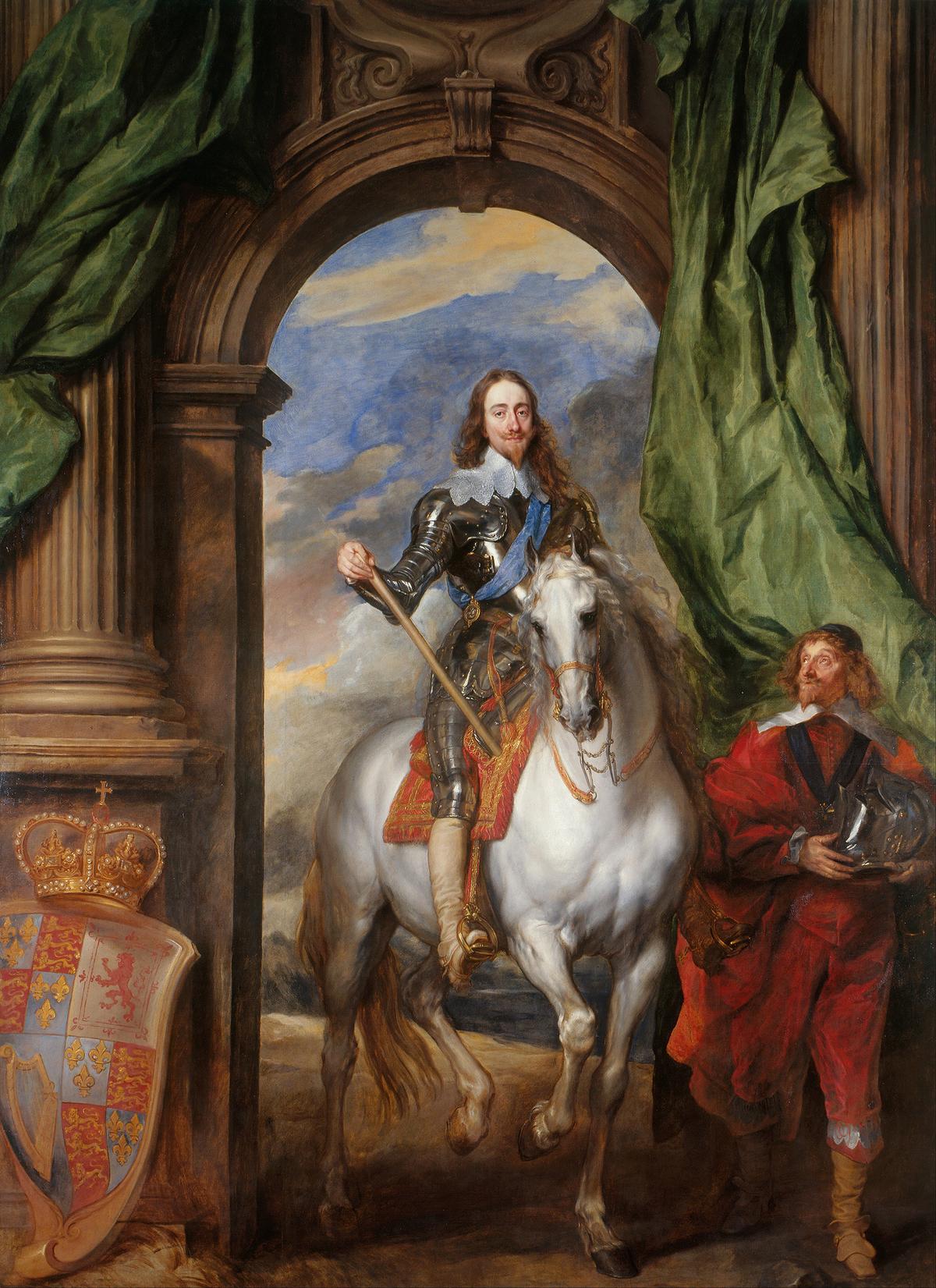
Dobson’s portraits are marked by skilled technique, naturalism, and vitality. Specialists find it remarkable that a genius talent was able to develop in the 1600s solely on British soil.
The Flemish artist Anthony van Dyck (1599–1641) had an extended career as the main portrait painter for Charles I and his nobles. Indeed, his society likenesses became emblematic of British courtly life during the first half of the 17th century, and they remain admired to this day.
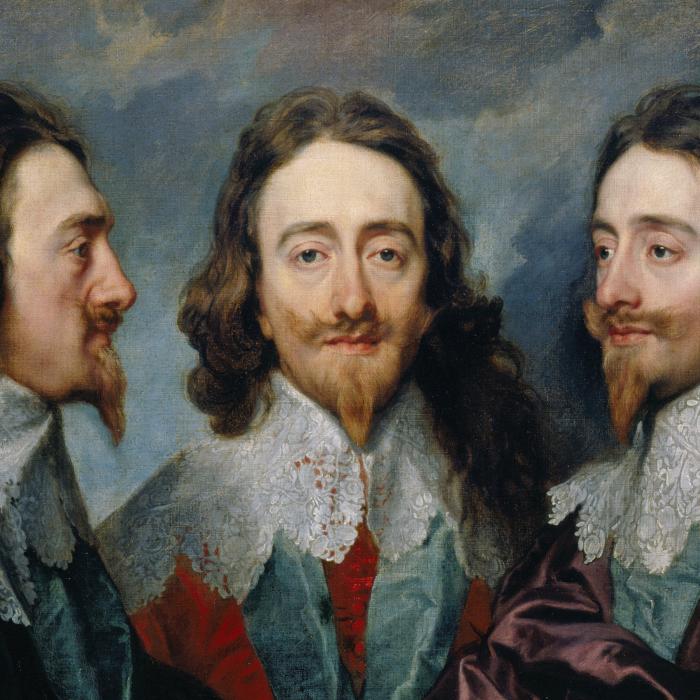
After van Dyck died in 1641, Dobson took his place at court. It remains unclear who introduced him to the king, but Dobson’s death four years later meant that the prime of his career was truncated.
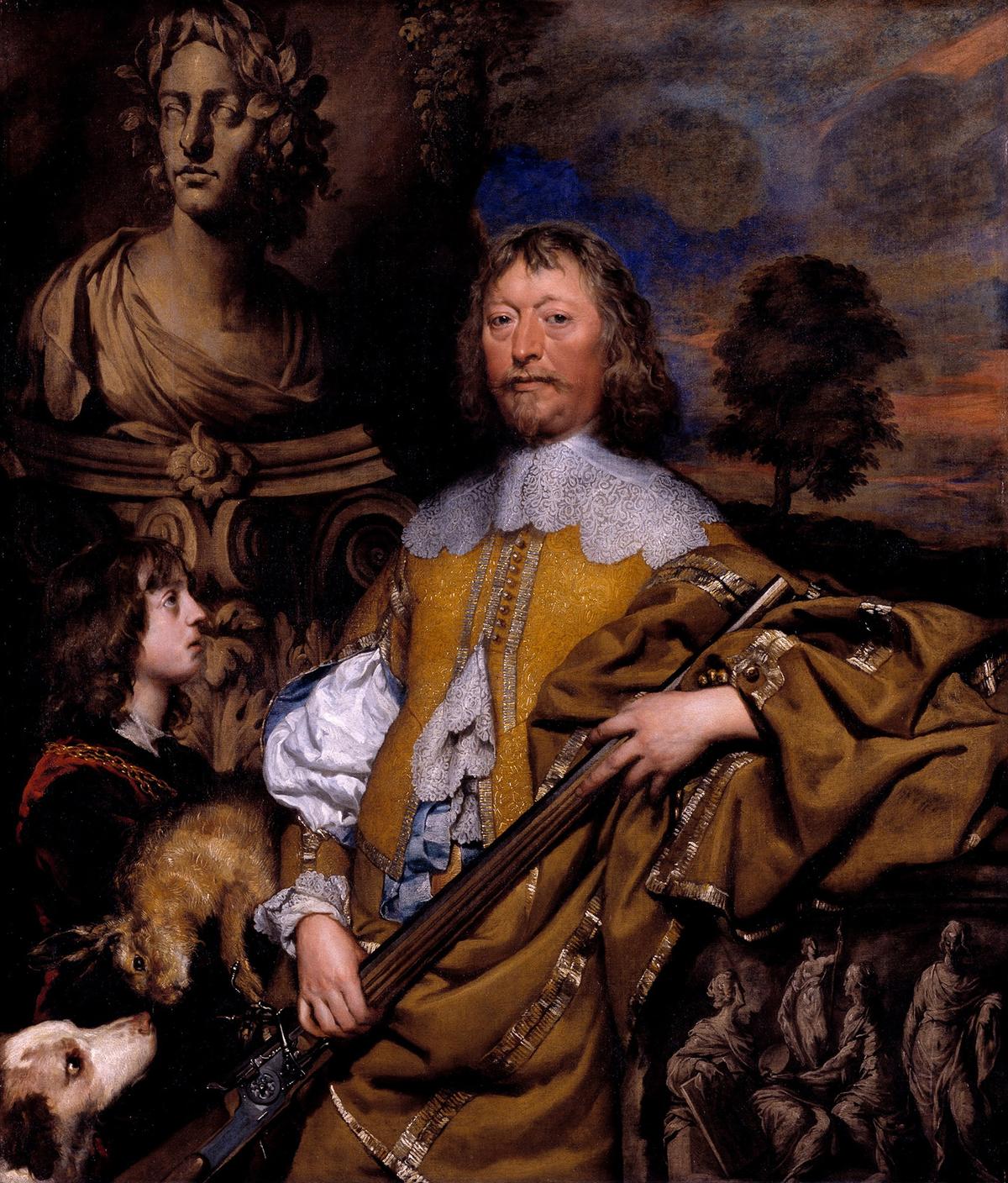
In 1642, the English Civil War began. It was a conflict between Royalists, often called “Cavaliers,” who were led by King Charles, against Parliamentarians helmed by Oliver Cromwell. The royal court moved to Oxford. Dobson created sumptuous portraits during this period that make up the vast majority of his oeuvre. His canvases are notable for their sensitivity and psychological insight.
These works are especially poignant, as some sitters were later shunned, exiled, or executed when Cromwell and his army proved victorious. Van Dyck’s former clientele flocked to Dobson at Oxford, and he painted the royal family, diplomats, intellectuals, aristocrats, and Cavalier commanders.
A Recent Acquisition
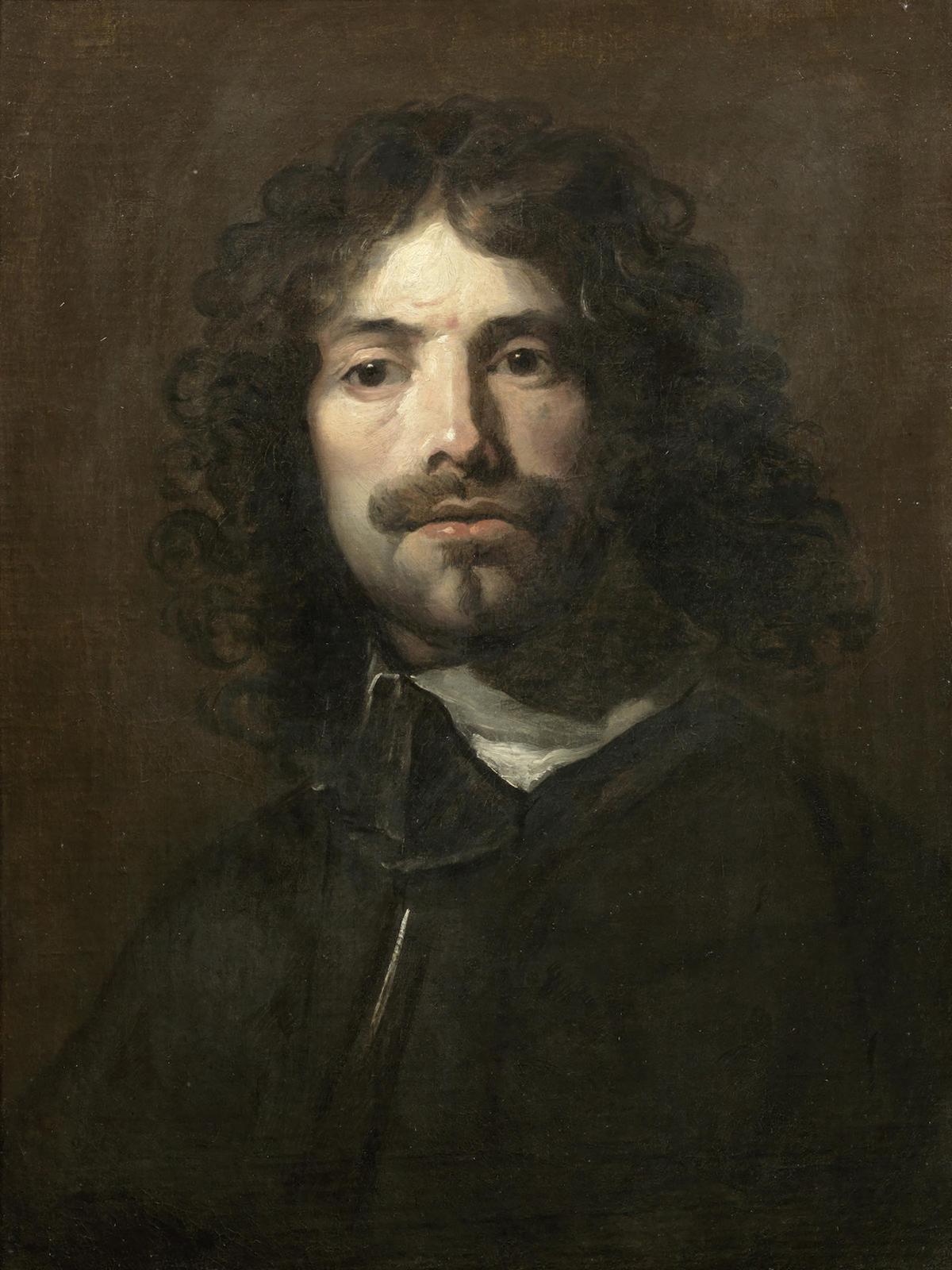
The Dobson self-portrait that the Tate and the NPG purchased from a private collection is dated to circa 1635–1640, before the artist’s rise to great favor at age 30. The work is one of the earliest self-portraits by an English artist. It is strikingly original, because it does not follow traditional portraiture poses intent on displaying status.
Dobson appears with an air of informality. The Museums write in their press release that the picture:
“has an honesty and intimacy that defied the conventions of 17th century British art. Dobson used thickly applied paint to create an almost bohemian vision of the artist, with wild hair and a melancholy gaze, in stark opposition to the carefully posed elegance of his contemporaries.”
The self portrait is especially Caravaggesque for its use of tenebrism, a technique of dramatic shadow and illumination. Dobson’s black cloak and white cravat add to the exaggerated lighting contrasts. His handsome head is slightly tilted and crowned by ringlets. Dobson’s half-open mouth and expressive eyes convey a dynamism unlike many other portraits of the period, which displayed stiff figures. His use of impasto, thick and visible mark making, is also in contrast to the fluid, refined brushstrokes of predecessors such as van Dyck.

Alternate Self-Portraits
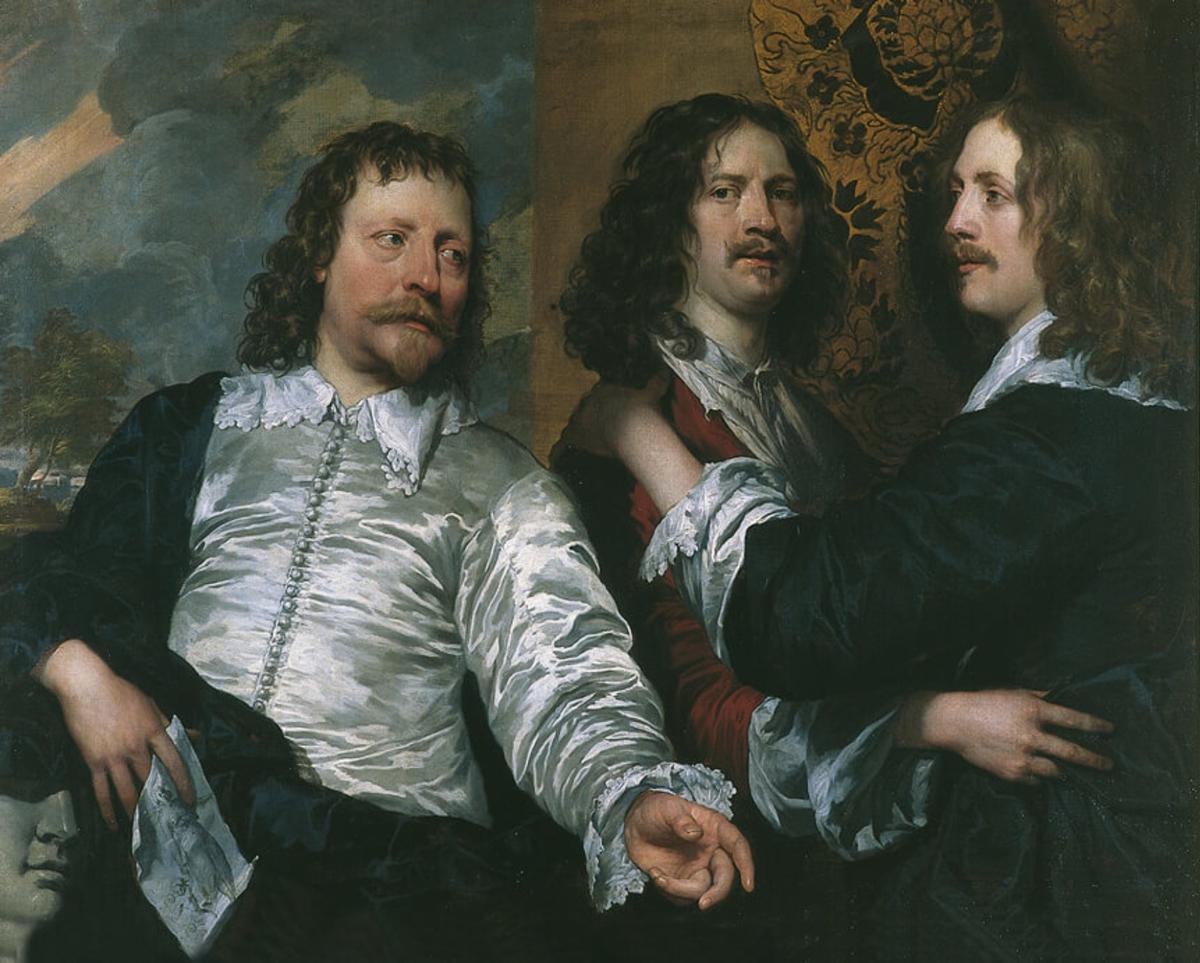
There are two additional surviving Dobson self-portraits—both in private collections. The Earl of Jersey owns one, which is currently on view at Osterley Park and House, London. This oval composition dates to around 1645 to 1646. Again, the artist depicts himself in black and white, directing the viewer’s attention to his piercing gaze. His open mouth gives the sense that he is about to speak. In contrast to his earlier self-portrait, this one references a late van Dyck self-portrait that is now owned by the NPG.The third Dobson self-portrait is part of a group picture; the artist is with Nicholas Lanier and Sir Charles Cotterell. Dobson is in the middle of this Royalist trio. On the left is Lanier, the King’s Master of Music, and at right is Cotterell, the King’s Master of Ceremonies. The artwork is displayed at Alnwick Castle, the property of the Duke of Northumberland. Unlike van Dyck, Dobson did not overflatter his highborn subjects; he embraced realism instead.
In this work, Lanier’s doublet strains over his girth and his cheeks are ruddy. Dobson himself is shown with a double chin. Ambitious symbolic classical elements are also present, further differentiating the artwork from standard portraiture. The current Duke of Northumberland comments that while the painting is hung in “a room with works by Canaletto, van Dyck, and Lely, … those works pale in comparison. It beckons to one, urging involvement in an unfolding drama.”
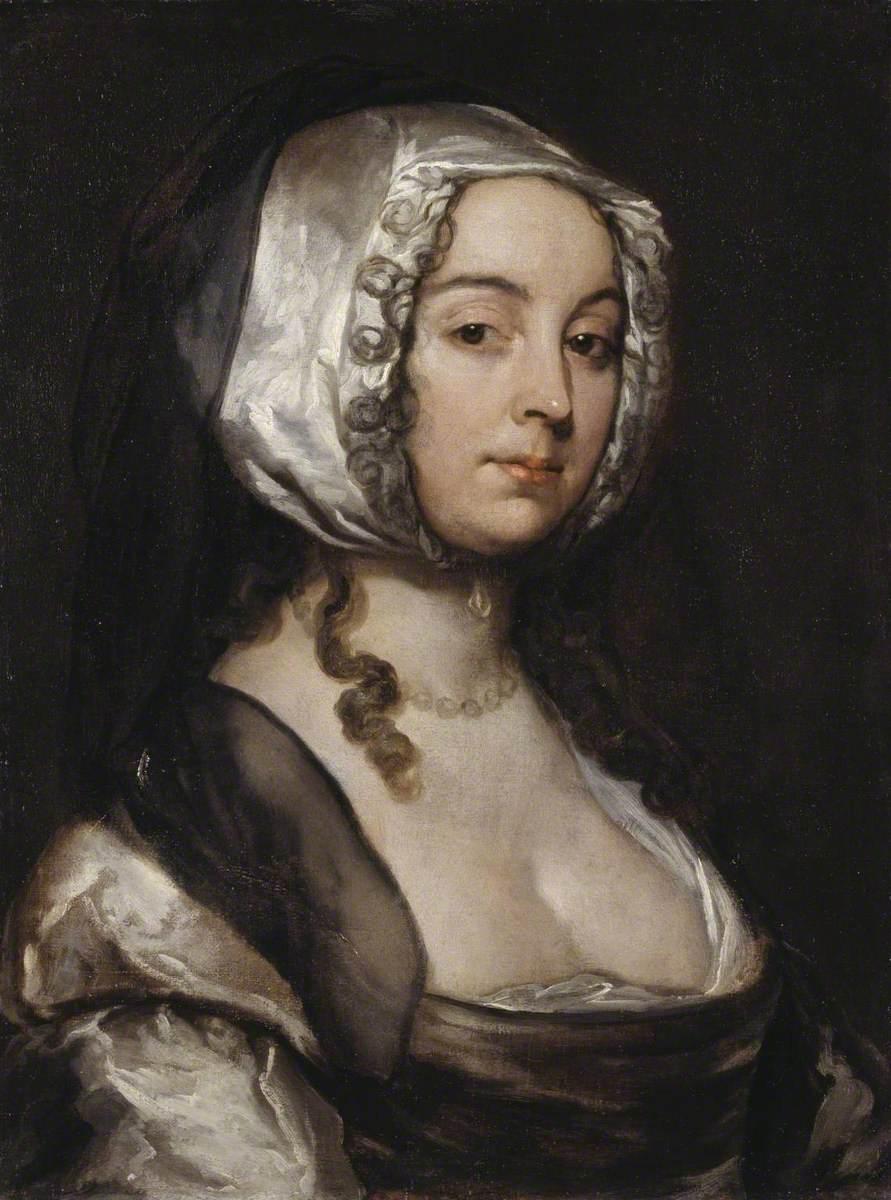
This November, Dobson’s earliest self-portrait will go on public display at Tate Britain. It will be shown alongside Dobson’s portrait of his second wife, Judith Sanders, which was already in the museum’s collection. These are the artist’s earliest known works, and they were hung together at Howsham Hall in Yorkshire, England, from at least 1791 until 1948 while part of the Strickland family’s collection. The portraits’ reunification is temporary, as Dobson’s self-portrait will be displayed alternately at the NPG and available to other museums as part of the national collection.
The Tate and the NPG hope to rouse the public’s interest in and understanding of Dobson’s career, rectifying the long oversight he has endured. In fact, this neglect can be traced to events during Dobson’s lifetime. While he was acclaimed by the Cavaliers, when the king surrendered and the English Civil War ended, Dobson lost his patrons and fell into poverty. He died soon after back in London, his career cut short at the age of 35.
Dobson’s self-portrait is important in terms of the self-portraiture genre and art history as a whole. The Tate and the NPG have pulled off a significant feat by securing this quintessential piece of British heritage for future British generations.