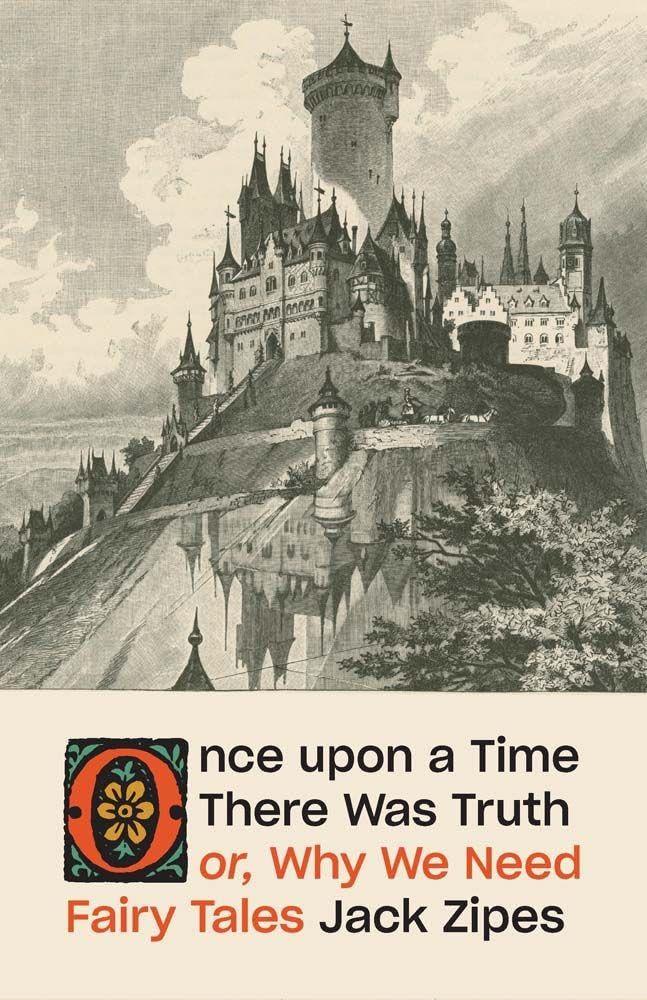
Jack Zipes’s new book “Once Upon a Time There Was Truth or, Why We Need Fairy Tales” seemed to have all the makings of a thought-provoking and necessary read. Unfortunately, it is neither. It’s rare, but, yet, too often that I read a book and, unfortunately, start to question the very reason it was written. This is one of those books.
I have two guesses as to why it was written: The author felt it was time to write another book, and, also, he wanted to rant.
The concept that fairy tales hold ancient truths has long been accepted; we still refer to Aesop’s Fables from ancient Greece. So, yes, we do need truth and fairy tales find their proper place. What we don’t need is a sociopolitical agenda disguised as an analysis of fairytales.
Overcomplicating the Point
In contrast to Disney’s versions, one wonders if viewers would prefer the kind the author advocates for—much more sinister versions. Old folk tales are dark and brutal, especially according to their original concepts. Zipes uses the tale “Hansel and Gretel” as an example in his chapter “Courageous Children and Complicit Adults.”This German tale takes place during a famine and begins inside a home located in a forest where a father, mother, brother, and sister live. The latest version changes the mother to a stepmother (the tale evolved, according to Zipes, from 1810 to 1857). Faced with starvation, the stepmother convinces her husband to send the children away deep into the forest with some bread (their last meal), effectively abandoning them so that she and her husband can survive. It’s certainly a cruel proposition. As the story goes, the father resists but is convinced; the children, left alone, find a home made of food and desserts belonging to a witch who eats children. Zipes argues that the stepmother and witch are identified as the villains and the father is cast as a sympathetic figure because of the patriarchal system of the day.
It isn’t difficult to follow the mental gymnastics it took to conceive this conclusion. One simply needs to look at academia today, in which “down with the patriarchy” is a common refrain. Additionally, Zipes managed to dilute the children’s bravery in outsmarting the witch, pushing her into the furnace, escaping, and making it back to their father (the stepmother had apparently died by then).
Where is the truth in the story? For Zipes it seems the truth is seen most clearly through one of today’s sociopolitical lenses. The villains are sympathetic, the sympathetic figures are actually villainous, and heroism can be glossed over in favor of a modern agenda.
Machiavellian Children?
The author seems to advocate bringing back the harsh realities of the original fairy tales in order to demonstrate how the world really works. That’s hardly kid-friendly, and there are several problems with this premise. Since the original versions (oral or print) of these stories, the world has changed drastically—specifically in the West, which Zipes makes abundantly clear.From academia’s ivory tower (a fitting visual for such a book), the West is seen as rife with problems and injustice. They see the demand for change as the only remedy.
Despite the societal changes that America’s democracy has allowed over time, these are not enough for academia. They are never enough. Academic’s perpetual complaints are based on the premise that they live in the past. They must pretend to live in the past—even the medieval past. That is indeed a fairy tale.
A Study in Cynicism
Zipes’ sociopolitically driven conclusions make sense in light of his references. The work is chock-full of concepts from modern European comparative narrative analysts, who seem to have concocted seemingly impossible conclusions. In reference to visitors to Disneyland, Zipes quotes French cultural critic, Louis Marin, who said:“Their path through the park is the narrative, recounted umpteen times, of the deceptive harmonization of contrary elements, of the fictional solution to conflicting tensions. By ‘acting out’ Disney’s utopia, the visitor ‘realizes’ the ideology of America’s dominant groups as the mythic founding narrative of their own society.”
So much for taking the family on a vacation to get away from life’s harsh realities. It’s an absurd quote cozily nestled within a bevy of absurdities.
The best thing about this book is its cover—but only the front. The back, with its praises from members of academia and the literati, demonstrates that Zipes isn’t alone in his ideas. One author, Kate Bernheimer, claims, “This volume aims an uncynical arrow at hope.” What? Uncynical? Without cynicism, this book has no basis. If anything, this book is an attack on hope (or at least on a escapism). To write such a thing, one must be a cynic. Zipes’s arrow isn’t aimed to mark hope. It’s aimed to kill it.
If this is the path to recapturing the truth-bearing originality of fairy tales, then let me off. The world has changed and certainly for the better, and most particularly in the West. The world elsewhere has drastically improved as well, and in no small part thanks to the West’s influence. Academia and the literati may disagree; that’s their prerogative, and apparently a form of job security. For me, and I assume for others who simply want to appreciate fairy tales at their face value, I opt for Hansel and Gretel’s bravery and Disney’s escapism.