Comte’s Concept
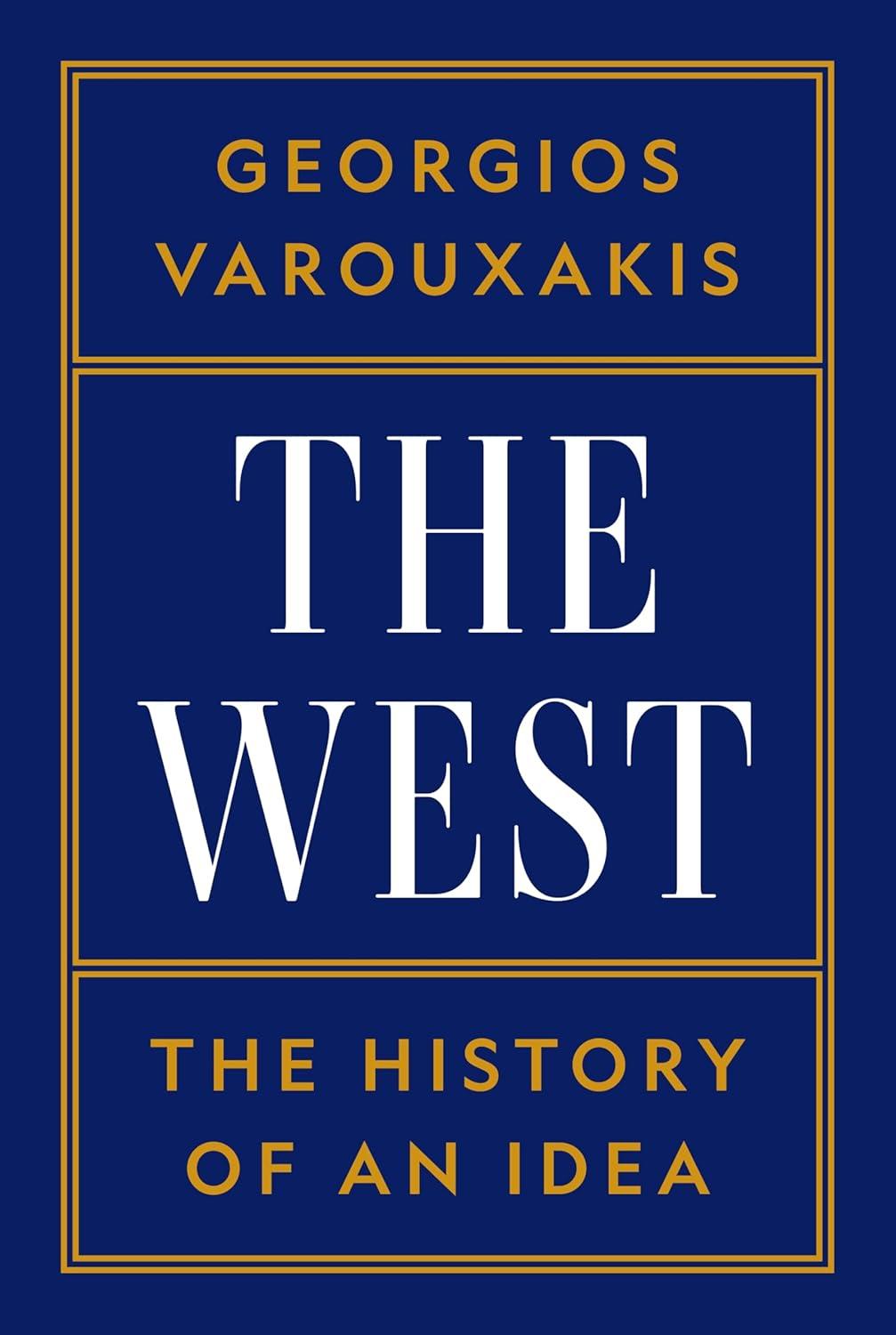
At the start, the author notes that his “book endeavors to reconstruct the history of when, how, and why ‘the West’ emerged as a social political concept.” In the grand context of Greek and Roman history, and, despite the divided Roman Empire between East and West, the idea of “the East” and “the West” wasn’t a concept until the early 19th century.As Varouxakis notes, “by the early modern era, and emphatically throughout the eighteenth century, it was a distinction between North and South that dominated people’s mental horizons.”
The book shows how the geographical distinction of North and South evolved into East and West, initiated primarily by the 19th-century terms of the “Occident” (West) and the “Orient” (East). These terms permeate the book, along with the terms of “Western civilization” and “Europe.” But who began the terminological trend of using “the West”? According to Varouxakis:
“It is [his] argument that [Auguste] Comte [the mid-19th century French philosopher] was the first political thinker to elaborate an explicit and thorough sociopolitical idea of ‘the West’—both as a supranational cultural identity and as a proposed political entity, based on civilisational commonality and shared historical antecedents.”
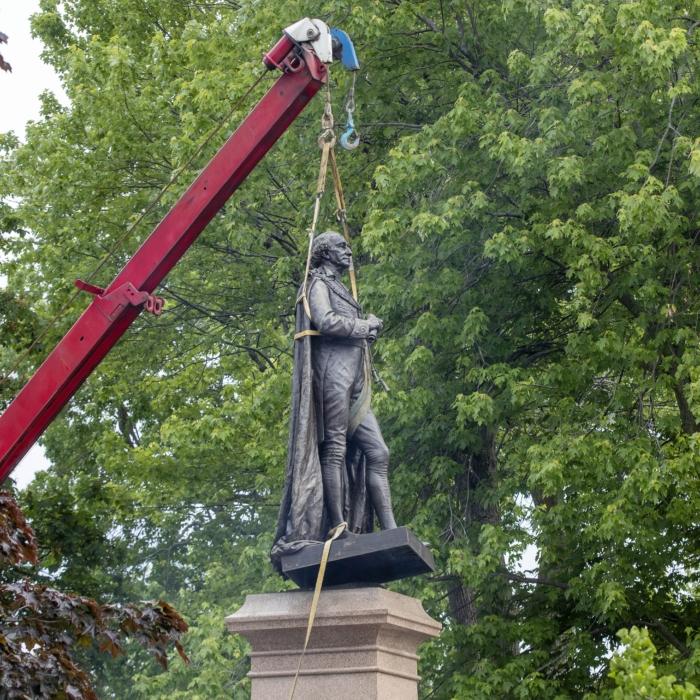
Throughout the book, Varouxakis highlights Comte’s intellectual influence on philosophers and political thinkers in the decades and centuries after his death. It was Comte, according to the author, who first identified l‘Occident (the West) as Europe, giving the intellectual idea a geographic quality. In this respect, Varouxakis notes that “Comte’s ‘West’ was a complex ‘sociological’ notion, and certainly not a geographical entity.”
It wasn’t meant as a geographic entity, as the book demonstrates how the “idea of the West” ebbed and flowed around the globe. Even so, it’s generally identified geographically with Europe, specifically Western Europe. But of course, even the idea of “Western Europe” stems more from “sociopolitical” beliefs than geography. This fits all within Comte’s hope that “the West” would be such a positive intellectual force that it would “[enable] the rest of humanity to achieve the same positive state of development.”
Not an Imperial or Cold War Concept
This concept of “enabling” other parts of the world, that is, the East, or as Aeschylus actually termed “barbarian,” sounds like imperial advocacy. As Varouxakis discusses, “the West” and “imperialism” were often been connected.But this intersection, first identified and propagated by 20th-century writers, is incorrect. The author states that Comte and “his disciples” were anti-imperialists. The idea of “the West” was about “unity” through sociological and intellectual means, not through war and conquest. Hence Comte’s certainly idealistic idea of establishing a religious affiliation called the Church of Humanity.
Perhaps the easiest definition of the West as it is now perceived is one Varouxakis quotes from a 1940 speech by Walter Lippmann. Lippmann qualified Western culture as “the culture of Greece, inherited from the Greeks by the Romans, transfused by the Fathers of the Church with the religious teachings of Christianity.” It was then “enlarged by countless numbers of artists, writers, scientists and philosophers from the beginning of the Middle Ages up to the first third of the nineteenth century.”
Outsiders: Russia and Germany
Varouxakis continues through the decades into the post-Russian Revolution era. The Cold War split Europe into eastern and western camps certainly holds weight as a post facto concept. How so? Russia was always on the outside of “the West” looking in. Its literary lights and philosophers were quasi-contributors to the west. It was also a brief partner during and shortly after the era of Peter the Great. But as the author notes, Europe was always suspicious of and belligerent to Russia and its “Asiatic roots.”Can ‘The West’ Endure?
Finally, Varouxakis brings the reader to the ultimate question for “the West.” That is, “will it endure?” Has “the idea” come to the end of its centuries-long lifespan? This isn’t a 21st-century question, but a 20th-century question that has continued into this era.The black intellectuals of “the West,” specifically in America, often posited this question. If African-Americans desired to be part of the “Western” heritage, but were practically treated like the intellectual equals of the Russians (nodded at but never accepted), then what was the West? If those now in the geographic heart of the West couldn’t be part of it, then it meant that the idea of the West wasn’t what Comte first suggested, nor was it capable of maintaining its modern definition referenced by Lippmann. In a sense, the concept of “the West,” if wielded in such a manner, was truly arbitrary and lacked substance.
Varouxakis’s point isn’t that this is the case, but that it has been argued as the case. “The West” as a “complex ‘sociological’ notion” must not be exclusive, especially for arbitrary geographic or ethnographic reasons. In the final portion of his book, he highlights how such arguments, adopted by certain demographics and ideologues, continue to rip at an already torn societal fabric. Perhaps this pulling and prodding is tolerable, for, as the author states, “there is no one, single idea of ‘the West.’”
Though Varouxakis doesn’t exude panic, the fear is that the center of this overarching idea will not hold. A quote from James Kurth, an American professor of political science, sums up this modern fear: “The real clash of civilizations will not be between the West and one or more of the Rest. It will be between the West and the post-West, within the West itself.”
“The West: The History of an Idea” is an impressive work on a concept that has captured a large portion of the world for centuries, and all of the world intermittently. It’s a timely work about the future of a most important heritage. How will it transform in the decades to come? Will it transform or deform? Will it remain static? As demonstrated in the book, these questions have been asked before and have been answered in various ways. One can only wonder where today’s answers will lead us tomorrow.