7 Simple Habits That Will Transform Your Writing

Great writing begins with simple, practical habits that build precision, structure, and intention, one sentence at a time.
7 Simple Habits That Will Transform Your Writing
Focusing on clarity is one good writing habit that you can foster. Aaron Burden/Unsplash
|Updated:
0:00

“i would like to be one of your writers. how can i start?”

This is an actual email pitch submitted to an online publication. Needless to say, this person didn’t get added to the publication’s roster. By some estimates, bad writing costs U.S. businesses about $400 billion per year. It certainly cost this writer a potentially lucrative gig.
The United States faces a literacy crisis with implications far beyond the financial, however. Americans can’t read and write as well as they once did, and this hurts business, politics, philosophy, and general interpersonal communication. The decline shows no signs of slowing, either. In 2024, average ACT scores hit their lowest mark since 1990 (19.4). Fifty-four percent of adults now read below a sixth-grade level, and that’s reflected in their writing, too.

Many factors contribute to this decline in literacy—particularly digital communication technologies that encourage lazy, short-form messages lacking proper grammar, punctuation, syntax, and complexity of thought.

But one key influence that’s sometimes overlooked is the simple fact of bad habits. Many other factors have led us to develop bad writing habits, but it’s also true that those bad habits reinforce and perpetuate the problem. As George Orwell wrote in his celebrated essay “Politics and the English Language,” “[our language] becomes ugly and inaccurate because our thoughts are foolish, but the slovenliness of our language makes it easier for us to have foolish thoughts.”
Philosopher Josef Pieper also emphasizes the connection between language and thought. In his book “Abuse of Language, Abuse of Power,” he states: “Word and language form the medium that sustains the common existence of the human spirit as such. ... If the word becomes corrupted, human existence itself will not remain unaffected and untainted.”

The good news here is that bad habits can be replaced with good ones. Orwell writes, “If one gets rid of these habits one can think more clearly, and to think clearly is a necessary first step toward political regeneration.”

Here, then, are seven ways to fight bad habits and foster good ones in your own writing. The health of our commonwealth depends on it.

Focus on Clarity

We write in order to communicate something. Period. If a piece of writing cannot be readily understood, it’s failed its primary purpose. A piece of writing should serve the reader by making comprehension smooth and effortless. This requires looking at the subject from the reader’s perspective and remembering that the reader doesn’t have all the background information or connecting ideas that you possess in your own head. You have to make everything explicit on both the sentence level and the paragraph level.

One caveat: Of course, “clarity” will mean different things in different contexts. If you’re writing a thesis on German postmodern philosophy, written for an audience of professors, then your writing will involve significant complexity of thought, terminology, and diction, yet it will be clear enough to that audience. But if you write your business emails like a German philosophy paper, you’re no longer communicating clearly to the intended audience in the intended mode.

Imagine getting a work email that begins: “Your earnings report recedes into an undifferentiated understanding. When something is understood but still veiled, it becomes unveiled by an act of appropriation and this is always done under the guidance of a perspective which ...”

Delete.

Strong verbs are a surefire way to improve writing. (PeopleImages/Shutterstock)
Strong verbs are a surefire way to improve writing. PeopleImages/Shutterstock

Use Strong Verbs

Strong, interesting verbs improve a piece of writing faster than just about anything else. Verbs carry the weight of the sentence, and a vivid verb generally creates a more vivid impression in the reader than an interesting adjective or adverb. In Gary Provost’s “100 Ways to Improve Your Writing,” he writes, “[Verbs] are the executives; they should be in charge.”

He gives some practical tips: “Sharpen a verb’s meaning by being precise. Turn look into stare, gaze, peer, peek, or gawk. Turn throw into toss, flip, or hurl. Inspect adverbs carefully and always be suspicious. Are they trying to cover up for a lazy verb? Most adverbs ... should be shoveled into a truck and hauled off to the junkyard.”

As often as possible, replace boring “to-be” verbs with something punchier; e.g., “The announcer is loud when he is excited” becomes “The announcer bellows with excitement.”

Use Active Voice—Most of the Time

I took this rule from Provost’s “100 Ways to Improve Your Writing.” Here, he rephrases a traditional rule that it’s better to use active voice than passive voice. Active voice means the subject of the sentence performs the action of the sentence (“The boy threw the ball.”). Passive voice means the subject receives the action (“The ball was thrown.”). Active voice almost always leads to greater clarity, vividness, and power in your writing.

However, I appreciate that Provost says “most of the time,” because occasions arise when the passive voice is more appropriate.

“Try to use the active voice. But realize that there are times when you will need to use the passive,” Provost advises. “If the object of the action is the important thing, then you will want to emphasize it by mentioning it first.”

Follow the MEAL Structure

Like a well-built house, a proper paragraph needs a firm structure. One such structure is MEAL, which stands for main idea, evidence, analysis, and link to thesis. This structure works especially well for any kind of argumentative or academic writing, but it can be adapted to other forms as well.
You begin with the main idea that the paragraph will prove, clearly stated up front (this is also sometimes called the “topic sentence”). Next, move on to the key facts or pieces of evidence that prove or support or exemplify that main idea (evidence). After that, provide your analysis and explication of those facts, showing how they relate and how they support the main idea. Finally, conclude with a sentence that ties everything together and shows the paragraph’s relation to the overall point (thesis) of the whole piece of writing.

Stick to 1 Main Idea

Paragraphs are not random blobs of words arbitrarily divided up on a page. They are discrete units of meaning.

A good writer will divide paragraphs strategically, along natural fault lines that already exist. Put simply, each paragraph should be about one, and only one, main idea.

Once you begin wandering into distinctly new terrain, it’s time for a new paragraph (that builds on but remains distinct from the previous one).

Cut Words When You Can

I have adapted one of Orwell’s rules for good writing. In his original rule, he says to “always” cut out an unnecessary word. However, I think this limits stylistic freedom and poetic diction too much. Besides, how do you define an unnecessary word? Sometimes a word isn’t necessary for the meaning of the sentence but may be necessary for the rhythm, sound, or style of the sentence. Nevertheless, Orwell’s basic point stands: We often use eight words to say something we could say in four. This leads to convoluted and confusing sentences. Less is more.
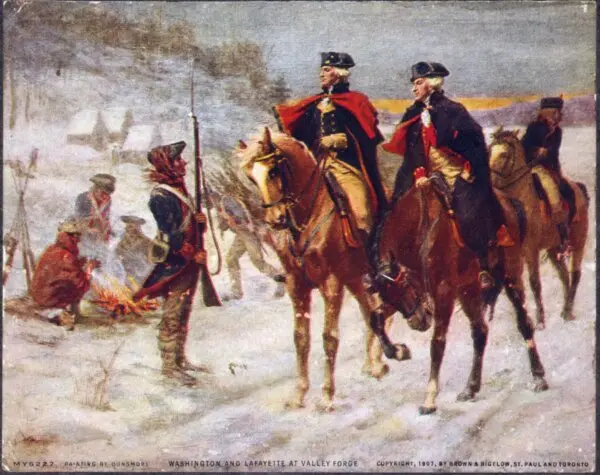
Developing an ear for poetry can help sharpen your sense of rhythm. (Ben White/Unsplash)
Developing an ear for poetry can help sharpen your sense of rhythm. Ben White/Unsplash

Read Poetry

To add elegance and a sense of rhythm to your sentences, read poetry. That sense of lyricism can really be gained only through experience and developing an ear for it, which in turn happens most quickly by absorbing a lot of poetry. You can’t go wrong with the classics: William Shakespeare; Alfred, Lord Tennyson; John Keats; Lord Byron; William Wordsworth; William Blake. In addition, for a more modern style that can be applied more easily to your writing, check out Richard Wilbur, Robert Frost, and Mary Oliver.
Google LogoMark Us Preferred on Google
Walker Larson
Walker Larson
Author
Before becoming a freelance journalist and culture writer, Walker Larson taught literature and history at a private academy in Wisconsin, where he resides with his wife and daughter. He holds a master’s in English literature and language, and his writing has appeared in The Hemingway Review, Intellectual Takeout, and his Substack, The Hazelnut. He is also the author of two novels, “Hologram” and “Song of Spheres.”