‘Cold Obstruction’
“To lie in cold obstruction and to rot” from Act 3, Scene 1 of “Measure for Measure.”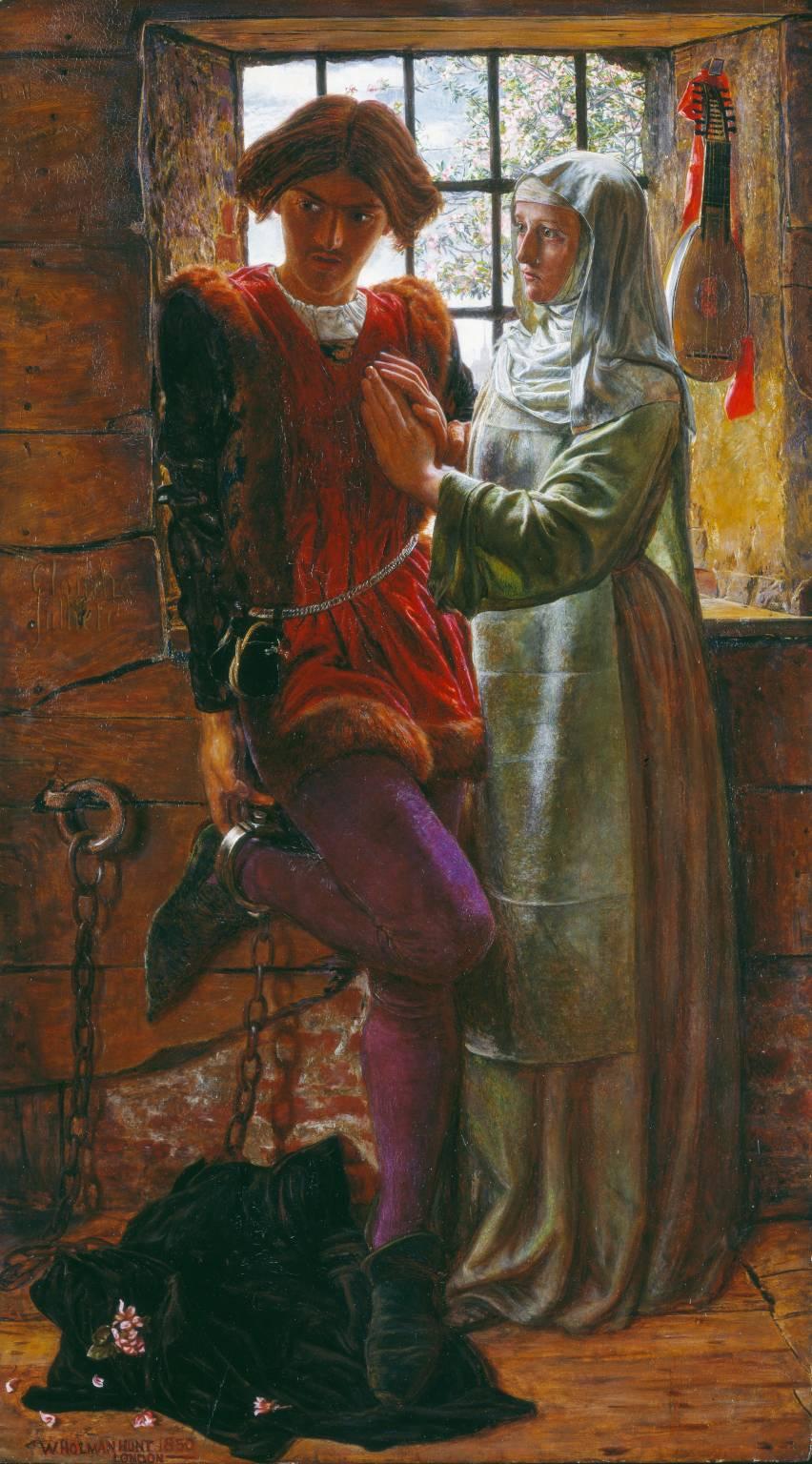
Ay, but to die, and go we know not where, To lie in cold obstruction and to rot, This sensible warm motion to become A kneaded clod; and the delighted spirit To bathe in fiery floods ...The phrase “cold obstruction” suggests both the physical horror of death (a body blocked from life, stiff and decaying) and a metaphysical dread—obstruction from movement, from meaning, from salvation. But more than that, the line mimetically enacts what its meaning is: The heavy plosives and stops in cold, obstruction, and rot (k, b, t, etc.) create a choking, halting rhythm, and the short, hard words contribute to the grim physicality of the image.
More than that, though, the choice of diction is inspired: Cold and rot are Old English Anglo-Saxon words, and their tone is simple, elemental, blunt, physical and visceral; but interposed between them is the word obstruction, which is Latinate-Romance, and its tone is abstract, cerebral, and bureaucratic (as in: There is an obstruction blocking the road—best contact the Department of Transportation!). This stylistic clash between the Latinate term (obstruction) provides a kind of detached medical or legal framing, and this makes the physical horror of rot and cold even more chilling.
Furthermore, we usually “lie” in a bed or a bath or something physical, so even the notion of lying in “obstruction” (not “an obstruction” but obstruction itself), not being the blockage but lying in it, conveys intellectual horror at its worst, because the abstract is being physically realized in the final word, “rot.”
‘I Was Adored Once, Too’
“I was adored once, too” comes from Act 2, Scene 3 of “Twelfth Night,” possibly my favorite Shakespeare comedy! This one line, is spoken by Sir Andrew Aguecheek.
What is the powerful emotional state that this line captures with such genius? There is wistfulness, loneliness, and an almost unaware self-pity. Sir Andrew is a gull, a fool, and is constantly exploited by Sir Toby Belch.
Sir Toby is successful in courting Maria as they carouse into the night, and the clown, Feste, sings a beautiful lyric about the fleeting nature of love and time. Sir Andrew’s line reveals, or mis-reveals, something about himself: It suggests a backstory of which, up to this point, we had no idea.
At the same time, given his foolishness, we have every reason to doubt the veracity of anybody ever having loved him. The net effect of this incongruity is wistful in that it suggests a childlike vulnerability, but ending on the word “too” suggests some lost moment of significance that cannot be retrieved.
Indeed, the “lostness” of his situation is only brutally confirmed by Sir Toby’s response, which completely ignores Sir Andrew’s pathos: Sir Toby: “Let’s to bed, knight. Thou hadst need send for more money.”
‘My Beating Mind’
“A turn or two I’ll walk / To still my beating mind” comes from Act 4, Scene 1 of “The Tempest.”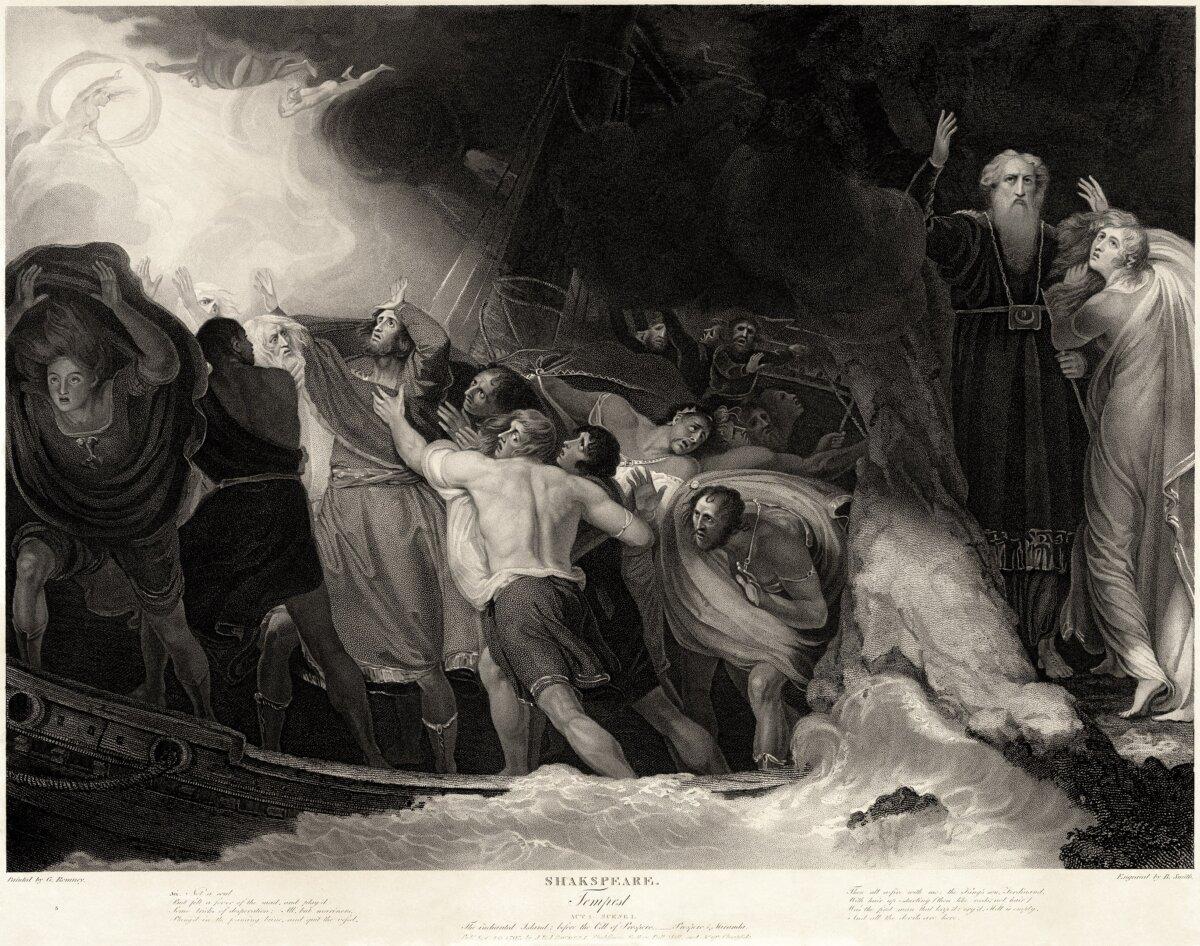
This deceptively quiet line is spoken by Prospero just before he brings his long, elaborate plan to its close. It’s the moment before the magician sets everything right: forgiving his enemies, freeing Ariel, restoring Miranda, and giving up his powers. And yet, even as he approaches resolution, Prospero recognizes the need to compose himself: not his heart, not his temper, but his mind.
The phrase “beating mind” is extraordinary. It’s almost physical, almost audible. In an age before the idea of mental health and neuroscience, Shakespeare intuits the storm of interiority and the difficulty of emotional regulation. The mind, like the sea around the island, beats, and, thus, Prospero walks to subdue it. The rhythm of the line itself imitates that movement: “A turn or two I'll walk.” The phrase pounds like footsteps. It’s a beautiful moment of reflection, restraint, and almost meditative self-discipline. The word “turn” is apt, for as the words turn into a new line, so Prospero turns away from emotional excess into meditative self-discipline.
Our revels now are ended. These our actors, As I foretold you, were all spirits and Are melted into air, into thin air: And like the baseless fabric of this vision, The cloud-capped towers, the gorgeous palaces, The solemn temples, the great globe itself, Yea, all which it inherit, shall dissolve, And, like this insubstantial pageant faded, Leave not a rack behind. We are such stuff As dreams are made on, and our little life Is rounded with a sleep.Notice how, as the vision fades, the language shifts from the polysyllabics of “inherit” and “insubstantial” to “dreams” and “sleep,” until we reach the pure simplicity of the monosyllabic (the word “beating” excepted), perfectly regular, iambic pentameter line of “A turn or two.” This contrasts with the iambic irregularities that had preceded it.
The irregularities enact the emotional storm. The use of hypermetric words—those with an extra syllable—at the end of lines (actors, vision, faded) or the feminine ending in “palaces.” All these linguistic features disturb the force of the pure iambic beat. These, through walking, Prospero restores.
Each, then, of these three lines captures a unique emotional texture and moment. Claudio’s dread evokes claustrophobia and decay; Sir Andrew’s sadness is light and comic but laced with loneliness; Prospero’s moment is hushed, dignified, and transitional. Shakespeare’s genius is that he can, in a single line, open up whole worlds of psychological truth. These may be one-liners—but they nail something quite deep. What Shakespearean one-liner nails it for you?