It was the year of Our Lord, 1775. For more than a decade, Great Britain had imposed taxes and trade restrictions on her American colonies to pay down their war debts. The Americans denounced these measures as encroachments on their constitutional right to govern themselves through their own elected assemblies.
The Boston Tea Party
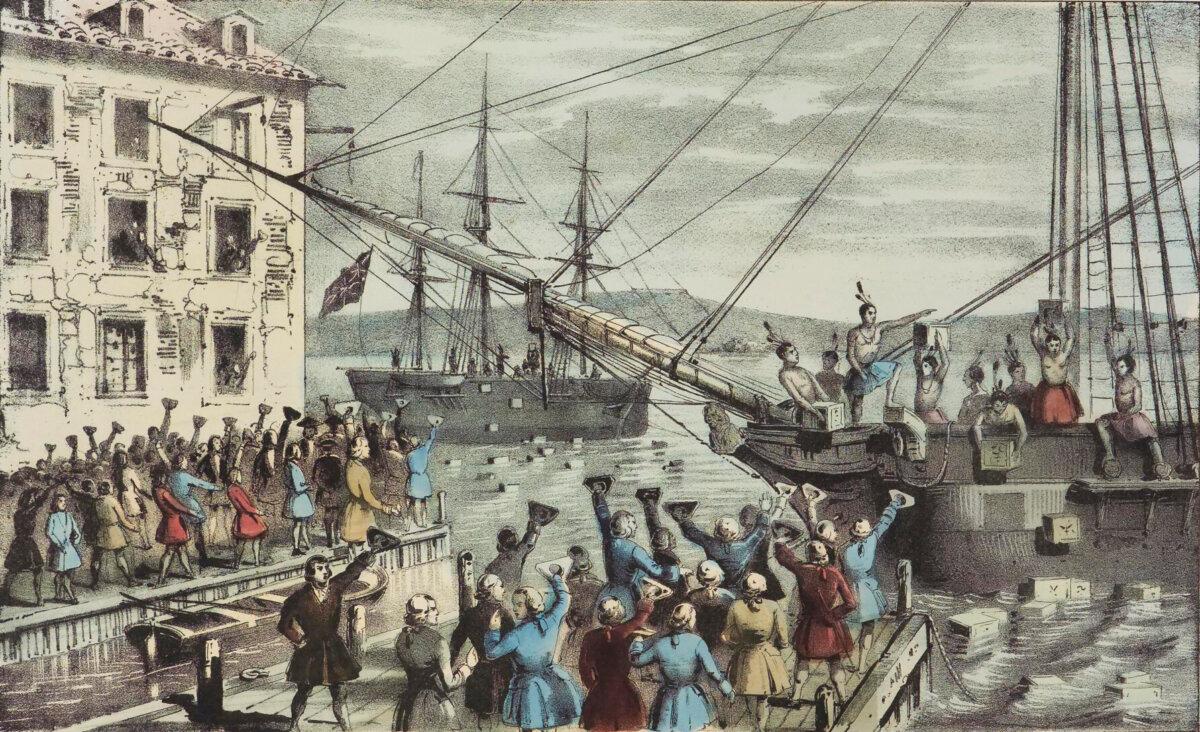
On Dec. 16, 1773, the Sons of Liberty boarded three merchant ships moored in Boston Harbor and dumped 342 chests of tea into the waters below. This show of defiance, known as The Boston Tea Party, enraged British leaders far more than anything before.
First Continental Congress
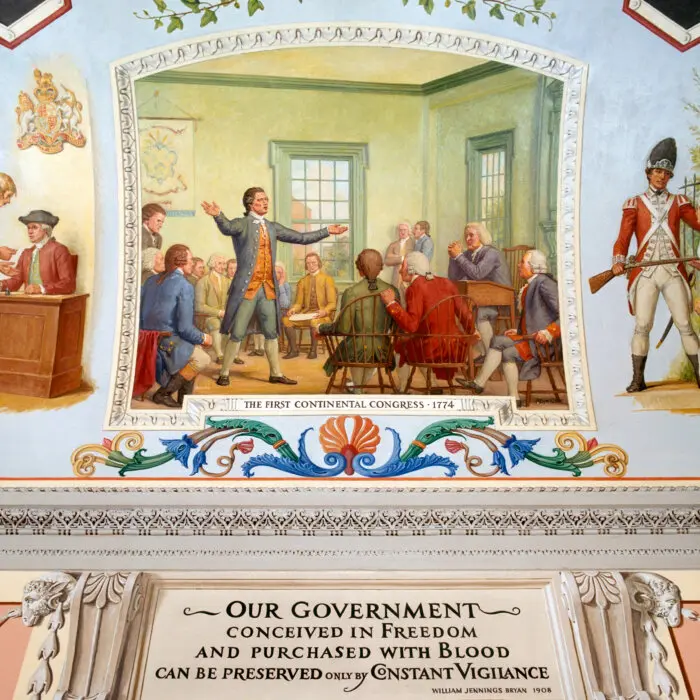
In response, delegates from 12 colonies assembled in Philadelphia, Pennsylvania on Sept. 5, 1774, for the First Continental Congress. Although denounced as an illegal body by the royal governors, Congress nevertheless stood as the colonies’ united front against Parliament. They created shadow governments, reorganized colonial militias, and petitioned King George III to intervene on their behalf.The Revolutionary War Begins
Tensions mounted like steam in a pressure cooker. Then, on April 19, 1775, violence erupted at Lexington and Concord. Employing guerrilla tactics, vengeful Americans ambushed and pursued the British redcoats, turning their retreat to Boston into a chaotic rout through a deadly gauntlet.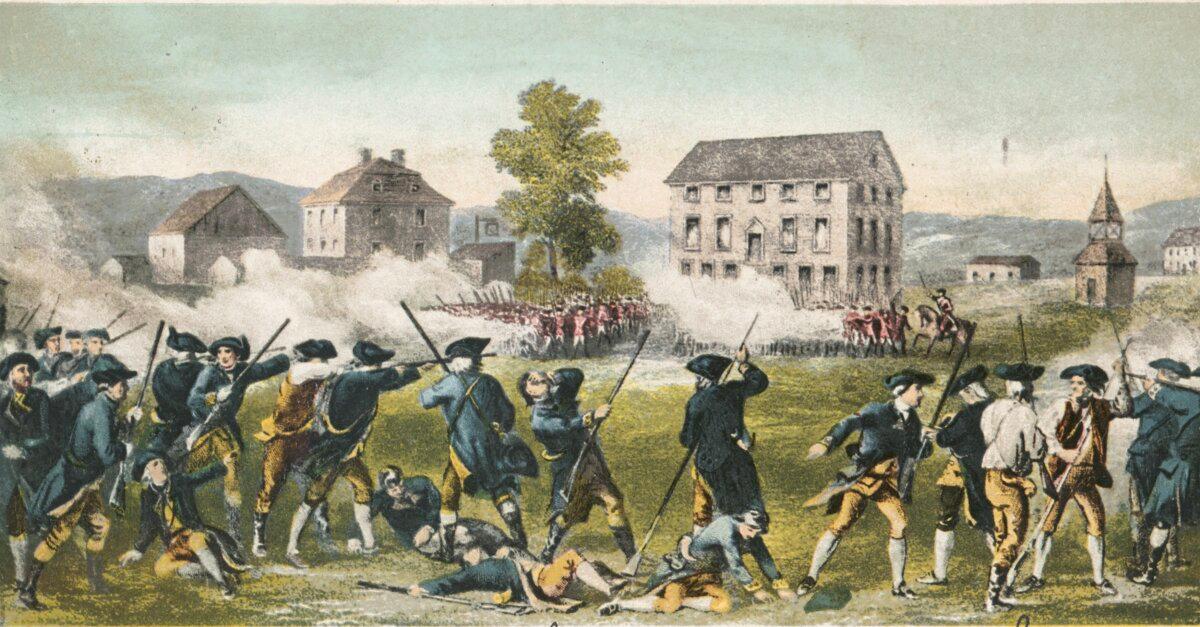
Second Continental Congress
On May 10, 1775, representatives from 11 colonies gathered at the Pennsylvania State House—known today as Independence Hall—for the Second Continental Congress. Delegates from Rhode Island and Georgia arrived a few days later. Most who had attended the First Congress returned, now joined by distinguished new members, including Benjamin Franklin, Thomas Jefferson, Philip Schuyler, and John Hancock.

Two notable absentees were Joseph Galloway and Isaac Low. Both would later collaborate with the British during the war and were exiled afterwards. By July, 65 delegates representing all 13 Colonies served in Congress. Invitations extended to the British colonies of East Florida, West Florida, Quebec, Nova Scotia, and St. John’s Island were declined.
War or Peace?
With New England already at war with Britain, Congress faced a dilemma not anticipated in the previous assembly: Should they seek peace and reconciliation, or prepare for war? Massachusetts Bay’s delegation feared a third option—abandonment—for dragging the other colonies into a conflict not of their choosing.The Continental Army
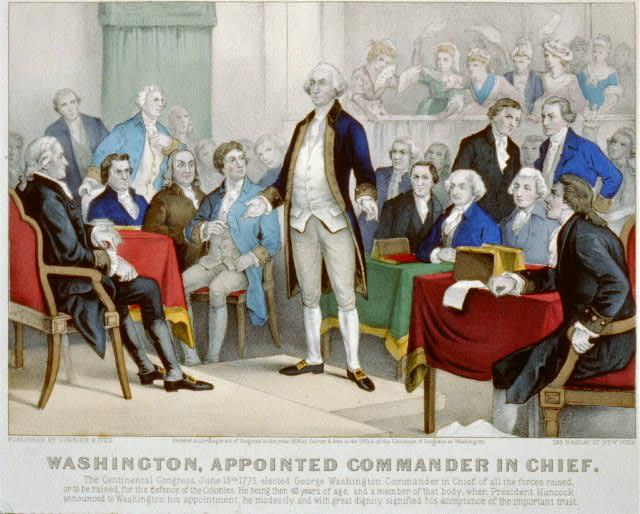
While debate raged in Congress, the Massachusetts Provincial Congress appealed for help, requesting that the Continental Congress adopt the New England militia armies besieging Boston and integrate them into a new, unified Continental Army. It would be a bold statement: that the fight against Britain was a struggle for all the colonies, not just New England.
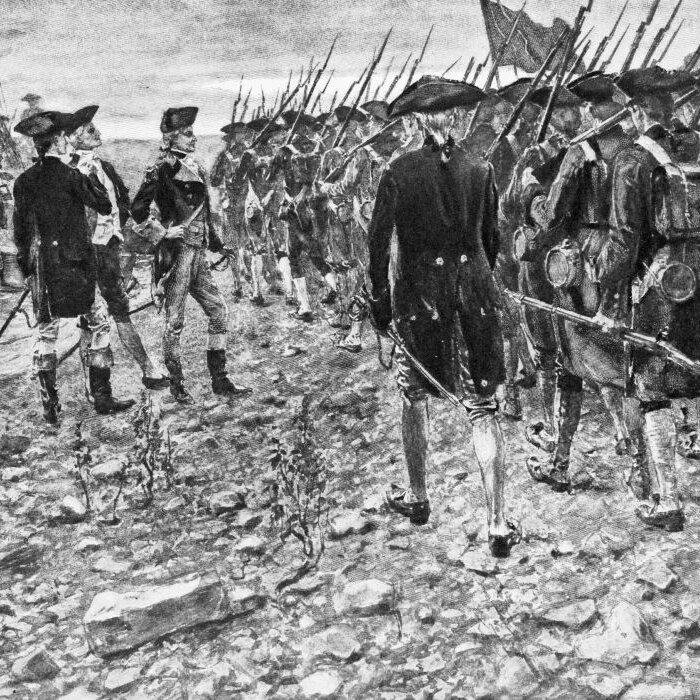
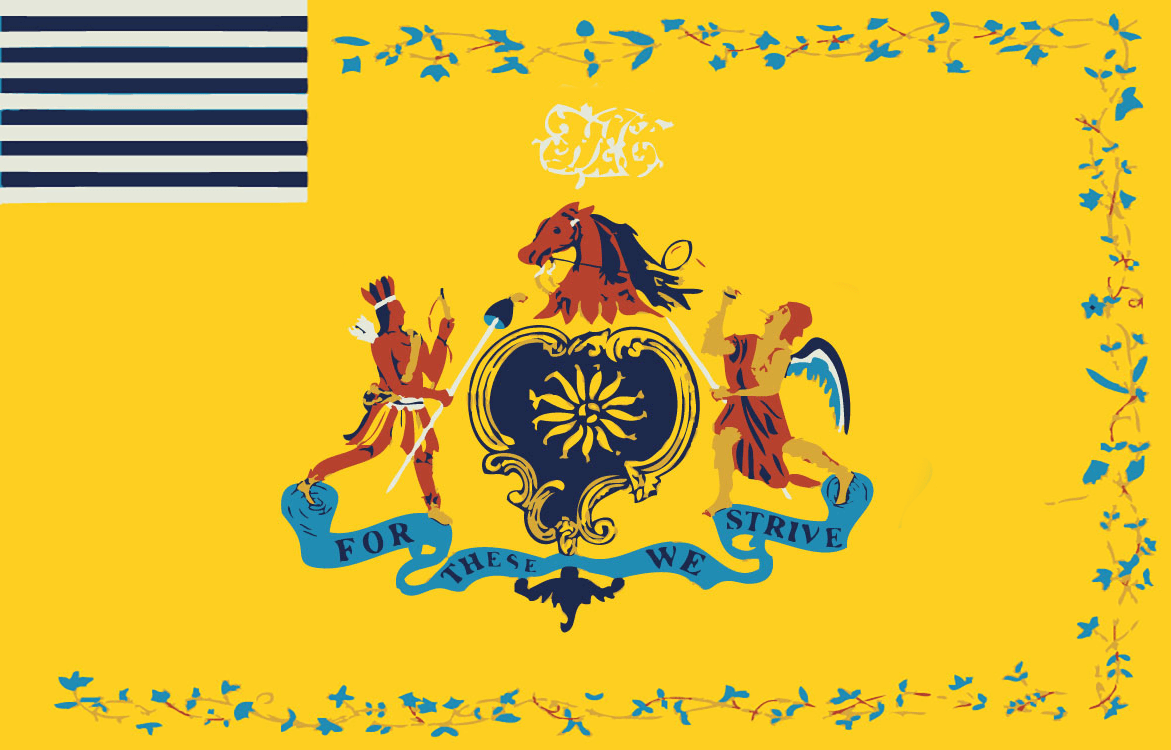
Accompanied by the Philadelphia Light Horse, Gen. Washington and his staff—including his second-in-command Maj. Gen. Charles Lee and secretary Lt. Col. Joseph Reed—departed Philadelphia on June 23, bound for Cambridge, Massachusetts Bay. Before their arrival, they received news of a major battle outside Boston. With over 1,500 total casualties—Britain suffering more than twice as many casualties as the Americans—the Battle of Bunker Hill proved to be the bloodiest of the Revolutionary War. It hardened hearts on both sides and quickly overshadowed Dickinson’s attempts at reconciliation.
The Olive Branch Petition
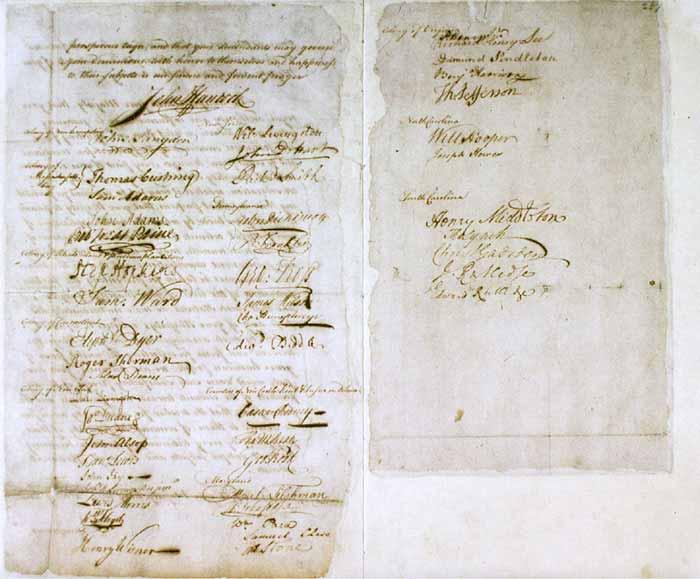
After Washington’s departure, Congress made one final attempt at peace. Drafted primarily by Dickinson, the Olive Branch Petition was a direct plea to the king, urging him to intervene on their behalf, repeal the Intolerable Acts, and end Parliament’s abuses. It affirmed loyalty to the crown, denied any intention of independence, and sought to end the crisis. The petition was adopted on July 5, signed on July 8, and entrusted to Richard Penn and Arthur Lee for delivery to London.Aftermath
On July 3, Gen. Washington assumed command of the Continental Army and was appalled to find it an unorganized, unhealthy, and undisciplined collection of poorly supplied militias. He now faced the impossible task of building an army from the ground up and forging it into a dominant force capable of waging war against Britain’s professional army. Privately, Washington wished he were back at Mount Vernon, Virginia.Meanwhile in London, Penn and Lee delivered the Olive Branch Petition to Lord Dartmouth, the secretary of state for the Colonies, on Sept 1. Dartmouth attempted to present it to the king, but King George III—still embittered by the bloodshed at Bunker Hill—refused to meet with him, rejecting the petition outright.
A week earlier, on Aug. 23, the king had issued his “Proclamation for Suppressing Rebellion and Sedition,” declaring the American colonies to be in open rebellion against the Crown. Then, on Oct. 27, he went further, accusing the insincere “Authors and Promoters of this desperate conspiracy” of waging war with the aim of establishing an independent empire. He vowed a “speedy end to these disorders” by unleashing Britain’s powerful land and naval forces—augmented, if necessary, by foreign allies—against the rebels and agitators.