Chuck Redfern was broadcasting live from WLAR radio in Athens, Tennessee, when listeners suddenly heard gunfire erupt in the background. He rushed outside to investigate.
Down the street, Thelma Wilson and her children huddled on the floor of their boardinghouse as bullets tore through the walls and shattered nearby windows. Their landlady raced to the scene and whisked the family to safety while gunfire echoed through the streets.
Moments later, a reporter with the Knoxville Journal followed three armed civilians—David Hutsell, Ken Mashburn, and Sam Simms—as they entered the boardinghouse. From a second-floor window, the men joined the firefight and opened fire with their rifles.
Machine Rule
During the first half of the 20th century, Tennessee Democrat Edward Hull Crump built one of the nation’s most powerful political machines. Like William “Boss” Tweed in New York and Richard J. Daley in Chicago, “Boss Crump” exercised enormous influence over his state’s legislature and governor.
In McMinn County, Paul Cantrell and Pat Mansfield enforced Crump’s rule. Cantrell was elected sheriff in 1936 and served three terms before winning election to the Tennessee Senate. Mansfield, his former deputy, succeeded him as sheriff. By 1946, the two men planned to swap offices, allowing each to retain power.
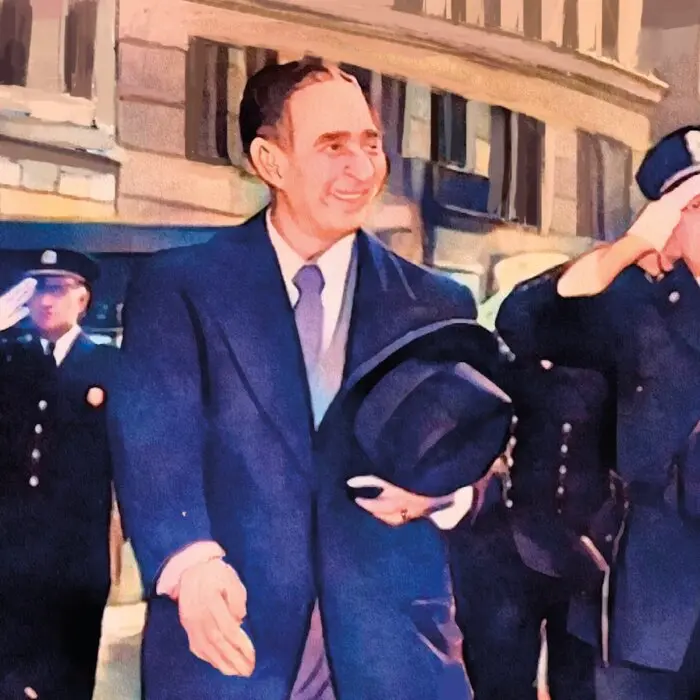
Their organization relied on fraudulent elections, compliance from local newspapers, intimidation, and extortion. Cantrell, Mansfield, and their deputies pocketed more than $335,291—about $4.5 million today—by collecting fees for every arrest. Deputies routinely stopped buses passing through the county and arrested passengers on dubious public drunkenness charges.
More than 3,500 men from McMinn County were activated for military service during WWII. Deputies frequently targeted these servicemen while they were home on leave because they often carried cash. Those who protested were beaten or arrested. One serviceman, Earl Ford, was fatally shot by Deputy George Spurling during an arrest.
When the war ended, many returning veterans who had endured the war’s bloodiest campaigns refused to tolerate the abuses of these “hired guns.” They organized the GI Non-Partisan League Ticket, commonly known as the GI Ticket. Their slogan was, “Your Vote Will Be Counted as Cast.” Endorsed by the local Republican Party, the nonpartisan, nonsegregated GI Ticket welcomed all veterans, regardless of race or religion, and fielded five candidates, including Knox Henry for sheriff.
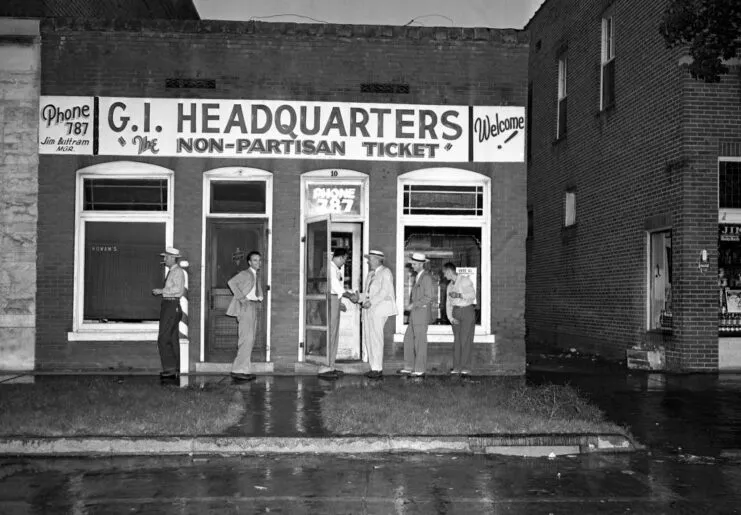
The Crump machine responded with threats and intimidation. Officials concealed poll tax receipt books, deliberately misspelled veterans’ names to invalidate their votes, and confiscated poll tax receipts from veterans who were arrested.
Election Day
When polls opened on Aug. 1, 1946, McMinn County resembled a community under martial law.Mansfield supplemented his force of 16 deputies with as many as 300 armed men. According to Chris DeRose’s “The Fighting Bunch,” the county was “flooded with deputies from Polk and other counties, municipal police, state police, prison guards, and even prisoners, including one who was released early from a rape sentence to work the McMinn election.”
These armed deputies hovered over voters as they cast ballots and aggressively confronted poll watchers. Bud Evans and Walter Ellis were arrested simply for requesting to inspect ballot boxes or challenging unregistered voters.
At the Dixie Cafe polling station, Deputy Minus Wilburn openly allowed unregistered and underage voters to cast ballots for Cantrell. When election judge Bob Harrill objected, Wilburn beat him with a club before arresting him. Poll watcher Les Dooley was threatened when he tried to intercede. Wilburn closed the polling place early and counted the votes without outside observers. Dooley was held at gunpoint to legitimize the tally.
Similar scenes unfolded in polling stations throughout the county. In Calhoun and Etowah, armed men delivered packets of marked ballots. In Niota, deputies initially refused to count the vote until an angry crowd forced them to proceed. When the ballots were finally counted, Knox Henry defeated Cantrell there by a margin of 696 to 249.
At the waterworks polling station, Tom Gillespie, a 53-year-old black farmer, attempted to cast his ballot for the GI Ticket. Deputy Windy Wise blocked him, used a racial slur, and declared, “You can’t vote here today.”
When Gillespie protested, Wise struck him with brass knuckles and shoved him outside. Gillespie immediately walked back into the polling place. Wise then shot him. The crowd watched in horror as the wounded Gillespie was dragged away to jail.
After Wise closed the polling site, deputies held GI election officials Shy Scott and Ed Vestal at gunpoint to lend legitimacy to the ballot count. When Mansfield and his deputies arrived, a heated confrontation erupted with GI leader Jim Buttram and Charles Scott, Shy’s father, pushing the standoff closer to violence.
Seeing reporters outside, Shy Scott suddenly lunged at the glass door to escape, with Vestal right behind him. His first attempt failed. On the second try, the glass shattered as both men tumbled outside. They held their hands up and quickly made their way toward the waiting crowd.
The Powder Keg Explodes
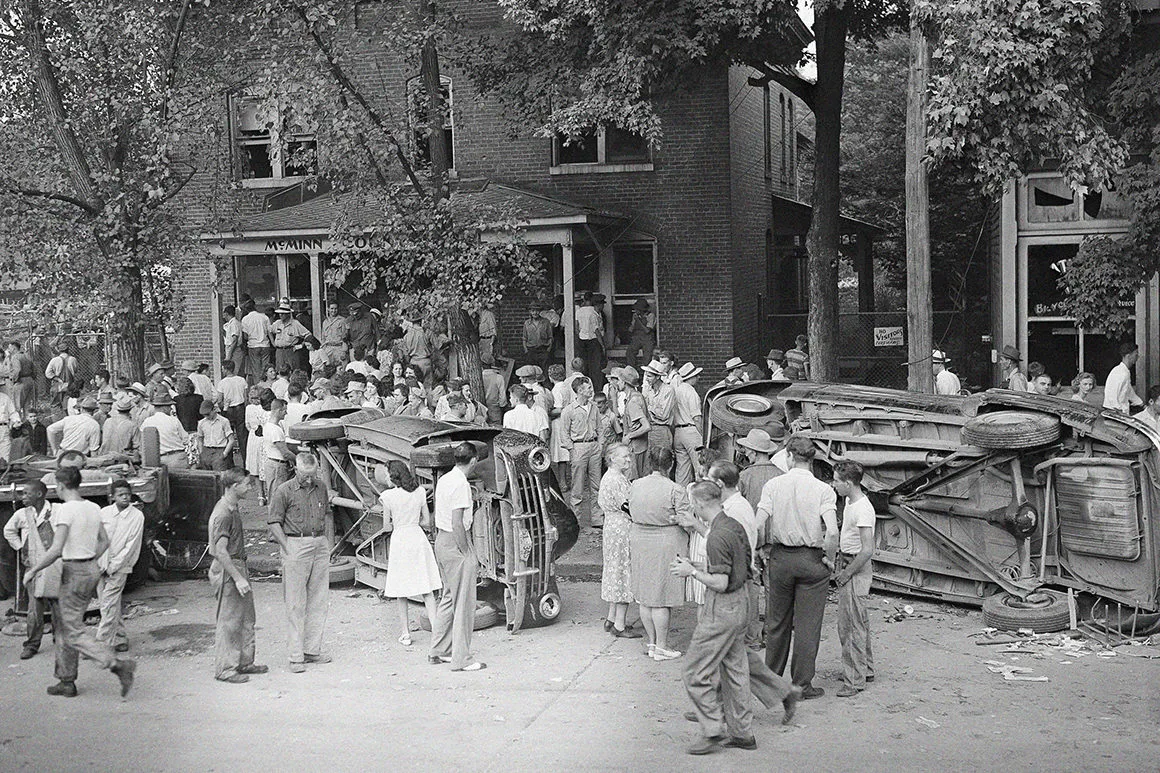
Convinced the election had been stolen, the townspeople reached their breaking point. Veterans rushed to retrieve their weapons. Several broke into the local National Guard armory and seized .30-caliber rifles, Thompson submachine guns, Colt .45 revolvers, and thousands of rounds of ammunition.
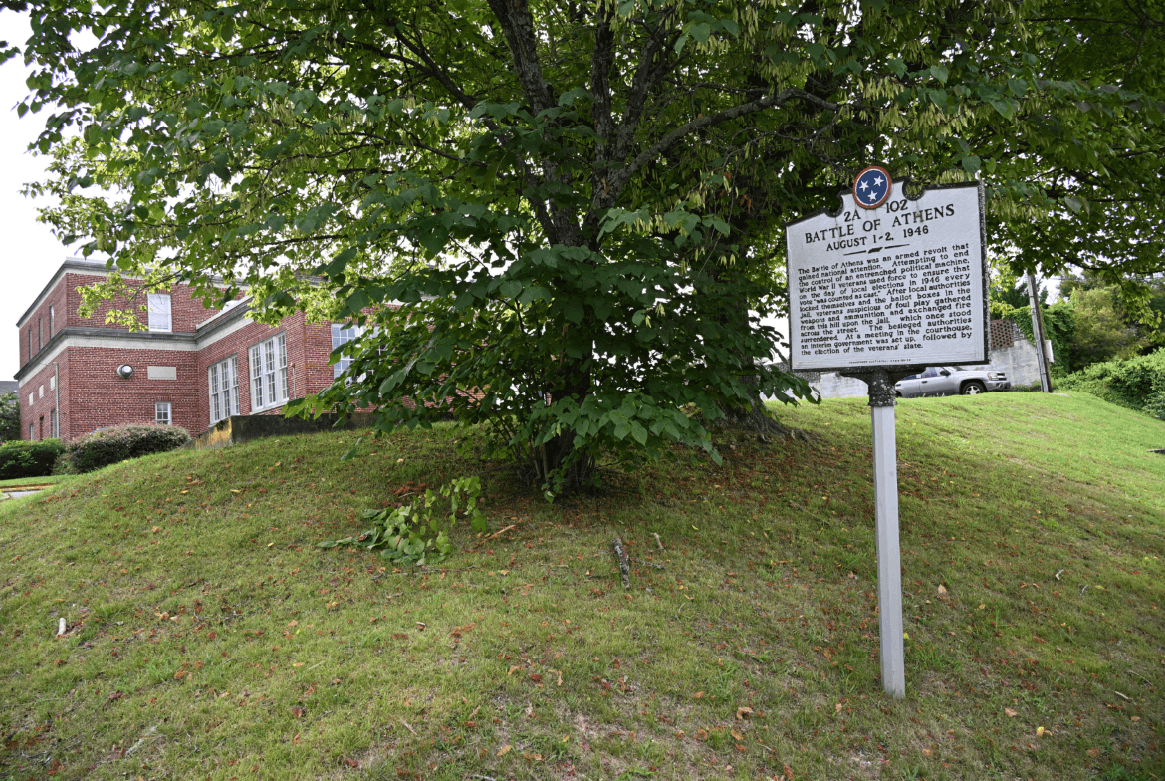
By nightfall, nearly 2,000 armed veterans and their sympathizers had converged on the jail. Their primary position was atop a 13-foot embankment along White Street, directly across from the jail.
After a tense exchange of words, veteran Bill White pulled back the bolt on his rifle. Hearing the familiar sound of a round being chambered, deputies standing outside immediately rushed inside the jail. Seconds later, gunfire erupted from both sides.

Townspeople dove for cover as bullets tore through the air, riddling parked police cars. White then shot out the streetlights, plunging the area into darkness. Veterans fanned out into buildings overlooking the jail, including the Wilson boardinghouse, where Hutsell, Mashburn, and Simms resumed firing from a second-floor window.
The trapped deputies called for reinforcements, including the National Guard. Others flushed GI Ticket ballots down the toilets. Constable Bryant Sharp was shot trying to escape.
The violence spread beyond Athens. Veterans and deputies faced off in Etowah, while armed civilians in Sweetwater thwarted an assassination attempt on Knox Henry by a posse led by Polk County Deputy Pryor Crowe.
Around midnight, word spread that the National Guard had been mobilized. Realizing time was running out, the veterans threw Molotov cocktails, but they proved ineffective.
At 2:30 a.m., the gunfire briefly ceased as an ambulance arrived to evacuate the wounded. Mansfield slipped into the ambulance and escaped, infuriating the veterans. They began hurling taped sticks of dynamite at the porch and roof. The explosions ripped through the building.
Stunned by the concussive blasts and leaderless, the deputies finally surrendered.
Veterans entered the jail and found ballots scattered across the floor and stuffed into toilets. Prisoners arrested on Election Day were released, while the deputies were locked inside the very cells they had used to hold others. Although both sides suffered injuries, no one was killed.
Once the remaining ballots were counted, the GI Ticket won by a landslide. Knox Henry was sworn in as sheriff of McMinn County.
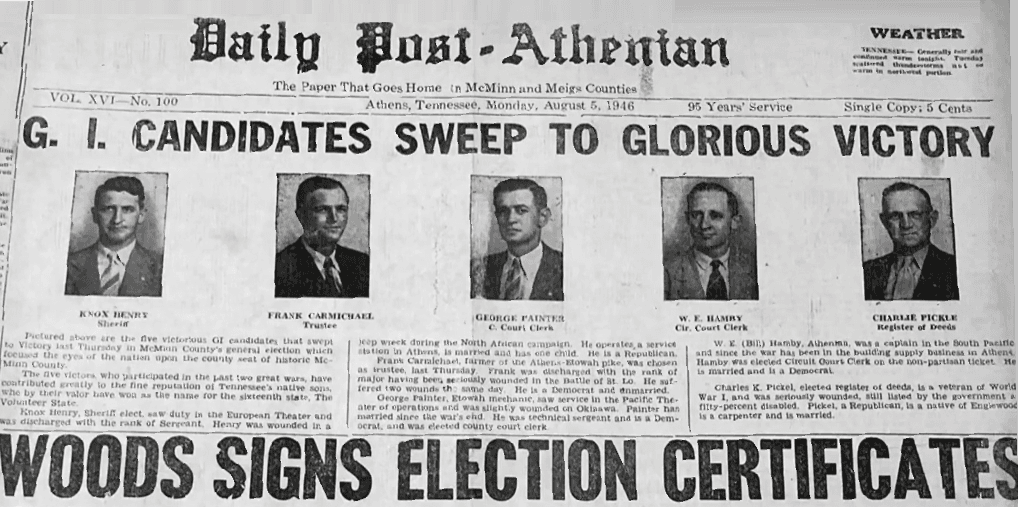
Aftermath
News of the uprising spread nationwide. Reform movements soon emerged in neighboring Tennessee counties, contributing to the eventual collapse of the Crump political machine.The McMinn County Historical Society and Archives and the McMinn County Living Heritage Museum provide research resources and exhibits for visitors wishing to learn more about the Battle of Athens.
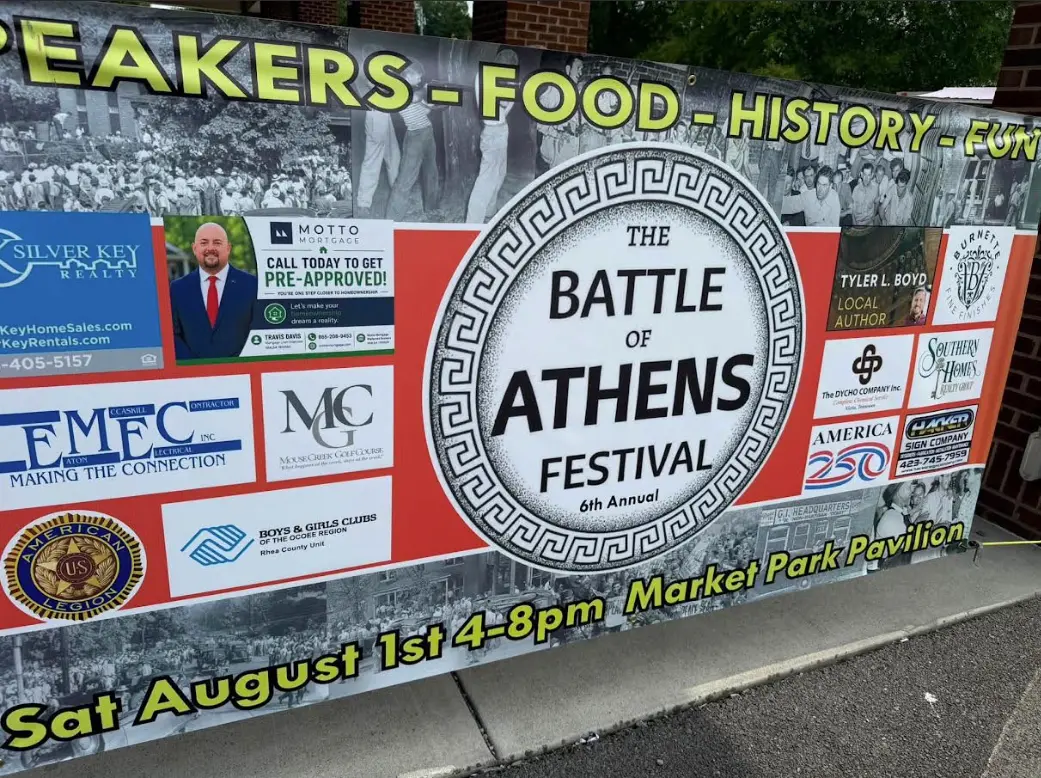
Each Aug. 1, the Battle of Athens Festival Committee commemorates the battle, honoring the veterans who, less than a year after defeating tyranny overseas, fought corruption here at home.