The United States publishes more self-help books than any country in the world. Books like Stephen Covey’s “The 7 Habits of Highly Effective People” and Dale Carnegie’s “How to Win Friends and Influence People” have become American classics. We’re also #1 in self-help podcasts, featuring everything from motivation to personal growth to better mental health.
From the colonial days to the present, Americans have looked for ways to better themselves, for tips and life hacks to solve problems great and small, to break bad habits and develop good ones, and to acquire more goods and money, self-confidence, peace of mind, and more—all with the goal of becoming happier.
Two Essential Questions
Arthur C. Brooks, writer, podcaster, and professor, has spent years studying happiness, what it means, and how people attain it. He teaches courses to students in happiness, has written books on it, and has researched the subject so thoroughly that he calls himself “the Happiness Professor.”


After introducing himself and his life’s work, Brooks said, “Let me define happiness. Happiness itself is a combination of enjoying your life, taking satisfaction in your accomplishments, but most importantly, knowing the meaning of your existence, the ‘why’ of your life.”
He goes on to say that for years he has been giving his students a little quiz to see if they know the meaning of their lives. It’s a two-question test which, as he says, you pass if you have answers, and you fail if you reply, “Those are questions I’ve never thought about before” or “Those questions don’t have answers.” Here are the questions:
“Why are you alive?”
“For what would you give your life?”
Brooks then says, “If you have answers to these questions, good. But if you don’t, that’s a problem because you’ll be at loose ends. You won’t know the meaning of your life.
“You’ll be unhappy.”
Data and Science
Brooks then directs his London audience to a graph showing the percentage of young adults who in a poll said, “My life feels meaningless.” The numbers effectively doubled between 1990 and 2020, up to 30 percent for young women and 20 percent for men. In an earlier online article, “Why Your ‘Perfect’ Life Feels So Empty,” Brooks noted corresponding results in a recent survey of happiness. He pointed out as well that symptoms of major depression had almost tripled from 2005 to 2019. After Covid, Brooks wrote, the problems only worsened.
Not only that, but a sizable percentage of those who said their lives were without meaning were the strivers, some of the best and brightest of their generation. They were pursuing success and accolades, but with no real idea of the ultimate point to that race.

In his address, Brooks explains the complex relationship between the left and right hemispheres of the brain, the former handling the “how-to and what of life,” the latter focused on simple questions with complex answers, like love, meaning, and mystery. Brooks then contends that our cell phones and screens appeal to the left hemisphere, which leaves the right hemisphere largely ignored. Here, he says, is one reason why so many more people these days, especially those who grew up with cell phones, have lost their way. Immersed in their screens, they have tamped down input from the right hemisphere in favor of the left.
Brooks concludes by citing what society with its technological baggage regards as the formula to success: Love things, use people, worship yourself. This, he says, is the counterfeit formula. To put it another way, the machines we’re using are turning us into machines of a sort.
According to Brooks, the correct formula for a meaningful and happy life radically reframes these conclusions: Use things, love people, worship the divine.
Back to the Two Questions
If we read Brooks’s first question carefully, we see that it’s restrictive. It doesn’t ask us to know the meaning of life in general, but the meaning of our own lives.
Brooks relates the story of his son Carlos, who was adrift during high school, spending hours daily scrolling through his phone. Encouraged by his father, Carlos skipped college and instead worked for months on a farm, then joined the Marine Corps. By age 23, he was married, had a son, and had developed a stronger religious faith and the conviction that he was meant to serve others, beginning with his family.
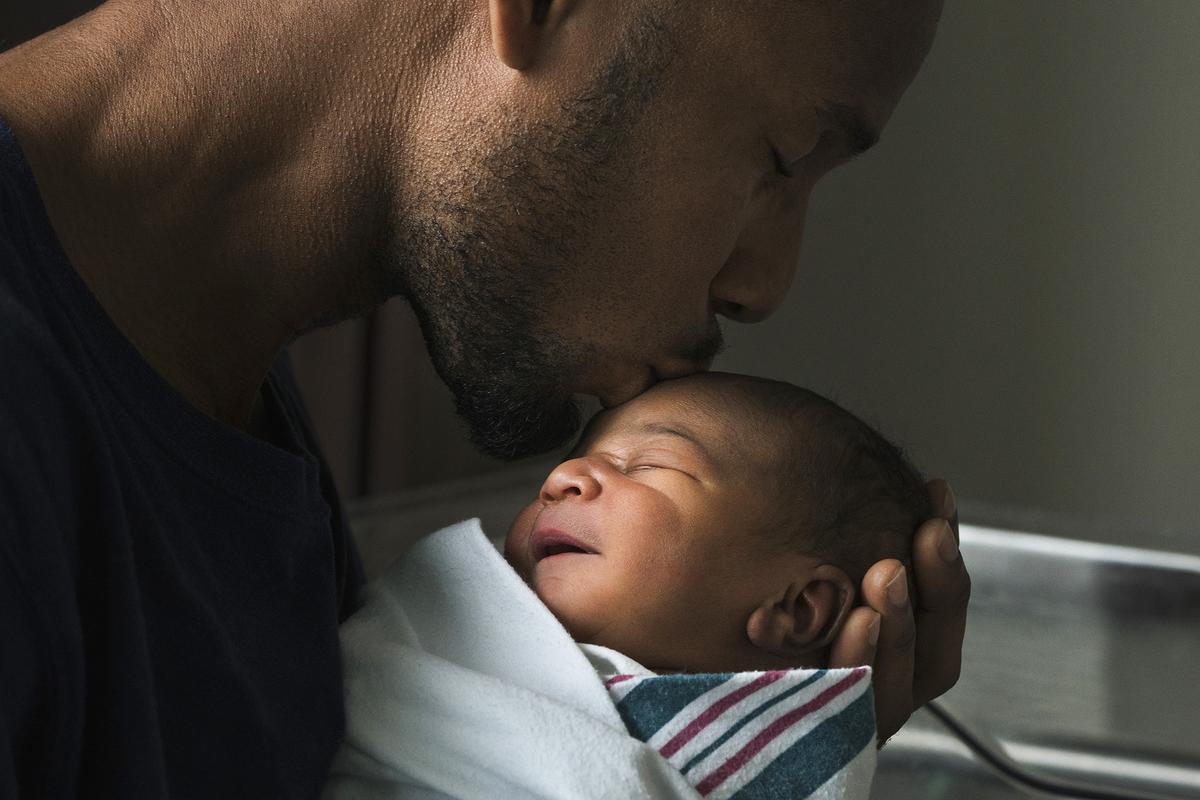
For those who have trouble answering “Why are you alive?” it might be useful to first tackle the second question: “For what would you give your life?” A husband or a wife might willingly and even happily—as Brooks puts it—die for a spouse. Most parents would die for a child. Soldiers throughout history have given their lives for their comrades. We read stories of people who risked or lost their lives saving strangers from fire or drowning.
Determine who or what we would die for, and we’ve taken a long first step toward affirming what we live for.
Knock, and a Door Will Open
In his address, Brook tells his audience that in our age of emptiness and screens, raising these two questions and intentionally seeking answers can profoundly impact the young. That constructive collision pushes the seeker to reengage with the right brain and enter into its realm of wonder and mystery, the essence of philosophy, poetry, and faith. Asking the questions, particularly that first one, is almost as important to a meaningful and truly happy life as answering them.
When I mentioned the two-question quiz to a writer friend less than half my age, she instantly jumped to this same conclusion. “I have lots of friends who never ask those questions,” she said. “They never ask what they’re doing here or what’s the point. They just glide along through their days without asking why.”
In his work as a professor, Brooks daily sees the damage done even to bright young people—the depression, the anxiety, the emptiness—who’ve never contemplated their ultimate purpose in life. For them, and for the rest of us, the questions can act as a pair of reading glasses not for print, but for better interpreting ourselves and the people and events around us.
Consequently, that quest can enrich our lives. In his newly published book “The Meaning of Your Life: Finding Purpose in an Age of Emptiness,” Brooks speaks of looking for his own life’s purpose while hiking the Camino de Santiago in Spain, part of that ancient network of pathways and roads followed by countless pilgrims over the centuries to the shrine of St. James, a hike that remains extraordinarily popular today. Regarding that trek, Brooks writes, “If you want to find the meaning of your life, you must treat life like the Camino—a pilgrimage that opens your mind and heart. When you start living in this way, your life will take on an openness and a vulnerability. That’s when your meaning will find you.”
Pursue meaning, and you’ll find true happiness.