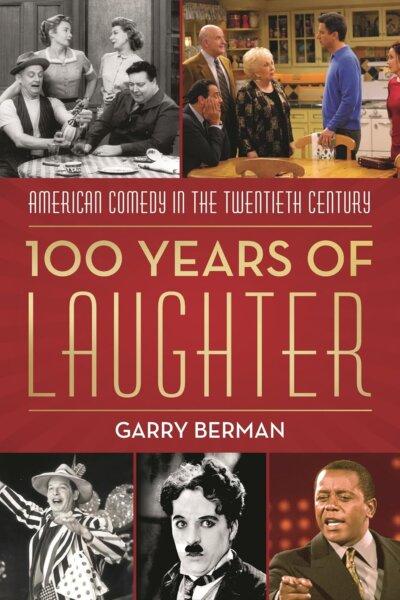
Could any century be properly defined as the funniest of all time? Garry Berman puts forth a convincing case for epochal hilarity in “100 Years of Laughter: American Comedy in the Twentieth Century.”
In the Theaters
Vaudeville was a live variety entertainment consisting of multiple acts on a single bill. It evolved over the latter half of the 19th century, and by 1903, there were 2,000 vaudeville theaters across North America. Comedians were often the vaudeville headliners. Those who ascended into Broadway and Hollywood stardom included W.C. Fields, Jack Benny, and the Marx Brothers.Running parallel to vaudeville was burlesque, which enabled comics to use “blue” material forbidden on the vaudeville stage. These ribald jokesters would share the bill with scantily-clad women who teased the mostly male audiences with bump-and-grind routines.
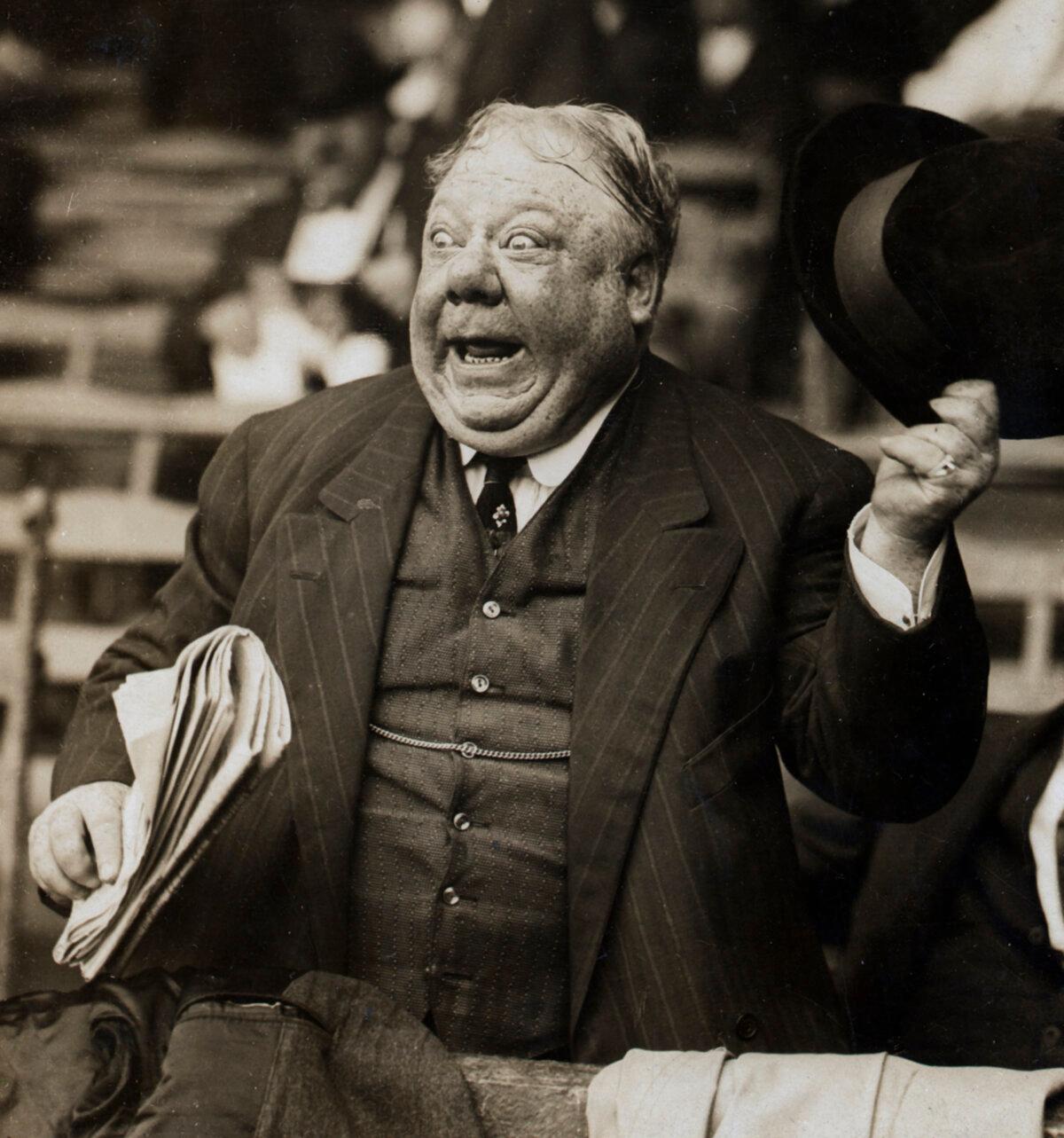
The early years of the 20th century also brought the rise of the silent movies. Berman recalls the rotund, rubbery-faced John Bunny as the screen’s first comedy star, beginning with the 1910 “Jack Fat and Jim Slim at Coney Island.” Alas, Bunny’s 1915 death at the age of 52 came at the peak of his popularity. Today, most of his films are considered lost.
In the Home
When radio took control of the airwaves in the late 1920s, comedians were front and center at the medium’s premiere. Berman writes that funnymen Weber and Fields and Will Rogers starred on NBC’s inaugural radio network broadcast in November 1926.But the rise of radio created a death knell for vaudeville. As George Burns observed, “People didn’t have to leave their homes to be entertained.” At the same time, sound technology was incorporated into film production, and many of the top vaudeville comedy talents went to Hollywood. As the 1930s rolled in, vaudeville slid into a fatal decline.


The Postwar Period
In tracing the years from the World War II era to the century’s conclusion, Berman covers a great deal of pop culture history that has already been the subject of too many books and documentaries. But he also serves up some nifty surprises.He is very generous in recalling Virginia O’Brien, who specialized in deadpan comic musical interludes in MGM films. Berman also pays due to “Mary Kay and Johnny,” a 1947 production on the long-defunct Dumont television network that is considered the first sitcom broadcast on a TV network in the United States. Sadly, only one episode of this series survives.
Of course, television would never have taken off with such gusto in the late 1940s had it not been for the raucous comedy of Milton Berle’s “Texaco Star Theater.” Even Berle’s professional rivals, Jackie Gleason and Bob Hope, credited his wild comedy antics with putting television in America’s living rooms, displacing radio as the beloved home entertainment medium.
Times Were A-Changin’
Of course, comedy not only survived that mid-1950s “crisis,” but it also continuously reinvented itself over the decades. In the 1960s, political subjects and language restrictions were breached in stand-up comedy clubs, record albums, and movies.Television was hesitant to get with the times, as witnessed in 1970 when CBS would not allow Mary Tyler Moore to play a divorcee in her eponymous sitcom because the network feared that it was too controversial.
However, one year later, the CBS series “All in the Family” broke taboos by addressing thorny subjects with aggressive humor, delighting audiences and widening what was acceptable for small-screen comedy.
There are a few gaps in Berman’s offering. There is no consideration of the Chitlin’ Circuit that gave black comics a stage during the Jim Crow years. Nor is there mention of regional country-style humor that found a national following via “Hee Haw” and would later fuel Southern stand-up comics like Jeff Foxworthy and Bill Engvall.
However, Berman offers cogent consideration of quirks in this genre, such as why there are no comedy teams nowadays and why the Americanization of British sitcoms scored more misses than hits.
There is also a fascinating consideration of how cue cards took over television comedy, especially during “Saturday Night Live” when ensemble players conspicuously paused in their line readings while the cue cards were being changed.
“100 Years of Laughter” is a fun book about a fun subject. Readers will certainly come away with an urge to look up vintage footage and recordings to relive the jollity of years passed.