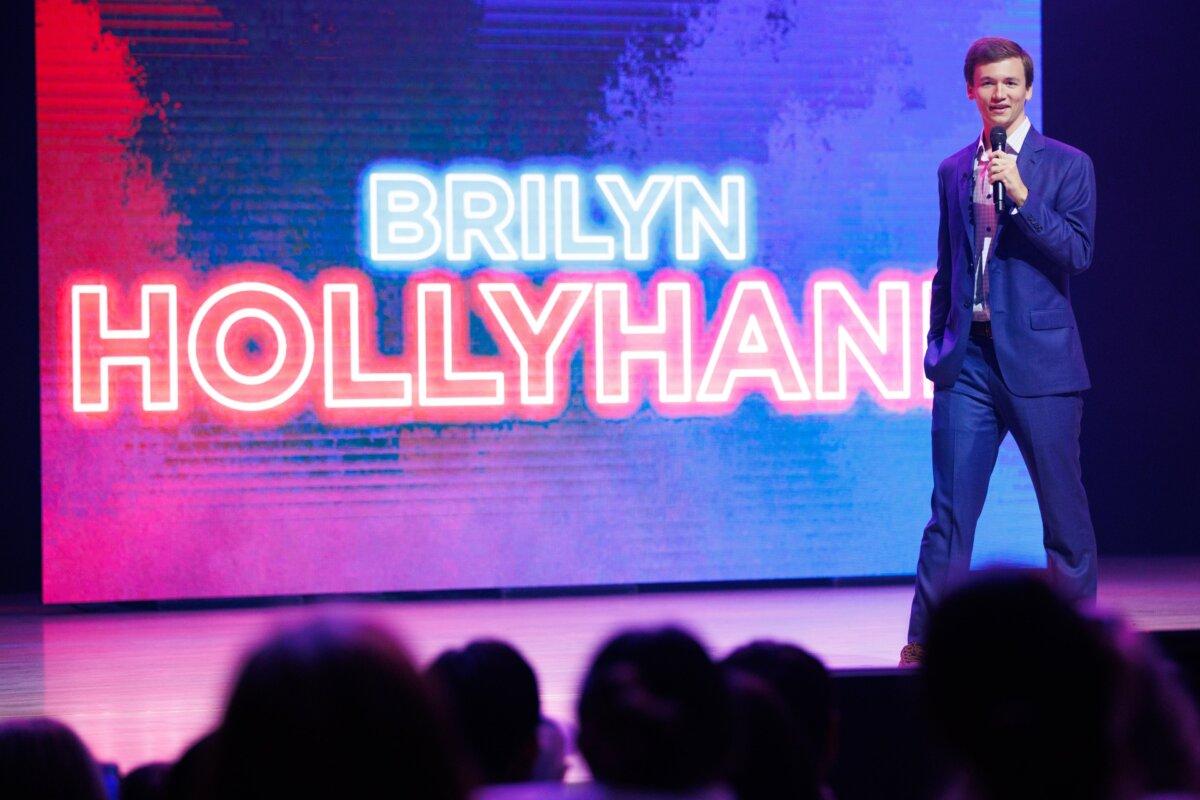
Twenty-year-old Brilyn Hollyhand is one of the most ubiquitous conservative influencers in today’s American political scene. He appears frequently on cable television news shows, hosts prominent figures on his podcast, and advised Donald Trump’s 2024 presidential campaign on attracting young voters.
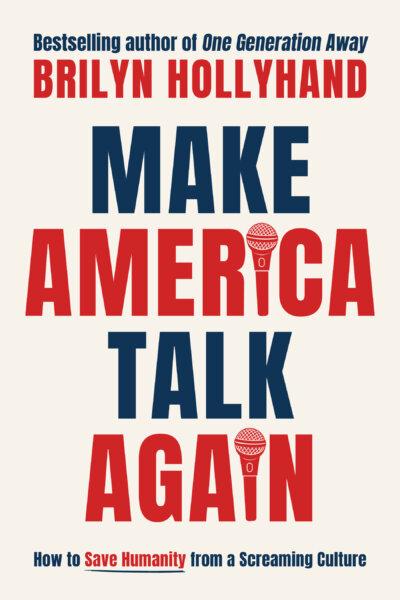
In 2024, he authored his first book, “One Generation Away: Why Now is the Time to Restore American Freedom,” which cataloged his political talking points. His follow-up book, “Make America Talk Again: How to Save Humanity From a Screaming Culture,” has just been released. As a full-time student at Alabama’s Auburn University, yes, he deserves an “A” in multitasking.
The new book carries the fatalistic subtitle “How to Save Humanity from a Screaming Culture.” Whether the young author is the white knight who can rescue humanity remains to be seen, but his book offers an earnest consideration of uncivil behavior in political discourse.
Fear of Speaking
Throughout the book, Hollyhand warns his readers that silence is not golden. Instead, he opines that too many people stay quiet on political matters because they are afraid to offer thoughts that could run afoul of those around them.Whether it is at the dinner table, in the classroom, or in the workplace, Hollyhand states that an awkward silence designed to avoid confrontation creates more harm than good. “When people stop talking, they do not stop disagreeing,” he writes. “They stop trusting.”
In the author’s view, this can result in one of two outcomes. It could force the individuals to withdraw further into themselves because they are afraid of generating hostile responses.


Charlie Kirk’s Way
Hollyhand’s philosophy unfolds in the shadow of the example set by Charlie Kirk. The slain conservative activist was a mentor and friend to the author, who embraces Kirk’s ability to mitigate cancel culture with cordial conversation.Kirk’s willingness to engage people with different views, coupled with his ability not to obsess over unpleasant protests against his presence, is behavior that Hollyhand seeks to emulate in his influencer activities.
Whether Kirk changed minds over political issues is not the issue, the author insists. Instead, he considers Kirk’s triumph as being able to listen and respond without spreading rancor, thus canceling cancel culture.
Hollyhand acknowledges his own effort to build bridges to the other side of the political spectrum with Harry Sisson, a Gen Z influencer who advocates progressive positions.
The Applause Culture
But engaging in private goodwill chats isn’t the full solution, Hollyhand adds. He blames the media for demanding that opponents act as enemies. As a result, this cleaves the society into separate factions where people only interact with the like-minded.In this state, the author observes, people lose the ability to defend their thoughts maturely because they are surrounded by everyone who always agrees with them. Complicating this situation is the discomfort some people experience in having their opinions questioned.
Hollyhand diagnoses an “applause culture” where a narcotic-level dependency on affirmation forces people to constantly seek the approval of those with the same views. As an example, he calls out politicians who routinely change their platforms to maintain the guise of popular support.
“There is nothing inherently wrong with recognition,” he writes. “The danger comes when recognition becomes the reason rather than the result.”
Those who buck that tide can risk being seen as pariahs. Hollyhand recalls hearing classmates claim they were ashamed to be Americans. This was not due to historic or current injustices, but “because that posture felt socially safe.”
Is there a solution to this toxic environment? Hollyhand does not supply in-depth antidotes, although he predicts the massive number of young adults could create a change for the better. To back this, he cites surveys that claim Gen Zers abhor authoritarianism and value freedom. It is an optimistic view, although it might be too early to judge whether it is justified.
“Make America Talk Again” has a few problems that should have been addressed in the editing process. Although Hollyhand’s writing style is mostly positive and supportive, he undercuts his message of civil discourse by slamming the “young, ignorant, foolish voters” who elected Zohran Mamdani as mayor of New York City.
He also puts too heavy an emphasis on Christian teachings as the key to solving many of the problems he cites. While this is obviously well-intentioned, it creates a detour from political science into proselytizing.
Nonetheless, Hollyhand is an intriguing and articulate young force of energy. “Make America Talk Again” will most certainly have its own follow-up book, and there is no doubt that Hollyhand will have plenty to talk about following the next election.