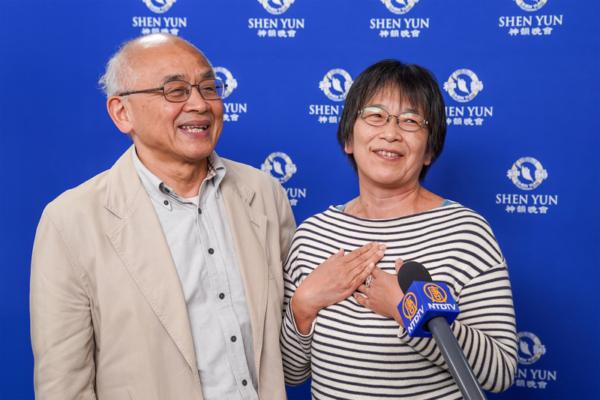
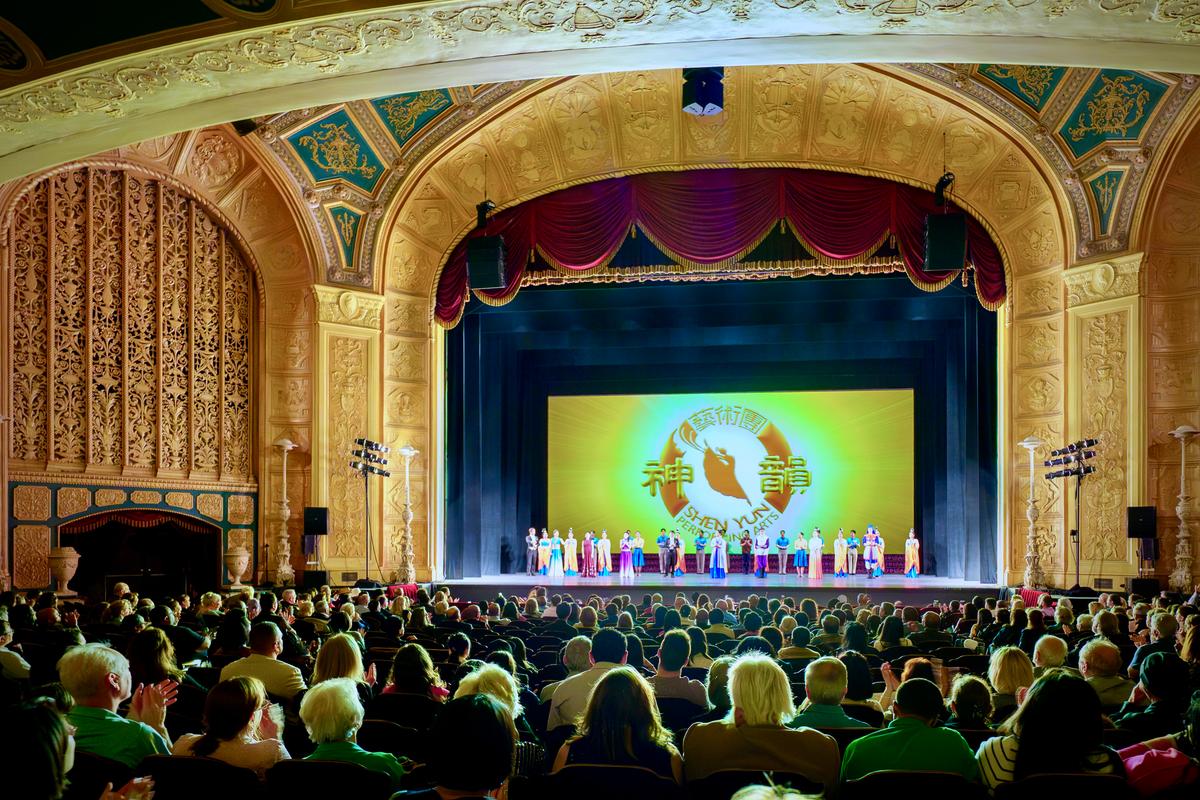
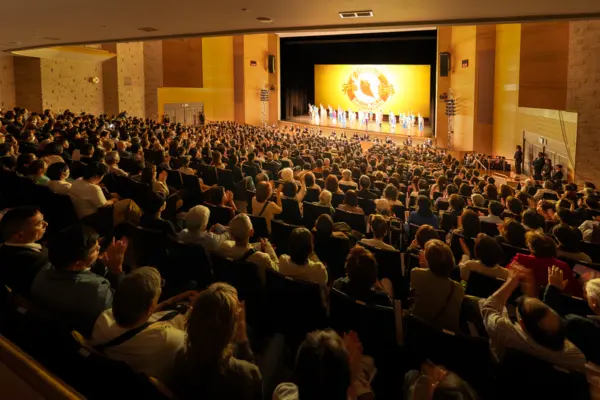
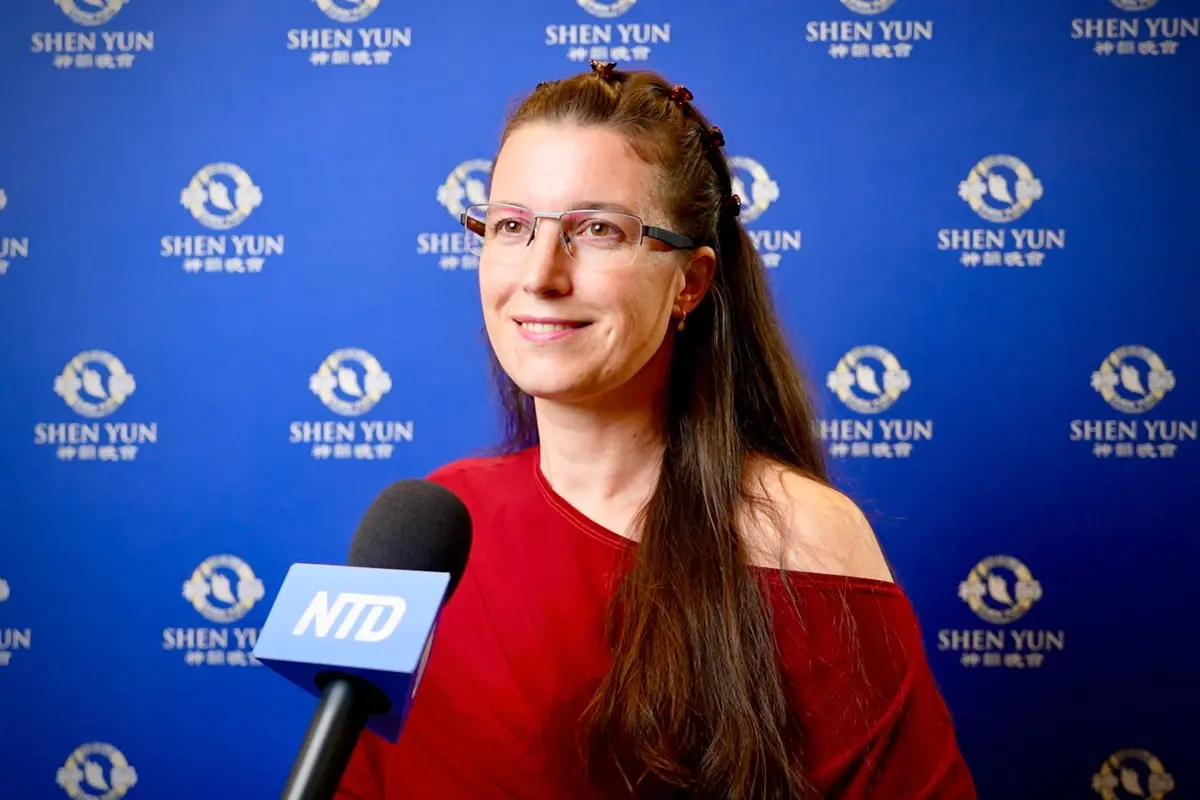
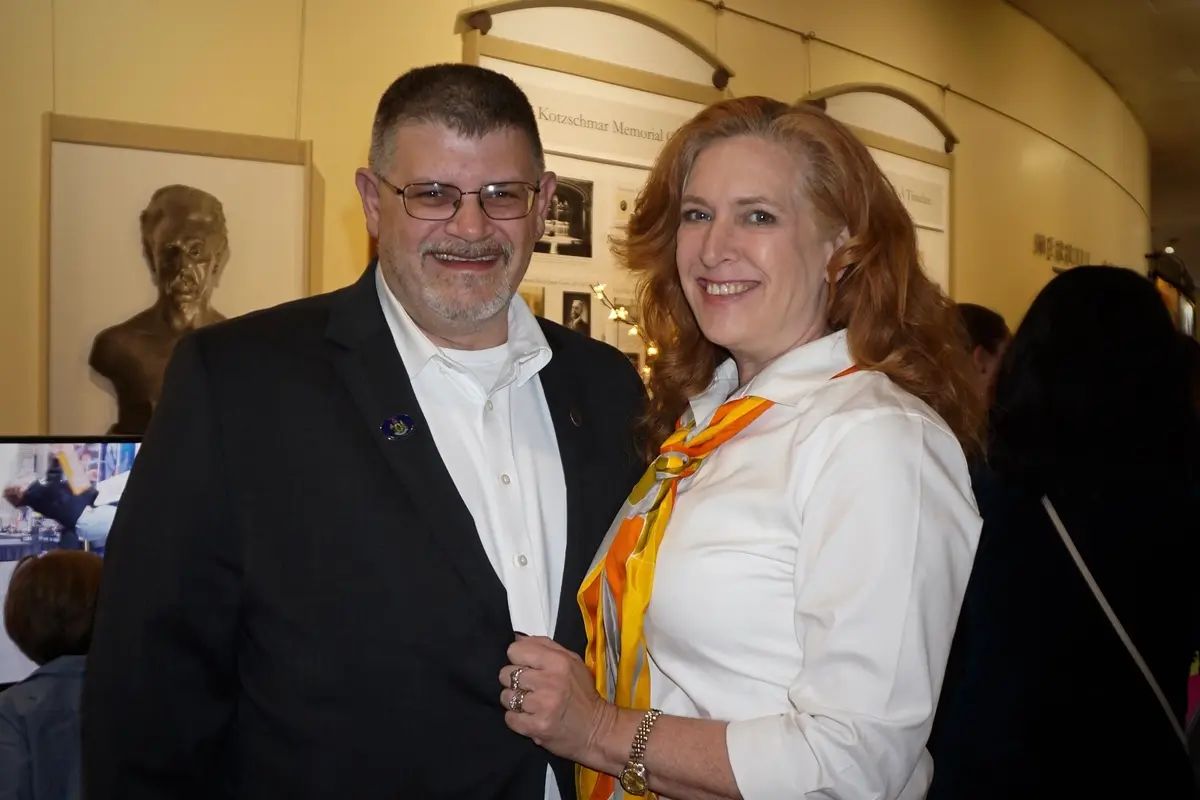
Reflecting on the performance, Mr. Shoji described it as both visually stunning and culturally rich. “It was a magnificent display of China’s ancient, traditional dance forms, a beautiful production that harmonizes very well with a modern aesthetic. I’ve been wanting to come see this performance for several years now, and I’m so glad I finally had the chance to attend today,” he said.
Speaking about the ‘Water Sleeves’ dance, he added, “The ’Water Sleeves’ dance is a traditional dance that has existed in China for ages. However, this was my very first time seeing it performed live. It really gave me a deep appreciation for the elegance of ancient Chinese dance.”
For Mrs. Shoji, the experience carried profound meaning. “This indeed was a performance carrying profound significance. Although this was my first time seeing classical Chinese dance, I really enjoyed watching it. Furthermore, the sincerity with which they are presenting such a significant performance—and specifically, the way they are protesting against the Chinese Communist Party—came across very powerfully, and it made me want to offer them my support,” she said.
Mrs. Shoji highlighted the vital importance of preserving tradition. “I have always believed that traditional culture serves as the vital pillar, upholding people’s moral compass and inner spirit. I practice the Way of Tea—the Japanese tea ceremony—and I also teach it to others. In fact, the Way of Tea was originally introduced to Japan from China a long time ago. Yet, modern-day China seems to have forgotten these traditions. Ever since the Cultural Revolution, the country has taken on a completely different form. We, Japanese people, feel a deep sense of sorrow over this. We are left wondering, ‘Why did they let such magnificent Chinese philosophies and traditions slip away?’”
She continued, “With that sense of reflection in mind, we in Japan are striving to pass on our own traditional culture to the younger generation. That is why, while continuing my own studies in the Way of Tea, I also dedicate myself to teaching it—specifically to high school students.”
Mrs. Shoji echoed his sentiments. “The erhu—that traditional instrument—was wonderful. The tone was truly exquisite—such a beautiful, rich timbre with great depth. And the singing was magnificent as well. The soprano’s singing was also superb.”
The couple was also deeply moved by dance dramas depicting the Chinese communist regime’s ongoing persecution of Falun Gong.
Mr. Shoji noted, “Falun Gong is indeed being persecuted—which began during the era of Jiang Zemin. This was truly heart-wrenching.”
Mrs. Shoji added, “It is truly remarkable that they chose to present that historical reality so openly on stage for everyone to see. I was simply awestruck—amazed that they would go to such lengths to tell the story. It really struck me how deeply committed they are to this cause. It actually brought me to tears.”
She then expressed her hopes for the future. “I hope they continue to present the truth to younger generations. I also hope that they continue to share the true magnificence of China with the world.”
Speaking about Shen Yun’s broader impact, Mrs. Shoji said, “The Chinese people themselves are finally raising their voices. The younger generation is striving to reclaim the true China—they are making earnest efforts toward this goal. They tirelessly and wholeheartedly continue to convey this message to the world.”
She concluded with a heartfelt reflection: “China currently finds itself in a highly challenging situation—I often find myself pondering: ‘How did things arrive at this point?’ ‘Why have they cast aside the noble philosophies of figures like Confucius?’ The influence of Confucianism took root in Japan—evident in values such as cherishing one’s father, respecting one’s elders, and helping those in need—yet modern China seems to have lost these virtues.
“Nevertheless, through this performance, you demonstrate that, ‘This is not how it should be—far from it!’ You convey this message in a way that is clear and easy for everyone to understand. I am convinced that going forward, the world will come to understand this truth and recognize the genuine face of China. While watching today’s performance, I felt strongly that this is precisely the message you are striving to convey.”