On a still, hot summer day, with vast cornfields lining both sides of a long stretch of a rural roadway in Berks County, Pennsylvania, a hand-painted sign at the entrance to an old farm piqued my interest. It read: “Covered Bridge Farmstand, Open Year-Round, 10-6; Artisan Cheese, Fresh Produce, Pasteurized Meats, Specialty Mushrooms, Sourdough Bread, Organic Eggs, Local Honey.”

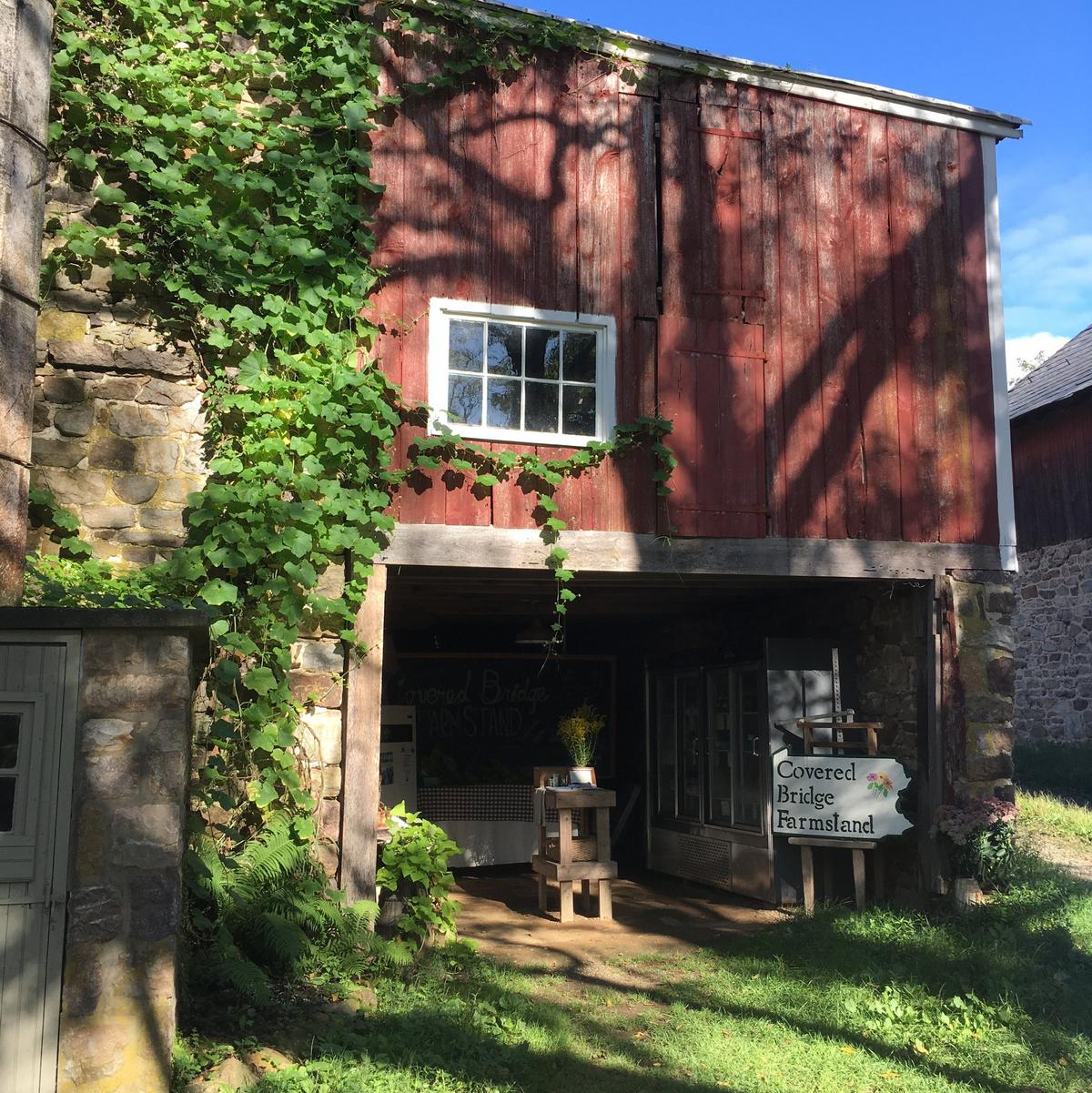
The sign for the Covered Bridge Farmstand is a welcome sight to hungry travelers. Courtesy of Valley Milkhouse Cheese
Though it seemed somewhat invasive to enter the farm’s gravel driveway, pass the house, and meander to a parking area in front of the barn, what awaited me was worth any apprehension. The 18th-century stone barn’s lower bay has an open niche with a glass-fronted cooler, its shelves packed with charming, floral paper-wrapped cheeses, as well as all the goodies advertised on the roadside sign. Covered Bridge Farmstand is an honor-system business. Visitors peruse, choose, and pay by cash or Venmo.
Although the specialty Valley Milkhouse Cheeses are the draw due to their unique flavor profiles and the fact that they are made on premise in the barn’s milkhouse, the other offerings from local growers and producers don’t disappoint. Yet, overall, it’s the setting of the place—the “sense of place,” as Henry David Thoreau penned—that stirs the sensibilities of history lovers and the agrarian-minded.
“It [the farm] speaks to the past,” said the current owner, Tom Stokes.
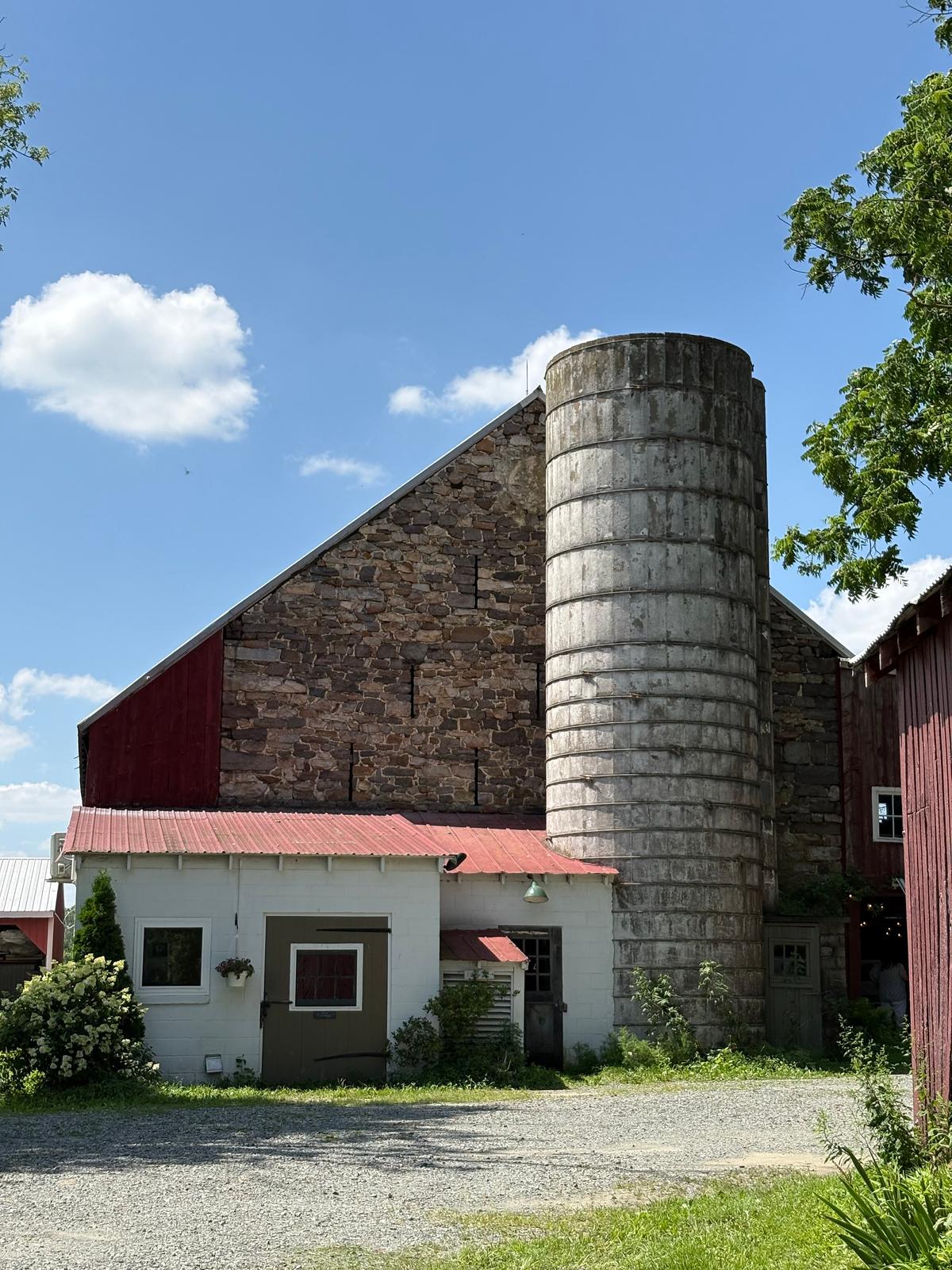
The barn and accompanying outbuildings make up this humble cheesemaking business. Courtesy of Valley Milkhouse Cheese
Preserving History and a Way of Life
Built in the 1700s and operated as a farm and dairy for more than two centuries, the barn and surrounding property is known as the Yoder Cleaver Farmstead due to its original owners: first the Yoder family and then the Cleaver family. Stokes, an architectural historian by choice, is a native Pennsylvanian with an appreciation for and interest in the age-old fieldstone homes and barns. These dot the state’s rural landscape, especially in places like Berks County, which includes Oley Township.“The whole township is listed as a historic district by the National Register of Historic Places [since 1983],” Stokes said.

To save the deep-rooted structures and give them new life, Stokes purchases some, restores and maintains them, and then offers space for lease. He purchased the Yoder Cleaver Farmstead 12 years ago and moved into the farmhouse. Around a year later, Stefanie Angstadt, who lives “down the road,” asked him if she could lease the barn’s milkhouse to operate a creamery, which she eventually called Valley Milkhouse Cheese.
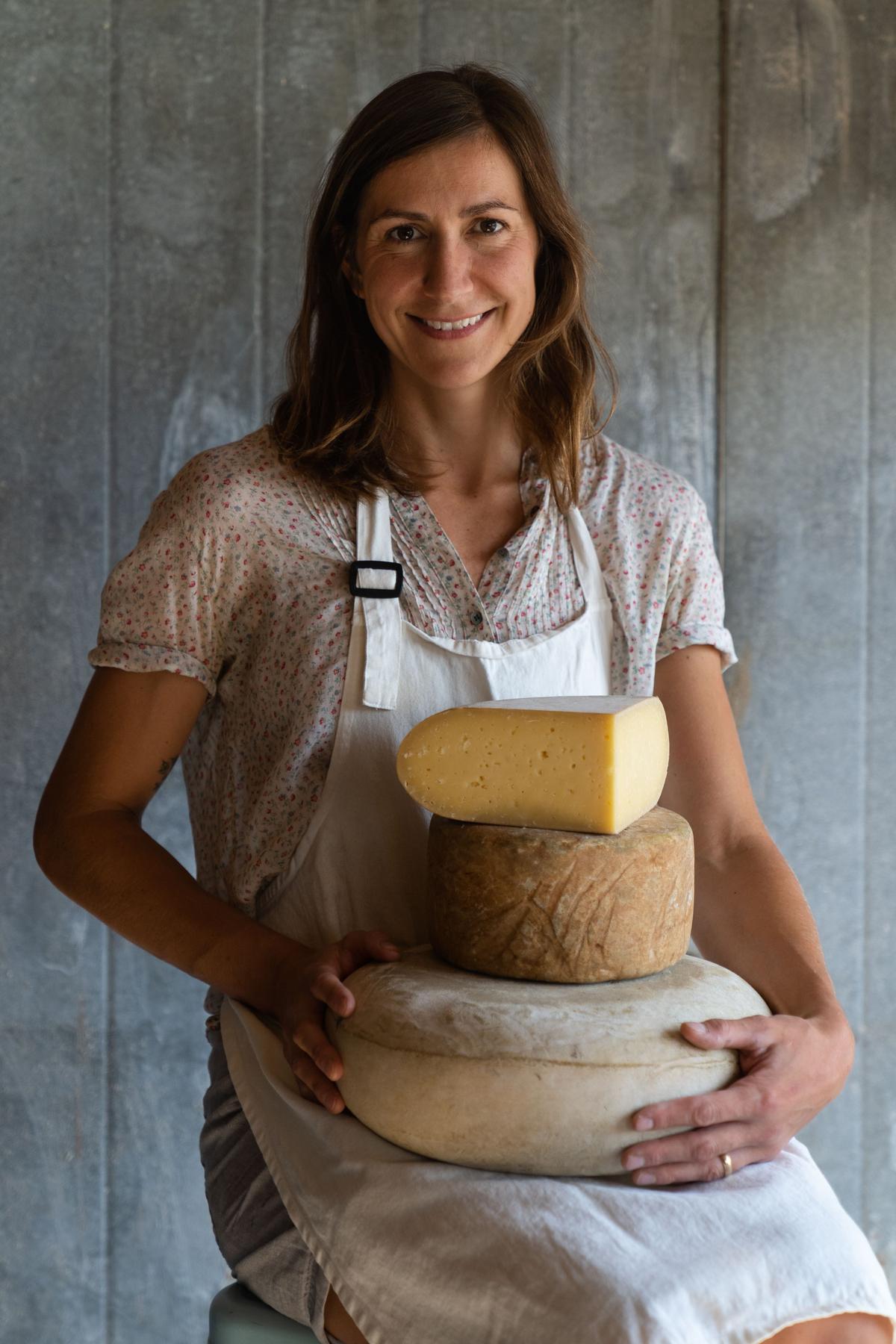
Stefanie Angstadt has popularized cheesemaking in her corner of Pennsylvania. Courtesy of Valley Milkhouse Cheese
“He’s about not only preserving the architecture, but the way of life,” said Angstadt about Stokes.
“Making cheese and butter in Oley Township [within Berks County] is part of our history regionally. I like to think I’m not doing anything new by making cheese in the barn’s milkhouse, but just keeping history going.”
Angstadt, whose grandfather was a farmer in Berks County, was raised nearby. She was surrounded by immediate and extended family deeply ensconced in the area since their German ancestors settled there in the early 18th century.
“It’s a beautiful, authentic environment in which to work,” said Angstadt about the Yoder Cleaver Farmstead.
Stokes knows a little about the Yoders, who settled there in the 1700s. “So many Yoders settled in this area that the area was once referred to as Yoderville,” Stokes said.
In fact, a Yoder family newsletter, written by Christopher Yoder and published in 2005, explains how the Johannes (Hans) Yoder’s settlement in 1714 was originally situated on a 461-acre tract. The Yoder Cleaver Farmstead may currently stand on a portion of that land.
Although Stokes doesn’t know when the farmhouse was built, he pointed out that “there is a lintel [a horizontal timber support] in the house that has the date 1741.” The barn, he learned, was built in the 1790s.
“I do know that it’s one of the older barns in the area; when there are barn tours, certain features are pointed out, such as the complex timbering system. Most barns that exist in this area were built after 1820s.” He added:
“These barns are not used so much in modern agriculture, so the thing I’m proud about is that it is being used. Stefanie started out in the milkhouse with the creamery, and she’s spread the operation throughout the barn. She ages her cheese where the silo once stood. Too many of these beautiful, historic barns get neglected and they fall down. I think that they can still be used—especially with a little creativity.”
It's not too late to use the historic buildings scattered throughout Pennsylvania. Courtesy of Valley Milkhouse Cheese
Angstadt, who left the area for a time to attend college, travel, and work in New York City, eventually learned about cheesemaking in Colorado and brought it back home. After removing the bulk tank from the milkhouse, which was last used as a dairy and creamery in the 1990s, her husband and Stokes helped her clean it out and retrofit it for making cheese.
Christopher Yoder’s newsletter reveals that the barn and milkhouse at the Yoder Cleaver Farmstead was locally known as the “Cheese Factory” since at least the 1880s. The newsletter reads:
“When the trolley line was completed through the Oley Valley, the milk was taken from the creamery to the trolley for shipment to Reading and Boyertown. The business expanded to produce butter and cheese and was a source of substantial employment in the area.”
Angstadt’s business uses milk obtained from only two local dairy farms. Milk is collected from such heritage breeds as Ayrshire and Jersey.
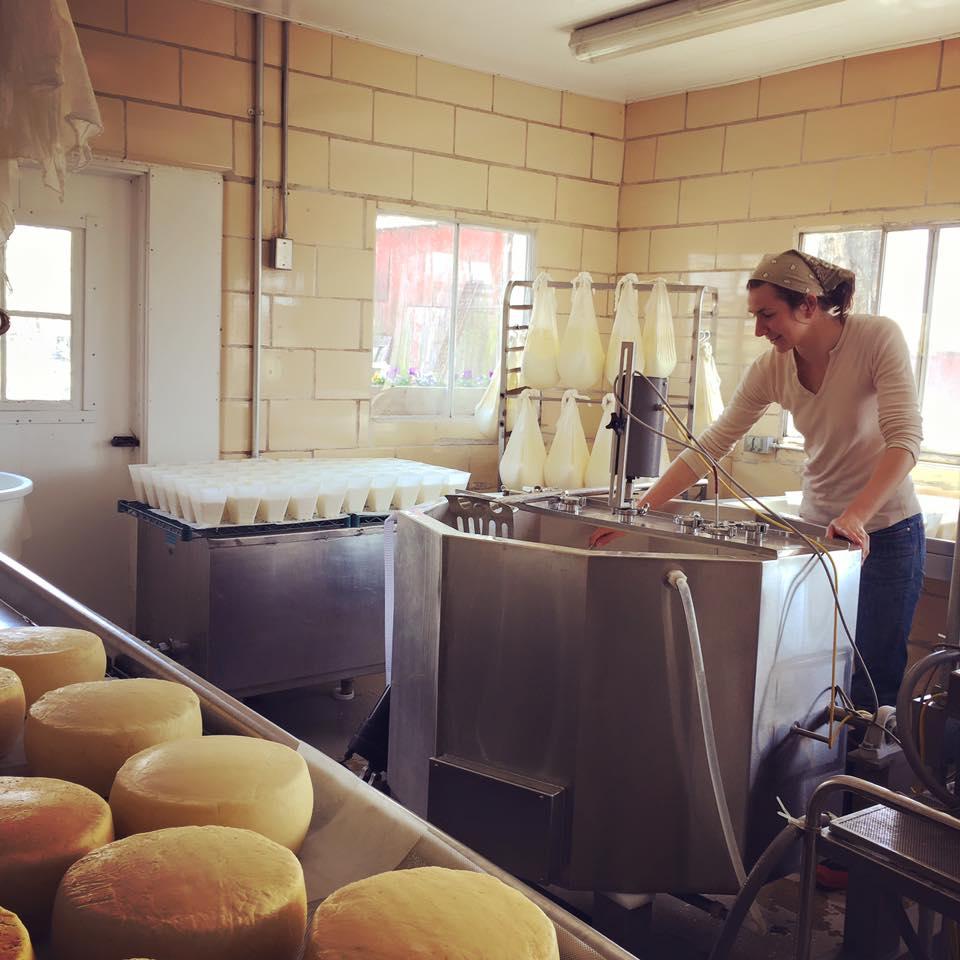
The cheese made at the milkhouse is from heritage cattle breeds that produce high quality milk. Courtesy of Valley Milkhouse Cheese
“Heritage breeds [original breeds brought to America] don’t make as much milk, but the milk they do make is higher in fat and protein,” she said. From about 20 cows comes 400–500 gallons of milk per week. That becomes 20,000 pounds of cheese each year.
After Valley Milkhouse Cheese was up and running, Angstadt decided to turn the lower bay of the barn into a farmstand— with Stokes’s blessing—to sell the cheeses and offer opportunities for others to display and sell items.
“What’s great is that people come from all over,” said Stokes. “I look at the license plates or ask them where they’re from. They come from Philly or New York City or other states. Sometimes Yoder family members will stop by. I like showing them around and telling them about the history of the place.”
“Sometimes visitors will tell us that actually worked in the milkhouse in the past,” Angstadt added. “I like hearing that.”
What arts and culture topics would you like us to cover? Please email ideas or feedback to [email protected]