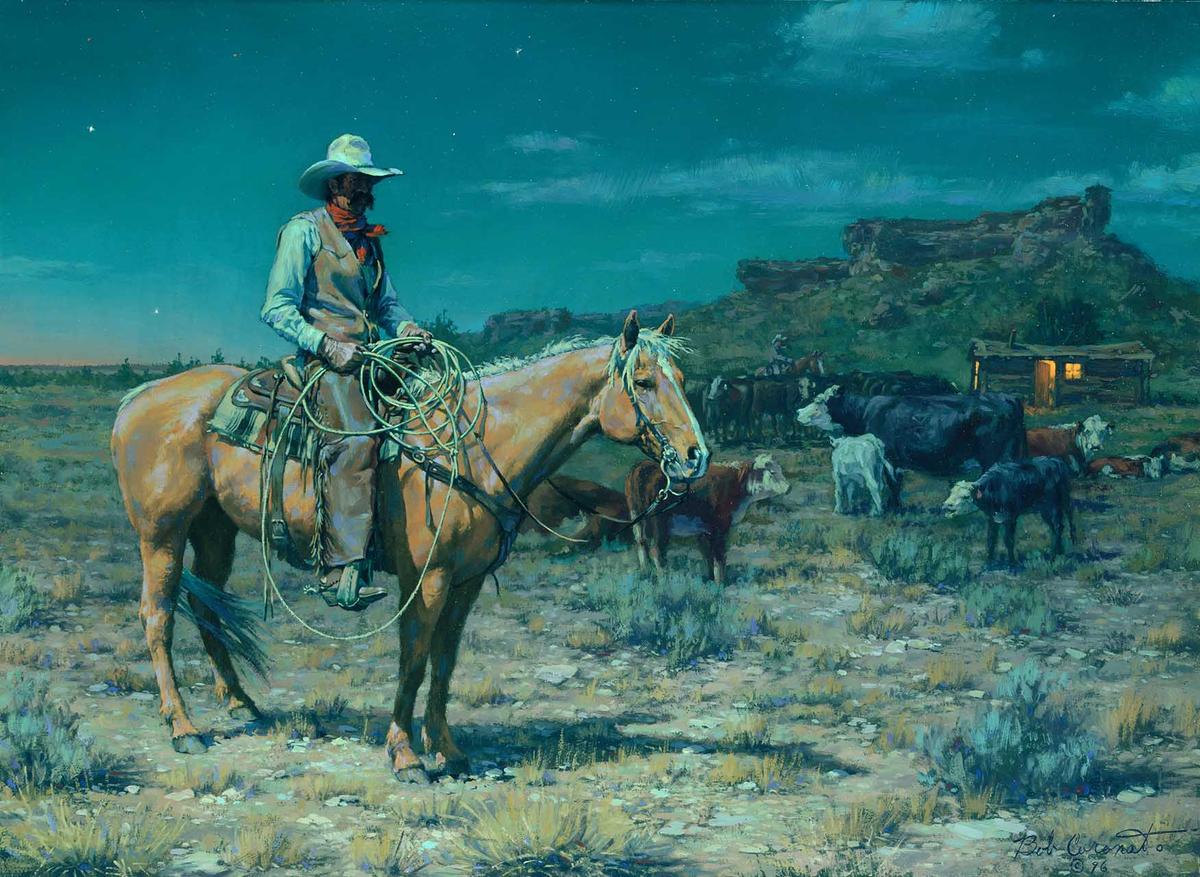
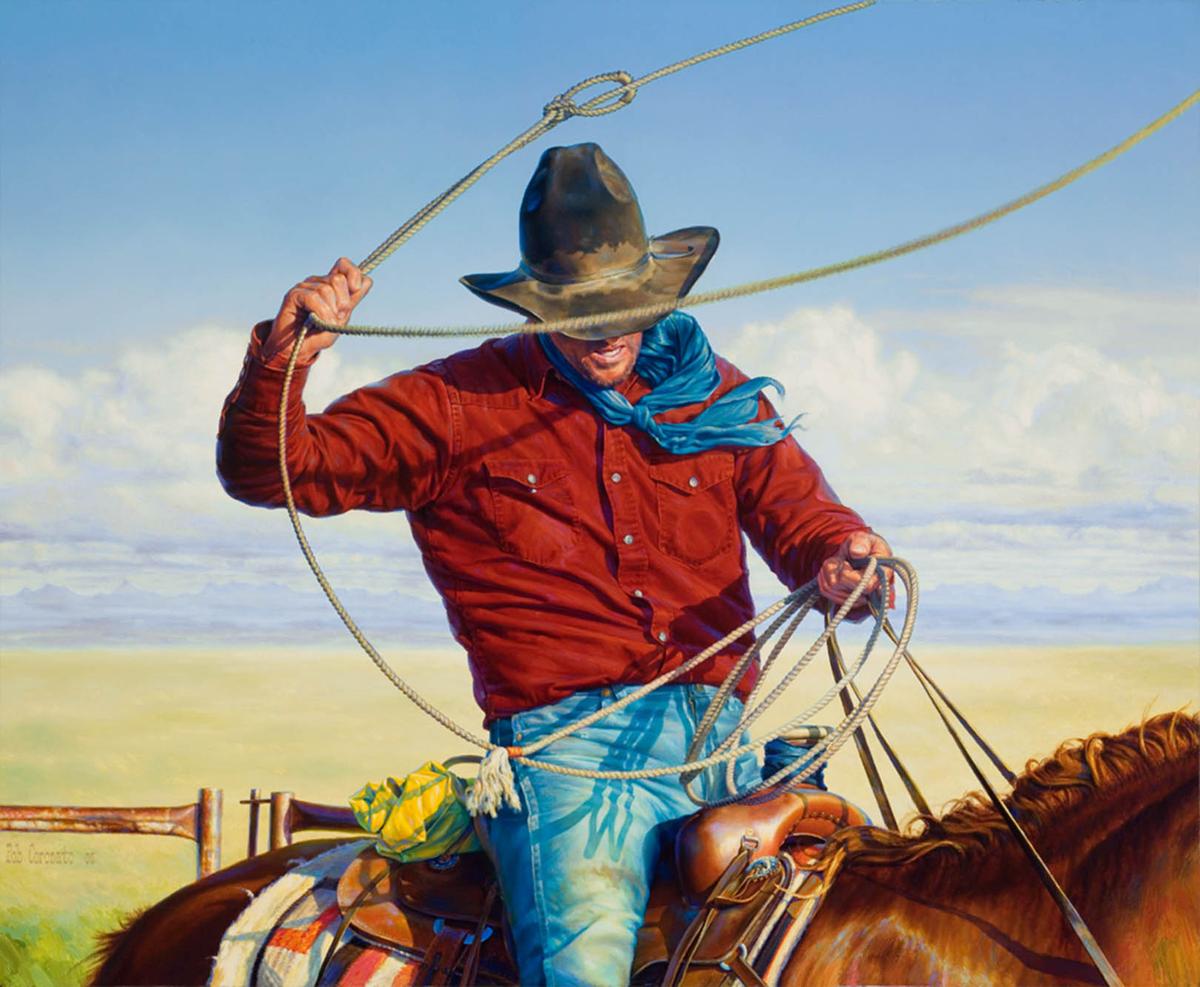
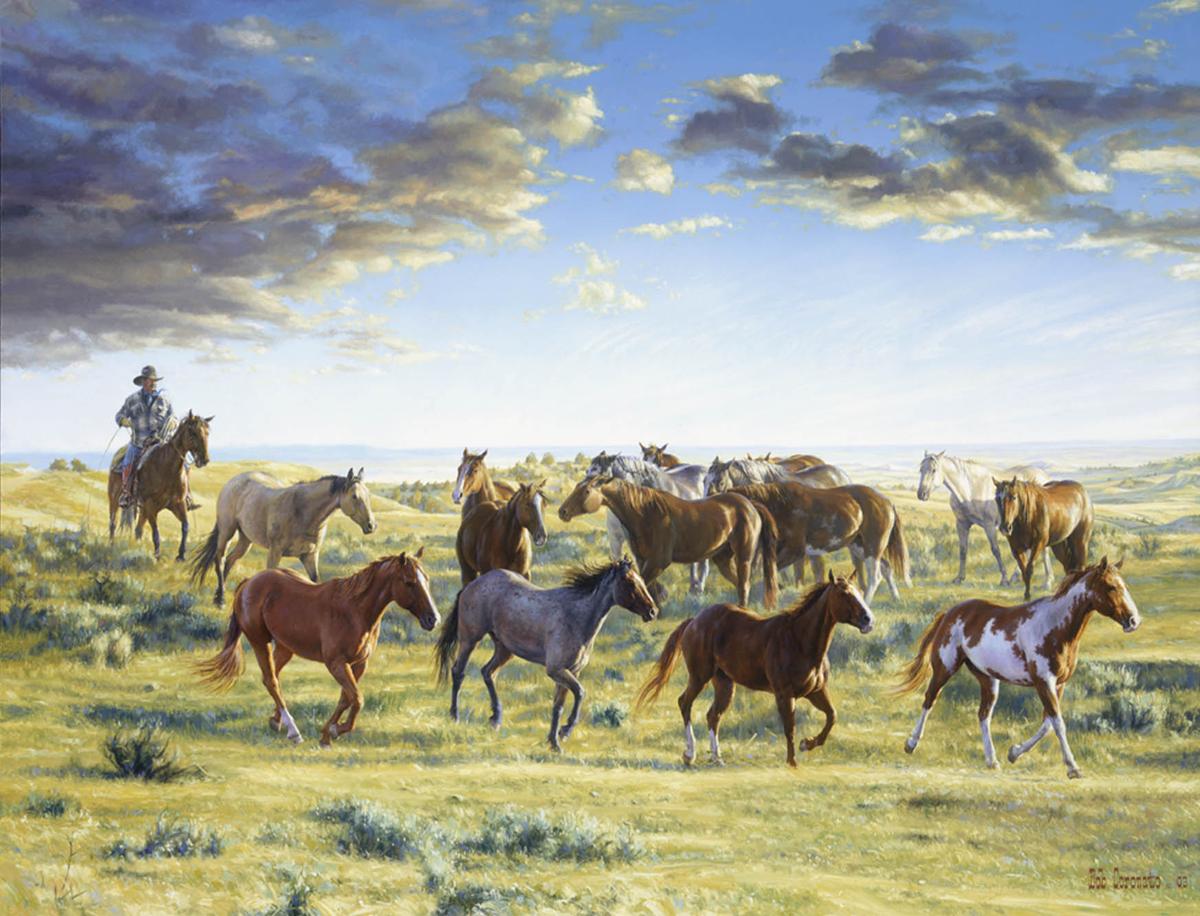
The rustic oil painting studio of cowboy artist Bob Coronato probably looks more Western than the West ever did.
Its saloon-like false front is bedecked with sun-bleached bull bones and wagon wheels, and inside this veritable antique museum of a studio—in the tiny town of Hulett, Wyoming—the artist works on synthesizing the spirit of the West realistically on canvas.
Like the studio itself, Coronato is authentically Western by design.
“When you paint it, in a way, you’re in there,” Coronato tells The Epoch Times. “You got to create that little fence post. You got to create that little false front building. And by the time you’re done with the painting, you almost lived inside that painting.”
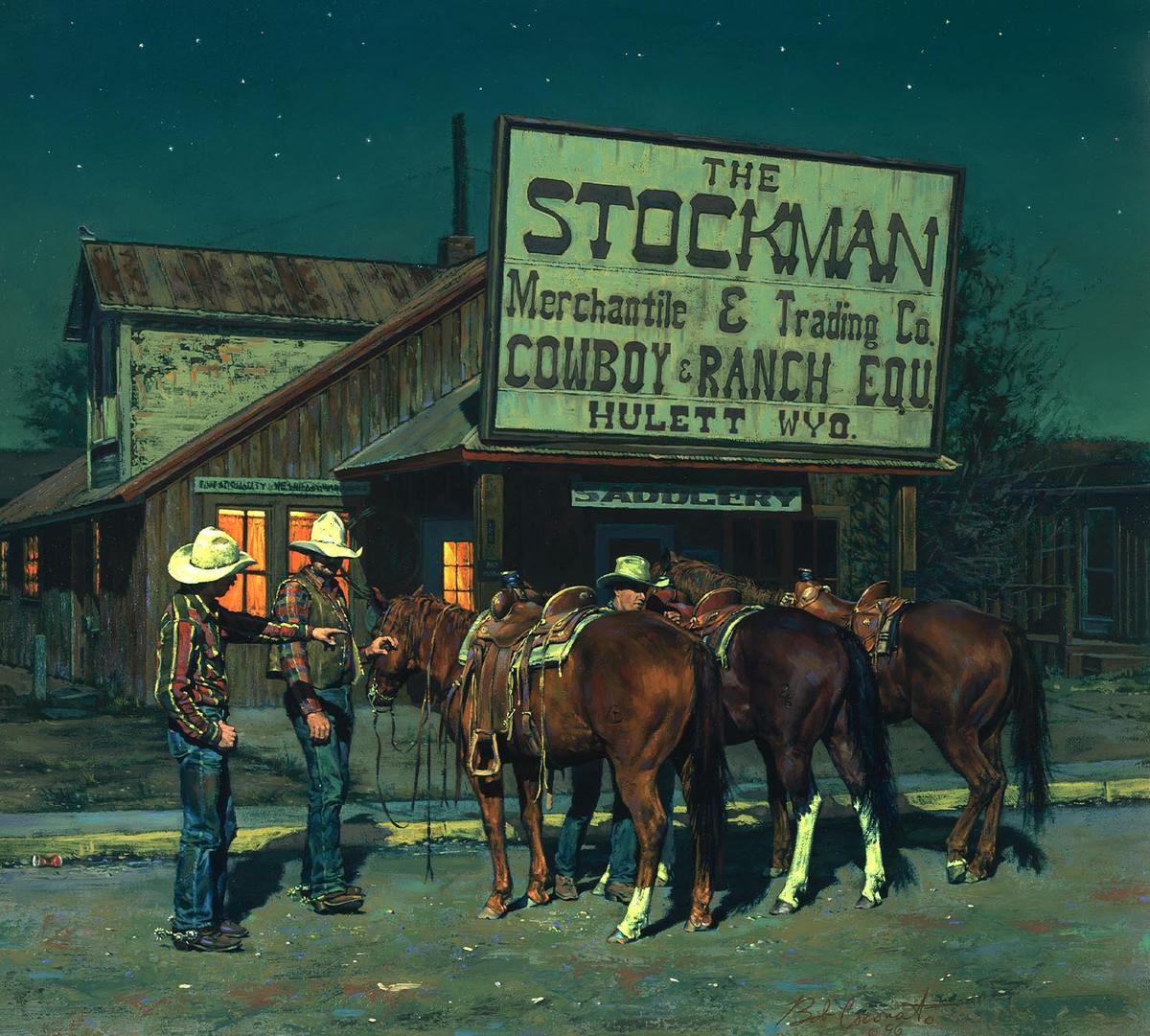
The 55-year-old artist grew up in New Jersey and attended Otis/Parsons Institute of Fine Art in California—the furthest thing from cowboy culture. But while in his twenties he intentionally moved to cowboy country to get his hands dirty as a ranch hand, because Western art was his lifelong passion and he wanted his paintings to be “authentic.” He stayed in Wyoming and has lived there for the past three decades.
It’s home, he says.

“When I got to Wyoming, I realized in this part of Wyoming specifically that time period didn’t die out. It was exactly the same,” he says, referring to the cowboy culture. “You had cowboys running all over town and you were way out in the middle of nowhere.” Everyone was like a neighbor, he added. It was like travelling back in time.
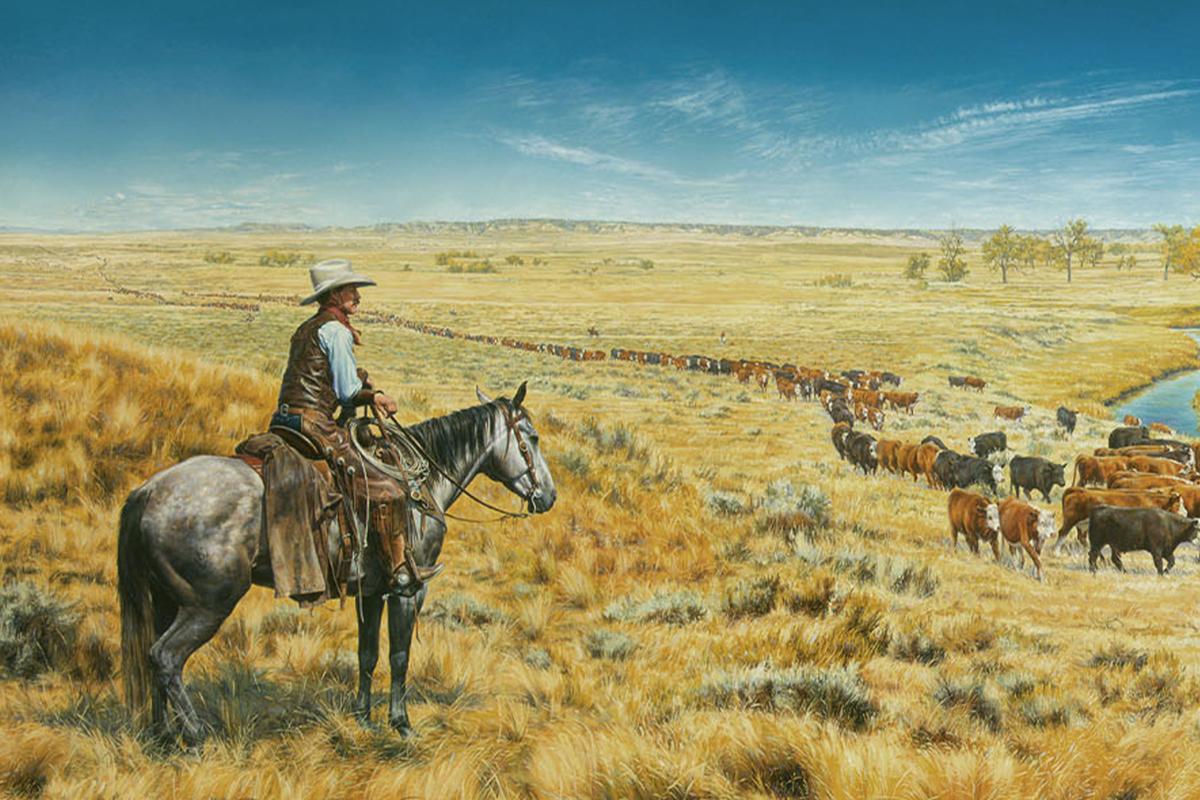
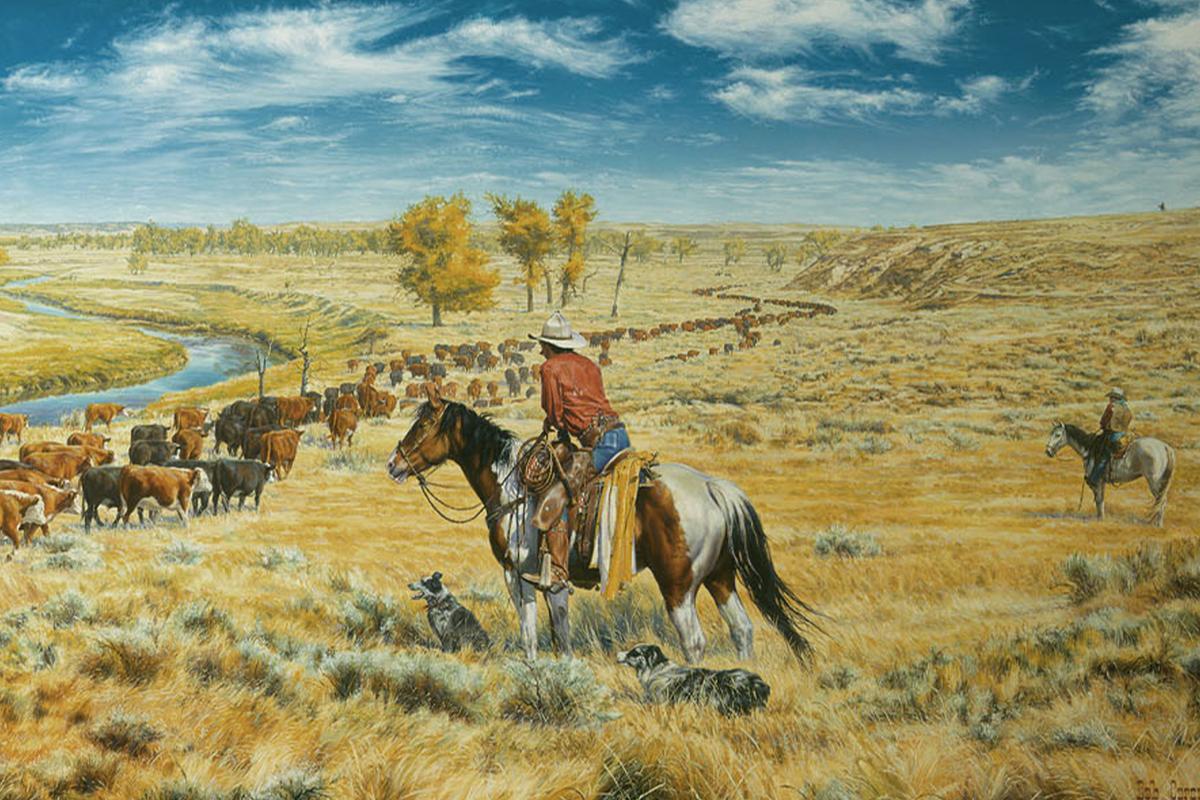
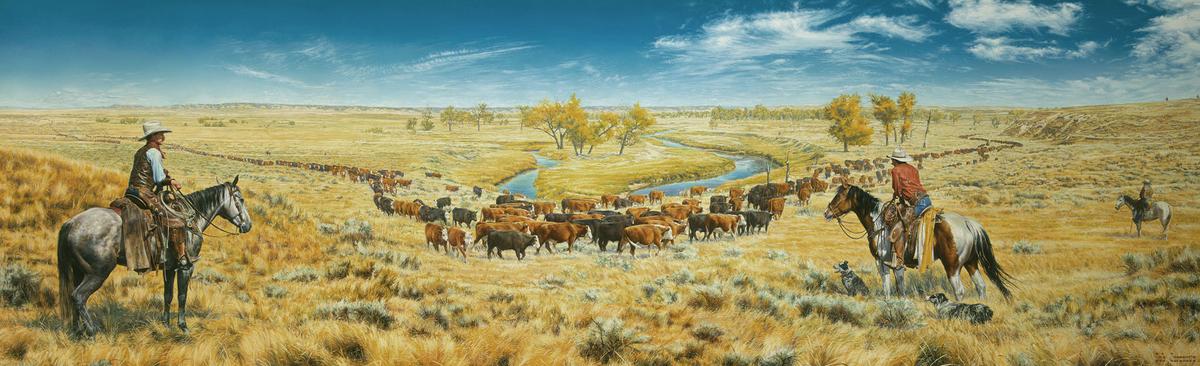
“A lot of these folks, they know good art, they know Western art, and they grew up with it,” he said. “There’s nothing like being in the saddle in order for one to get the feeling and then to paint it.”
As years passed, and as the burgeoning cowboy artist from New Jersey spent summers rousing at 3 a.m. to drive cattle to mountain pastures to graze, he learned the cowboys’ lifestyle, their lingo, and, of course, how to herd cattle on horseback. Camera in hand, Coronato gathered more than a lifetime’s worth of subject matter to paint from and authentic experiences with which to infuse them.
He was one of them, now.
Coronato drew inspiration from the stalwart character of a seasoned cowboy he knew, who stayed in his saddle and worked despite the pouring rain.
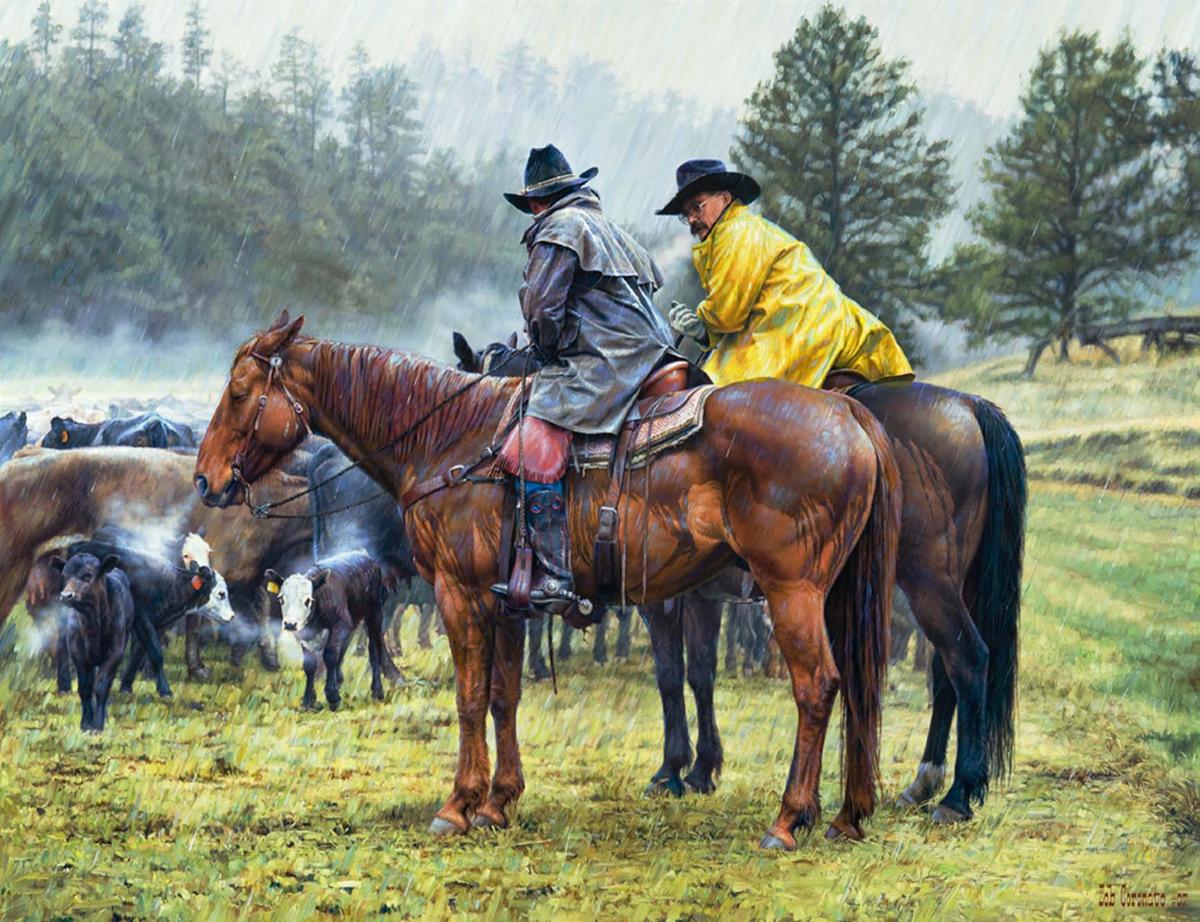
The big challenge of painting this artwork, he says, was the rain. How does one paint rain?
He says he feels profoundly connected to cowboys and has painted them ever since his childhood experience of being “held up” at gunpoint by costumed reenactors. But experiencing the real deal caught him off guard, in certain ways. Real cowboys are more “introspective” and attuned to nature than one would think, Coronato says. His painting titled “June 9 in the Black Hills” tells of this.
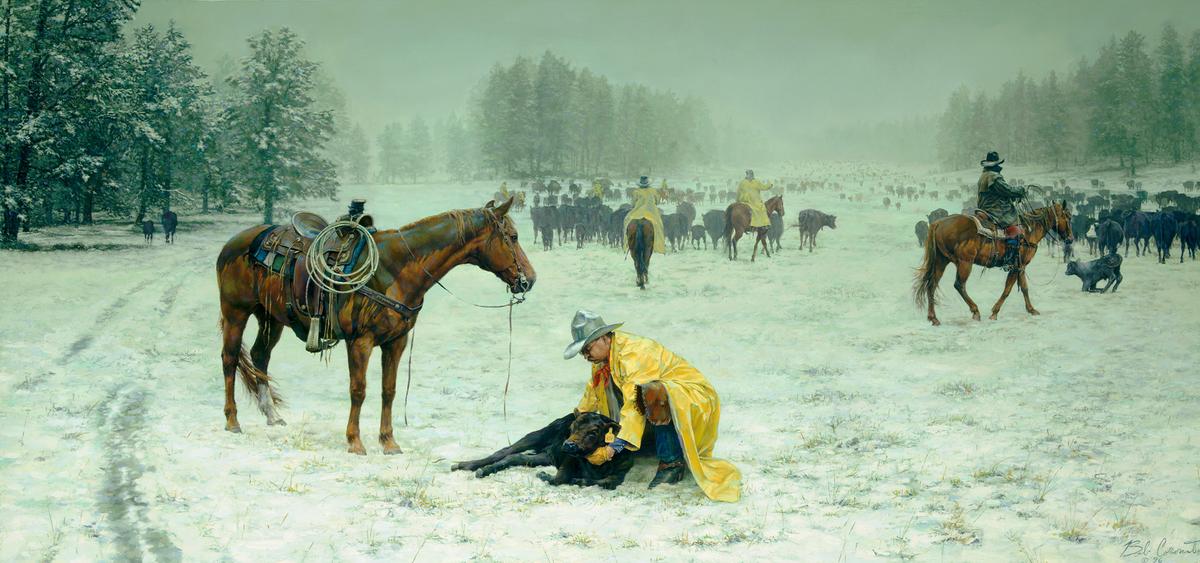
During one cattle drive, cowboy George White (who “adopted” Coronato) led the crew and somehow knew they were in for bad weather the night before it hit. “This is June,” the artist recalled, “[and] he goes, ‘Wear your long johns.’” Coronato thought it was prank, but as they drove toward summer pastures at higher elevations, the falling rain turned to snow. “By the end of the day, we were in a foot of snow,” Coronato said.
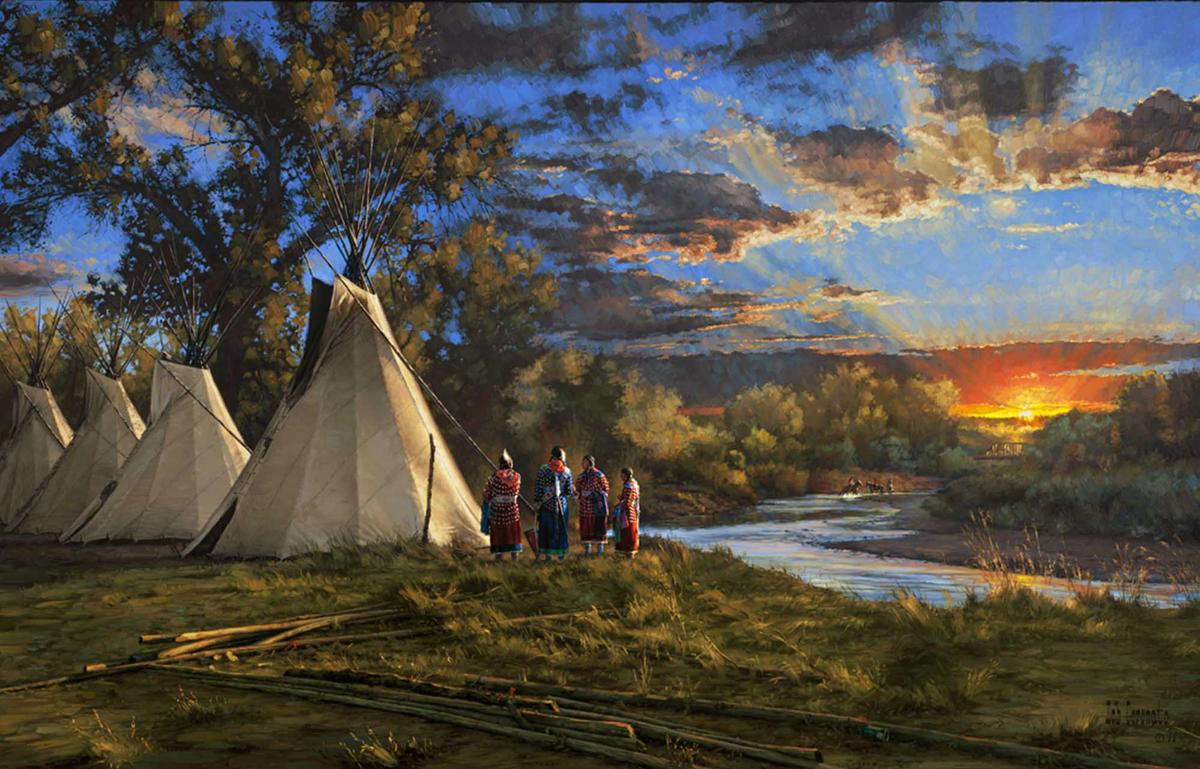
As Coronato dove deeper into cowboy culture, he also embraced the local Native Americans of Wyoming.
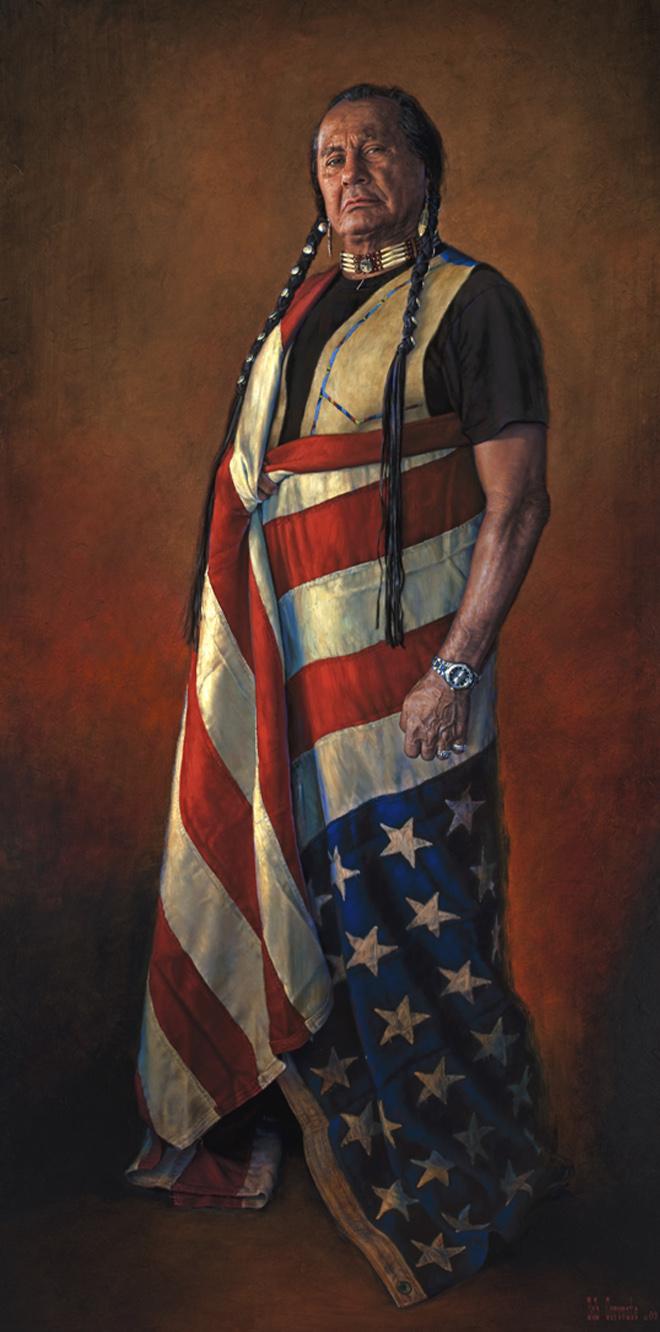
After successfully capturing the story written on Means’s face, with the figure draped in an inverted American flag, Coronato says he achieved his lifelong goal of painting an artwork that “made you want to cry.” After showing it, he gave the painting to the nation, and it hangs in the Smithsonian’s National Portrait Gallery today.
The style of the artist calls to mind Charlie Russell’s artwork, but Coronato has synthesized that cowboy aesthetic too. Though decidedly realist, his works are unorthodox in their technique. “I always used to say, the work is better than I can actually do,” Coronato said. “I know what a good brushstroke looks like, but it doesn’t come out of my hand naturally.”
Coronato doesn’t work the whole canvas at once like most painters. Rather than proceed from pencil sketch, to underpainting, then overpainting, and finally finishing touches, he starts in the top left corner and meticulously lays in solid color from left to right, top to bottom, “like a computer printer” until it’s finished.
More Paintings By Bob Coronato