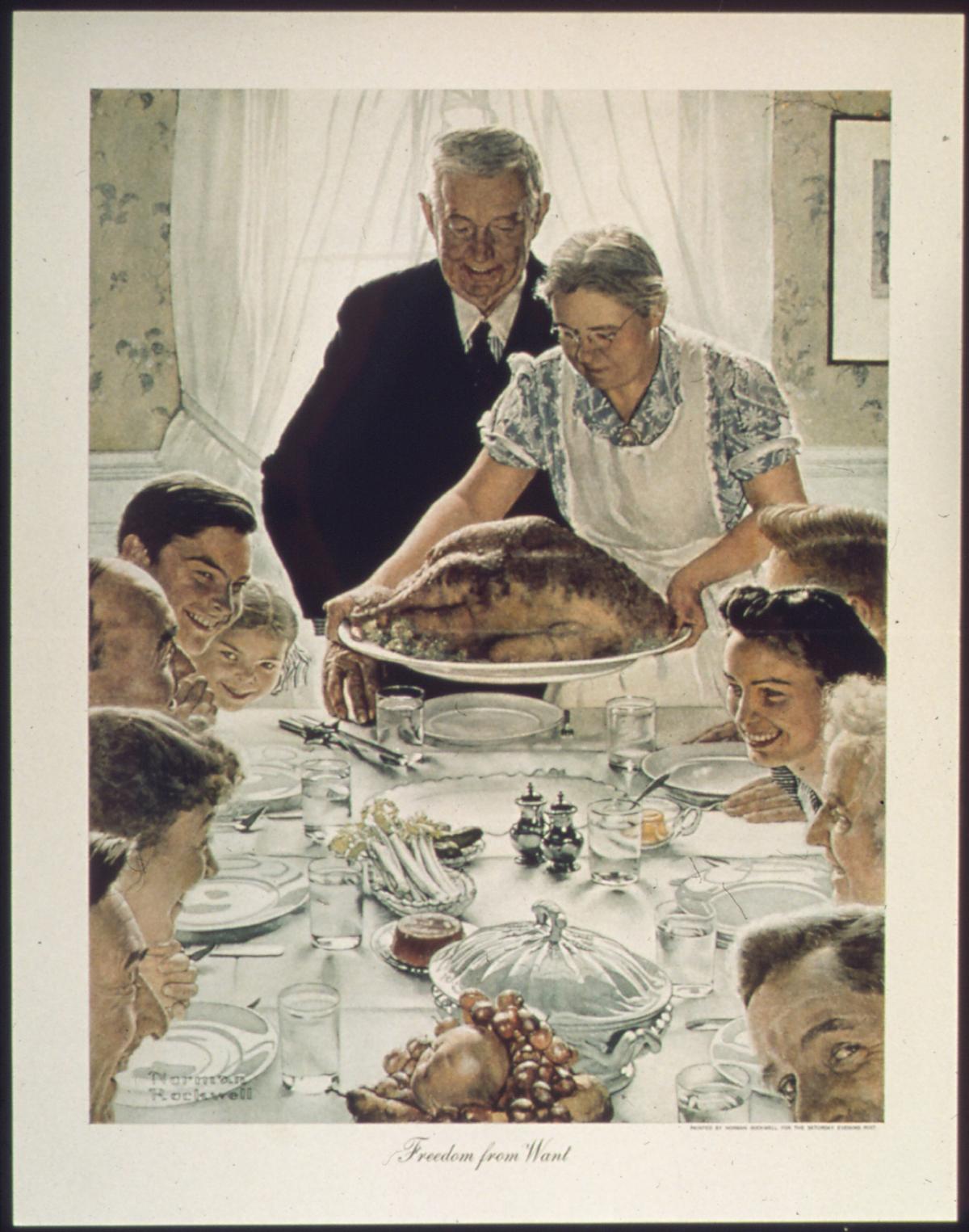
If a picture is worth a thousand words, then let’s cut to the chase and begin with Norman Rockwell’s painting “Freedom from Want.”
In March 1943, “Freedom from Want” appeared in The Saturday Evening Post. Like the other three paintings in Rockwell’s “Four Freedoms” series—he was inspired by President Franklin Roosevelt’s 1941 State of the Union Address—“Freedom from Want” has ever since served as the icon of our American Thanksgiving, so much so that most people know it only as “the Thanksgiving painting.”
Framed by the white light of the window, Grandma is carefully lowering a roasted turkey to the table. At her elbow, her husband stands ready to carve the bird while everyone else, young and old, is smiling, delighting in the occasion and one another rather than the food. Although viewers often see the painting as depicting a sumptuous feast, the side dishes—a plate of celery, a single casserole dish, a ring of cranberry sauce, and a bowl of fruit—are certainly nothing fancy, and the drinking glasses are filled with water.
Let’s time-travel back to the year when Rockwell’s painting appeared.
Glad Sacrifices
By Thanksgiving 1943, the United States had been at war with the Axis powers for almost two years, and rationing was the order of the day. Meats, cheeses, butter, and other foodstuffs, including turkeys, were in limited supply, which meant that cooks had to use their ration cards with care to provide the sort of meal Rockwell painted.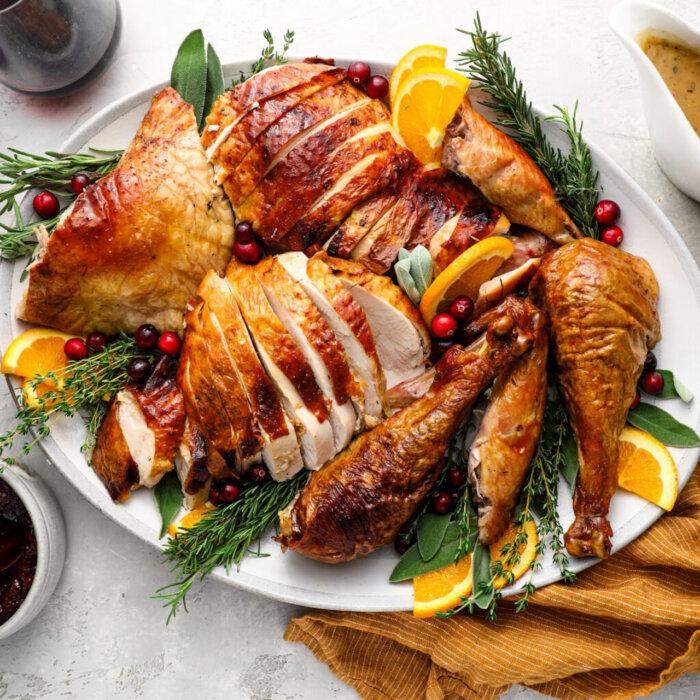
Hard Times Don’t Cancel Thanksgiving
Except for the adolescent girl in Rockwell’s painting, the others are all old enough to remember the Great Depression and its effect on Thanksgiving.In 1933, for those fortunate enough to have a job, the average wage was about 53 cents an hour. A Thanksgiving meal for six cost approximately $5.50, or 10 hours of labor. In a time when “Brother, Can You Spare a Dime?” was playing on radios everywhere, many families simply couldn’t afford the traditional Thanksgiving meal.
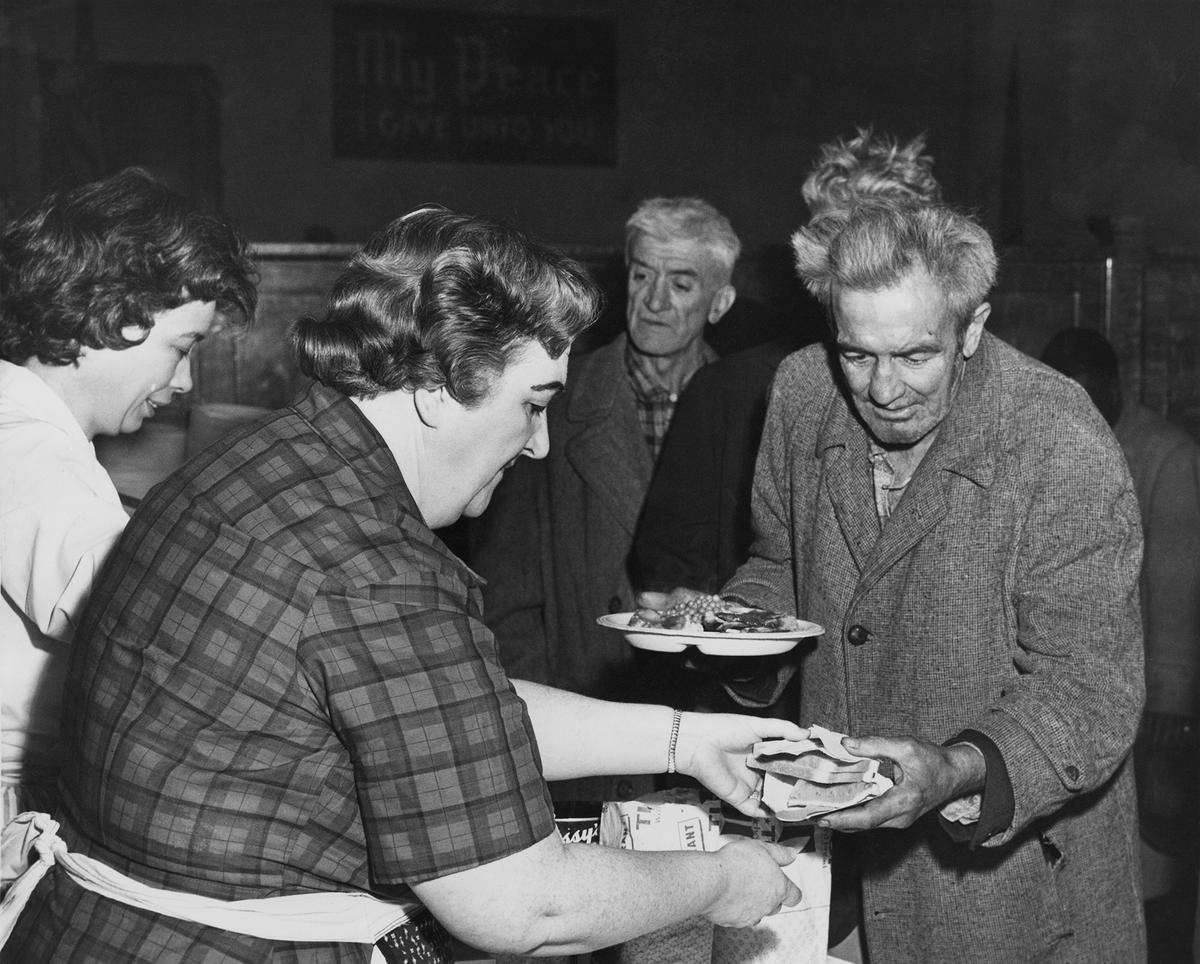
And so they made do. Creative cooks whipped up inexpensive dishes, concocting mock duck, for instance, by rolling up a flank steak in seasonings and stuffing, then searing and roasting it to reproduce the taste of real, and expensive, duck. Porcupine meatballs—ground beef mixed with rice—became popular, and other inexpensive foodstuffs such as potatoes, with 2 pounds selling for a nickel, allowed for tasty side dishes. The introduction of “instant gelatins” brought about the molded salad, a concoction of gelatin, mayonnaise, fruits, and nuts.
A personal note here: Since that time, my own family has for several generations served up what we call the “green salad,” a Pacific Lime Mold that I now realize is likely the offspring of that long-ago era.
Peace, Harmony, Tranquility, and Union
In late September 1863, magazine editor and longtime advocate of a National Day of Thanksgiving Sarah Hale wrote to President Abraham Lincoln, asking that Thanksgiving be “made a National and fixed Union Festival” so that it might “become permanently, an American custom and institution.”Concluding this document, written in the middle of our nation’s bloodiest war, are words pertinent to us today. The proclamation recommends that Americans “fervently implore the interposition of the Almighty Hand to heal the wounds of the nation and to restore it as soon as may be consistent with the Divine purposes to the full enjoyment of peace, harmony, tranquillity and Union.”
The True Treasure of Thanksgiving
If we go back to Rockwell’s painting, we see the happy faces of relatives and friends enjoying the pleasures of companionship. It’s highly unlikely that they agree 100 percent on the issues of the day, and all doubtless have their personal quirks, but they push these aside in favor of laughter and union.We also notice the partial portrait of the man in the lower right-hand corner of the painting. He looks out at us as if to say, “Do you get it? Do you see? This is what Thanksgiving is all about.”
During these Thanksgivings, when war or want might have smothered gratitude for life, liberty, and the bounties of a generous land and climate, Americans sat down together to share a meal, whether it was turkey with all the fixings or porcupine meatballs with green beans and cornbread, as a sign of appreciation for their country, their families, and their friends.
We can do the same. We can remember and honor the sacrifices of those countless millions of people who have shaped our country, as well as the sacrifices of family and friends who have shaped us. On this special day, we can put aside our misfortunes and be thankful for the blessings in our lives and for life itself. We can take a break from the headlines and our private quarrels and aim instead for unity and tranquility.
Enjoy the food and drink, but most of all, as Rockwell’s painting encourages us, treasure the company.
Happy Thanksgiving, everyone!