





William Foxwell Albright (1891–1971) was born to financially modest American Methodist missionaries in Coquimbo, Chile. His life as a child was anything but easy for various reasons. He grew up under tight budgetary constraints, in a country not his own, combined with poor eyesight and a crippled left hand due to a farming accident. These issues often made him the brunt of jokes among the local schoolchildren. Albright, however, was a voracious reader and inquisitive thinker, and his affinity for ancient history led him to become known as the father of Biblical archaeology.
Becoming a Scholar
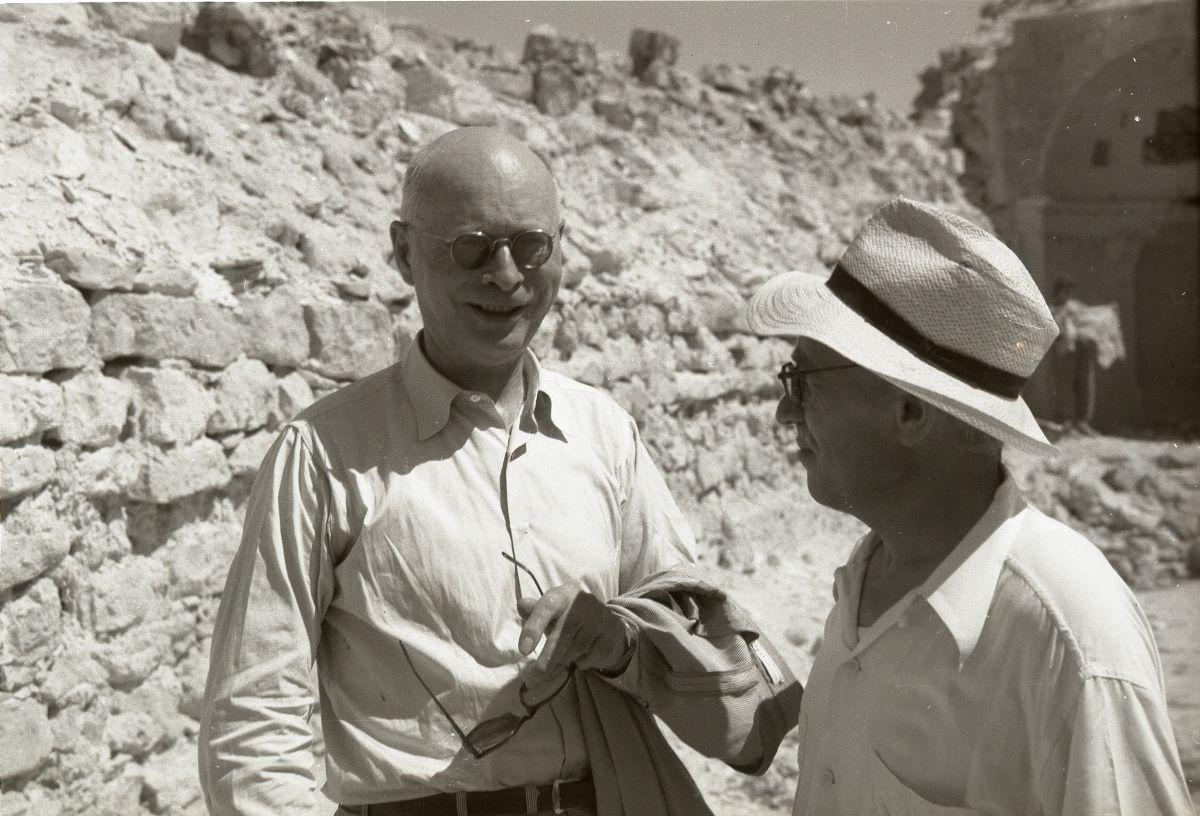
Leaving Chile and coming to America, he attended Upper Iowa University, where he earned a degree in classic literature at the age of 22. That same year, he earned a scholarship from Johns Hopkins University. Albright already made a case for his brilliance by publishing his first scholarly article in 1912, and, by the time he entered his doctoral studies, had taught himself the languages of Assyrian, French, German, Greek, Hebrew, and Latin, not to mention the fact he was fluent in English and Spanish.
In 1916, he earned his doctorate from Johns Hopkins while studying under the renowned German Sumerologist and Assyriologist, Paul Haupt. His goal was to become an Orientalist—a scholar of the ancient Near East—like Haupt.
Reaching Palestine
Hardly had his time with the Army ended when he was notified that he had been awarded the Thayer Fellowship, which came with a $1,000 stipend. He planned to begin his first scholarly journey to the Middle East, specifically Palestine. The money was barely enough pay for his travels, but Albright decided to remain in the Baltimore area for another six months. It was a wise decision, because he was awarded the Johnston Scholarship, which provided an additional $1,200. He was now ready to take on the task of stepping foot into the places he had only read about.Making His Mark
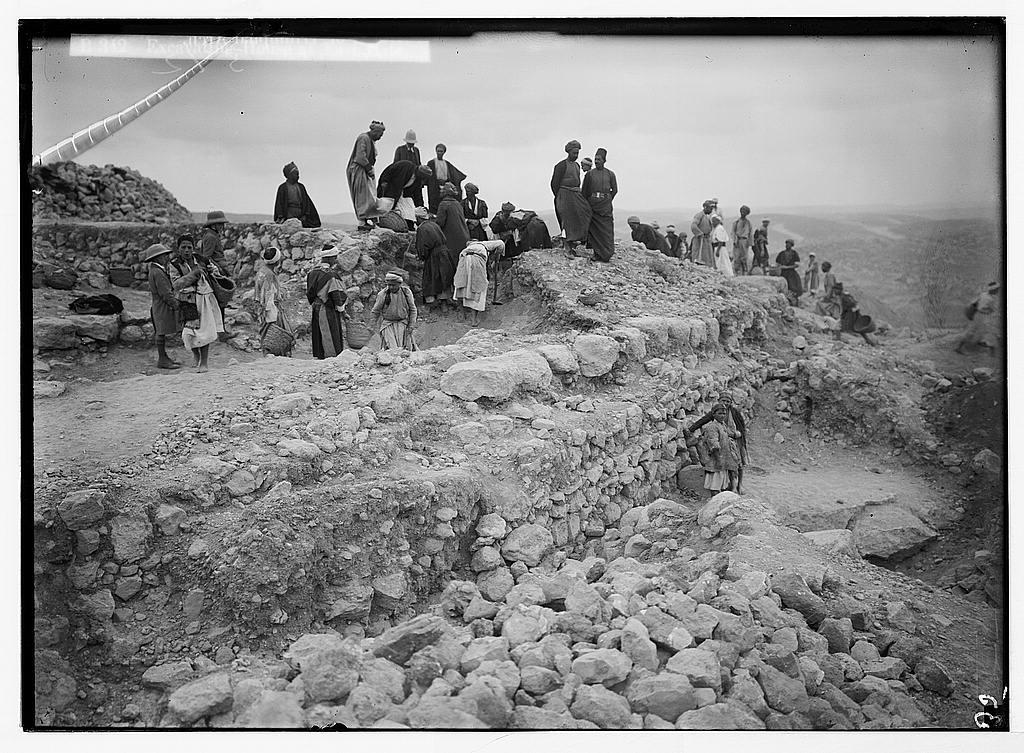
His next excavation site, Tell Beit Mirsim in southern Judea, put Albright on the scholarly map. From 1926 to 1932, he led four seasons of excavations. He believed the site was the biblical Debir from Joshua 15, a claim that remains debatable. During this time, he and his team excavated and discovered layers of pottery. His method of using the stratigraphic record established a chronology of the pottery that ranged from the Bronze Age into the Iron Age. Among the ruins of the ancient city were “dye vat[s]” and “textile complexes,” leading him to conclude that the location had been home to dyers and weavers.
Major Personal Moments
Two major moments took place in Albright’s life shortly after he arrived in Palestine. In 1920, he became director of the American School of Oriental Research (ASOR), a position he held until 1929, and then intermittently between 1932 and 1935. In 1921, he married Ruth Norton, the same year she received her doctorate in Sanskrit from Johns Hopkins University.The Nash Papyrus
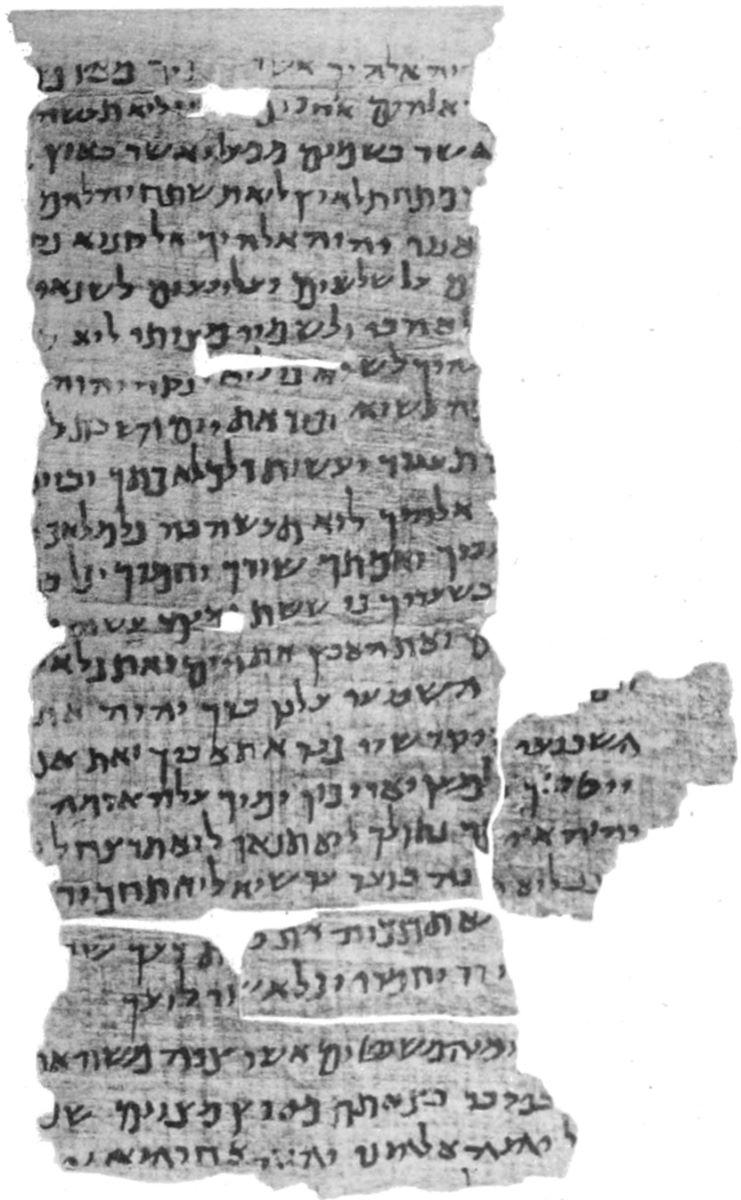
In 1902, a fellow of the Society of Antiquaries, W.L. Nash, purchased four adjoining ancient pieces of papyrus, which possessed 24 lines (and traces of a 25th line) that included the Ten Commandments and the Shema' prayer (Deuteronomy 6:4-5). The following year, scholar S.A. Cooke determined that the writing originated from the second century.
Confirming the Greatest Discovery
Albright’s study had far-reaching effects for him shortly after World War II. In 1946, Bedouin shepherds discovered seven scrolls in a cave near Qumran. In February 1948, shortly before the British Mandate would end in Palestine, ASOR fellow John Trever was presented with several manuscripts from these scrolls. Realizing the possibility of a truly historic discovery, Trever needed to prove the scrolls’ authenticity and their age. Recalling Albright’s work on the Nash Papyrus, he contacted him.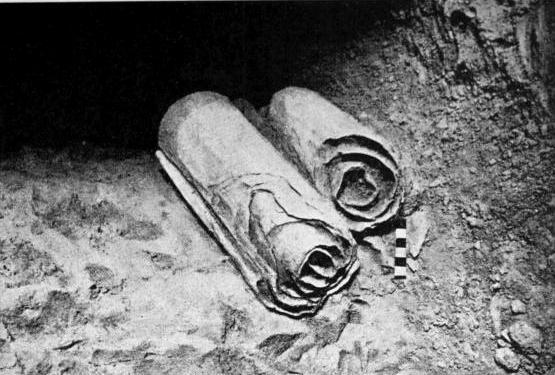
In 1948, Albright became the first scholar to authenticate what we know now as the Dead Sea Scrolls. It was indeed the pinnacle of his illustrious career.
For many reasons, Albright left an indelible mark on the field of archaeology, no doubt earning the moniker of father of Biblical archaeology. He produced more than 1,100 scholarly works. He mastered 26 modern and ancient languages. He was awarded 29 honorary degrees, was elected to the National Academy of Sciences in 1955, and shortly before his death in 1971, the ASOR was renamed the W.F. Albright Institute of Archaeological Research.

.jpg)