How a Failing Businessman Elevated the World

In this installment of ‘Profiles in History,’ a tinkerer and failing businessman finally hit on one of world’s most useful and famous inventions.
How a Failing Businessman Elevated the World
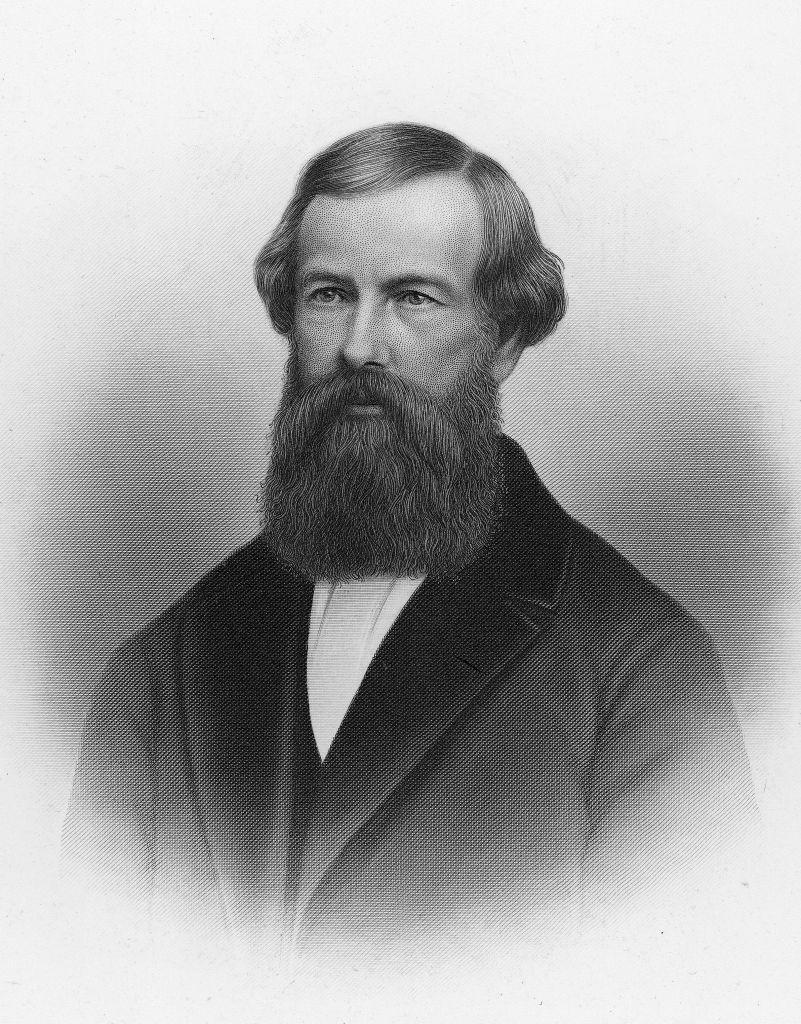
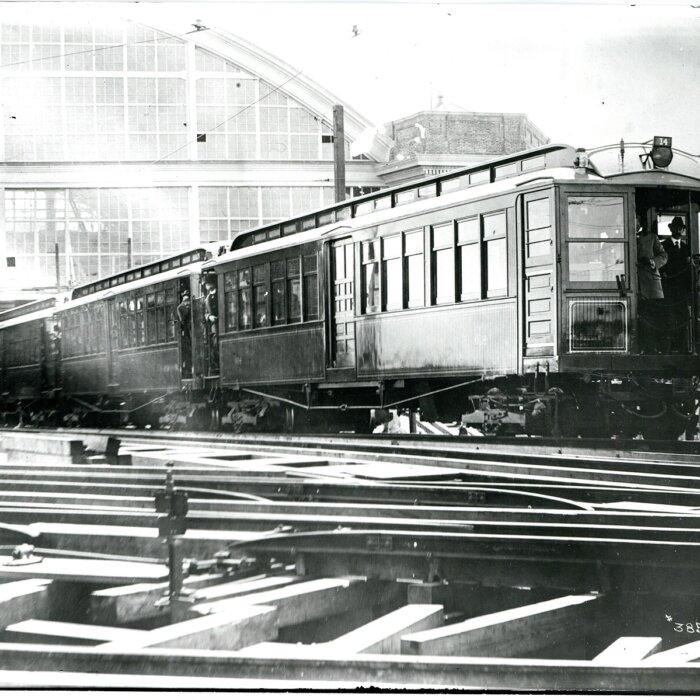
(Left) An elevator installed in the Washington Monument and the thousands of sightseers to the capital can be accommodated in their climb to the top of this 555 feet granite shaft, May 21, 1927. Library of Congress. (Right) Inventor of the safety brake for the elevator, Elisha Grave Otis. Public Domain
|Updated:
0:00

Elisha Graves Otis had been a brilliant failure. As a child, he had proven an affinity and knack for tinkering with and fixing machinery. But in 1851, he strongly considered moving from the East Coast to the West Coast to join the many thousands of fortune seekers during the Gold Rush. An honest worker, he was no businessman. Luckily for him and the world at large, he was convinced to remain east where he would create one of history’s most important inventions.

Otis (1811–1861) was born to farmers in Halifax, Vermont. As he grew up, he proved a man of the machine, rather than a man of the soil. He could often be found spending his time with the local blacksmith, fixing tools and machines. Although he was not fond of farming, his mind for mechanics helped the family farm. Whenever something broke, Otis could usually fix it.

Life in Troy

The American inventor Elisha Graves Otis, circa 1856. (Kean Collection/Getty Images)
The American inventor Elisha Graves Otis, circa 1856. Kean Collection/Getty Images

At 19, he had been offered an opportunity to work for his brother, Chandler, in Troy, New York. With his father’s permission, Otis left the Green Mountain State for The Empire State.

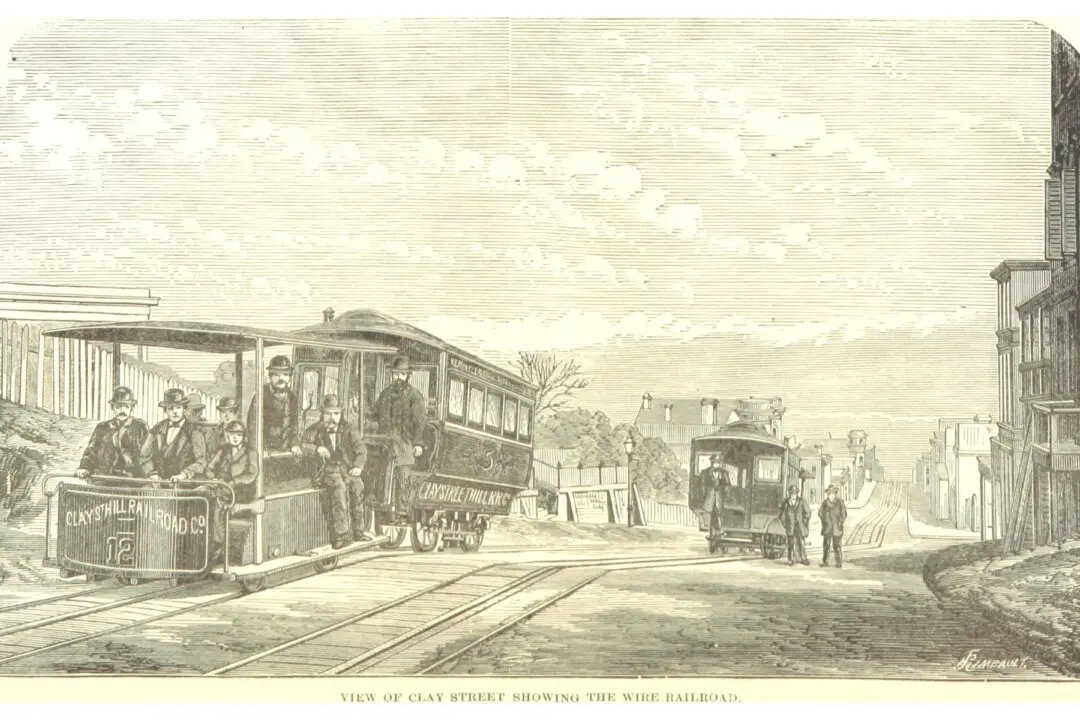
Troy was located on the Hudson River and near the Erie Canal. With the river transporting goods south into New York City and the canal transporting goods west to Lake Erie, along with providing plenty of hydropower to the numerous mills, factories, and manufacturers, Troy was becoming an industrial hub.

Otis worked for his brother for five years, at which time he designed a hoisting system that could move goods or equipment up and down several stories. He decided to start his own freight transport business, and for three years, he transported goods between Troy and Brattleboro, Vermont.

During this period of work in Troy, Otis married Susan Houghton in 1834, and together they had four children. Four years after their marriage, Otis opened a gristmill in Brattleboro, but within a year, with business going poorly, he converted it into a sawmill. The sawmill was about as successful as the gristmill, so he tried his hand at carpentry, building wagons and carriages. He endured slow business and even tragedy, when his wife died in 1842.

Major Changes

Otis made several major changes in 1845. He married to Elizabeth Boyd and decided to move the family to Albany, where he found work as a mechanic for a bed-framing company. Just as he had done with his brother’s business, Otis improved upon his new employer’s production capacity and efficiency. He created an automatic bed turner that enabled the company to build bed frames four times faster.
The success of his creation caused him to try again at starting his own business. In 1848, he founded the Hudson Manufactory. But again, the business failed, closing in 1851.

At about this time, Otis began considering a move to California. Perhaps his luck would pay off on the other side of the continent. Were he not able to strike gold, he would most likely find a demand for his skills in innovation and machinery. Nonetheless, a friend of his, Josiah Maize, convinced him to join him in New Jersey where he was planning to open his own bedstead factory.

The call West still sounded in Otis’s ears as Maize moved his business from Bergen, New Jersey to Yonkers, New York in 1852. For whatever reason, whether family, the friendship of Maize, or the deterrents that made up the arduous journey to California, Otis stayed. Lucky thing he did.

Designing the ‘Safety Hoist’

While working at the Yonkers factory, Otis began designing a way to improve the safety of the current elevator. The hoisting systems of the day, which were specifically made for moving goods and equipment up and down, were hardly safe. The problem with these elevators was that too often the rope or cable that lifted the platform would snap, making the platform fall from whatever height, and often destroying the goods, or worse, injuring or killing workers.

Instead of creating an altogether new hoisting system, his innovative system centered around stopping an elevator in the event its rope or cable snapped. The basis was to place uprights with upward jutting teeth along the outside of the elevator and place hooks and pawls that would catch and sustain the elevator. The platform would fall no more than a few inches. Otis called it a “safety hoist.”

Otis had finally landed on a brilliant idea that certainly met an industrial demand. In 1853, Otis founded Union Elevator and General Machine Works Company, and, by the end of 1854, he had sold eight “safety hoists.” Interestingly, he had yet to patent his invention, but no one had yet to infringe on his creation.

A Marketing Opportunity

Around the time of founding his new business, New York City was preparing to host the country’s first world’s fair. The brilliant machinist and tinkerer wanted to market his idea at the fair, and he wanted to make the most of the venture. Only one person could make the most of such an occasion: P.T. Barnum.

The New York Crystal Palace exhibition lasted from July 14, 1853, to Nov. 14, 1854, giving Otis plenty of time to conduct a number of demonstrations of his new invention. Barnum was thoroughly impressed with Otis’s “safety hoist” and promoted it enthusiastically. Barnum was known as the country’s greatest showman, but Otis proved to be quite the performer in his own right.
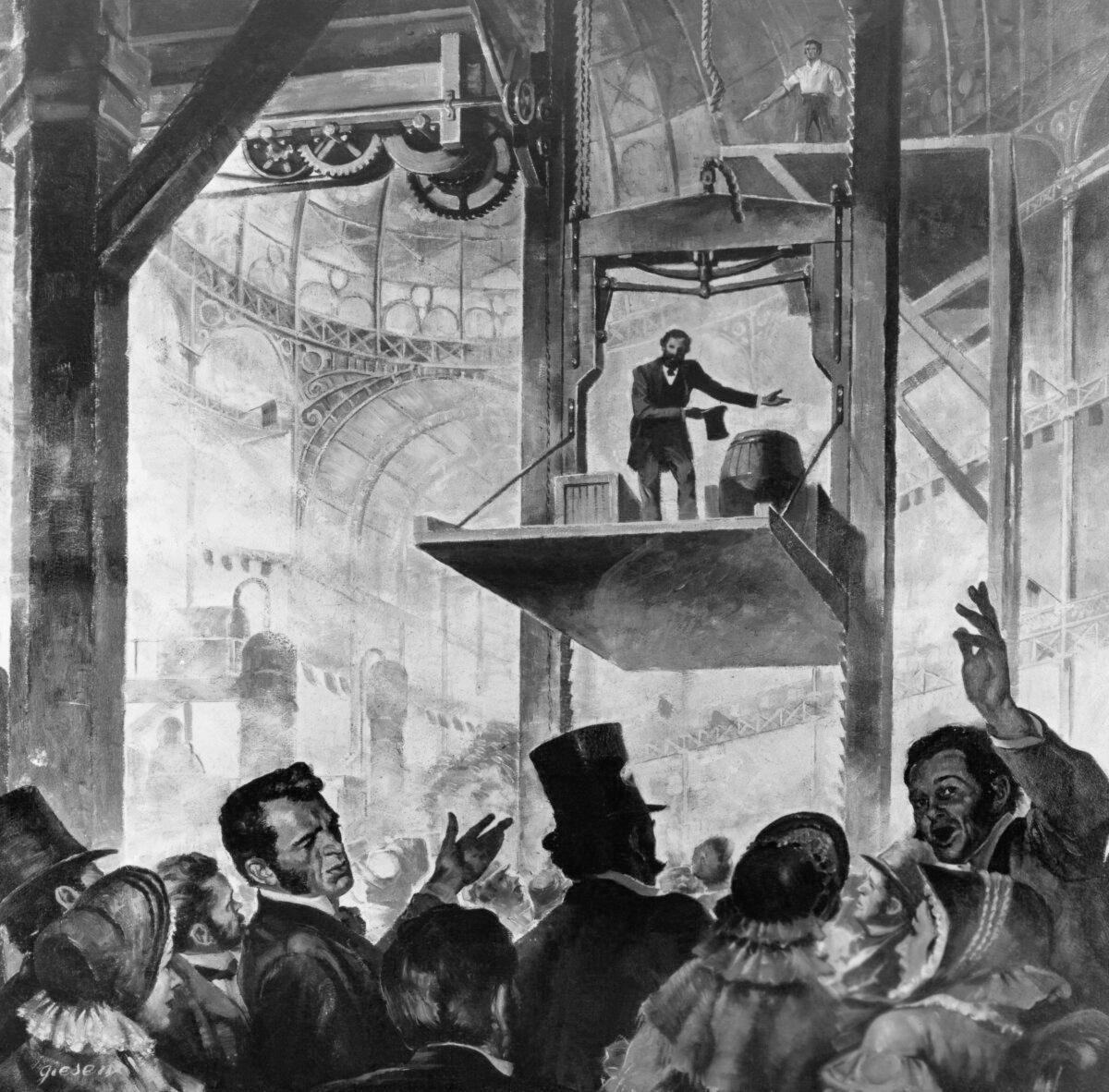
Elisha Graves Otis shows his first elevator in the Crystal Palace, New York City, 1853. (Public Domain)
Elisha Graves Otis shows his first elevator in the Crystal Palace, New York City, 1853. Public Domain
Having perfected the “safety hoist” to the point where he was not hesitant to test it in front of a very large crowd, Otis performed his first demonstration in 1854 inside the Crystal Palace. Standing on the platform, he had it raised about 30 feet in the air. He then had an assistant cut the rope that had hoisted the platform. The crowd screamed in horror, but for naught. The platform dropped only a few inches before coming to a halt. He looked out over the crowd and yelled out, “All safe, ladies and gentlemen, all safe.”

Lifting Up People, Literally

The demonstrations left an impression on the crowd and by the end of 1855, he had doubled his annual sales to 15. He had still not patented his invention despite its growing popularity. There was indeed a demand for such a contraption. Businesses began purchasing the safety hoist strictly for maneuvering goods and equipment.

On March 23, 1857, the historic five-story H.V. Haughwout Building in New York City became home to the world’s first elevator designed for people, and its elevator was, of course, installed by Otis.
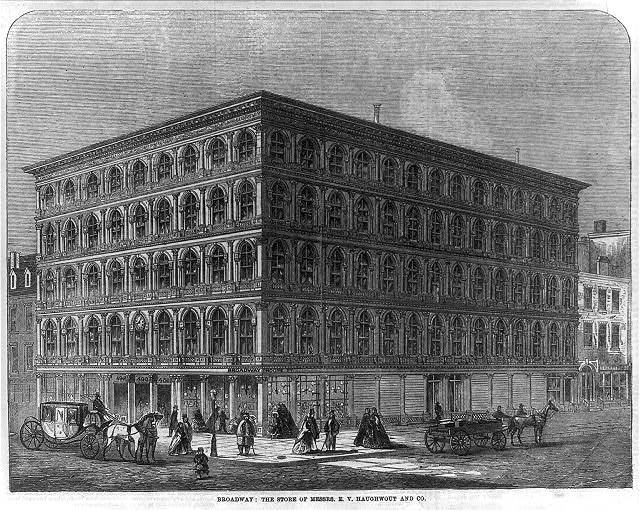
"Broadway: The Store of Messrs. E.V. Haughwout and Co." Woodcut from Illustrated London News, April 2, 1859. Library of Congress. (Public Domain)
"Broadway: The Store of Messrs. E.V. Haughwout and Co." Woodcut from Illustrated London News, April 2, 1859. Library of Congress. Public Domain
Finally, on Jan. 15, 1861, Otis received a patent for his “hoisting apparatus.” Unfortunately, he died a few months later from diphtheria. His business, however, became a success, especially under the direction of his two sons, Charles and Norton. Otis revolutionized the way goods were moved and how people got around in buildings. His elevator system directly impacted the development of skyscrapers, making them practical.
In 1867, the brothers renamed the company from Union Elevator and General Machine Works to Otis Brothers & Company. It is now known as Otis Elevator Company, and, according to its website, the company’s elevators and escalators move “2.5 billion people a day and maintain more than [around] 2.5 million customer units worldwide, the industry’s largest portfolio.” The Otis Elevator has been placed in some of the world’s most famous and important places, including the Washington Monument, the Kremlin, and the Eiffel Tower.
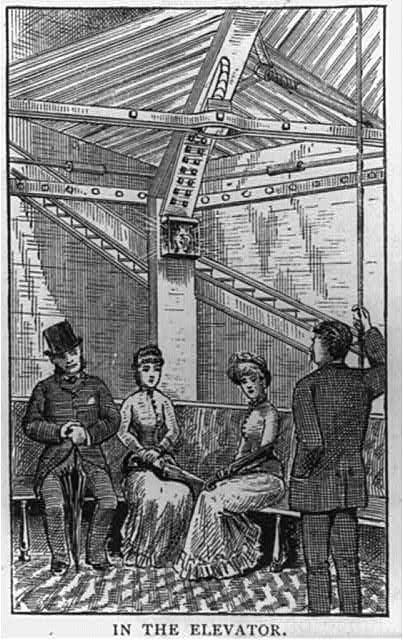
Two men and two women in elevator in the Washington Monument, 1887. Library of Congress. (Public Domain)
Two men and two women in elevator in the Washington Monument, 1887. Library of Congress. Public Domain
What arts and culture topics would you like us to cover? Please email ideas or feedback to [email protected].
Google LogoMark Us Preferred on Google
Dustin Bass
Dustin Bass
Author
Dustin Bass is the creator and host of the “American Tales” podcast and cofounder of “The Sons of History.” He writes two weekly series for The Epoch Times: Profiles in History and This Week in History. He is also an author.