Why Little Girls (Rightly) Love Cinderella

Long before it included glass slippers and fairy godmothers, ‘Cinderella’ told a tale of courage, justice, and grace.
Why Little Girls (Rightly) Love Cinderella
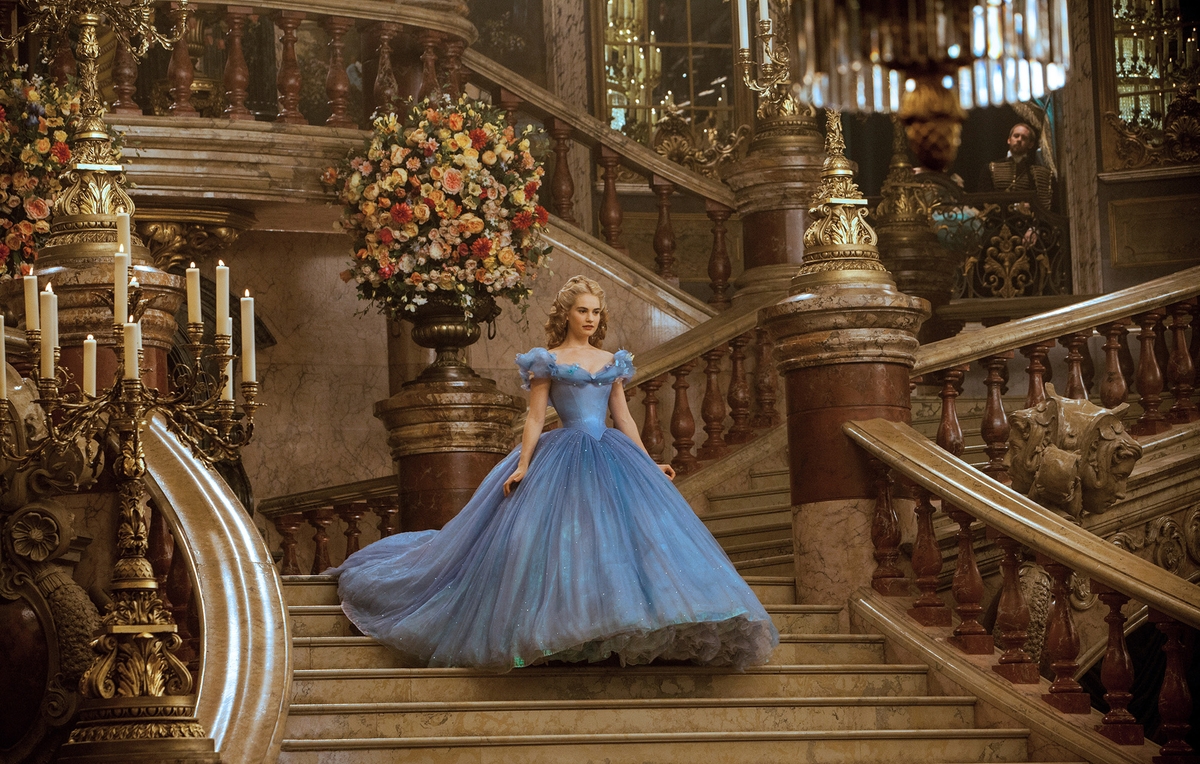
Ella (Lily James) in her ballgown, in Kenneth Branagh’s 2015 rendition of “Cinderella." MovieStillsDB
|Updated:
0:00

My wife and I let our daughter watch Kenneth Branagh’s 2015 rendition of “Cinderella” for her third birthday. She sat on the couch in a somewhat rumpled blue dress and a plastic crown, her legs straight out in front of her, feet not reaching beyond the edge of the seat, eyes wide, enchanted by the story playing out before her. She doesn’t watch many movies, and this one was new.

Because we knew of her growing interest in princesses in general and Cinderella in particular, we figured this would be the perfect birthday treat. And so it was. Seeing her favorite story dramatized in glorious color and sound on screen seemed to move and inspire her in a way that she simply couldn’t articulate.

The Cinderella story has dazzled countless generations of children, particularly little girls, like my daughter—and plenty of adults too. Its enduring relevance speaks to its timeless truths and valuable moral lessons. This story’s theme has remained present in our cultural consciousness for thousands of years, a testament to its power and charm.

The Cinderella Story Through Time

One of the earliest forms of the Cinderella story appeared in the Ancient Egyptian tale of “Rhodopis and Her Little Gilded Sandals.” In this story, an eagle carries away the sandal of a virtuous maiden, Rhodopis, and drops it in the lap of the king. The king is intrigued by the strange event and the sandal’s beauty, and sets off to find its owner. When he eventually finds the owner, Rhodopis, he marries her and makes her his queen.

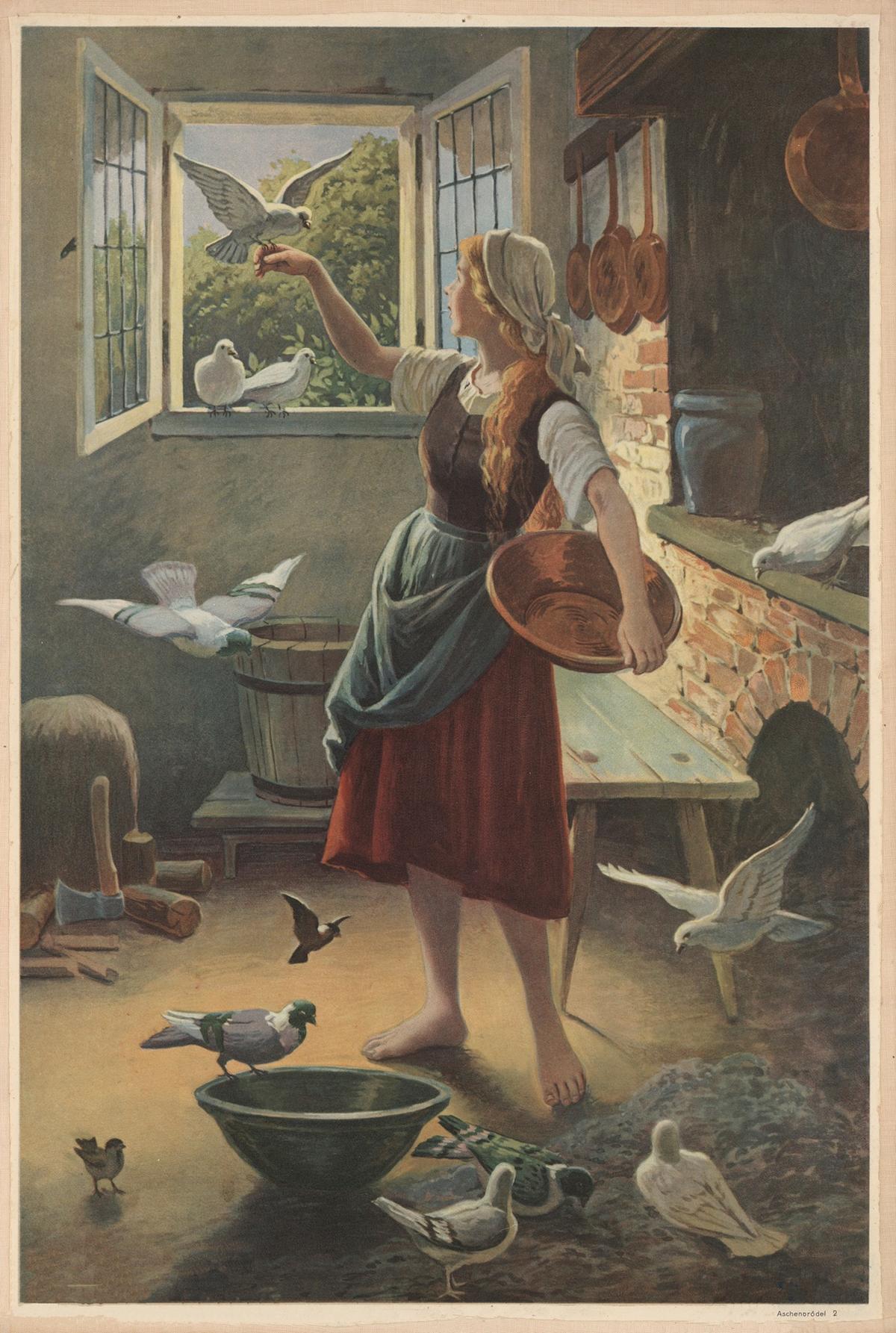
Later authors added details to the story, reminiscent of the modern Cinderella tale. Their edits transformed Rhodopis into a slave girl. Though she was mistreated by fellow slaves, she was beloved by animals. Features of the Cinderella story we know took shape here.
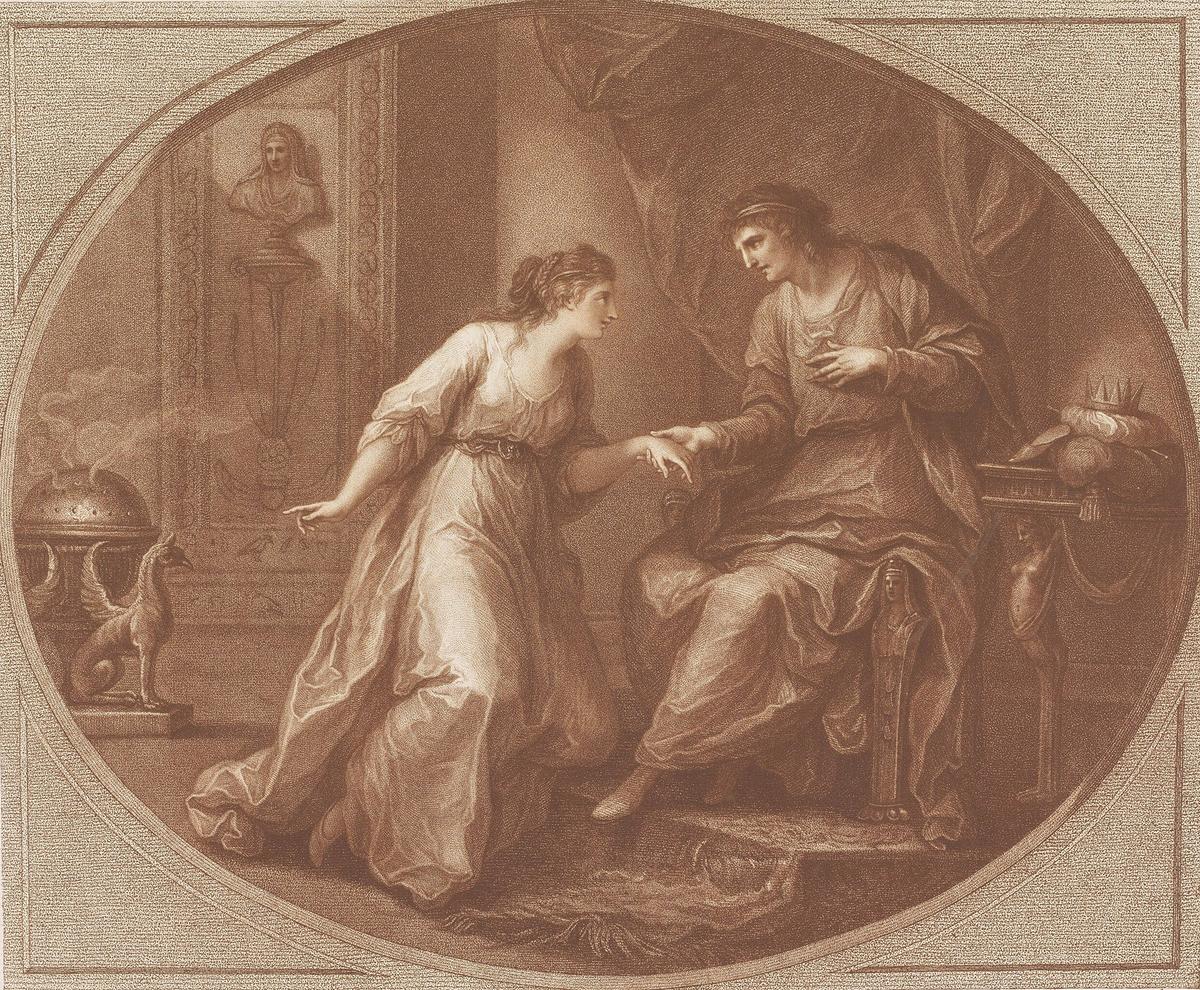
"Psammeticus King of Egypt in love with Rhodope," engraved by Francesco Bartolozzi in 1783, depicts an early telling of the Cinderella story. (Public domain)
"Psammeticus King of Egypt in love with Rhodope," engraved by Francesco Bartolozzi in 1783, depicts an early telling of the Cinderella story. Public domain

An even more familiar version of the tale emerged in China during the Tang dynasty (618–907). This version introduces the evil stepmother and jealous stepsisters. Thanks to a fish’s magic bones and a fairy’s advice, the heroine attends the New Year festival. She loses her slipper at the party, where the king finds it and uses it to track her down and marry her.
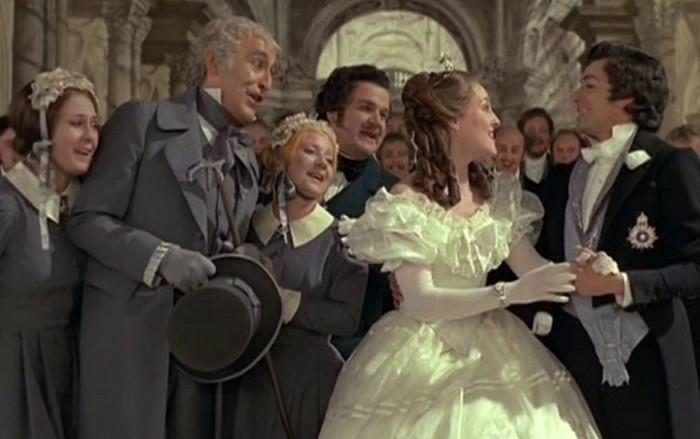

The Cinderella story traveled to Western Europe during the Renaissance. Each retelling added adaptations and layers of detail like rings on a tree. In 1697, French author Charles Perrault published a collection of fairy tales that included “Cendrillon.” That tale introduced many  of the now-iconic features of the story, including the fairy godmother with her midnight curfew, the pumpkin that turns into a carriage, and, of course, the glass slipper.
As the Cinderella story moved into Western Europe, artists and authors added details that shaped the version most familiar today. (Public domain)
As the Cinderella story moved into Western Europe, artists and authors added details that shaped the version most familiar today. Public domain

Perennial Appeal

The Cinderella story’s ability to endure from epoch to epoch and to manifest in a variety of distinct cultures suggests that it has permanent and universal value. The story expresses the archetype of the unjustly persecuted heroine whose patient virtue under oppression is rewarded in the end. That archetype resonates with people of all times and places. Why this resonance? Since the human experience of oppression and trial is universal, the desire to transcend it is also universal. Cinderella provides a model for transcending suffering through virtue.

Cinderella struggles with her situation, faces up to it, and makes the best of it. She wins the ultimate victory over her persecutors by refusing to sink to their level, by maintaining “kindness and courage,” as Lily James says in the Branagh film. She overcomes evil not through violence or ambition, but through virtue and unexpected magical assistance. Even higher powers are looking out for her because of her goodness!

There’s something thrilling about Cinderella’s ascent from the lowest place to the highest as an unsought reward for her virtue. This kind of unexpected transformation of a terrible situation into the best is something that every human heart longs for, and—in their better moments—still believes in.
As J.R.R. Tolkien brilliantly put it in his essay “On Fairy Stories,”
“The consolation of fairy-stories, the joy of the happy ending: or more correctly of the good. Catastrophe ... this joy ... is a sudden and miraculous grace: never to be counted on to recur. It does not deny the existence of dyscatastrophe, of sorrow and failure: the possibility of these is necessary to the joy of deliverance; it denies (in the face of much evidence, if you will) universal final defeat and in so far is evangelium, giving a fleeting glimpse of Joy, Joy beyond the walls of the world, poignant as grief.”
Such  cosmic hope, embodied in a fairy tale, speaks to some of our deepest aspirations.
All this applies just as much to adults as to children. But the child audience deserves special attention here. Though young children may not be able to articulate their attraction to the story of the girl with the glass slipper, they likely have an inkling of these truths. Their moral compasses have already begun to develop, and they can recognize both injustice and kindness when they see it. They have an intense  longing for justice—as it is in the end of Cinderella.
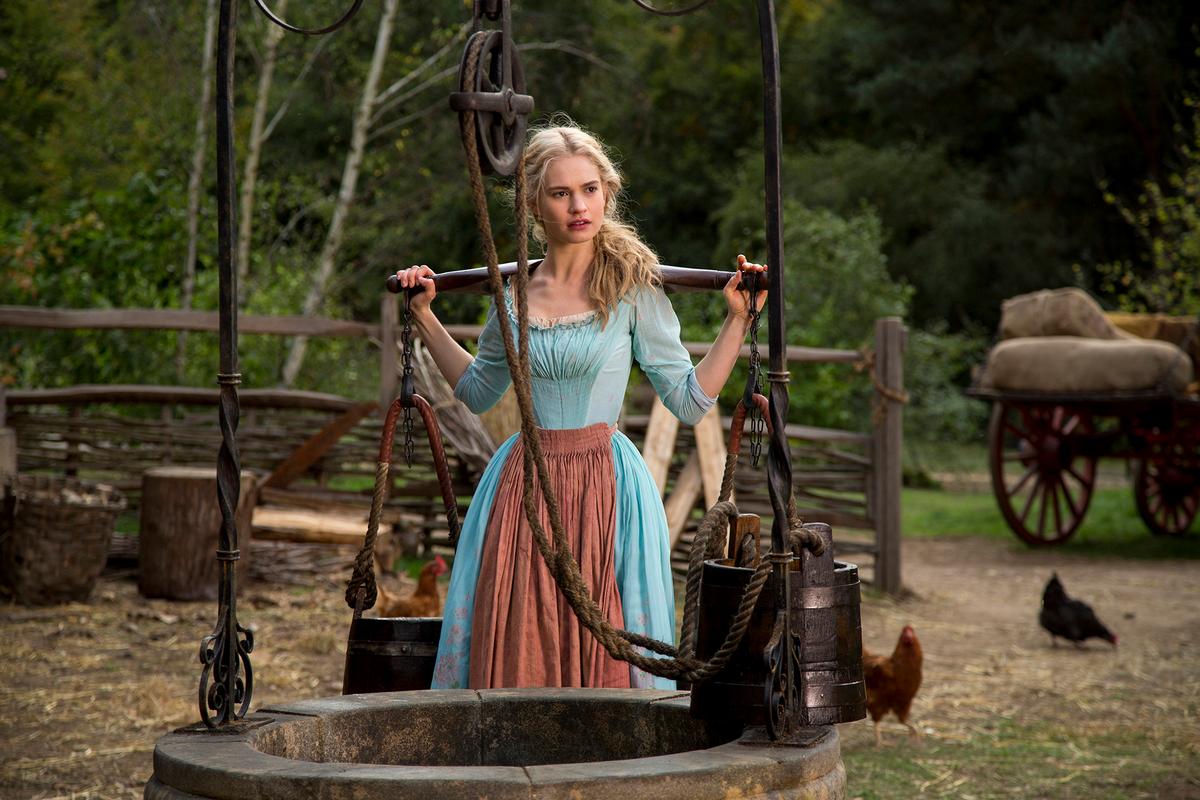
Across the versions of "Cinderella," the heroine is defined by patience, kindness, and courage in the face of injustice. (MovieStillsDB)
Across the versions of "Cinderella," the heroine is defined by patience, kindness, and courage in the face of injustice. MovieStillsDB
I suspect that little girls like my daughter are first captivated by Cinderella’s beauty. Little girls naturally desire to be beautiful. In Cinderella, they find a model of beauty that they can imaginatively identify with. Rarely is it enough to simply read about Cinderella—they must be Cinderella in their games. But then–and this is maybe the simple genius of fairy tales–Cinderella’s outward beauty draws her little admirers to appreciate her inner beauty. What begins as  simple visual delight moves into the heart, helping youngsters explore moral questions. 

To put it simply, Cinderella is a good role model. She helps children associate beauty not just with looks but also with deeds–with patience, kindness, determination, and hope. It’s one of the reasons we ought to keep reading fairy tales to our children (and watching quality movie adaptations of them). Their external elements, shimmering with magic, delight, and imaginative fodder for children, gently lead children into deeper explorations of truth, beauty, and goodness.


Google LogoMark Us Preferred on Google
Walker Larson
Walker Larson
Author
Before becoming a freelance journalist and culture writer, Walker Larson taught literature and history at a private academy in Wisconsin, where he resides with his wife and daughter. He holds a master’s in English literature and language, and his writing has appeared in The Hemingway Review, Intellectual Takeout, and his Substack, The Hazelnut. He is also the author of two novels, “Hologram” and “Song of Spheres.”