White House Hostesses Who Boosted America

Dolley Madison, Grace Coolidge, and Jacqueline Kennedy are among the women who left marks on both politics and American culture.
White House Hostesses Who Boosted America
President-elect John F. Kennedy and Jacqueline Kennedy pose at Georgetown University Hospital in Washington with their son, John F. Kennedy Jr., following a baptism for the infant on Dec. 8, 1960. AP Photo
|Updated:
0:00

When Americans pause to consider the first ladies of the White House, what usually comes to mind are their interests and accomplishments. Dolley Madison rescuing George Washington’s portrait from British invaders, Eleanor Roosevelt’s civil rights activism, Lady Bird Johnson’s highway beautification programs, Laura Bush’s advocacy for literacy and reading—these are representative of the deeds and projects undertaken by our presidents’ wives.

Often overlooked are the skills necessary for planning and executing the White House social calendar—those dinners, parties, and entertainments that project an image not only of a particular presidency but also of America itself. Success depends on seeing that a mix of friends, acquaintances, and strangers take comfort and pleasure from the event.

While these occasions may seem inconsequential to casual observers, they are frequently of vital importance in our government’s policy making and diplomatic efforts. Moreover, they afford the hostess moments of opportunity for a quiet diplomacy all her own, a word or two advancing her husband’s reputation, running cover for his gaffes or awkward introversion, and deflecting the barbs of his critics.

Reserved Gentlemen, Gregarious Ladies

Father of the Constitution James Madison was one of the brightest of our presidents, but his advantages of intelligence might have been offset by what some saw as deficiencies. He was 5 feet, 4 inches tall and spoke with a shrill voice; and he was painfully shy, preferring the company of his books or a few friends to large parties.
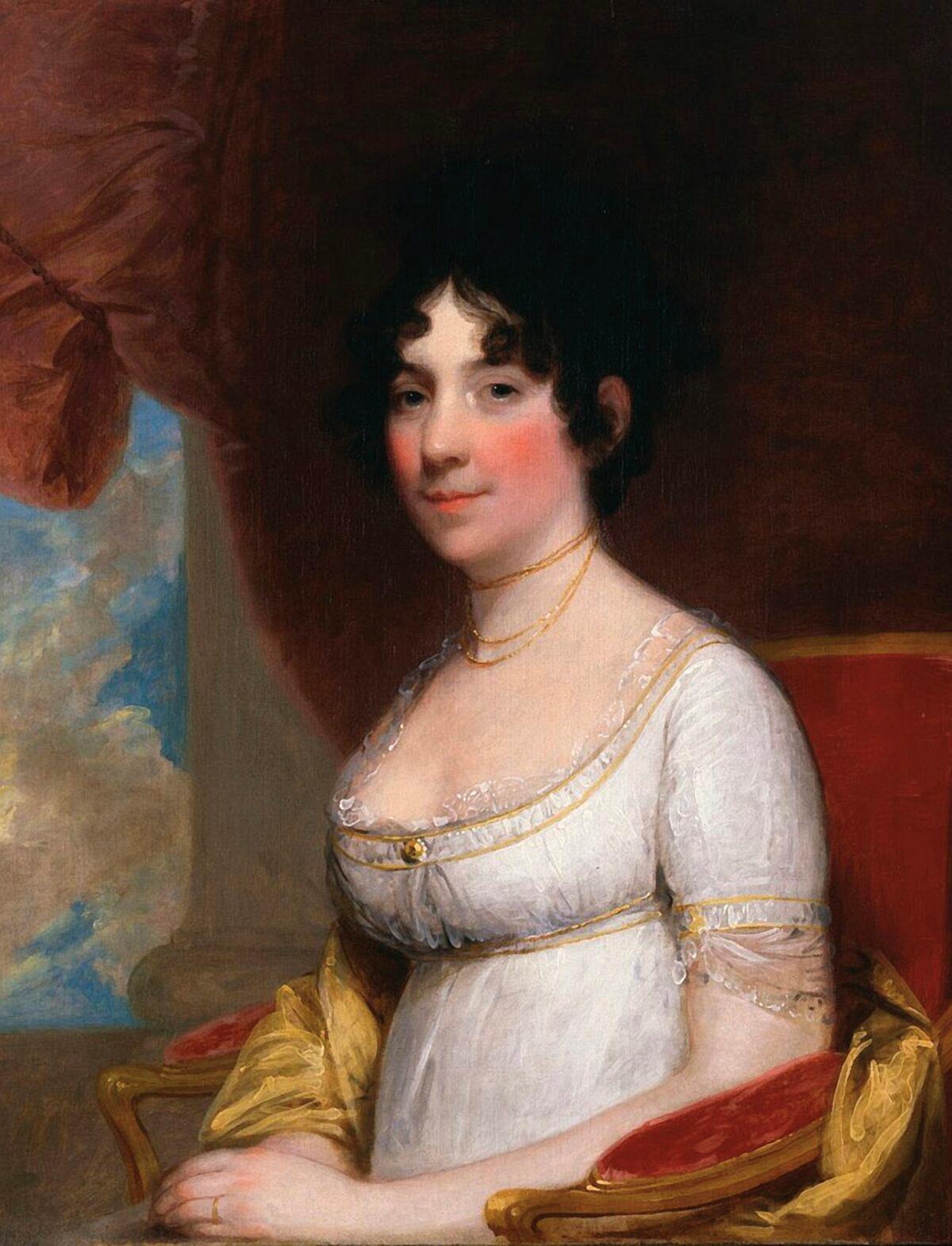
Fortunately for the future president, in 1794 he married Dolley Payne Todd, a fetching widow 17 years younger and three inches taller than her husband. The pair made a great team, for while James was reserved, Dolley reveled in parties and entertaining others. Even before Madison became president, Dolley often served as a White House hostess for the widowed Thomas Jefferson, winning an early reputation for her vivacity, warmth, and attractive looks.
“Dolley Madison,” 1804, by Gilbert Stuart. White House, Washington. (Public Domain)
“Dolley Madison,” 1804, by Gilbert Stuart. White House, Washington. Public Domain

As first lady, she instituted the first inaugural ball and gave larger parties than her predecessors. Because of her vivacious personality, her husband often placed her at the head of the main table so as to direct conversation. Her Wednesday night “drawing room” get-togethers became so popular that they became known as “squeezes” because of the numbers of people packed into the room.
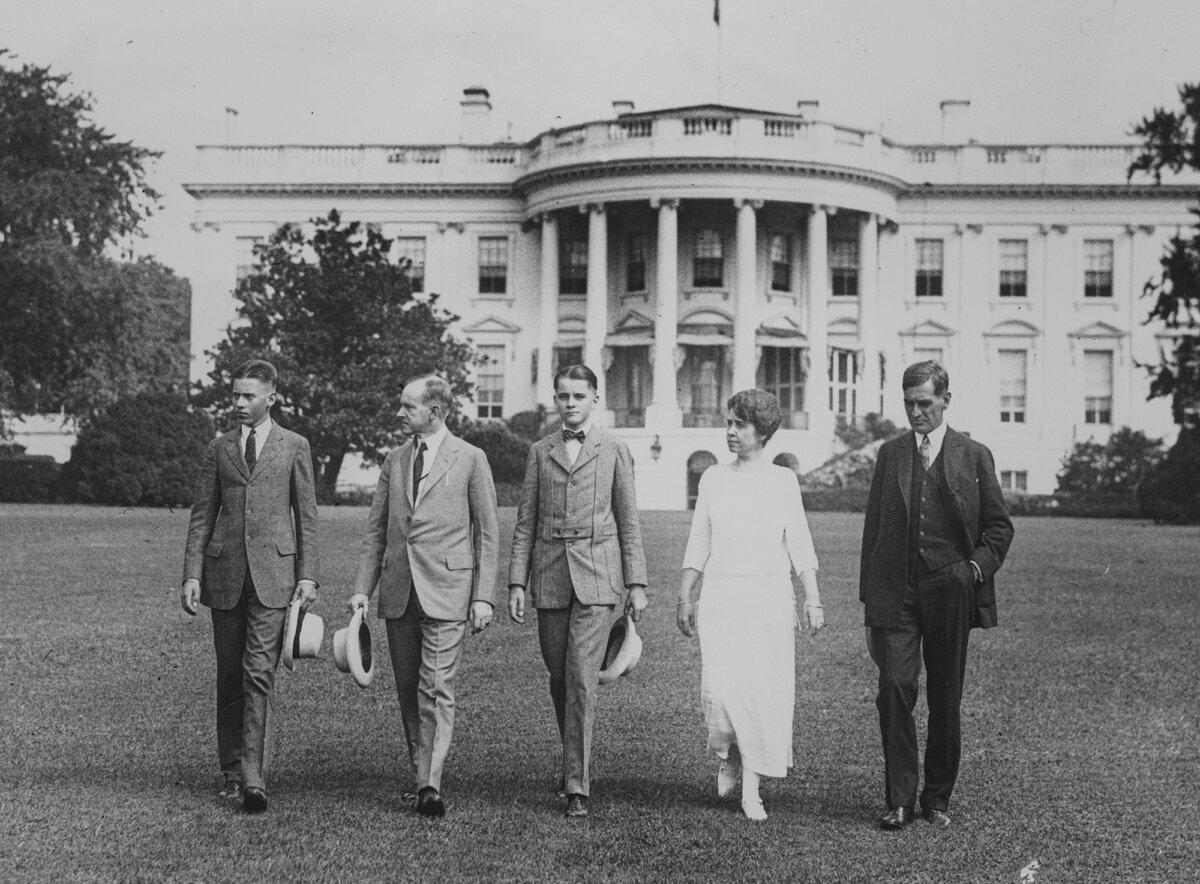
A century later, the reticent Calvin Coolidge, “Silent Cal,” took office and was blessed in his turn with a wife who excelled at playing hostess. Nicknamed “Sunshine” by the Secret Service, the outgoing Grace Goodhue Coolidge brought that light to White House social affairs. She had the gift of making visitors feel at home and delighted in welcoming others into the presidential residence. She took particular pleasure in parties for children and holiday events like the lighting of the Christmas tree—the first ever with electricity—and the Easter Egg Roll.
(L–R) John Coolidge, President Calvin Coolidge, Calvin Coolidge Jr., first lady Grace Coolidge, and George Christian at the White House, circa 1930. (FPG/Getty Images)
(L–R) John Coolidge, President Calvin Coolidge, Calvin Coolidge Jr., first lady Grace Coolidge, and George Christian at the White House, circa 1930. FPG/Getty Images
Even Theodore Roosevelt’s oldest daughter and D.C. doyenne, the acerbic Alice, had nothing but praise for Coolidge: “She had a simplicity and charm … was amused by all the official functions and attentions, yet was always absolutely natural and unimpressed by it all.”

A Touch of Class

Jacqueline Kennedy was a first lady who, like Dolley Madison, added her own distinct flair to White House gatherings.
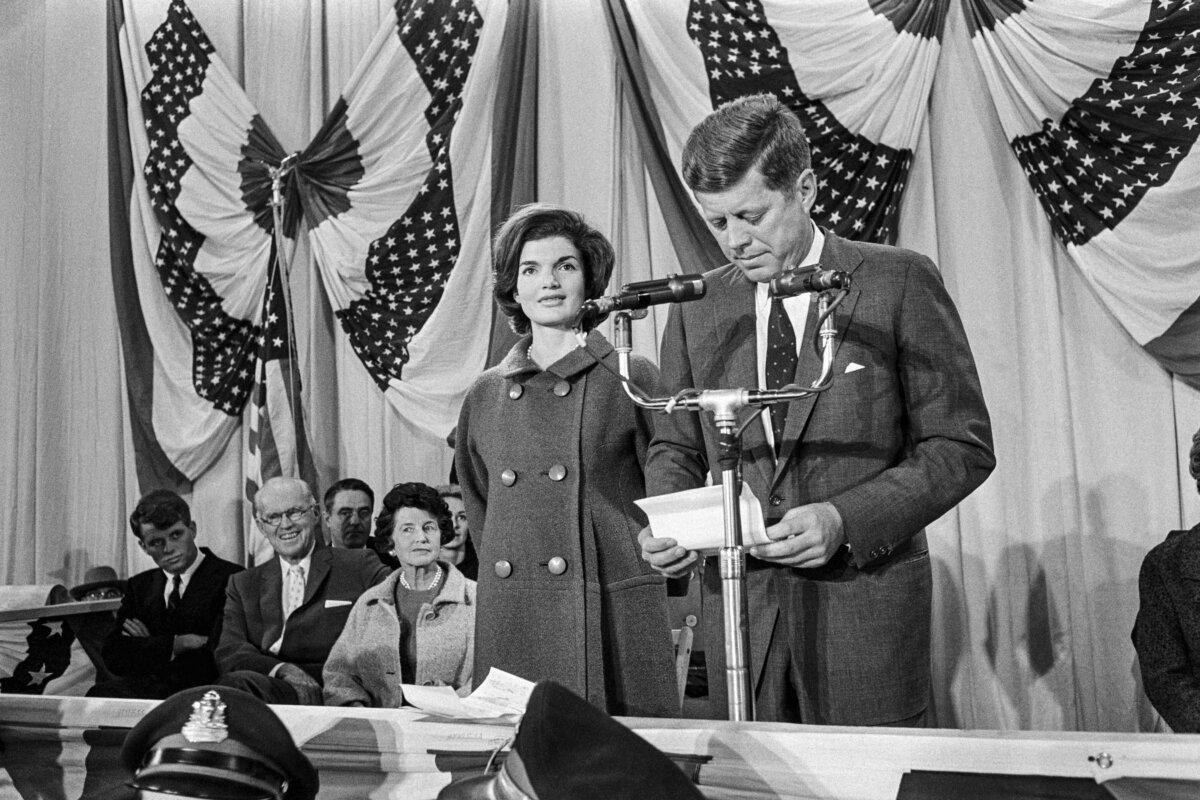
First lady Jacqueline Kennedy (C) stands next to President-elect John Fitzgerald Kennedy as he delivers his victory speech on Nov. 9, 1960. She was only 31 years old when her husband took office. (AFP via Getty Images)
First lady Jacqueline Kennedy (C) stands next to President-elect John Fitzgerald Kennedy as he delivers his victory speech on Nov. 9, 1960. She was only 31 years old when her husband took office. AFP via Getty Images

Only 31 when she became first lady, Kennedy’s life had nonetheless prepared her for the rigors of planning and executing White House events. She enjoyed a privileged childhood, was an expert equestrian, studied history, literature, art, and French in college, and had spent a year in Paris while at Vassar. She later recalled: “I loved it more than any year of my life. … I learned not to be ashamed of a real hunger for knowledge, something I had always tried to hide, and I came home glad to start in here again but with a love for Europe that I am afraid will never leave me.”

As hostess, Kennedy emphasized the promotion of American culture, including on her list of invitations writers, musicians, artists, historians, and scientists. After his visit, violinist Isaac Stern wrote to express his gratitude: “It would be difficult to tell you how refreshing, how heartening it is to find such serious attention and respect for the arts in the White House. To many of us it is one of the most exciting developments on the present American cultural scene.”

Getaway Diplomacy

“It was much more relaxed to visit the ranch rather than the White House,” said former first lady Laura Bush in an interview. “We could have red-checked tablecloths instead of linen napkins. I think it gave people—both the world leaders who visited there, as well as George—a chance to get to know each other in a way you don’t have on a formal trip or a state visit.”
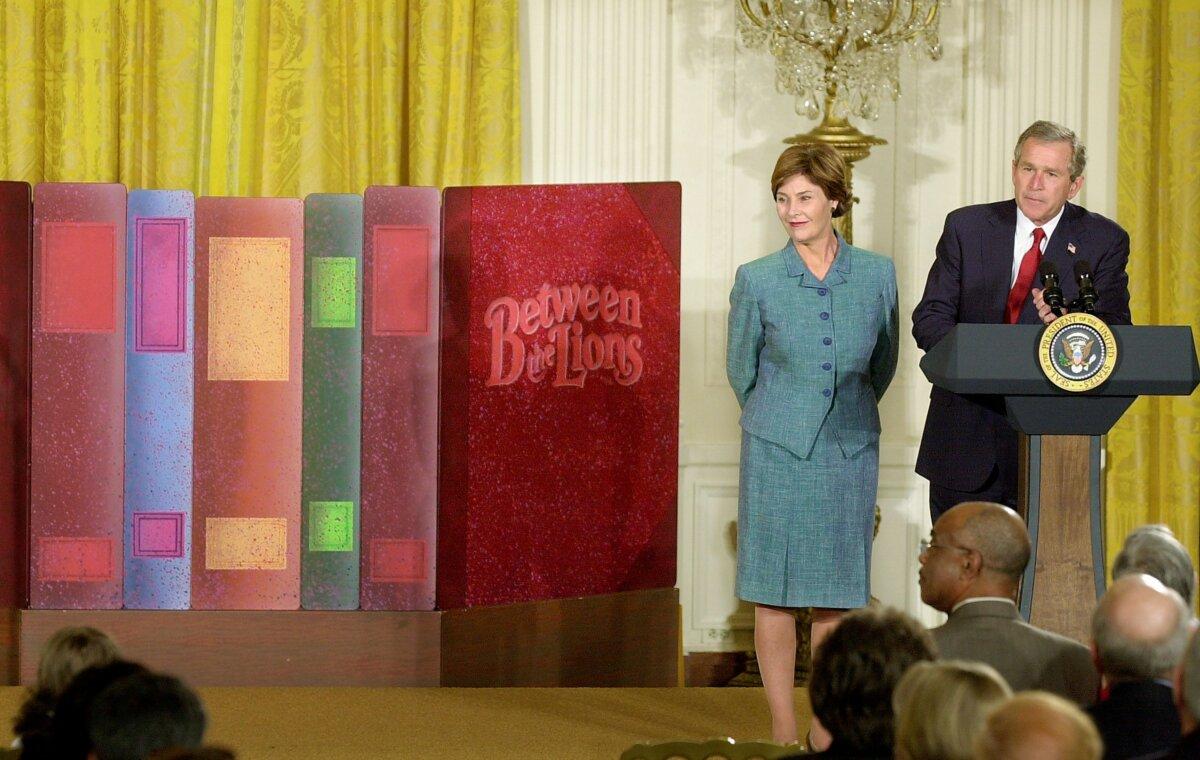
Former President George W. Bush and first lady Laura Bush promote early reading for children in the East Room of the White House on April 3, 2002. (Mike Theiler/Getty Images)
Former President George W. Bush and first lady Laura Bush promote early reading for children in the East Room of the White House on April 3, 2002. Mike Theiler/Getty Images

Laura and George Bush frequently entertained politicians, diplomats, and even heads of state at their Texas ranch rather than in Washington, aiming for a casual setting and more personal time with the likes of Germany’s Angela Merkel and Japan’s prime minister, Junichiro Koizumi. Here, as Bush recounts, they could sit by the pool with their visitors or take long walks across the prairie, options unavailable to them in the White House. “There’s just great relief, really, in being briefly in a place where you can walk out the front door and go for a walk. When you’re at the White House, you just can’t do that.”

Like other presidents and first ladies over the last 80 years, George and Laura Bush also took advantage of Maryland’s presidential retreat center, Camp David, for short breaks and holidays. Here too was a relaxed atmosphere conducive to soft diplomacy, a place where dinner parties were more intimate and less stiff.

The Substitutes

Not all White House hostesses were wives of the presidents. Daughters, sisters, and friends have acted as hostesses for presidents who were widowed, unmarried, or whose spouses were unable or unwilling to arrange and host White House affairs. As mentioned earlier, Dolley Madison had stepped up for Jefferson, as did Jefferson’s daughter Martha, and others have followed the precedent in the years since then.

When a stroke left Letitia Tyler, wife of John Tyler, unable to act as hostess for White House dinners, her daughter-in-law, Elizabeth “Priscilla” Cooper Tyler, took her place. Though only 25 at the time, her youth and the experience she had gained in her work as an actress before her marriage proved major assets in her position as official hostess. One newspaper of the day praised her as “one of the most amiable and accomplished ladies in all the land.”

With some coaching from Dolley Madison, Tyler organized twice-a-week dinner parties when Congress was in session, and she even helped ease some of the political tensions of the day. One adversary of the president, former president John Quincy Adams, later wrote of a party hosted by Priscilla: “The courtesies of President and of Mrs. Robert Tyler to their guests were all that the most accomplished European court could have displayed.”

Their Gift for Us

All of the women who have hosted White House events with grace and aplomb, whether as wives or surrogates, deserve America’s appreciation and gratitude. Their task was not always easy, and their efforts and creativity have often brought little recognition and even criticism.

We should remember and honor these women. At the dinners and entertainments they arranged and over which they presided, they acted as ambassadors for America, putting guests at ease and enabling important connections and conversations among their guests. On less formal occasions, such as holiday parties, at their best these White House hostesses have gently reminded us, as they did their guests, of the generous spirit and grace of our country.

What arts and culture topics would you like us to cover? Please email ideas or feedback to [email protected]
Google LogoMark Us Preferred on Google
Jeff Minick
Jeff Minick
Author
Jeff Minick has four children and a passel of grandkids. He has written two novels, “Amanda Bell” and “Dust on Their Wings,” as well as “Learning as I Go” and “Movies Make the Man.” You’ll find more of his writing at JeffMinick.substack.com.