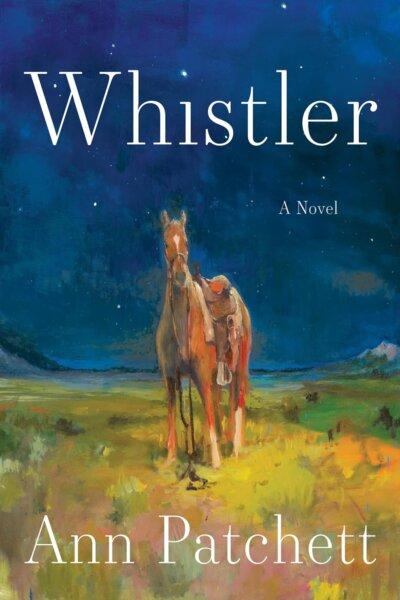
“Whistler” is a beautiful novel about life choices as they are remembered and as they unfold in the present. The story opens at the Metropolitan Museum of Art in New York City, where we meet Daphne Fuller, a 53-year-old English teacher, and her husband, Jonathan. There they make a spontaneous, yet fateful, decision.
Jonathan notices an elderly man watching Daphne and following them from wing to wing. When he corners the man for a conversation, he turns out to be Eddie Triplett, Daphne’s childhood stepfather. She hasn’t seen him in nearly 45 years.

The chance meeting evokes a strong response in Daphne, who bursts into tears. “I hadn’t known there was something in me to break, but there it was and break it did.” Eddie was her first stepfather, the man who helped raise her and her sister Leda after her biological father walked out.
Ripples of the Past
There are two sides to this novel. The first is Daphne’s rekindling of a relationship with Eddie that she thought lost forever and the resurfacing of memories she hadn’t touched in years. Past decisions, some of the characters’ own making and some of others’, have an effect on the present.Intimate stories live or die by the depth of their characters. In “Whistler,” that principle extends to Daphne’s entire family tree, which is more tangled than a string of holiday fairy lights thrown in a storage box.
Buddy Zabriskie was her biological father, but he abandoned his wife, Abigail, and their girls to become a full-time fisherman. Later, he and Daphne reconnect, but the reunion doesn’t go as planned for either.


Abigail married three times. Her second husband was Eddie Triplett, an editor she met while working as a publicist in Boston. Her third husband, Lucas Ekker, is the author of a series of self-help books, once popular and now fallen out of favor.
She had two sons with Lucas, Christopher and Matthew. Daphne and Leda always felt like the boys became the most important children in their mother’s life, but have largely accepted their second-tier status.
Daphne’s husband, Jonathan, is much older and jokes often that she always seems to attract older men. “I never experienced a flicker of interest from a man my own age,” she admits, “but show me a man ten or fifteen years older … and he’d be pulling me aside to tell me he couldn’t remember the last time he felt this way.”
Jonathan must soon travel to Wisconsin and settle his late mother’s estate, who died at the age of 96. He encourages Daphne to contact Eddie again, sensing she desperately wants to. It’s true, but she’s hesitant, unsure of what the effects on her and everyone else in the family might be.
It turns out, the effects aren’t what she or anyone else expects.
Intimate, Smart, Engaging
Patchett has a wonderful ability to drop you in the middle of a family crisis—whether momentous or minute—and make you feel like you’ve been a part of the clan forever. She delivers the distinct natural rhythm of conversing with people who have known you your whole life.The backstories are unnecessary; they are conversations interrupted months earlier that are picked up as if no time has passed. Daphne’s inner dialogue fills in the gaps in the history of the family, but Patchett doesn’t need to spell out every detail. Their actions and the things left unsaid tell more than exposition ever could.
Patchett teases little mysteries throughout that keep the reader engaged. The big ones are obvious: Why did Abigail divorce Eddie after the accident? What actually happened that night? What does it have to do with a story about a horse named “Whistler?”
The author also drops a myriad of small moments that seem innocuous at first, but later speak volumes. In flashbacks, especially during the accident itself, she weaves details that can convey simple but poignant moments.
Even though Patchett includes a seemingly mandatory storyline about a secret gay relationship, it’s not the central crux of the book, but plays a key role in the narrative. Her characters and plot feel particularly fresh and vital compared to most fiction offerings today.
There is a distinct lack of forced, pseudo-edginess that populist talents seem to feel necessary for their story to get traction or recognition.
The events of “Whistler” aren’t minor or ordinary; they reside far from the forgettable. The book works exceptionally well because the stories are recognizable—relatable human experiences that carry the weight of lives lived and the reckoning of choices made.