After Isidor and Ida Straus’s deaths, Isidor’s cousin Mrs. Samuel Bessinger said: “Theirs was the love of husband and wife so beautiful among old couples who have weathered life’s storms together. Two more devoted lovers could scarcely be found.”
Around 11:40 on the night of April 14, 1912, the RMS Titanic struck an iceberg and began sinking. As the ship went down in the early morning hours of April 15, a number of passengers aboard the lifeboats that allowed an escape from certain death observed 67-year-old Isidor Straus and his 63-year-old wife, Ida, together on the ship’s deck. After interviewing many of the survivors, the New York Tribune published this account of their final moments:
“When 1st class passengers Albert and Vera Dick got into Boat No. 3, they remembered seeing the Strauses near the boat and said: ‘As our boat, the last boat of all to go, moved away from the ship we could plainly see Mr. and Mrs. Straus standing near the rail with their arms around each other. The lights of the Titanic were all burning and the band was playing. To me the most affecting episode of the whole disaster was that final glimpse of this elderly couple, hand in hand, awaiting the end together.’”
Given their ages and their wealth, we might ask: Why did Ida and Isidore die holding each other that night when so many other passengers, mostly women, boarded the boats and survived this tragic accident?
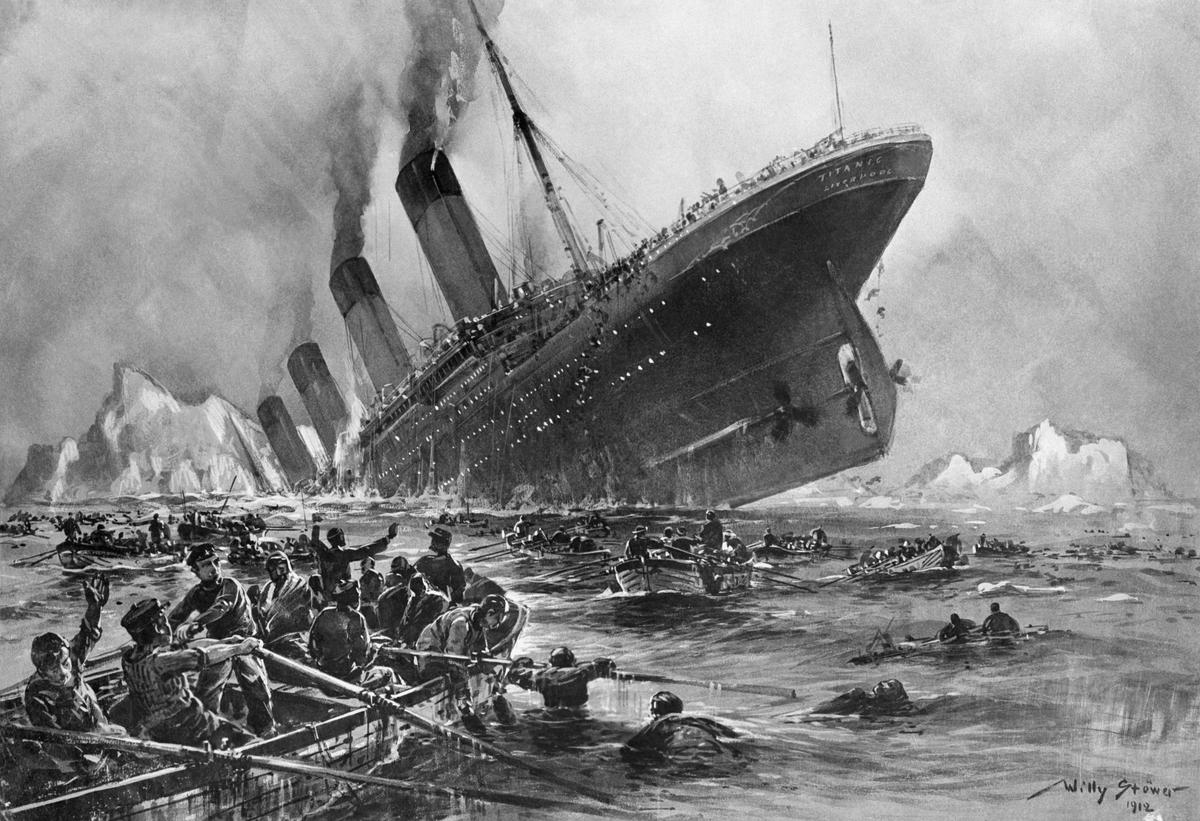
An engraving of the Titanic sinking, 1912, by Willy Stöwer. Public Domain
The answer to that question lies in a code of manliness, a deep sense of loyalty, and a love whose strength electrified the memories of those who witnessed it and still touches our hearts today.
Building a Life Together
Born in 1845 in Bavaria, Isidor Straus was 9 years old when his family immigrated to the United States, where his father soon opened a dry goods store in the small town of Talbotton, Georgia. During the Civil War, Isidor worked for a time for the Confederacy, procuring supply ships to run the Northern blockade. During his travels, he met another German migrant, Nathan Blun, from New York.After the war, Isidor and other members of his family moved to New York, where they met with financial success, first as owners of a store selling china and crockery. This led them into a lucrative partnership with Macy’s. Isidore also reconnected with Nathan Blun and fell in love with his daughter, Rosalie Ida. The two shared the same birthday, Feb. 6, and after they married on July 12, 1871, they shared a lifelong love affair that roused the admiration of those who knew them.


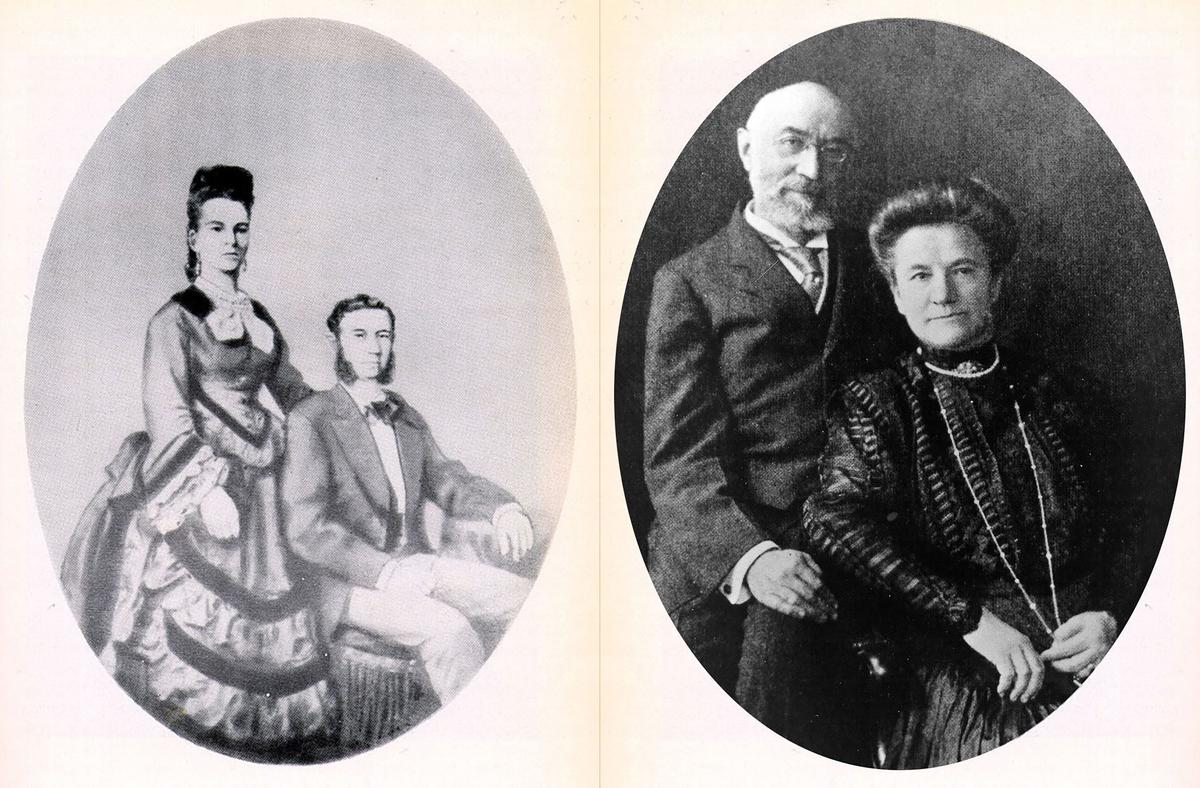
(L) Wedding photo of Isidor Straus and Rosalie Ida Blun, 1871. (R) the Straus's before 1812. Public Domain
Isidor managed the business side of their lives, providing for his family; Ida managed the household; and together they had seven children. Active in both local and national politics, Isidor became a friend and confidant of President Grover Cleveland and, later, a friend of Theodore Roosevelt.
Meanwhile, by 1896, he and Blun had become the controlling owners of Macy’s. By the time he and Ida boarded the Titanic, Isidor was a multimillionaire.
Generosity and Grace
In January 1912, Isidore and Ida traveled to the Holy Land, where in Jerusalem Ida visited the Jewish ghetto and found widespread hunger and privation. She spoke with her husband, who immediately authorized a three-year annual grant of $10,000 to establish a soup kitchen for the hungry. Afterward, they traveled to parts of Europe and finally ended their continental tour in London. Isidore was accompanied by his valet, John Farthing, and Ida engaged Ellen Bird as her maid. On April 10, the four of them boarded the Titanic.Known for having survived both the sinking of the Titanic and that of the Britannic in 1916, stewardess Violet Jessop welcomed them aboard. Later, she paid tribute to Ida and Isidore in her memoir:
“Next appeared a delightful old couple—old in years and young in character—whom we were always happy to see join us; Mr. and Mrs. Straus had grown old so gracefully and so together. They were, as usual, charmed to see us and with all the arrangements made for their comfort. They gave each of us an individual word of greeting as they made their way to the deck above to wave farewell to friends.”
According to other accounts, this same charm and grace marked the couple once the Titanic struck the iceberg.
Love and Honor Hand in Hand
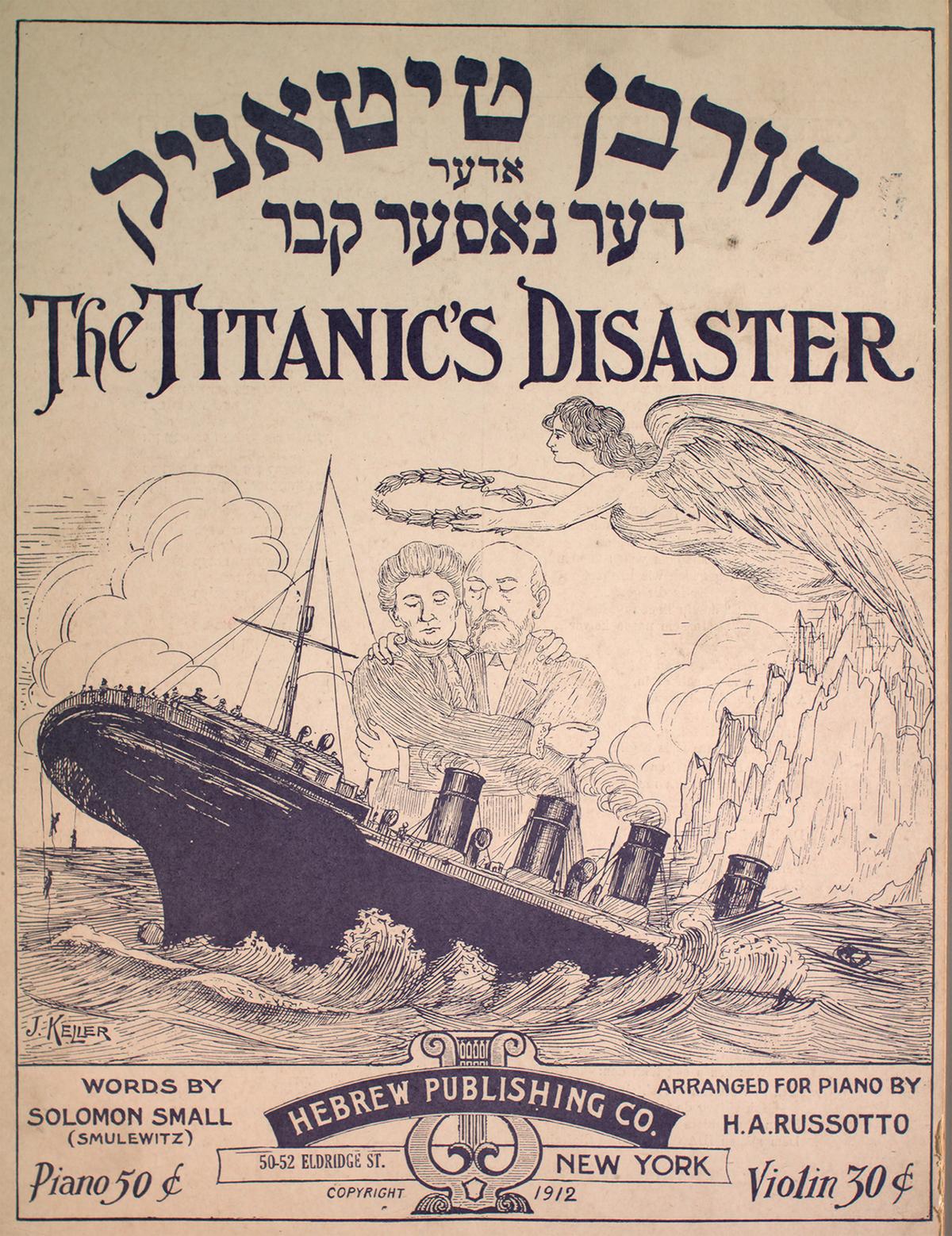
Sheet music cover for "The Titanic's Disaster," 1912, by Solomon Small and Henry A. Russotto. Johns Hopkins University. Public Domain
Like the other passengers that night, Isidor and Ida left their cabin and, accompanied by John Farthing and Ellen Bird, made their way to the deck. The passengers they met who survived that terrible night all later remarked on the couple’s calm and courageous demeanor.
Repeatedly offered a place in the boat along with his wife because of his age, Isidor refused, according to a fellow passenger who recounted that he would share his fate with the rest of the other men. When someone insisted there was room for him, saying, “You are an old man, Mr. Straus,” he answered, “I am not too old to sacrifice myself for a woman.” He dismissed every offer to board the lifeboats, “Not until all the women are in the boats will I put my foot in a lifeboat.”
Isidor’s chivalric code, however, roused in Ida another code, perhaps even older: loyalty and love.
Like her husband, Ida refused to get into a lifeboat. After making certain that her maid, Ellen Bird, had secured a seat, she rejected all offers to do the same. According to different eyewitnesses, Isidor and others pleaded with her to go. One passenger remembered that she even resisted the attempts of her husband to guide her to a lifeboat: “The struggle which ensued when Mr. Straus tried to force his wife into the boat is a picture which I shall never forget. It was more than pitiful. Mrs. Straus won it, and went down with her husband when the Titanic sank.”
Mrs. Straus, an account from Bird noted, had said: “Where you are, papa, I shall be.”
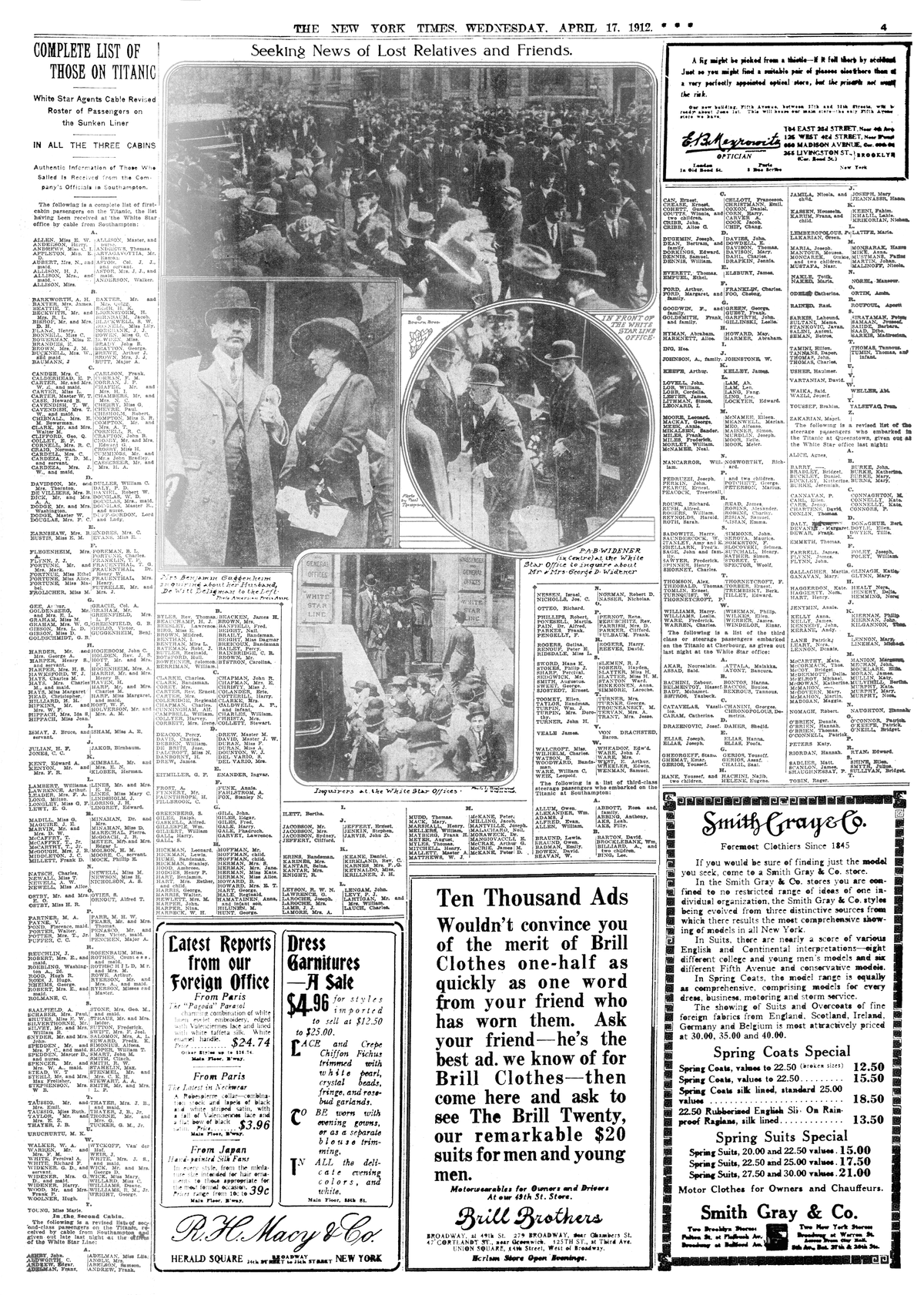
The New York Times article on April 17, 1912 titled "Complete List of Those on Titanic." Public Domain
Testaments to Love
Isidor Straus’s body was recovered, and he was buried in The Bronx’s Woodlawn Cemetery. Because their mother’s body was never found, her children obtained an urn of seawater from the place where the Titanic had gone down and buried the urn beside Isidor, with the inscription, “Many waters cannot quench love—neither can the floods drown it. (Song of Solomon 8:7)”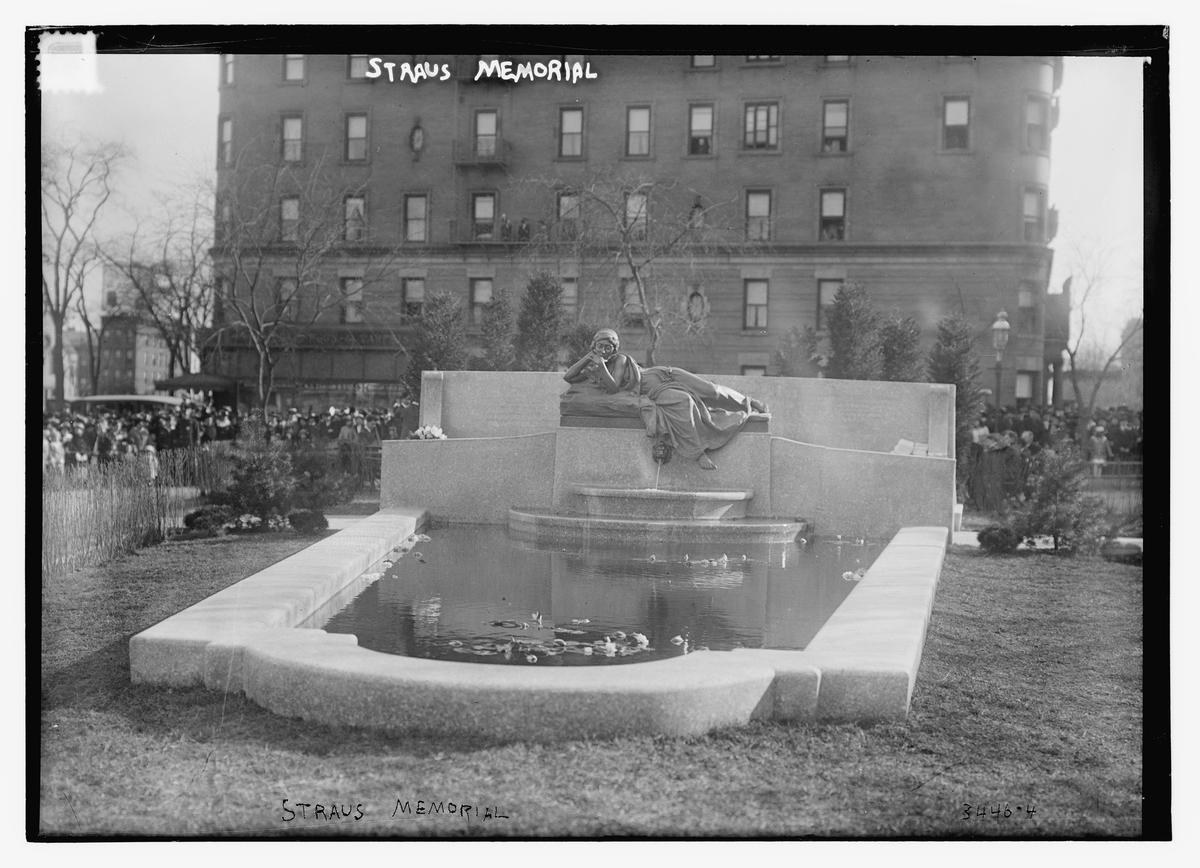
The Straus Memorial was dedicated on April 15, 1915, the third anniversary of the death of Isidore and Ida Straus. Library of Congress. Public Domain
On April 15, 1915, three years to the day after the sinking, Straus Memorial Park in New York City was dedicated, honoring the love of Ida and Isidor. On the back of the memorial statue is another Old Testament verse, this time taken from the Book of Samuel II: “Lovely and pleasant were they in their lives/ And in their death they were not divided.”
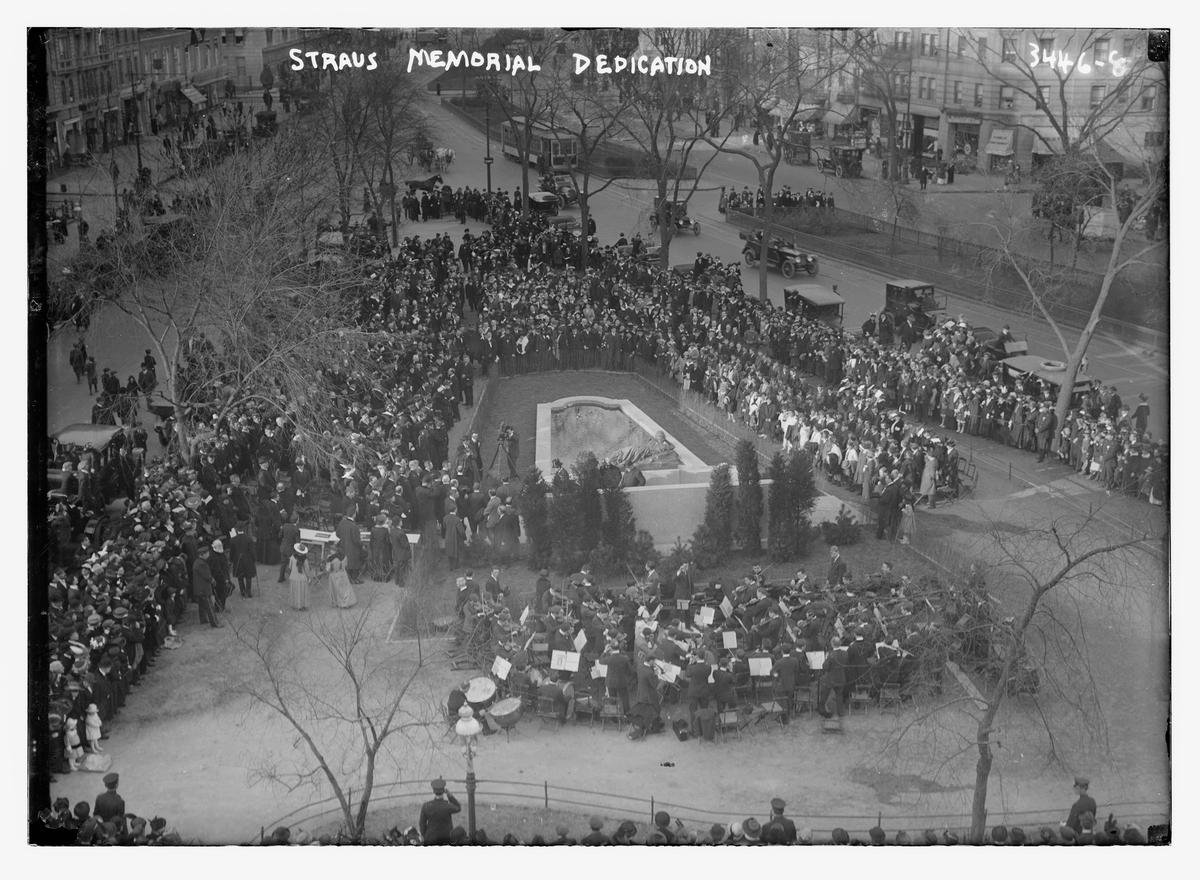
Aerial view of Straus Memorial dedication ceremony on April 15, 1915 in New York City. Library of Congress. Public Domain
One more passage from Scripture, this one from the book of Ruth, surely applies as well to this couple’s love and Ida’s act of devotion: “Entreat me not to leave you or to return from following you; for where you go I will go … where you die I will die, and there will I be buried.”
What arts and culture topics would you like us to cover? Please email ideas or feedback to [email protected]