According to a 2026 U.S. Census report, more than 90 percent of American households are air-conditioned, either by central air or window units.
It’s easy to forget that widespread household air conditioning is a recent phenomenon. In 1955, for instance, less than 2 percent of homes were air-conditioned. Most baby boomers who now enjoy refrigerated houses and climate-controlled cars grew up without summertime temperature controls, even in places like Florida, Louisiana, and Texas. Born in the late 19th and early 20th centuries, their grandparents and great-grandparents likely regarded universal air conditioning, if they thought of it at all, as akin to science fiction, like the Jules Verne novels they’d read as kids.
So, lacking the ability to reduce the temperature with thermostats, how did those sun-stricken unfortunates handle the heat and humidity of summer?
Time to hop aboard Mr. Peabody’s Wayback Machine and take a look.
Climate & Architecture
Today’s houses from Maine to Florida and Atlanta to Portland are designed and constructed with an artificial interior weather system in mind. Things were different 150 years ago. Depending on where one lived, the weather itself factored heavily into the design of a house.In large parts of the United States, air circulation was crucial for dealing with summer and early fall temperatures. Architect John Cluver notes, “While windows today are seen primarily as something to look through, before air conditioning was invented, they were a critical tool for reducing the heat in the house.” Double-hung windows, which could be opened at the top and the bottom, brought cooler air into the house and pushed the hotter air out.


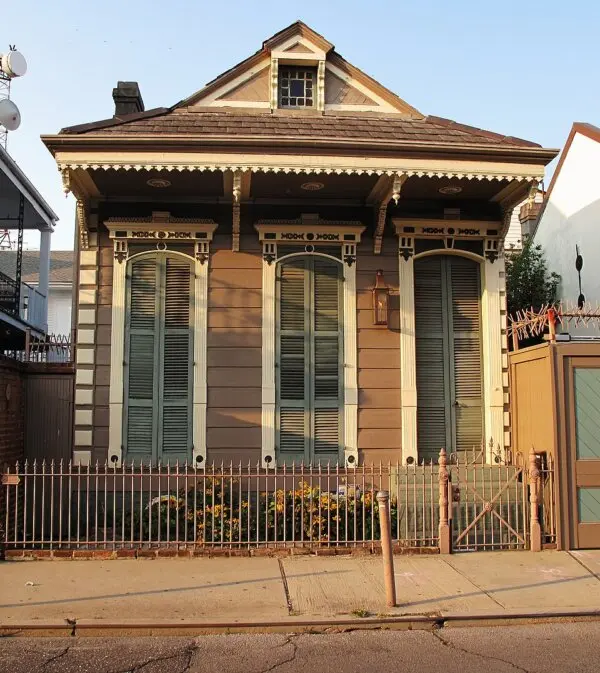
Circulation was further enhanced by hallways that carried air from the front of the house to the back. Even “shotgun houses,” small homes built to accommodate burgeoning populations in southern cities like New Orleans, and so-called because one supposedly could fire a shotgun through the front door and out the back without hitting anything, acted as excellent conduits for breezes.
Other architectural adaptations in the battle against high temperatures were large front porches, high ceilings, and summer kitchens. The porches furnished extra shade for the home and provided a gathering place for families and friends in the evening. Homes often featured ceilings 10-feet tall, which not only added a touch of elegance to the rooms but also kept them cooler as well. Some wealthier homeowners built summer kitchens, rooms that might be easily sealed off or small buildings entirely separated from the house to allow for baking and cooking in the hot months.
To offset the torpor of hot, muggy nights, those who lived in tenements often camped out on fire escapes or in parks to parry the nighttime heat, while some homeowners built sleeping porches. These might be screened-in, add-on rooms, or an open side porch doubling up as a summertime bedroom. Seeking relief from Washington’s oppressive summers, for instance, President William Howard Taft ordered a screened-in sleeping porch built atop the White House. For a time, Woodrow Wilson worked in the Rose Garden in a tent replete with electric lights and a telephone.
Breezes and Bugs, Awnings and Ice
Though we take little notice of it today, the ordinary window screen brought about a revolution in lowering indoor temperatures and suppressing disease.The American Civil War kicked off widespread use of wire screens. A Connecticut company, Gilbert and Bennett, manufactured sieves, but with the war, the Southern half of their business had vanished. A company worker suggested making and promoting wire window screens as well as sieves, and though the concept wasn’t new, this time the plan took off. Sold at first without frames, screens permitted homeowners to enjoy the cool breezes of early morning and twilight while also preventing insects like mosquitoes and flies from entering the house. With the passage of time, disease rates, especially malaria, dropped dramatically.
Awnings, too, became extremely popular before and after the turn of the new century. With mechanical devices easing the task of adjusting awnings, and with steamships replacing sail, canvas makers embraced this new demand, creating decorative awnings that added a touch of color to homes while also reducing indoor temperatures. The owner of a Victorian-era house, Michael Duffy, calculated that his awnings lowered the inside temperature by 10 to 15 degrees.
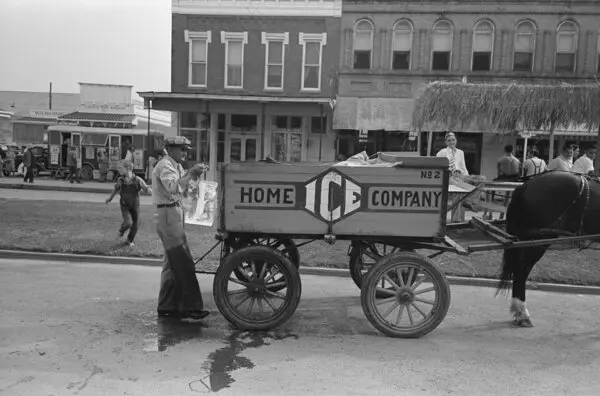
Finally, the latter half of the 19th century witnessed the Great American Ice Age. Harvesting natural ice had taken place before the Civil War, but with the coming of specialized insulated railroad cars, the slow uptick in manufactured ice, and increasing demand, this industry exploded. Soon, more than 1,500 wagons hauled ice to customers in New York City.
By the turn of the century, other towns and cities across the country sported their own ice houses and delivered that product to countless homes, where ice boxes served as early refrigerators and chipped ice satisfied the desire for chilled beverages.
One major change that ice brought to culinary culture occurred as a result of a heat wave at the 1904 World’s Fair in St. Louis. An English tea merchant, unable to sell his wares because of the sweltering temperatures, added ice to his brews, and iced tea became a hit both there and nationwide.

Dress
In an online article, “Don’t You Get Hot?” the writer points out that most reenactors dressed in 18th- and 19th-century clothing will answer that frequently asked question in the negative. Decked out in the costumes of whatever period they represent, their dress appears formal and stiff compared to our own summertime wear, and utterly inappropriate for hot weather.But the great difference between clothing then and now lies in the fiber. Our hot-weather apparel includes synthetic materials, which tend to trap bodily heat and perspiration, while the more loosely woven cottons and linens worn by our ancestors allowed the body to dissipate heat more easily. The woman in full dress we see in paintings or photos from 1880 to 1920 likely felt cooler than many in jeans and blouses or shirts do today.
An Experiment in History
Did these techniques work?Of my 75 years, I’ve spent approximately 40 without air conditioning in houses and apartments ranging from a fifth-floor walkup efficiency in Downtown Boston to the bed-and-breakfast my wife and I owned for 20 years in the Smokies until her death. Given my steep electric bills for heating my apartment this past winter—February alone cost me $340—and to the shock and amusement of friends and family, I decided to take a real trip on the Peabody Wayback Machine and decided against purchasing an air conditioner this summer.
My apartment is one of three in a downtown home built in 1900 in Front Royal, Virginia, meaning the building was designed to repel and shed heat. Before dawn—I rise earlier than the neighborhood birds—I’ve opened certain windows every morning for the last three months, closed them as the day heated up, and drawn the shades to block the late afternoon sun. As the day wore on, I sometimes switched from my usual khakis to shorts. I generally went shoeless while at home, finding that this socks-only tactic kept me cooler. I drank plenty of iced liquids and avoided using the stove, instead preparing summer dishes like salads and sandwiches.
A key difference—my cheat, if you will—between my summer lifestyle and that of a man living here 120 years ago is fans. He and his family in 1900 would have had only hand-held fans available, while mine were electric and kept me delightfully cool with no effort on my part.
Excluding taxes, my electric bill for July was $42.31, and I’m still here to tell the tale.
There’s a lot to be said for those old-timers.