When Character Counted: Haym Salomon, Forgotten Patriot

In this installment of ‘When Character Counted,’ we meet the man whose financial know-how fueled the American Revolution.
When Character Counted: Haym Salomon, Forgotten Patriot
Haym Salomon, fundraiser for the American Revolution. National Archives. Public Domain
|Updated:
0:00
“An army marches on its stomach” runs an old adage, meaning that troops can’t march without provisions. Equally valid would be “An army marches on its pocketbook,” for without money not only provisions but other supplies and payrolls will be lacking.

In 1781, the Yorktown Campaign was in full swing. French ships had cut off the British from supply by sea, and George Washington’s army was marching from New York toward the Virginia Peninsula in hopes of ending the war. Yet the disgruntled army seethed with rebellion over the lack of pay and provisions. Washington estimated that he needed $20,000 to conclude the campaign.
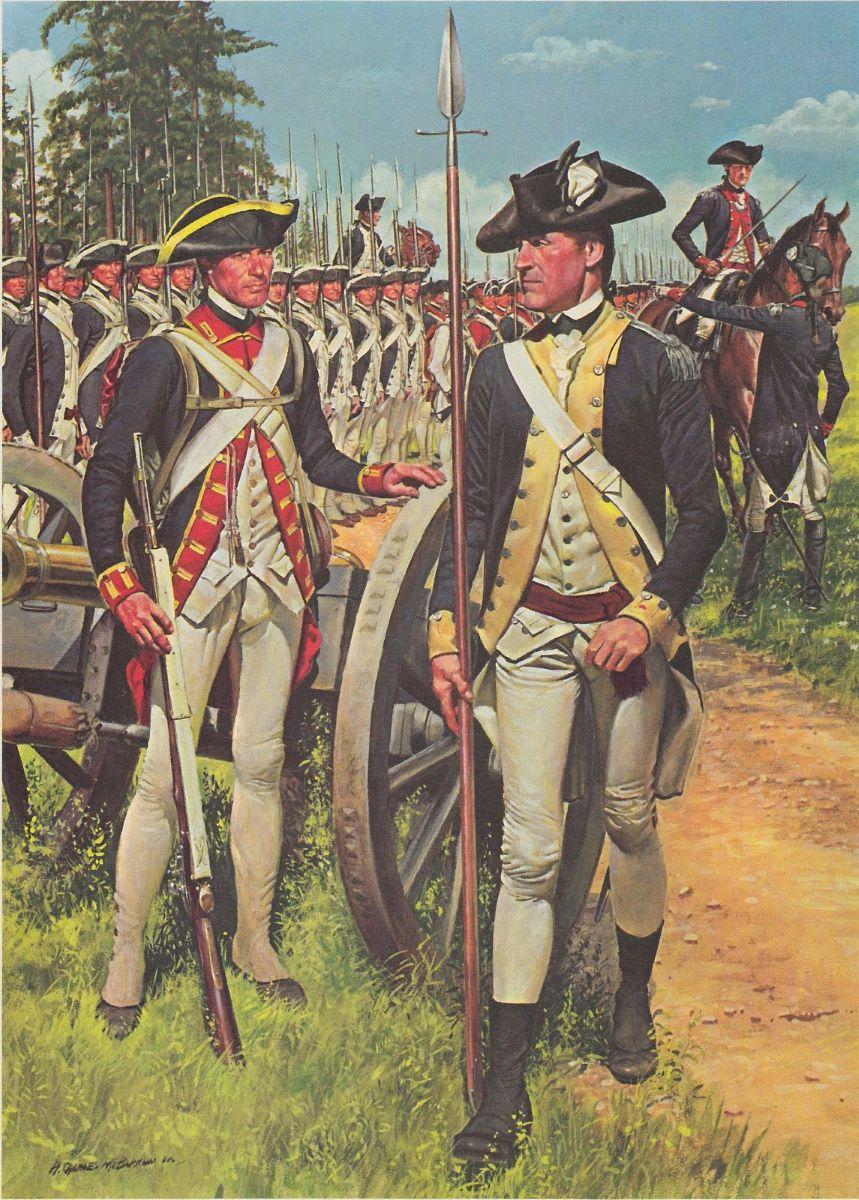
The Continental Army at the time of the Yorktown campaign. United States Army. Prints & Posters - The American Soldier: Set 1, U.S. Center of Military History. (Public Domain)
The Continental Army at the time of the Yorktown campaign. United States Army. Prints & Posters - The American Soldier: Set 1, U.S. Center of Military History. Public Domain
When Superintendent of Finance Robert Morris wrote to Washington that the Continental Congress had no money, Washington replied, “Send for Haym Salomon.” Setting to work, this brilliant financier quickly raised the amount required for the victory that brought an end to British hopes in the war.

The Instantaneous American

In 1770, Haym Salomon (1740–1785) fled Poland and made his home in London for the next five years. He then sailed for New York City, where he became an international broker and significantly, a member of the Sons of Liberty. When war between Great Britain and its colonies erupted, Salomon, an ardent advocate of liberty, sided with the Americans.

His next three years read like an adventure novel. For a short time, Salomon supplied Washington’s army with supplies and clothing. In 1776, the British arrested him for suspicion of spying. Instead of hanging him, they forced him to serve as a translator for Hessian Troops for a year. Some evidence suggests that the entrepreneur spent part of that time encouraging the Germans in their native tongue to desert the British.

In 1777, he married Rachel Franks, whose brother Isaac was serving as a lieutenant colonel on Washington’s staff. Early in 1778, he was again arrested for espionage, but this time managed to escape his captors and fled to Philadelphia.

Funding a Revolution

Broke and ill from his imprisonment, Salomon nonetheless once again fired up his brokerage business. With his fluent French and skill in finance, he became a liaison to the French forces and paymaster for their troops serving with the American forces. He also worked closely with Robert Morris, extending more than $650,000 in loans and credit to the American cause from 1781 to 1784.
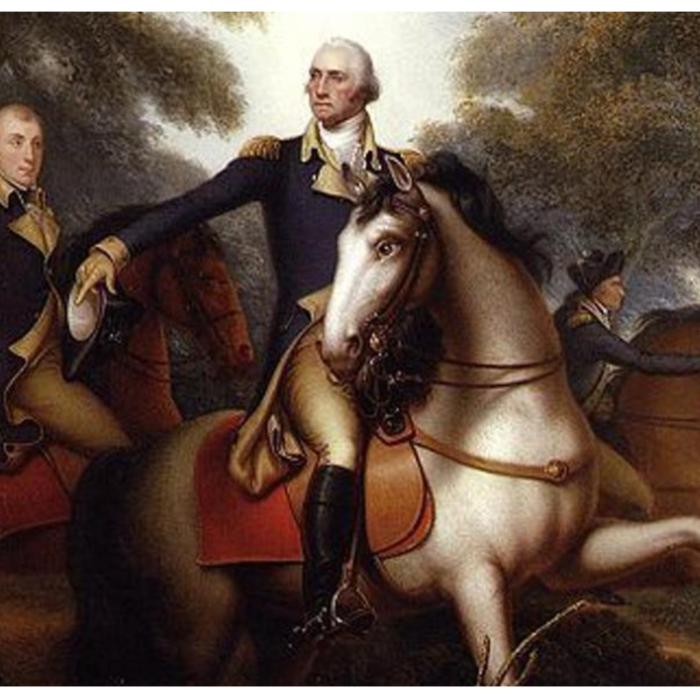
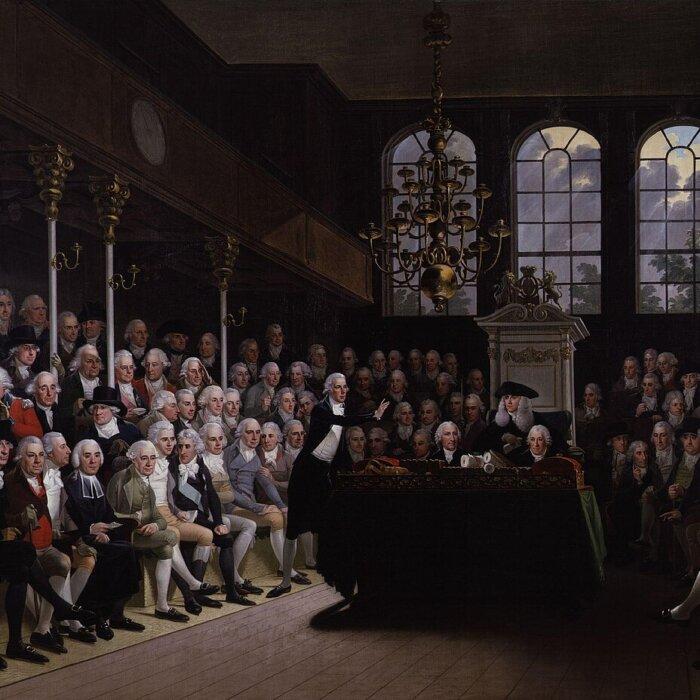
Both during and after the war, Salomon also made personal loans or gave money outright to individual Americans fighting for the cause of liberty. The financially strapped James Madison wrote of Salomon to Edmund Randolph on Sept. 30, 1782:

“I am almost ashamed to acknowledge my wants so incessently to you, but they begin to be so urgent that it is impossible to suppress them. The kindness of our little friend in Front Street, near the coffee house, is a fund that will preserve me from extremities, but I never resort to it without great mortification, as he obstinately rejects all recompense.”
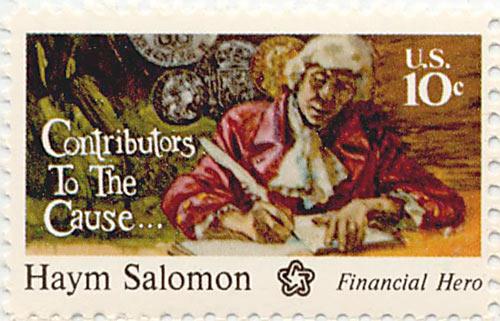
Haym Salomon, featured in a 1975 commemorative stamp. (Public Domain)
Haym Salomon, featured in a 1975 commemorative stamp. Public Domain

Faith and Integrity

Through all his years in America, Salomon remained active in the Jewish community. A member of Philadelphia’s synagogue Mikveh Israel, he was the also treasurer for the country’s first Jewish charity, the Society for the Relief of Destitute Strangers. In 1784, when some accused his fellow Jewish business associates of profiteering and price-gouging, Salomon’s stouthearted written defense of them brought widespread approval from his fellow Americans.

Legend has it that when the Great Seal of the United States was being designed, George Washington asked Salomon what he’d like to be paid for his help during the war. “Salomon responded ‘I want nothing for myself, rather something for my people.’ It is for this reason that the 13 stars are arranged in the shape of the Star of David.”
In 1925, in an address delivered at the laying of the cornerstone for the Jewish Community Center in Washington, President Calvin Coolidge summed up his contributions to American liberty: “There is a romance in the story of Haym Salomon, Polish Jew, financier of the Revolution. ... He negotiated for Robert Morris all the loans raised in France and Holland, pledged his personal faith and fortune for enormous amounts, and personally advanced large sums to such men as James Madison, Thomas Jefferson, Baron Steuben, General St. Clair, and many other patriot leaders, who testified that without his aid they could not have carried on in the cause.”
Sadly, in 1785, Salomon died penniless and in debt, leaving his wife and four children destitute, with the Continental Congress unable to pay the monies owed him. Philadelphia’s Independent Gazetteer honored him in its obituary with these words: “He was remarkable for his skill and integrity in his profession, and for his generous and humane deportment.”
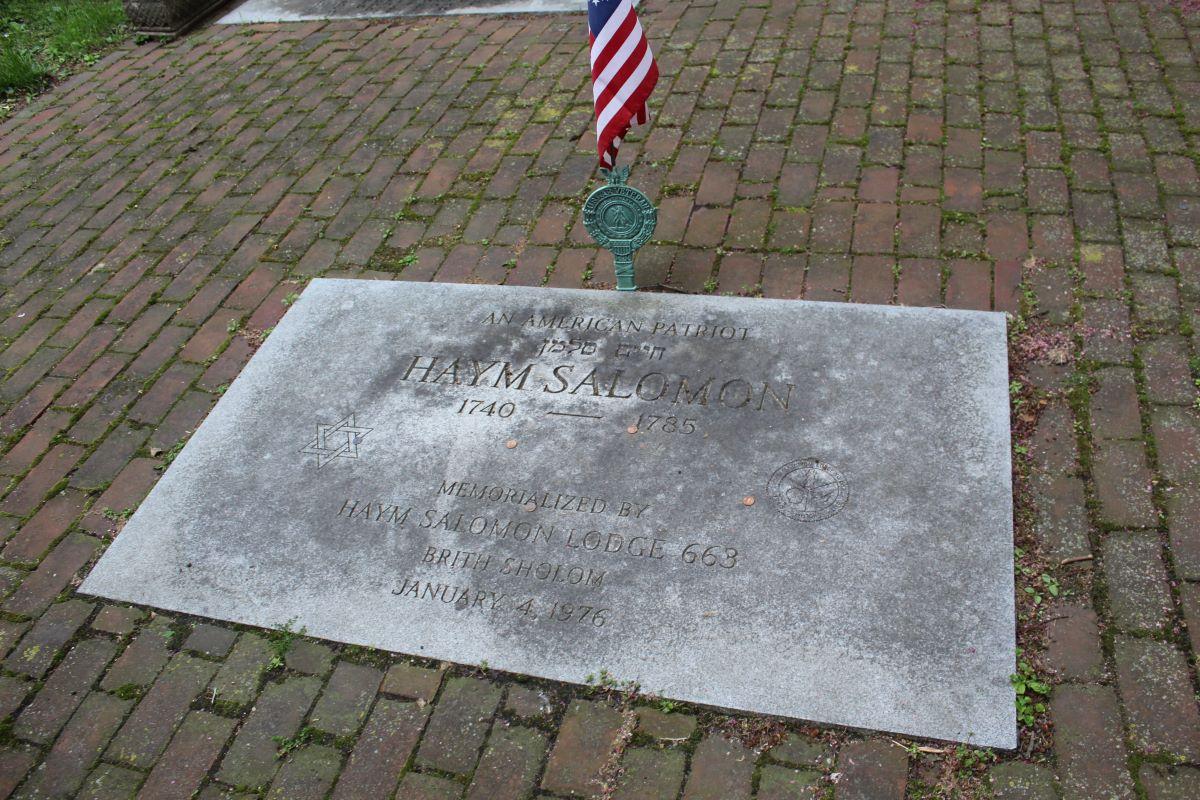
Haym Salomon marker, Mikveh Israel Cemetery, Philadelphia. (<a href="https://commons.wikimedia.org/wiki/User:Evrik">Evrik</a>/<a href="https://creativecommons.org/licenses/by/2.0/">CC BY 2.0</a>)
Haym Salomon marker, Mikveh Israel Cemetery, Philadelphia. Evrik/CC BY 2.0
What arts and culture topics would you like us to cover? Please email ideas or feedback to [email protected].
Google LogoMark Us Preferred on Google
Jeff Minick
Jeff Minick
Author
Jeff Minick has four children and a passel of grandkids. He has written two novels, “Amanda Bell” and “Dust on Their Wings,” as well as “Learning as I Go” and “Movies Make the Man.” You’ll find more of his writing at JeffMinick.substack.com.