What We Gain When We Write by Hand

A look at the science and sensory experience of handwriting shows how it anchors thought in a way that digital screens never can.
What We Gain When We Write by Hand
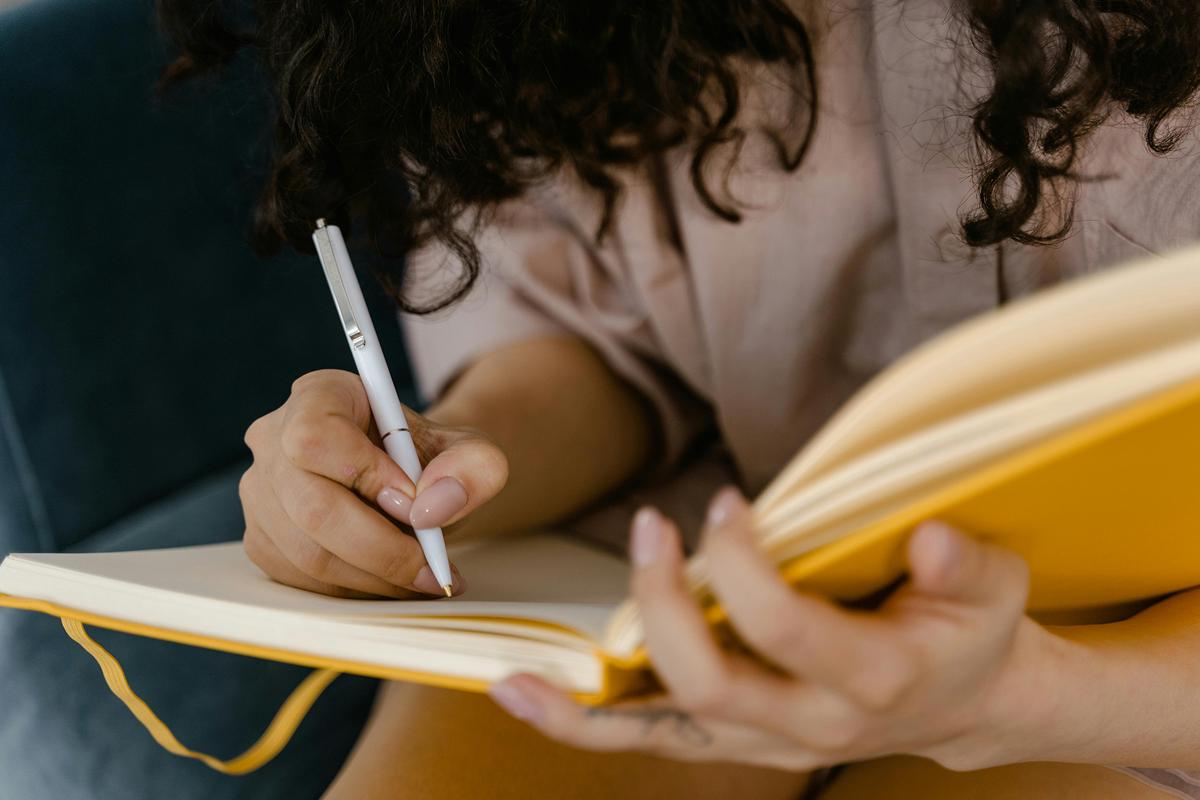
Writing by hand creates a direct, physical connection between the writer and the page, a sensory experience that can't be replicated by digital tools. (Bohdan Bevz/Getty Images
|Updated:
0:00
The pen softly scratches the paper. Ink glides onto the page: a glossy, liquid black, or a blue like deep waters. The hand brushes paper, which was once a tree. When the writer is finished, he holds his work between his fingers, scanning the looping arcs of the letters traced out by his pen. Writing by hand is a rich tactile, sensory experience. Nothing comes between the writer and the concrete medium, the bare page. His connection to the page isn’t just emotional or intellectual; it’s physical. There’s a reason most love letters, even today, are written by hand on real paper; only this tangible medium can reflect the passion and intimacy of love.

Pen to Paper

In a 1998 interview, British author A.S. Byatt said: “I write anything serious by hand still. This isn’t a trivial question. There’s that wonderful phrase of Wordsworth’s about ‘feeling along the heart,’ and I think I write with the blood that goes to the ends of my fingers, and it is a very sensuous act.”

There’s something grounding about writing by hand, especially in an age when most words are lost into the intangible, amorphous swirl of cyberspace. When the writer writes by hand, his or her words become embodied, intertwined with the physical world. The writer carves out a space, grasping at a permanence that pixels on a screen will never have. Writing is about the world; it helps when it exists in the world in concrete form.

While it’s true that I do most of my professional writing on a laptop, it’s also true that when I have something really important to work out, something crucial to think through, or need intense mental flexibility, I pull out a piece of paper and begin scribbling. I return to the source. I reconnect with ink stains and paper cuts. And I experience a freedom that the digital page can’t recreate. Some of my best articles were developed from handwritten notes and outlines.

Research shows that handwriting activates more brain regions than typing, supporting stronger learning and memory. (Mikhail Nilov/Pexels)
Research shows that handwriting activates more brain regions than typing, supporting stronger learning and memory. Mikhail Nilov/Pexels

The Science Behind It

Poets and artists will, I think, recognize the romance of the physical page that I’ve tried to describe. But the scientists also back me up. Recent research has added to a growing body of evidence that writing by hand improves cognitive function and promotes learning and memory better than writing on a computer.
A 2024 study by researchers at the Norwegian University of Science and Technology measured the brain activity of students taking notes. Researchers discovered that the students who wrote by hand showed more brain activity across a range of brain regions compared to students who typed their notes. Activated brain regions were diverse and included areas of the brain that handle movement, vision, memory, and sensory processing. This research supports the findings of a 2014 study that suggested students taking notes on a computer tend to type without thinking, without really processing the information they are putting down.

In contrast, students who take notes by hand process the information more thoroughly, partly because they can’t write everything down and must interact with the lecture by determining what needs to be recorded and what doesn’t. In essence, writing by hand involves more of the whole person than typing on a keyboard.
Shaping letters by hand engages the body in ways that reinforce memory and comprehension. (MART PRODUCTION/Pexels)
Shaping letters by hand engages the body in ways that reinforce memory and comprehension. MART PRODUCTION/Pexels
There’s also something powerful about the physical act of forming the shapes of letters by hand. Each letter has a distinctive shape that the body comes to know like a familiar piece of furniture—as opposed to typing, where hitting each key feels exactly the same. Writing for Scientific American, Charlotte Hu observed, “It’s similar to imagining something and then creating it: when you materialize something from your imagination (by writing it, drawing it or building it), this reinforces the imagined concept and helps it stick in your memory.”

This aligns with research that has shown when people write, draw, or act out a word they have read, they are more attentive to the information they are processing. That heightened attention improves memory. A 2021 study outlined by Hu found that participants could memorize lists of action verbs more effectively when they acted them out.

All this has important implications for children in particular. According to Hu, research reveals that children learn better when they produce letters using fingers and hands rather than tapping away at a keyboard. Research has also shown that writing by hand may help stave off cognitive decline associated with aging, as Pamela Rutledge noted in Psychology Today.
The slower pace of handwriting fosters mindfulness and deliberate thinking. (Sneksy/Getty Images)
The slower pace of handwriting fosters mindfulness and deliberate thinking. Sneksy/Getty Images

Rutledge made a thought-provoking observation: “I’m also aware of the difference in mindfulness required to compose a note on paper when you can’t hit the delete button every time you write the wrong word.”

This seemingly simple difference between handwriting and typing actually carries significant implications. The ease with which words can be added, changed, or deleted on a screen encourages a little recklessness in the way we write (and therefore, the way we think). Our “throwaway culture” extends, it would seem, even to language. Anyone who has spent much time on the internet has probably noticed how cheaply we hold language and, frankly, how much drivel and irresponsibly incendiary remarks exist out there. We don’t weigh our words carefully because technology makes them so cheap, ephemeral, and disposable.

Losing Language

But is this casualness really a healthy way to treat words? Words are the vehicle for truth, and if we treat them casually, we risk treating truth casually, too. In “Abuse of Language, Abuse of Power,” philosopher Joseph Pieper wrote, “Word and language form the medium that sustains the common existence of the human spirit. And so, if the word becomes corrupted, human existence itself will not remain unaffected and untainted.”

Maybe, then, writing by hand, because of its greater permanence, gives words more of the respect they deserve. When we write a thank-you note or a love letter, we have to carefully consider each sentence. It takes courage to write by hand, to etch your thoughts into the paper without the ability to instantly erase them. It’s like planting a flag and standing for something.

The medium forces greater mindfulness. And that, I submit, is something we could all do with a bit more of.

Google LogoMark Us Preferred on Google
Walker Larson
Walker Larson
Author
Before becoming a freelance journalist and culture writer, Walker Larson taught literature and history at a private academy in Wisconsin, where he resides with his wife and daughter. He holds a master’s in English literature and language, and his writing has appeared in The Hemingway Review, Intellectual Takeout, and his Substack, The Hazelnut. He is also the author of two novels, “Hologram” and “Song of Spheres.”