The Walters Art Museum in Baltimore has presented a unique exhibit called “Paws on Parchment” that examines and celebrates the depiction of cats in medieval manuscripts.
“’Paws on Parchment' explores how medieval people thought about, engaged with, and admired cats through the animals’ presence in manuscripts from the period,” the exhibit’s webpage states. The exhibition runs through Feb. 22, 2026, and it highlights cats’ roles in medieval society, from beloved pets to eliminators of disease-carrying vermin to manuscript vandals.
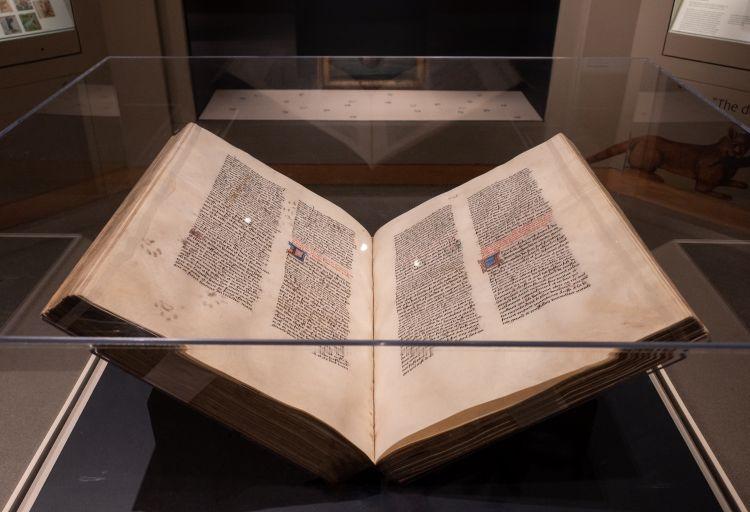
Inky paw prints mark a manuscript from the 1470s, a reminder that cats have been interrupting human work for centuries. The Walters Art Museum, Baltimore
Cats in Medieval Manuscripts
The exhibit includes a manuscript from the 1470s covered with inky paw prints. Apparently, centuries ago, cats showed the same casual indifference to the laborious work of their human owners that they do today. Anyone who’s owned a cat can relate to the amusement-plus-frustration the Flemish scribe must have experienced when he returned to his manuscript and discovered the feline graffiti adorning it. The modern-day equivalent would be the string of incoherent letters left on a computer screen after a cat has sauntered across the keyboard.“Objects like this have a way of bridging across time, as it’s just so relatable for anyone who has ever had a cat,” Lynley Anne Herbert, one of the museum’s curators, told Margaret Carrigan of Artnet. According to Carrigan, Herbert dove into primary sources such as medieval poetry, pet names, encyclopedias, and bestiaries to gain a better understanding of what medieval people thought of cats. Her conclusion: “Many medieval people loved their cats just as much as we do.”
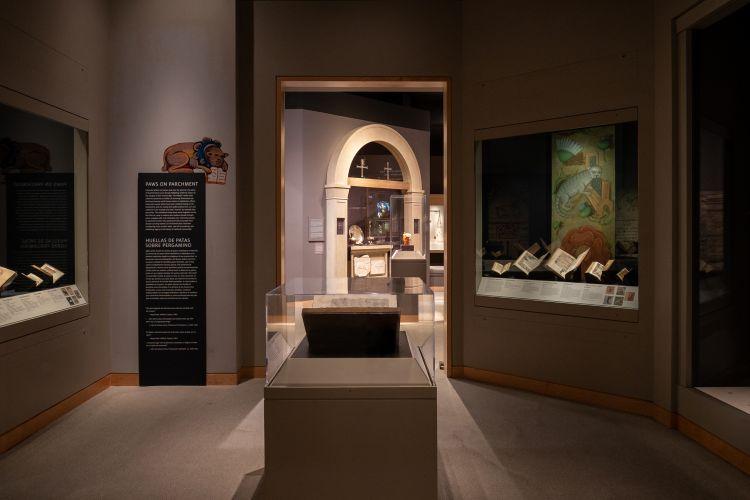
Cats held an important place in medieval life, carrying both practical and symbolic meaning, as shown in medieval depictions on view at the Walters Art Museum. The Walters Art Museum, Baltimore
That said, cats in the medieval era played a very practical and essential role: keeping rodents in check to protect food, books, and textiles—not to mention preserving the health of their human friends by eliminating disease-carrying vermin. For this reason, cats in medieval illustrations are generally depicted chasing mice.
Cats in Everyday Medieval Society
The medieval mind functioned in a profoundly analogical way, seeing constant parallels between the physical and spiritual dimensions. In the case of cats, medieval thinkers saw their deadly hunting efficiency as symbolic of the devil’s pursuit of sinful souls, which he aims to catch and torment, much as a cat toys with a mouse.The medieval bestiary known by its catalog number “MS Bodley 764” (not in the exhibit) includes further spiritual reflections inspired by felines. The medieval author finds a parallel between the panther and the spiritual triumph of Jesus Christ. Of the panther, it notes that it is “very beautiful and tame” and continues to say:
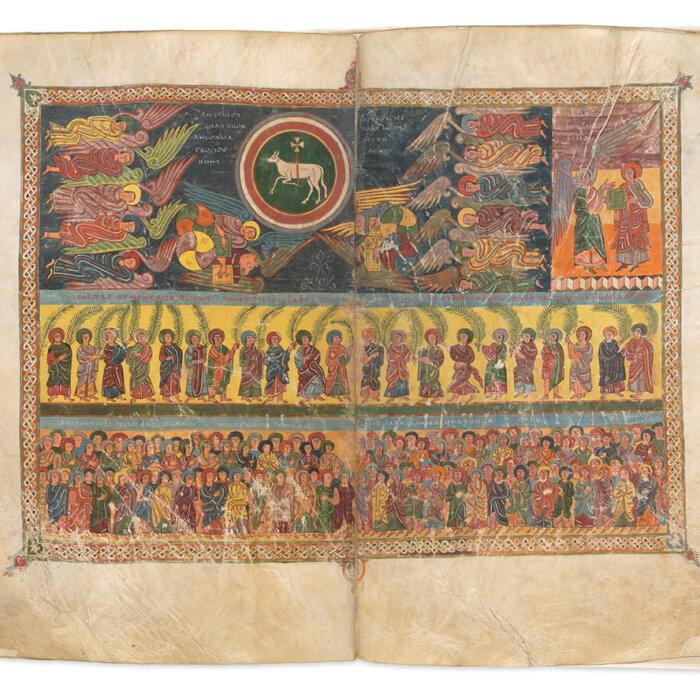
“When he has eaten and is full, he hides in his lair and sleeps. After three days he rouses himself from sleep, and lets forth a great roar; and out of his mouth comes a very sweet smell that seems to contain every kind of scent. When the other animals hear his voice they gather from far and near, and follow him wherever he goes on account of the sweetness of his breath. Only the dragon, hearing his voice, hides in terror in the bowels of the earth. ... Thus our Lord Jesus Christ, the true panther, descended from heaven and saved us from the power of the devil. ... He falls asleep and rests in the grave, and descends to the underworld, where He chains the great dragon. On the third day He rises from sleep and sends out a great cry and pours out sweetness.”
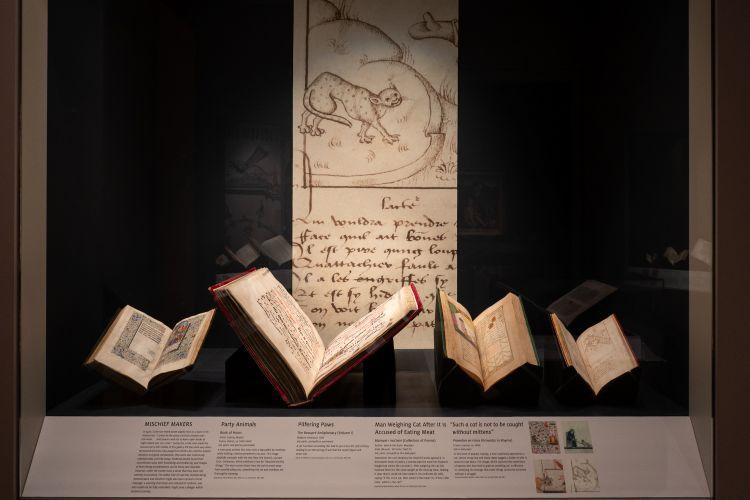
Medieval illustrations frequently depict cats hunting mice, reflecting their vital role in controlling vermin. The Walters Art Museum, Baltimore
Cats also appear in the work of medieval saint and mystic Hildegard von Bingen, who received visions from God detailing the workings and essences of the natural world. In her book “Physica,” she wrote, rather puzzlingly, “The cat (cattus) is more cold than hot, and it draws bad humors to itself. It does not abhor airy spirits [demons], nor do they abhor it. It has some natural affinity with the toad and the serpent.”
In texts such as these, we see that in the medieval mind, physical creatures interact with immaterial creatures—the airy spirits—and also have mysterious connections to other animals, in this case, toads and serpents. The medieval vision was highly integrative.
The religious significance of animals also appears in the exhibit’s 15th-century Italian painting “Madonna and Child With a Cat.” The Smithsonian magazine says the work is based on a legend concerning the Nativity of Jesus. In it, Mary prayed for a way to keep the infant Christ warm, and a cat appeared, leapt into the manger, and settled down beside the babe. In gratitude, Mary traced her initial “M” on the cat’s forehead, said to be the origin of tabby head markings. The painting and the story exemplify the way that animals and the natural world constantly weave in and out of religious themes in the medieval imagination.
Cats in Medieval Religious Thought
In the Islamic world, cats held special significance and were respected for their elegance and cleanliness. According to the website Muslim Heritage, in some Muslim legends, “qariinas,” meaning good spirits, were believed to inhabit the body of cats, especially at night. One of the works on display is a 13th-century Turkish version of “Wonders of Creation” featuring a black cat.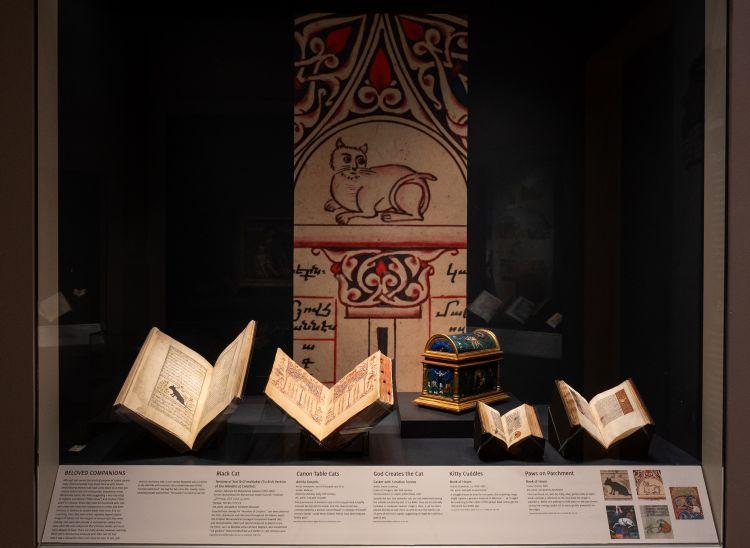
Cats were widely respected in Islamic culture for their elegance and cleanliness. The Walters Art Museum, Baltimore
In addition to these artistic depictions, some real cats also became involved with the exhibit. The museum celebrated by permitting four kittens from the Baltimore Animal Rescue and Care Shelter to “tour” the exhibit—a moment that so touched the curator that she decided to give two of them a permanent home.
The exhibit is a wonderful homage to the way that cats, from the medieval period to today, leave their pawprints in human art and human life.
What arts and culture topics would you like us to cover? Please email ideas or feedback to [email protected]