After 7.5 million years, it returns with 42, then points out that the answer is useless because nobody properly knew the question.
Simulation theory has exactly the same flavour. Large brains, larger claims, and a faint stench of panic.
Why We Might Be in A Simulation
1. Nick Bostrom’s argument still standsIf even a small fraction of advanced societies create large numbers of simulated worlds populated by conscious beings, then simulated minds could quickly outnumber original biological ones. If there are far more simulated minds than real ones, then the odds quietly flip: you are more likely to be simulated than real.
3. Technology keeps making the idea less laughable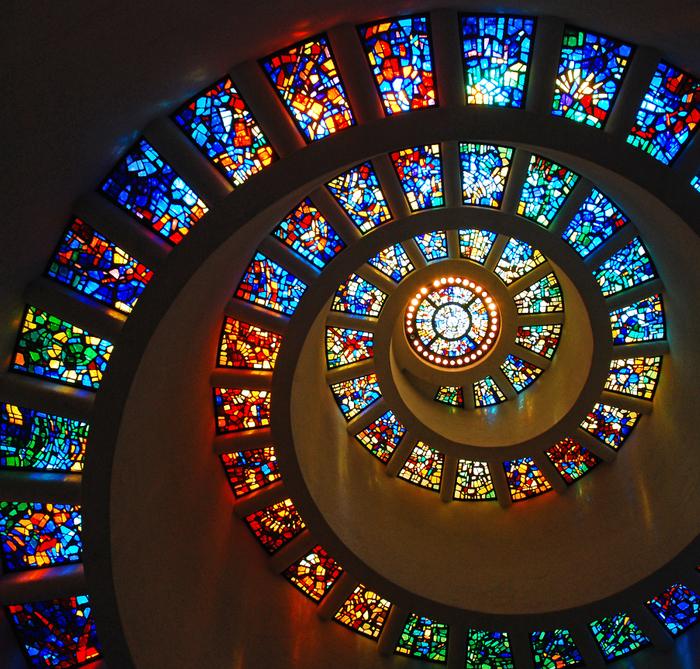

What was once crude and pixelated is now immersive and increasingly indistinguishable from reality.
Even if we are simulated, it does not follow that our experiences are meaningless. The simulation argument is not about whether our lives are “fake” in a trivial sense, but about what reality is made of and how it is generated.
From the inside, a simulated world could still contain genuine thoughts, relationships and consequences.
5. Nobody has decisively ruled it outThe simulation hypothesis survives partly because there is no accepted knockdown refutation from inside the system.
If we are in a simulation, it may be hard for beings inside it to prove otherwise. Philosophically, that leaves the door annoyingly ajar. This is an inference from the structure of Bostrom’s argument and the absence of any agreed empirical disproof in the literature cited here.
Why We Probably Are Not
1. The energy bill may be completely monstrousHe examined simulating the visible universe, Earth, and even a low-resolution Earth, and concluded that the requirements were astronomically large.
Once uncertainty about whether such simulations are technically possible is included, the probability that we are simulated is less than 50 percent, tending towards an even split.
At present there is no neat experiment that can distinguish base reality from a sufficiently sophisticated simulation.
Without a workable empirical test, the idea remains more philosophically stimulating than scientifically settled. That is supported by the fact that the central sources here are philosophical and probabilistic rather than experimental demonstrations.
People love to point at quantum strangeness and say, “Pixels.”
But strange features of reality do not automatically mean simulated reality. They may simply be features of ordinary physical reality, however odd and uncooperative it turns out to be. This is an inference, but it follows from the fact that none of the cited simulation papers treat quantum oddness as proof of simulation.
So Where Does That Leave Us?
In a very Douglas Adams position. Musk says base reality is wildly unlikely. Bostrom insists the logic is serious. Kipping says not so fast. Vazza says the power requirements are obscene.Which means the rest of us are left with a possibility that is at once fascinating and frustrating: we may be living in a simulated universe, or we may not, and we may not be able to tell the difference.
Either way, the bins still need to go out. The emails still need answering. And the universe, simulated or otherwise, remains astonishingly poor at customer service.