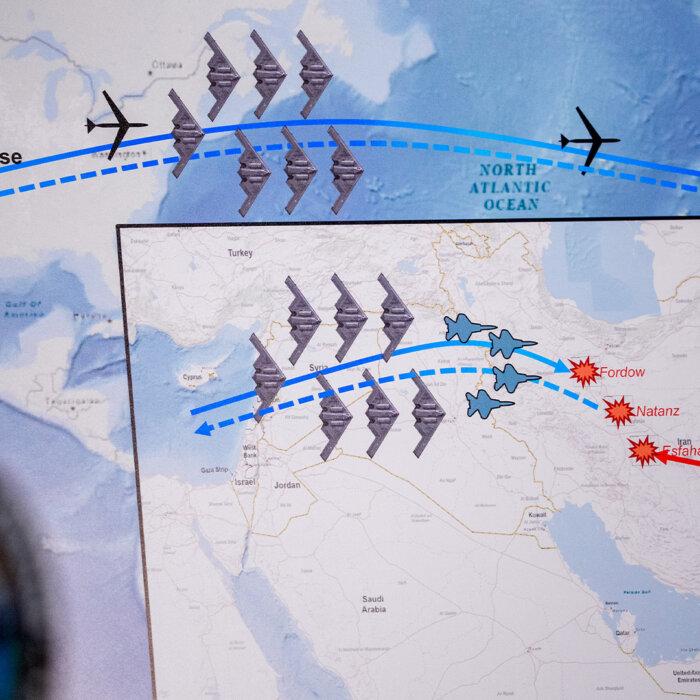
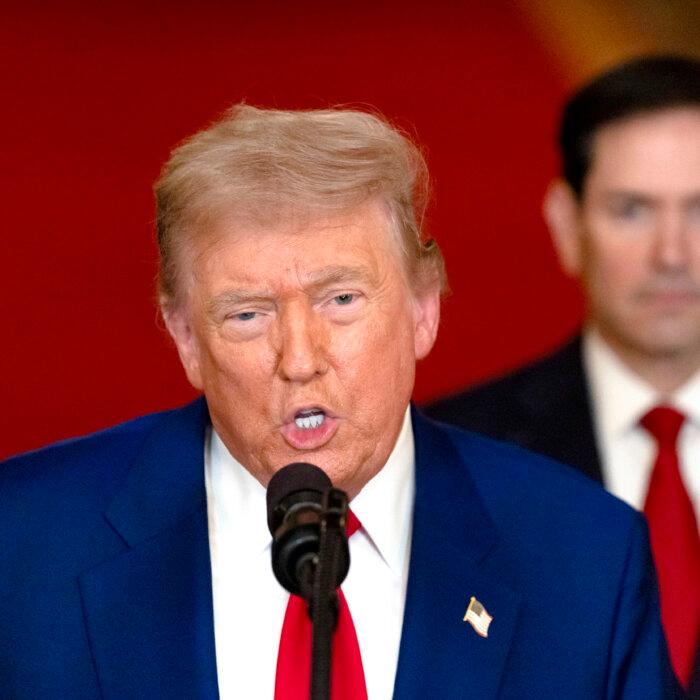
The stock market climbed to near-record highs following President Donald Trump’s announcement of a cease-fire between Iran and Israel. The move came after Iran retaliated by launching missile strikes on a U.S. airbase in Qatar, which left no casualties. Market experts saw this as a sign that Tehran was neither looking for a full-scale war nor eager to retaliate economically by closing the Strait of Hormuz. This is a strategic waterway through which 20 percent of the world’s oil passes through, and its closure could rattle the oil markets. But following the cease-fire, oil plunged and stocks skyrocketed.
Historically, the stock market tends to dip immediately following the launch of war and the uncertainty it brings. And there’s no way to know whether the Iran–Israel cease-fire would hold. In addition, Israel remains in conflict with Hamas forces in Gaza. And the Ukraine–Russia war surges on. These conflicts bring about uncertainty, and, as we’ve observed, the markets don’t like uncertainty.
Shock and Awe?
Wars and political conflict may initially trigger sell-offs in the markets as investors become risk-averse due to instability. But the stock market often rebounds within a few weeks or months. In some cases, markets post above-average returns during war times as government spending leans toward defense and infrastructure.In fact, the stock market climbed about 10 percent following Germany’s invasion of Poland in 1939, which triggered World War II. Stocks dropped 2.9 percent following the Japanese attacks on Pearl Harbor. But the markets regained those losses in less than a month.
Similar trends have been seen more recently. After Hamas terrorists kidnapped and killed more than 1,300 Israeli civilians in Gaza on Oct. 7, 2023, the S&P 500 Index dipped. But it rose as the Israeli military and air force retaliated in the next week.
Moreover, the stock market was shaken following Russia’s invasion of Ukraine in February 2022. The S&P 500 fell by around 7 percent in the weeks following the strike. But within a month, markets rebounded and the index rose to above pre-invasion levels.
Flight, Not Fight
During times of war, some investors flock to safe-haven investments such as bonds, gold, and currencies. Gold has remained resilient in times of both economic and geopolitical uncertainty. Gold prices surged above $2,067 per ounce following Russia’s invasion of Ukraine, a 15 percent uptick from prewar levels, according to Discovery Alert, an investment analysis firm.But you may be surprised to know that bonds haven’t necessarily held up in war times.
A Win for the Defense Sector
Defense contractors and other companies involved in the research, production, and development of military equipment and technology tend to get a boost during war times.- Lockheed Martin Corp. (LMT)
- RTX Corp. (RTX)
- Transdigm Group Inc. (TDG)
- Boeing (BA)
- Northrop Grumman (NOC)