You could also follow the pipe out of the skimmer and cut it off and glue on a cap anywhere along the line back to the irrigation system.
Theoretically, the autofill pipe may have been added to the system in an irrigation junction box where it would be easy to cap off.
Some float valves are adjustable, so maybe it just needs to be adjusted. Maybe all you need to do is replace the rubber O-ring or valve seat to get it to stop leaking.
It can be a good idea to have a small trickle of water running into a pond to replace water lost to evaporation. This is better than replacing it all at once, which is more stressful to the fish and other organisms when the water temperature and chemistry change too fast. At the same time, it is good to do occasional water changes of 20 percent to 30 percent to replace more water than the trickle does.
Since the topsoil here is gumbo with clay beneath, is a dry well feasible or even a French drain? If so, how large would you recommend? What would your suggestion be for the drains: rocks wrapped in fabric, or a drainpipe wrapped in fabric set in rocks?
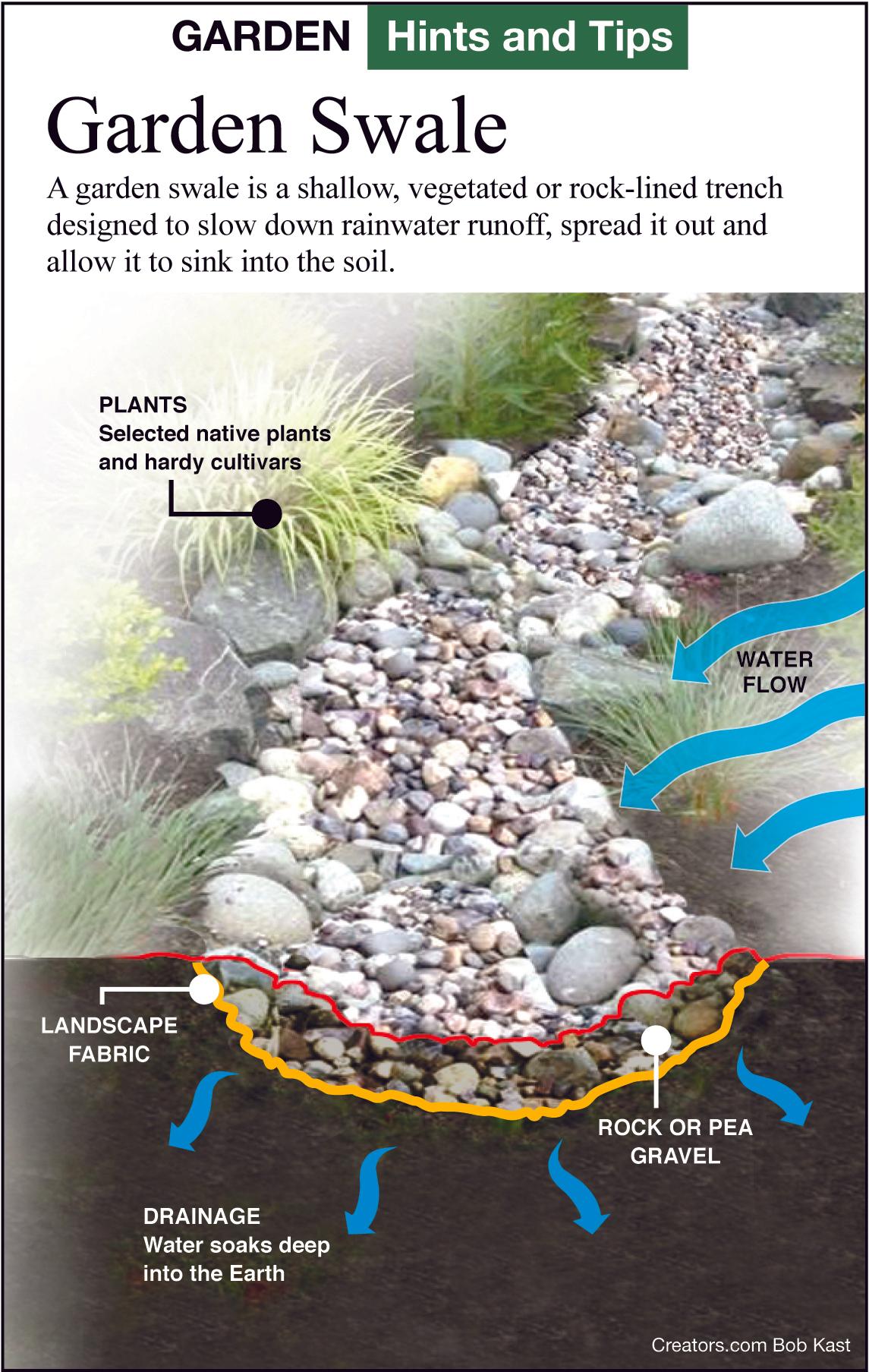
If you have water that you want to move from the house to the ditch and you can’t do it aboveground by shaping the land, you can put it underground. But first, let’s talk about the aboveground system. A shallow gully shape is called a swale. The swale can have occasional wider and deeper areas that will hold water for a while so that wetland and shoreline plants can live. These areas are called rain gardens, and they slow the water so it doesn’t reach the ditch too quickly. The water sinks into the ground to replenish the groundwater. It will slowly sink into gumbo and clay soils, but if they are compacted, it may not soak in at all.
Putting the same water into a drainpipe moves the water to the ditch quickly. This gets rid of the problem water on your property, but it can create flooding downstream.
Putting this water underground in a French drain moves it towards the ditch slowly. It lets some of it sink into the ground, if the clay and gumbo allow it. If I have to have water moving underground, I prefer it in a pipe that is wrapped in cloth and surrounded with rocks that are in a trench that was first lined with cloth. I don’t want any soil getting into the pipe.
In your situation, I don’t think the dry well will be big enough to hold very much water, and what it does hold will not drain quickly because of the soil type. I would move the water in a swale with rain garden areas because I like wetland plants.