Jason Rich was just 10 years old when he rubbed shoulders with real buckaroos, wrangling on a ranch in southern Idaho. These included his uncle—“the real deal” when it comes to cowboying, Rich tells The Epoch Times—and Rich’s cousins, who helped their dad on cattle drives to cool grazing pastures during the hot summers.
“You’ve got to hear it, smell it, learn from those cowboys,” said Rich, now 55 and living in Mendon, Utah. “It’s invaluable that you’ve surrounded yourself with that to capture the reality and emotion and express that culture accurately.”
He says he never considered himself a “full-blown cowboy,” though his father always owned horses, which they broke-in and trained. And being on horseback so often allowed him to gather subject matter, photographed from the saddle beside his cowboy cousins, to paint from.
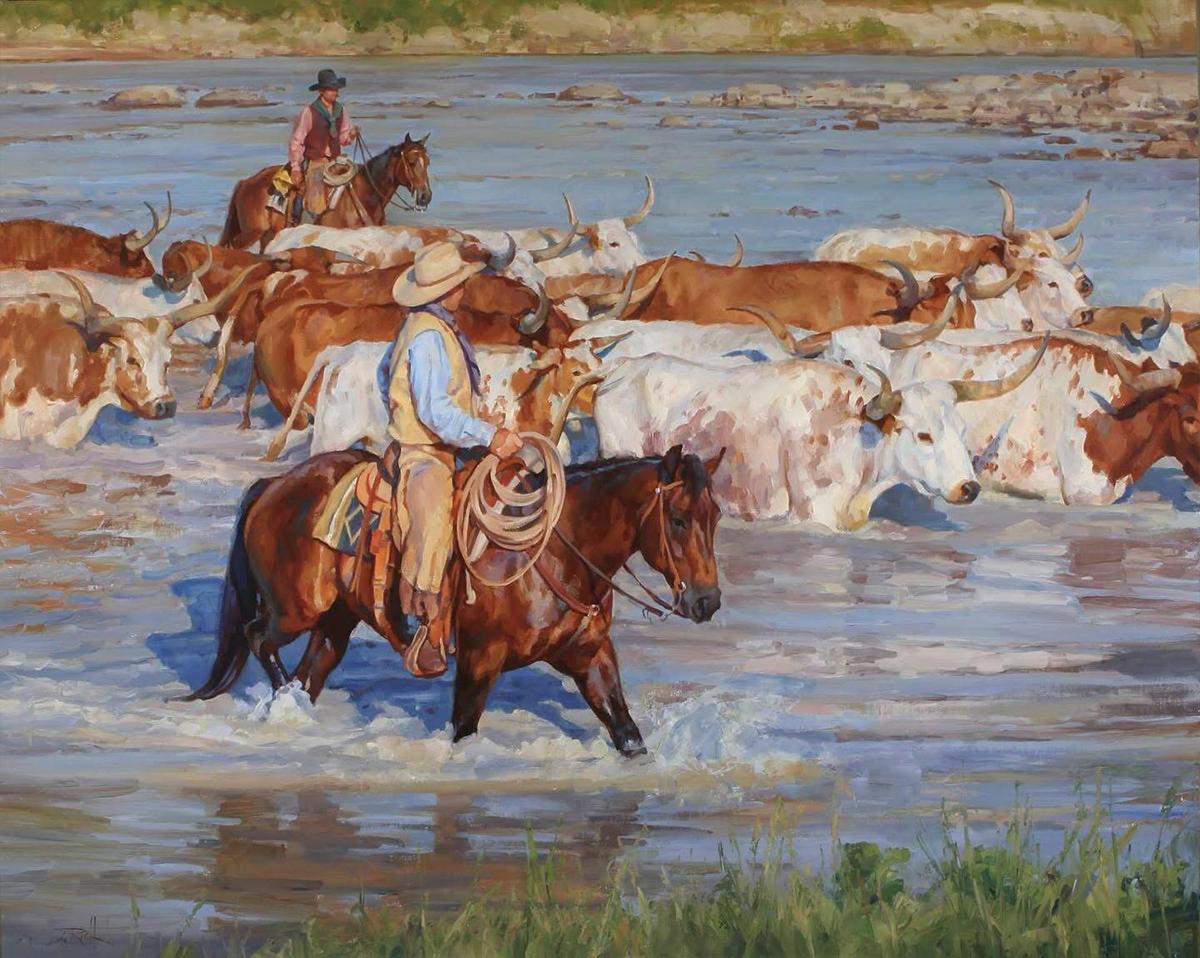
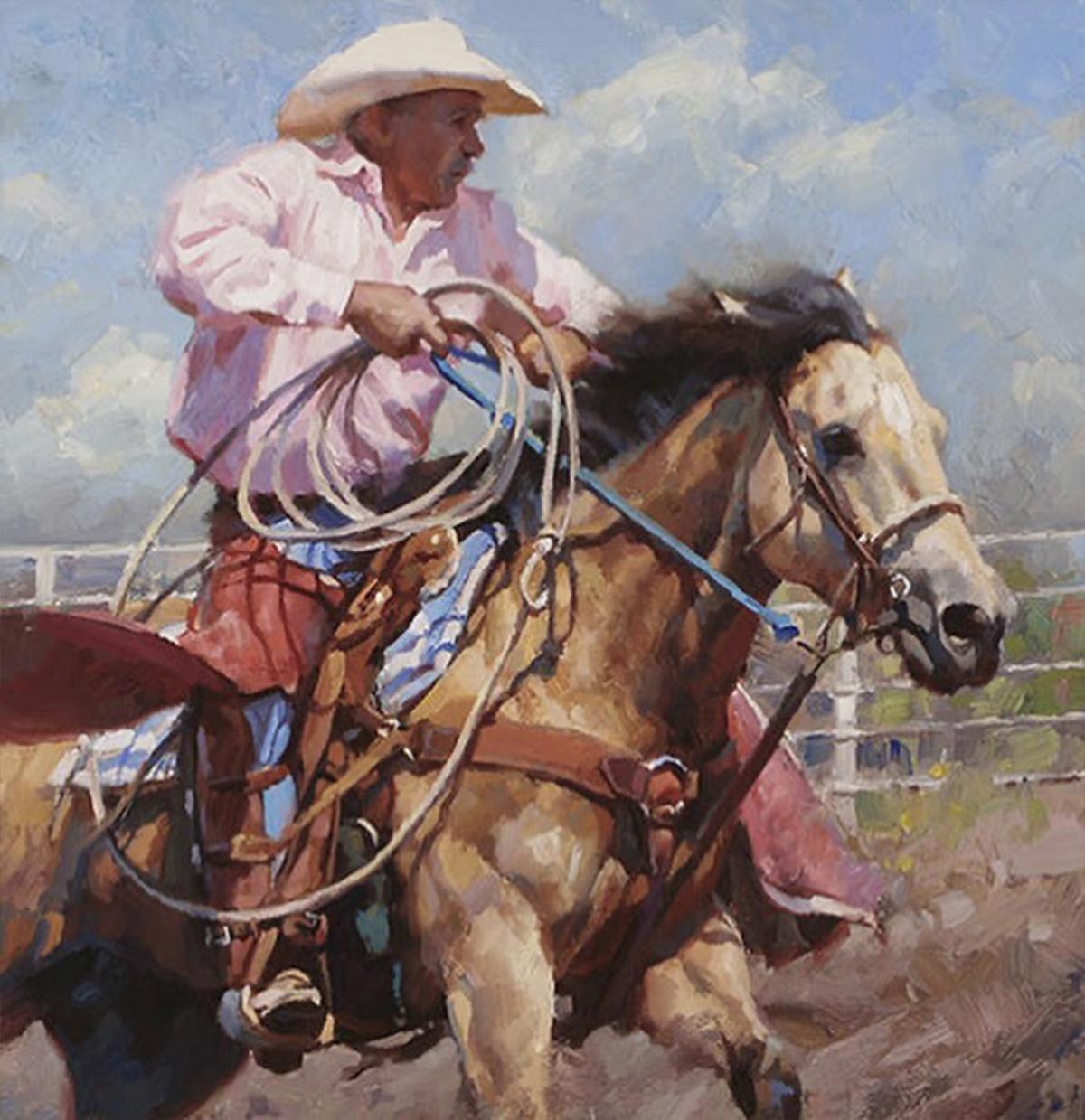
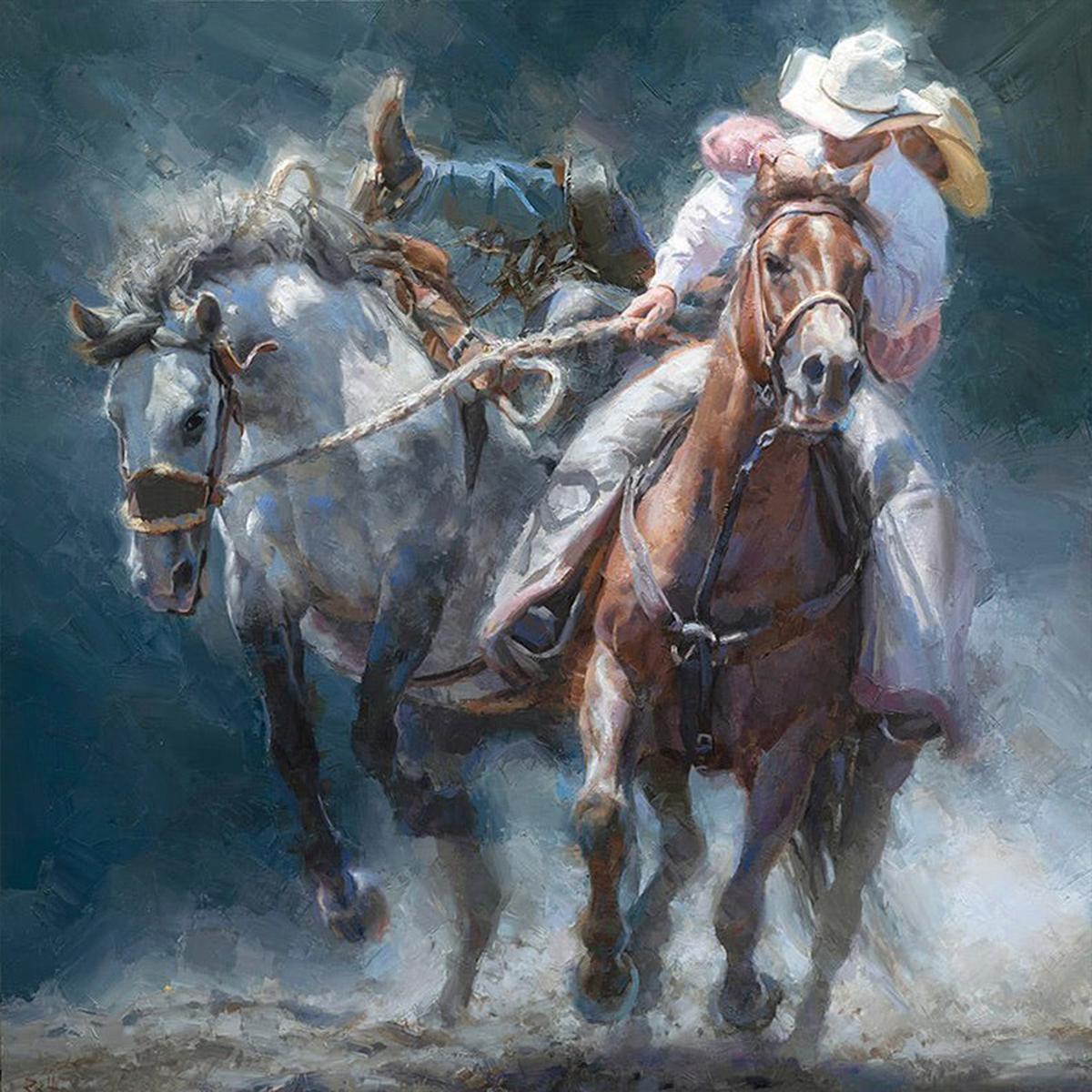
Few artists in the modern age would know there are different cowboy subcultures, such as buckaroo and Texas cowboy, or that rodeos have special riders called “pickup men” who manage rodeo rough stock and protect bucking bronco riders after a tumble. But such details appear in Rich’s paintings.
Speaking of pickup men, he said, “They’re fantastic horsemen, and so I painted pickup men in a lot of various ways.”
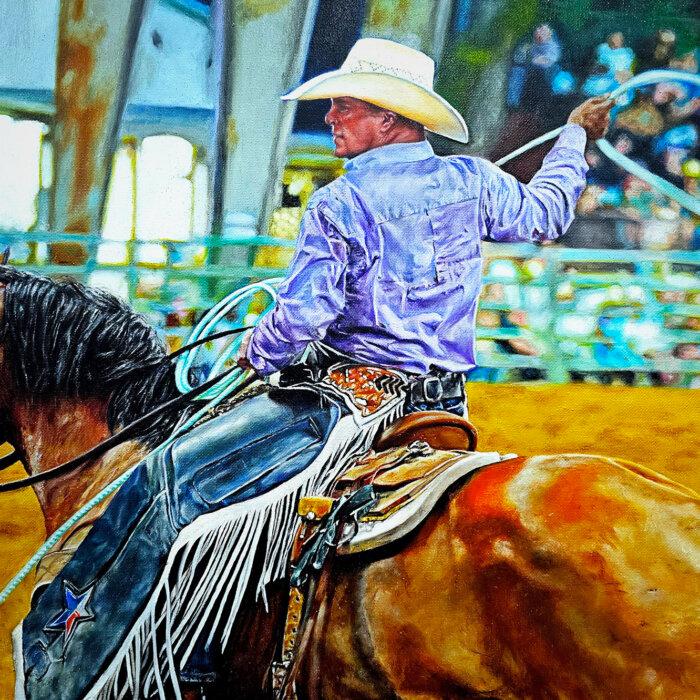
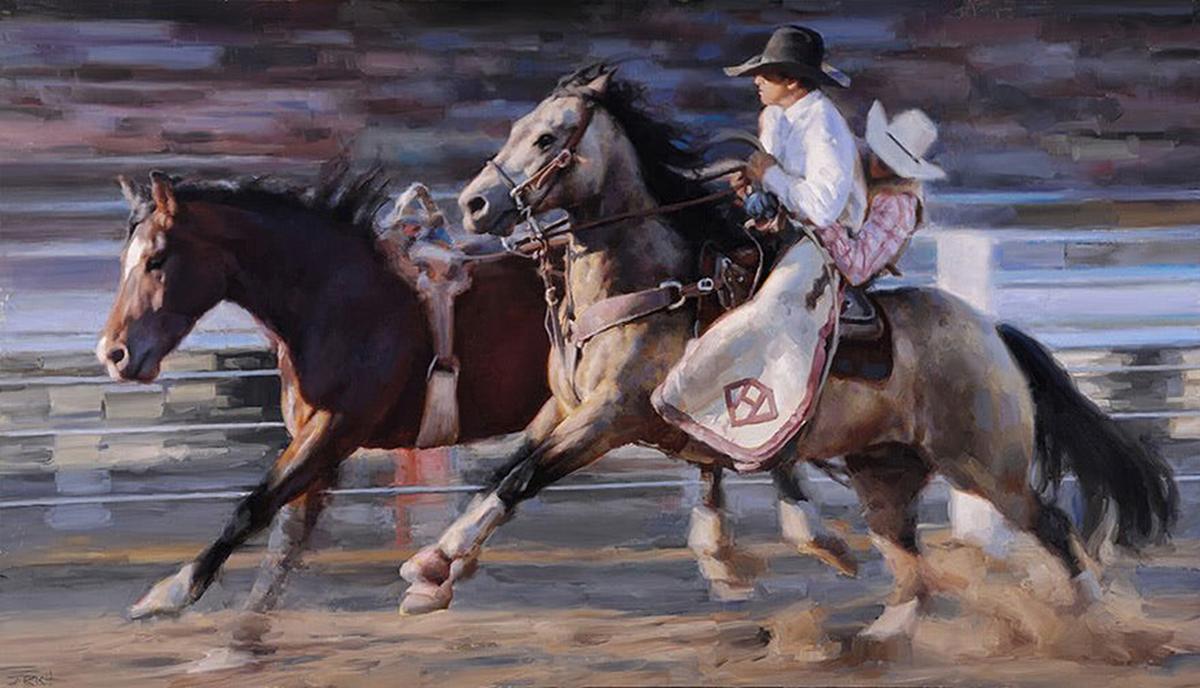
And who might that confident rider be? None other than the pickup man.
The other cowboy, unsaddled and dangling on for dear life after his eight seconds of glory in the corral, is the rescuee, whose own horse careens by riderless.
Rich says he had to start treating his painting like a business, especially when his wife stopped working. Now—like one his idols in the painting milieu, the 19th-century realist portrait painter John Singer Sargent—he would have to cope with trying to appease clientele. Yet from this new driver sprang inspiration: teams of horses galloping amid rivers, sunsets, and Western landscapes.
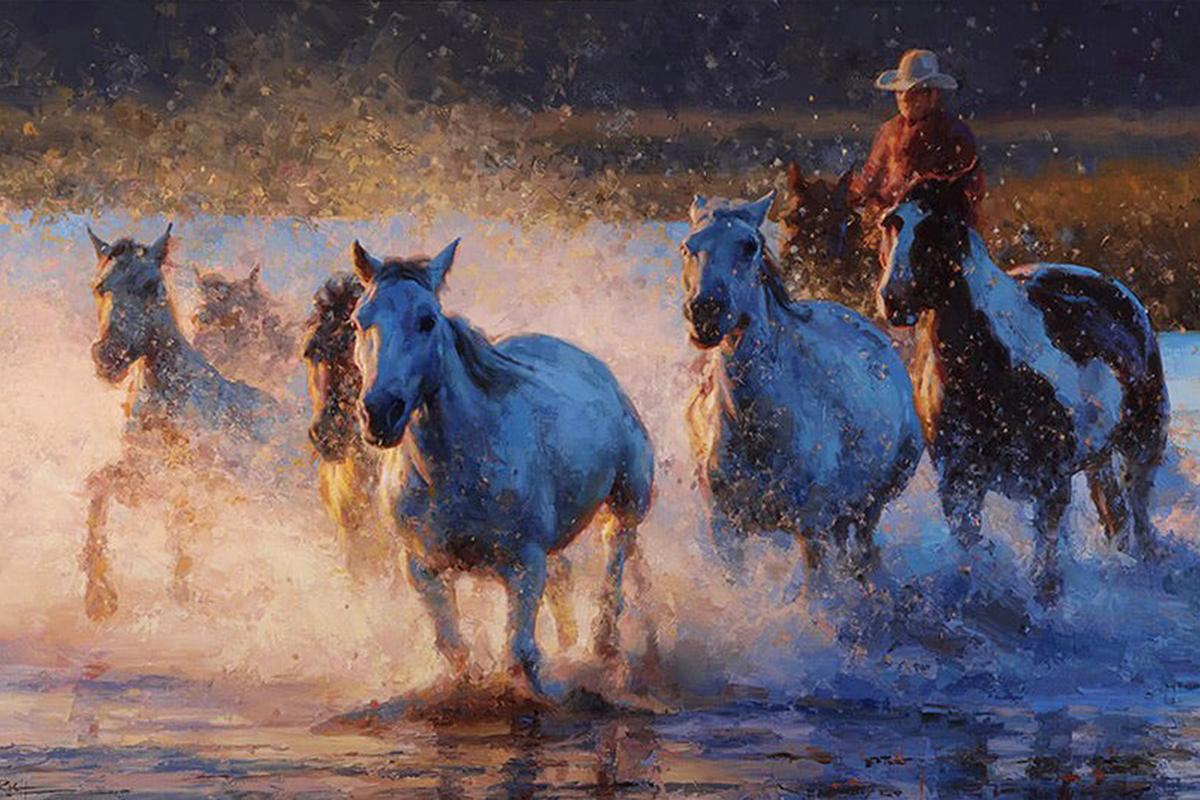
“River Run” is another sprawling canvas depicting a surge of equine energy as horses, darkened by blue twilight, are cast in dramatic silhouette by a field of spray lit up by the pink light of sunset behind them as they gallop across a river. A lone cowboy in crimson is painted in soft lines in the background.
Clearly, horses take center stage in such works designed to appeal.
There’s something about rivers and horses that “people resonate with and respond to,” Rich said. “It’s really peaceful” and “creates a lot of emotion.”
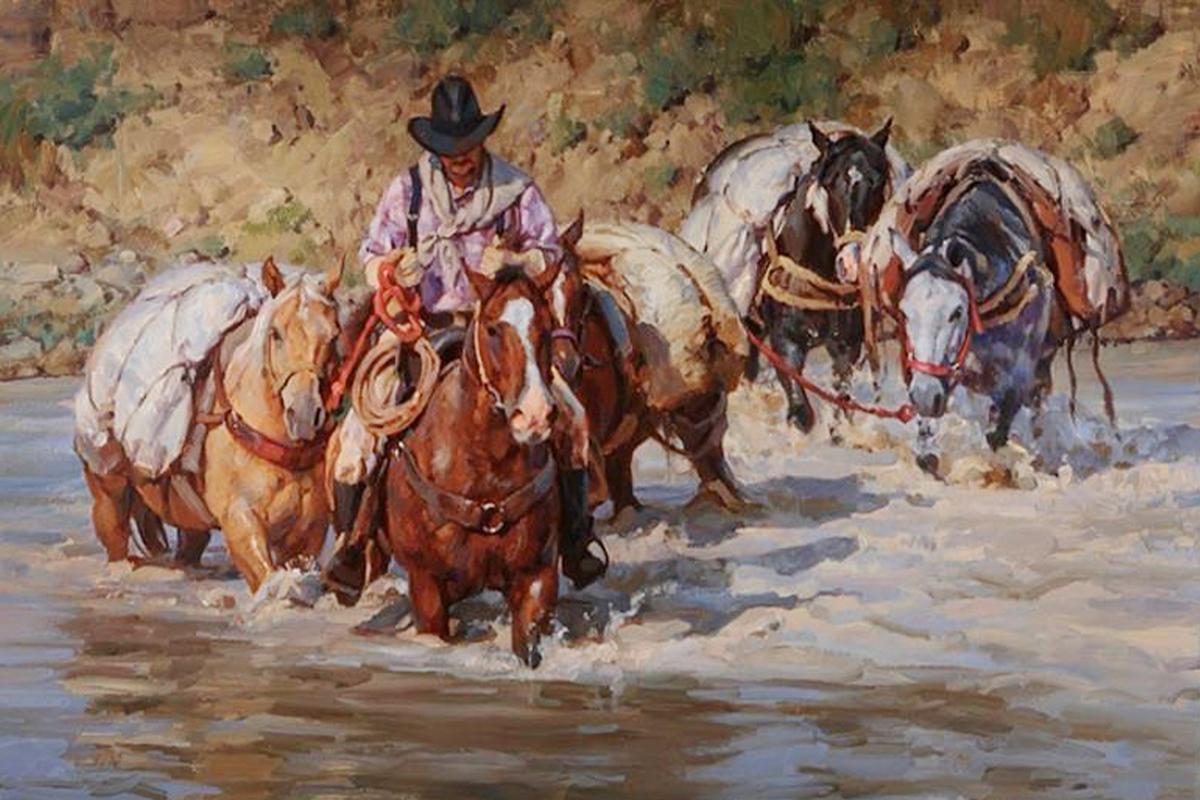
But, as earlier masters like Sargent or Rubens centuries before demonstrated, the gesture and untouched brushstroke have the power to transform paint into flesh—or horsehair in the case of Rich’s work. Of course, great cowboy painters like Frederic Remington and Charles Marion Russell always used this technique.
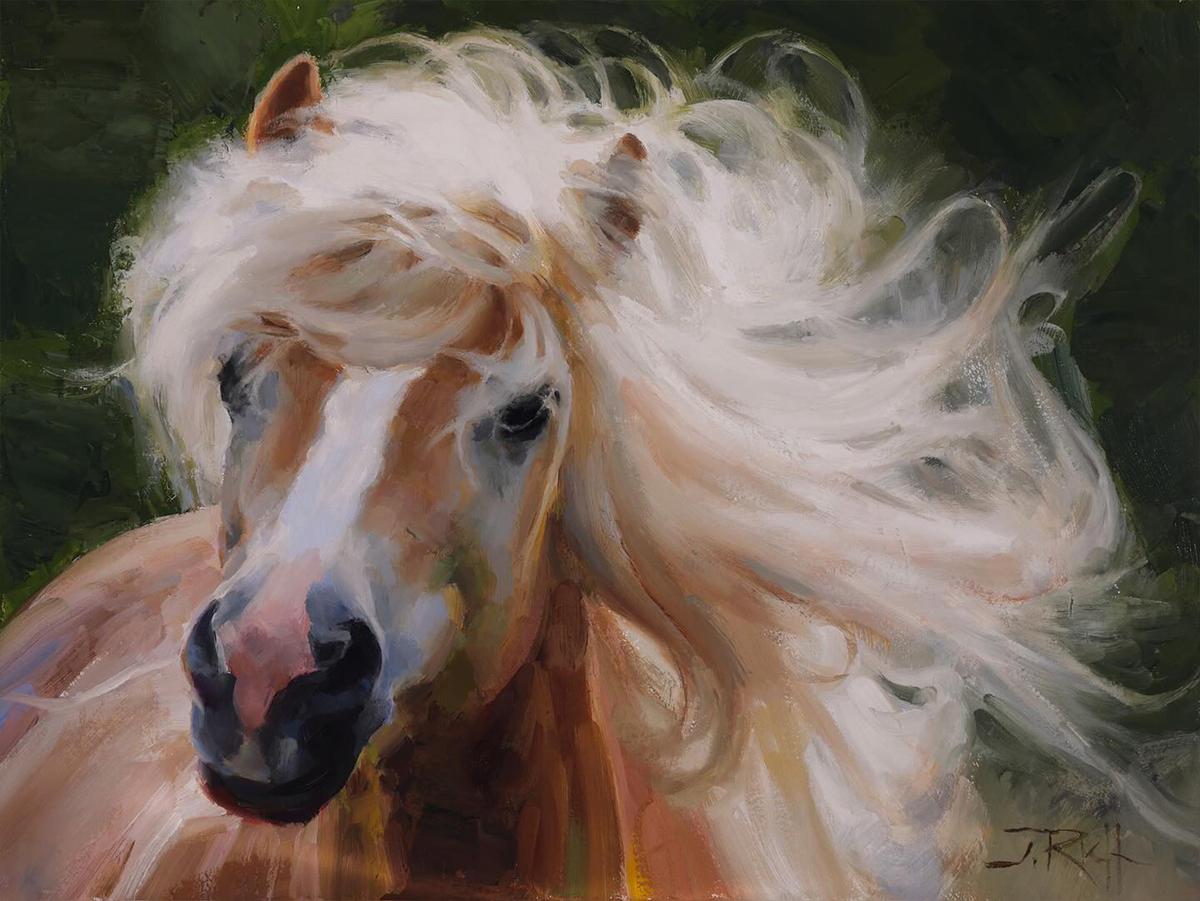
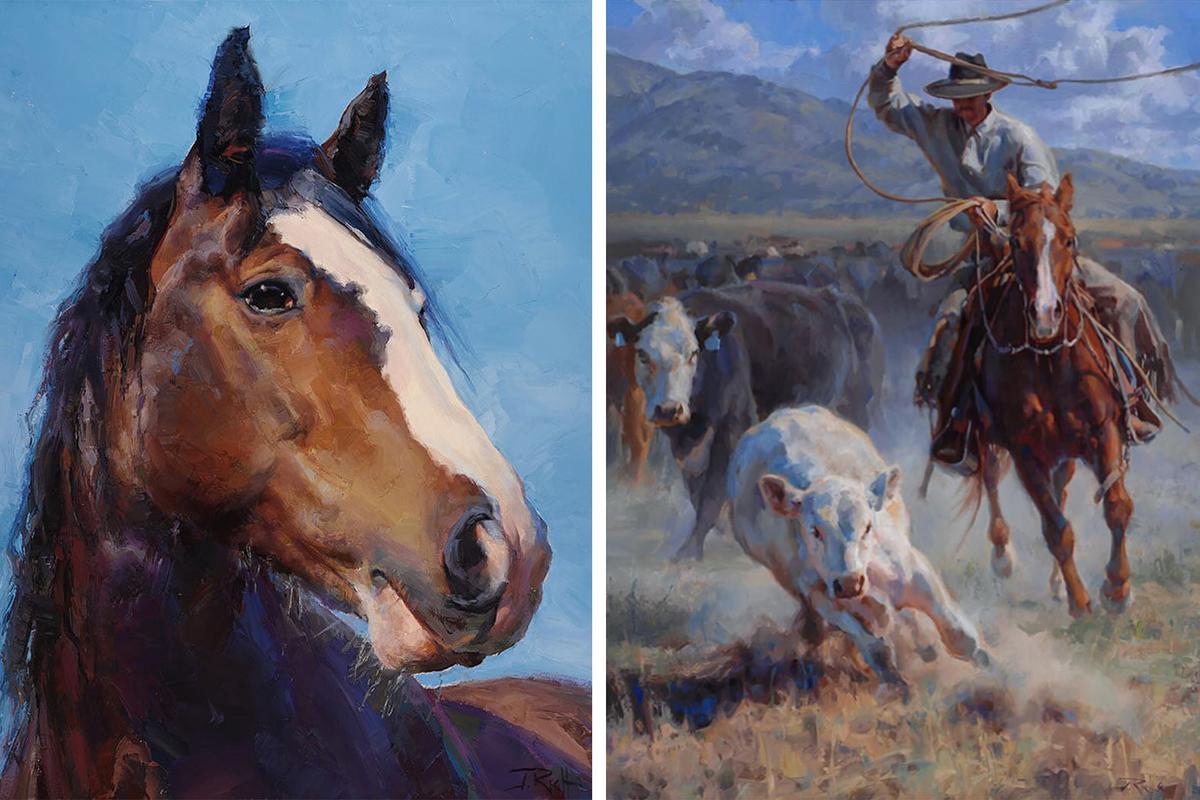
Rich’s horse-face portraits highlight this effect. But he’s keen to point out that these also show how horses really do have their own personalities.
“Glamour Girl,” he says, portrays a gorgeous show horse who seems to know she’s gorgeous. “She looks like she’s just showing off,” Rich said, speaking of one of his small-sized canvases. “I was just drawn to the attitude of this little pony flinging her hair.” Paint captures the sunlight in her strawberry blond mane.
His work “Handsome” shows off Rich’s virtuosity with texture and paint-handling in a similar way.
With all his studio work, though, Rich still gets in the saddle in search of inspiration. Sometimes his cowboy cousins will pose for him on horseback, and there are also landscapes to help the artist tell a story.
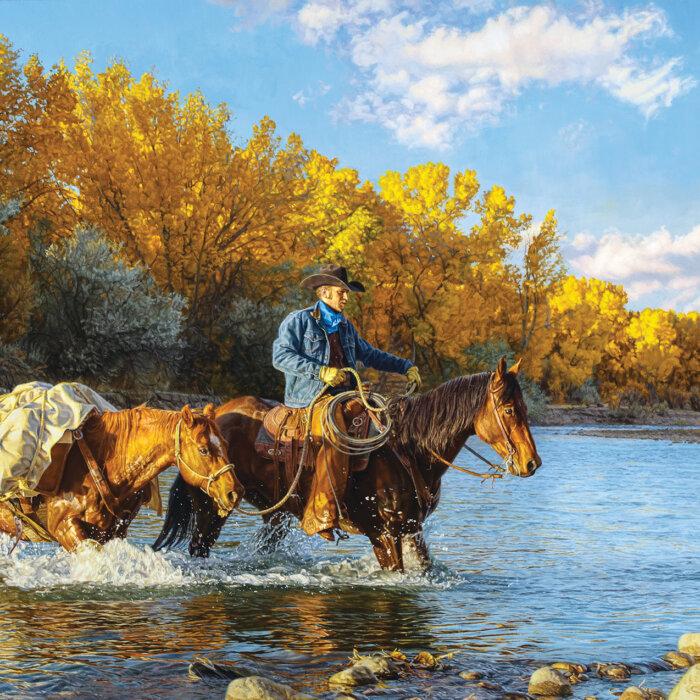
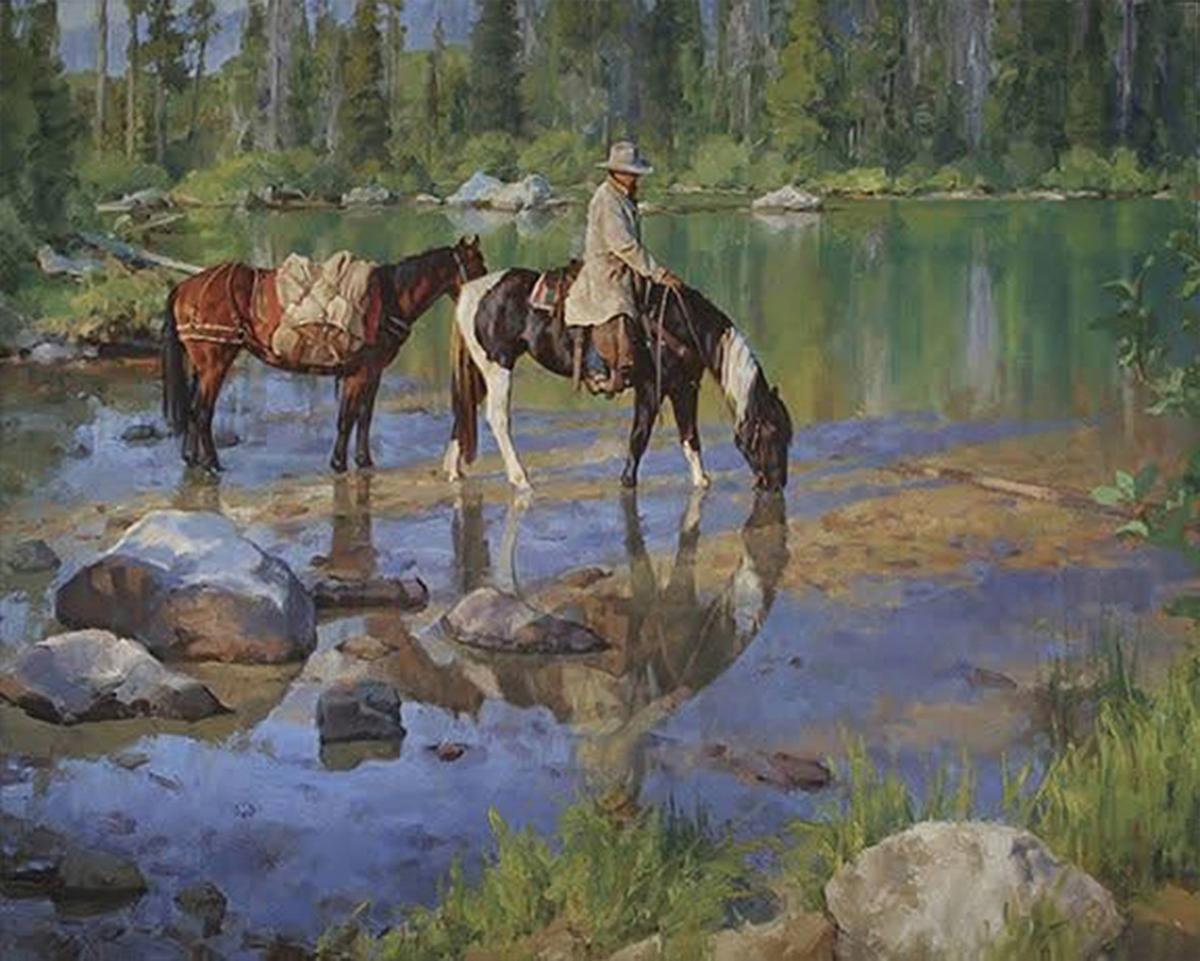
“Tranquility” tells the story of a cowboy coming upon a lake while backpacking cross-country. Although for this work Rich gathered photos of Taggart Lake near Jacksonville, Wyoming, he prefers to be an editor and leave some details out.
“There’s not any particular story,” he said. “I’m just putting that imagery out there, trying to create a nice design.”