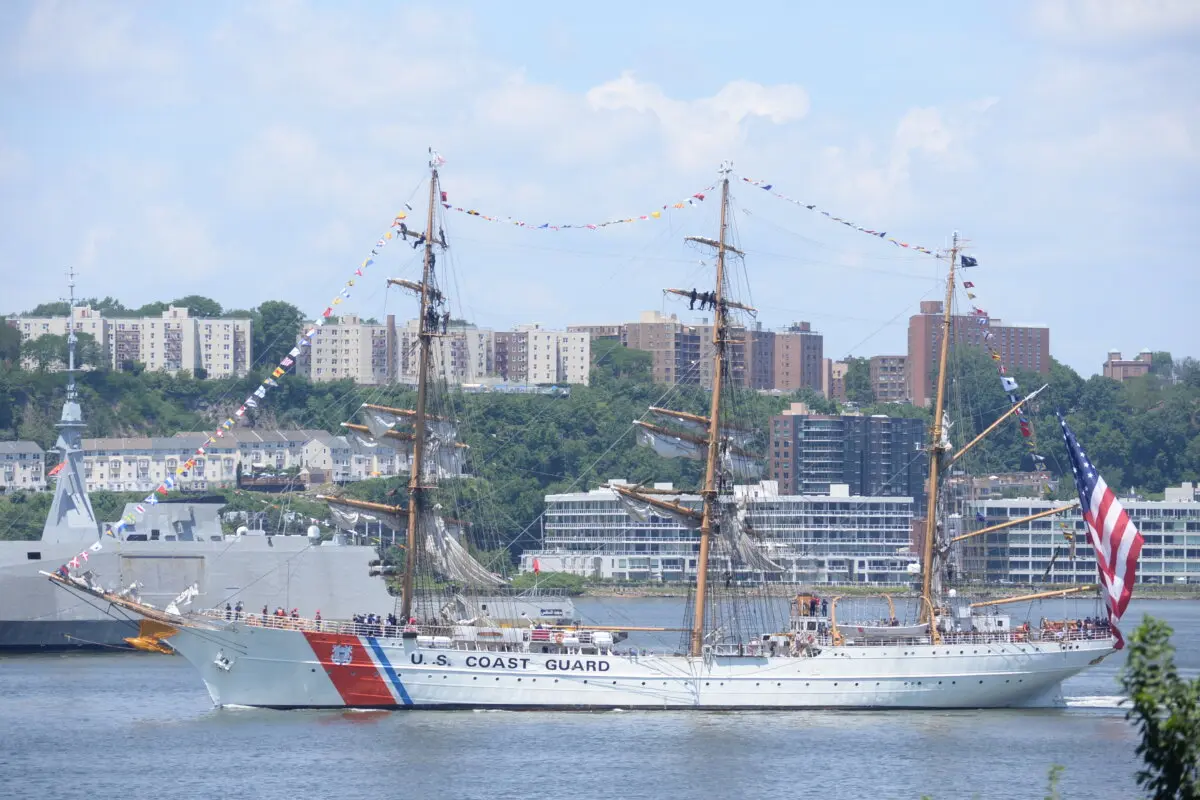
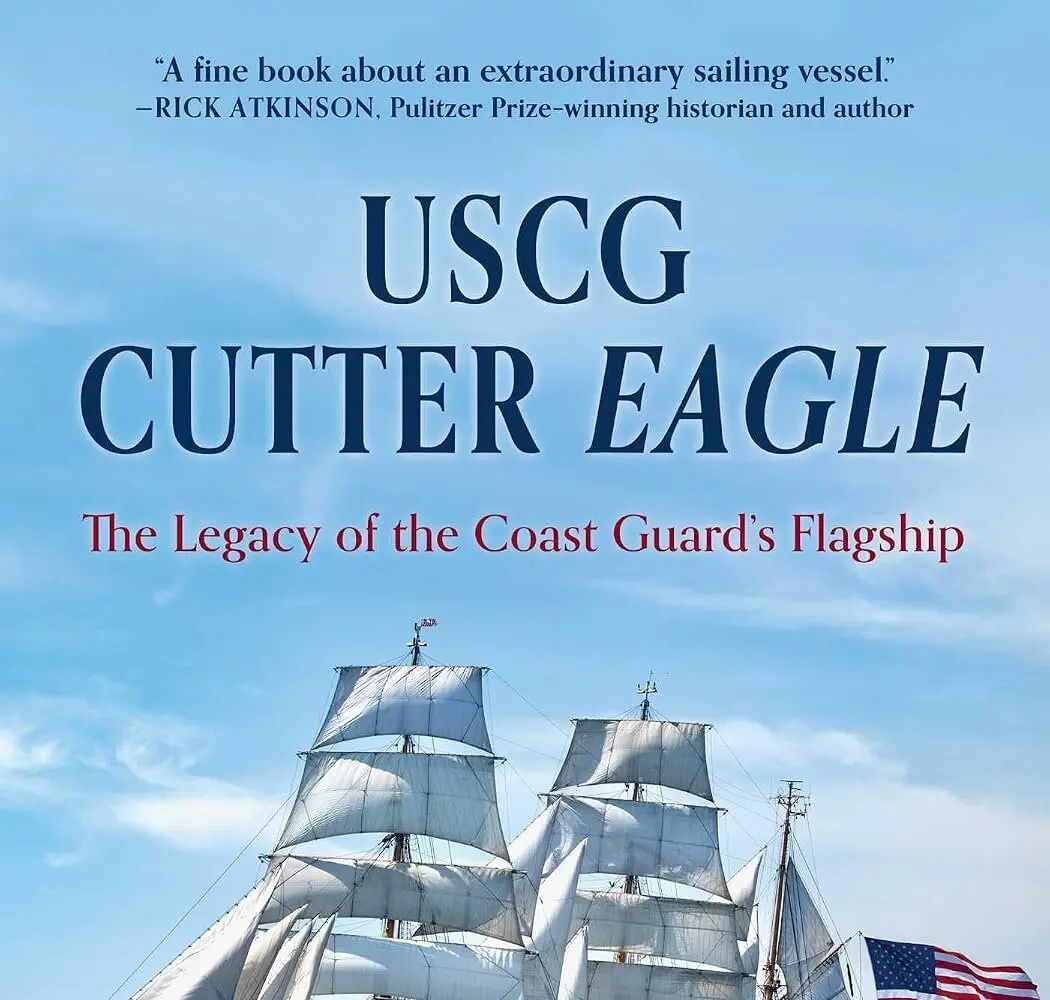
The U.S. Coast Guard has no more visible symbol than its training ship, the barque Eagle, America’s tall ship. Its towering masts and recognizable red, white, and blue Coast Guard “Racing Stripe” Service Mark on its white hull represent the Coast Guard’s commitment to excellence. It’s an all-American symbol.
Like many Americans, USCGC Eagle is an immigrant. It arrived in the United States in 1946, a war prize from Nazi Germany. Its history, its legacy, and the history of the U.S. Coast Guard are presented in Will Sofrin’s new book, “USCG Cutter Eagle: The Legacy of the Coast Guard’s Flagship.”
Sofrin starts with the U.S. acquisition Eagle in the aftermath of World War II. At the time, it was Horst Wessel, one of five Gorch Fock-class sail training ships launched by the Nazi Kriegsmarine between 1933 and 1939. Taken as war reparations, Horst Wessel, renamed Eagle, was given to the Coast Guard as its new sail training ship.
Eagle was refitted in Germany by a joint team of available Coast Guard personnel and the former crew of the vessel when it belonged to the Kriegsmarine. This required refitting its engine, as well as the sails and rigging. A challenging voyage to the United States followed, including dodging a hurricane.
From there, he traces Eagle’s history. For the past 80 years, the ship has served as a Coast Guard training ship, giving USCG Academy cadets hands-on experience in navigation, ship handling, and leadership in an oceangoing setting.
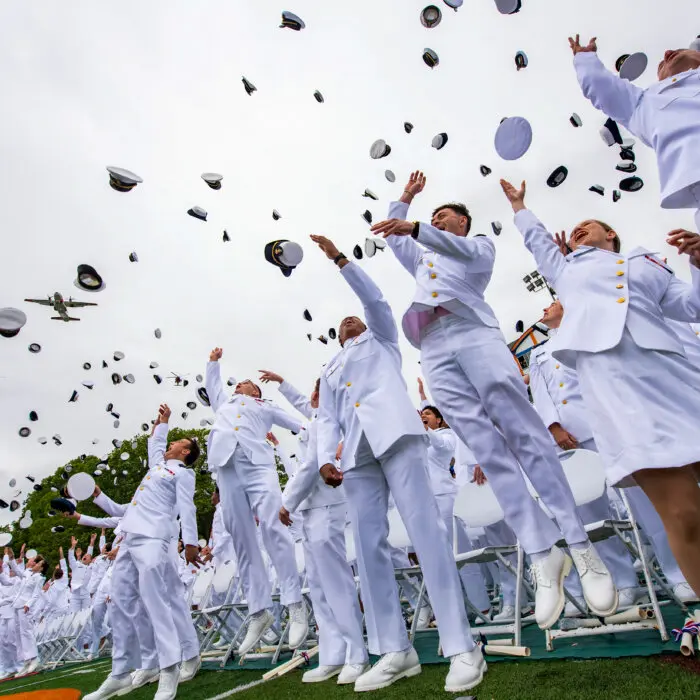
All cadets complete cruises aboard Eagle during their education to earn a Coast Guard commission. Operating a sailing ship develops teamwork, trains cadets to endure hardship, and gives them opportunities to exercise leadership.
Goodwill Ambassador
Sofrin also shows how Eagle serves and has served as an ambassador of goodwill for the United States. He relates Eagle’s experiences showing the flag at ports around the world.In addition to voyages to Caribbean, South American, and Western European ports, Eagle has served in more ambitious roles. It was the flagship for Operation Sail in 1976, the U.S. bicentennial’s parade of tall ships at New York Harbor. It sailed to Australia to help that nation celebrate its 1988 Bicentennial. It conducted a voyage to St. Petersburg in 1996, after the fall of the Soviet Union.
Operation Sail
Its crew berthing and mess facilities were basic, similar to those used throughout history; junior crewmembers used hammocks. It has been rebuilt several times over the years. It gained its famous “racing stripe” 30 years into its Coast Guard career, added in 1976 as part of a refresh for Operation Sail.Other modifications have included twice replacing its diesel engine for more modern and powerful models and rearranging the interior for coed living. Women joined the crew of Eagle in 1976 after the USCG Academy began admitting women. It has changed its figurehead five times.
The book also describes some of the dramatic events in which Eagle has participated. The chapter on the 1984 “knockdown” tells how a squall set Eagle on its beam-ends.
Only prompt action and magnificent seamanship by its crew prevented its loss and the loss of any lives aboard the ship. The chapter also describes instances where Eagle went to assist distressed ships.
Wrapped around Eagle’s background is a history of the U.S. Coast Guard. Sofrin explores its 18th-century origins as a revenue service, the emergence of marine U.S. Life-Saving Service in the 19th century, and their merger into the U.S. Coast Guard in 1915.
He presents its 20th-century roles, including chasing rumrunners during Prohibition and fighting alongside the U.S. Navy in both World Wars, the Korean War, the Vietnam War, and the Gulf War.
The author also follows it into the 21st century, where it plays its traditional roles of intercepting smugglers and saving distressed mariners with cooperation from other U.S. military services during the global war on terror.
This book works on many levels. It’s an outstanding sea saga, describing the battle between men (and women) and the sea. It looks at a frequently overlooked branch of the U.S. military, the Coast Guard. It describes how young people make the transition into adulthood, and it underscores the value of hard work and teamwork.
For those with an interest in the sea, U.S. history, or who want to see some of the reasons the U.S. is exceptional, this is a book which is well worth reading.