Previously on “Tune in Today,” we explored the revival of J.S. Bach in the 19th century and Pablo Casals’s improbable rediscovery of the “Six Suites for Solo Cello” in the 20th century. The “Six Suites” has since become one of the most widely performed works in all classical music, boasting a veritable plethora of recordings to choose from.
Yet unlike many other classical pieces, each recording of the “Six Suites” sounds wholly unique. This isn’t only true from performer to performer, but even between recordings by the same performer across their career.
This isn’t unusual in and of itself; interpreters of music tend to be inherently distinguishable from one another in the performance of any piece or genre. What’s unusual in the case of the “Six Suites” is the lack of agreement between interpretations on the basic principles of the music. From articulations to bowings, which notes to play, or what instrument to play, the true “sound” that Bach intended has been lost over time.
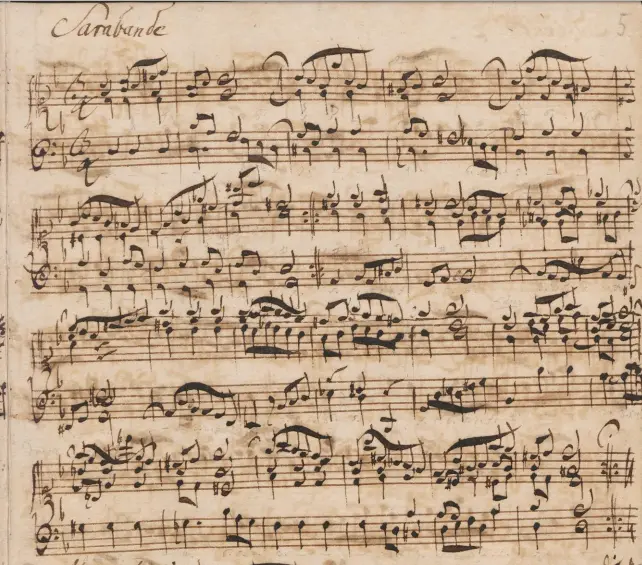
In fact, the original version of the “Six Suites” is lost. No autograph manuscript by the composer has ever been found, and cellists are left to flounder blind, piecing together a patchwork of guesses and estimations from copies fraught with errors and editorial re-imaginings.
Cellists nowadays draw inspiration from a few sources. There are two notable versions, one by Bach’s wife, Anna Magdalena, and another by his associate Johann Peter Kellner. Anna Magdalena’s version, customarily considered the most important source, is marked haphazardly, with several contradictory bowings exhibited in the opening bars of the “First Suite” alone.
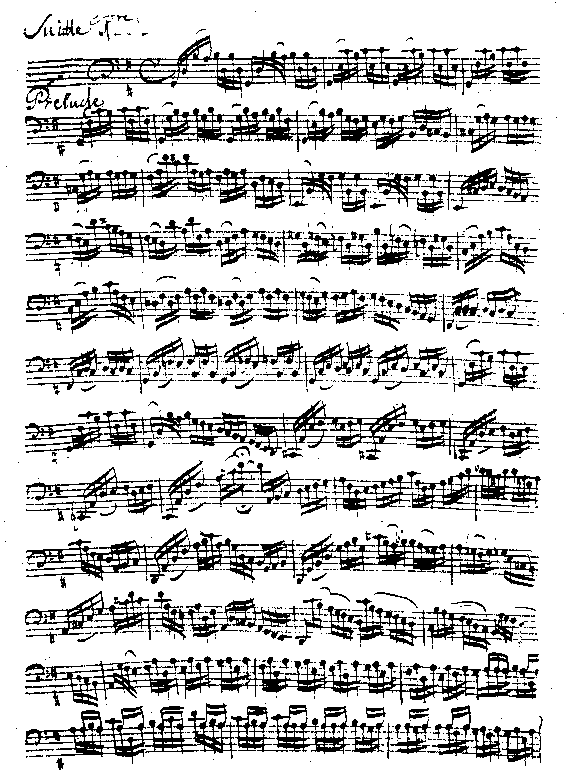
Evidence suggests that she may have copied from an intervening source rather than the original. On the other hand, Kellner’s more uniform version is riddled with careless errors, a multitude of wrong notes scattered throughout the pages.
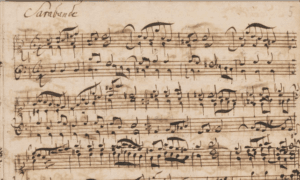

The case of one of the most famous missing manuscripts in classical music has been the cause of both scholarly frustration and creative freedom. While musicologists despair over uncovering the “definitive” markings of the “Six Suites,” audiences are blessed with a vast array of interpretations of the music.
Bach Cello Suite No. 6 in D major, ‘III. Courante’
This recording of J.S. Bach’s Cello Suite No. 6 in D major, “III. Courante,” is by Pieter Wispelwey. (Listen)The “Sixth Suite” of the cycle is a triumphant finale. Unlike the other suites, scholars believe it may have been intended for a five-stringed piccolo cello, which contains a higher string not native to the typical cello. For performers on a regular cello, this suite is technically challenging, requiring awkward fingerings and frequent ventures into the upper register of the instrument.