Wolfgang Amadeus Mozart needed a job. He and his mother left their home in Salzburg, Austria, and after much searching, arrived in Paris in the spring of 1778. The French salons and their proud socialites did not daunt the 22-year-old; since the age of 6, his father had taken him on concert tours around Europe from London and Vienna to Naples and Amsterdam. Paris was simply another city on the list.
However, the city that had once promised opportunity instead delivered condescension and mounting personal strain. It would be the last summer Mozart spent with his mother. As her health declined, he struggled to navigate the glittering indifference of Parisian patronage. After her death, Mozart toiled for several more months before retreating to the Germanic states for the winter; his father eventually ordered him home.
The Concerto for Flute and Harp belongs to the hopeful opening months of Mozart’s Paris stay. It was completed in April 1778 and stands at the threshold of a transformative period in his musical language that resulted in works of even greater emotional depth.
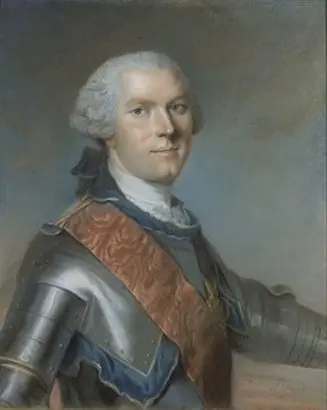
The Duke and the Daughter
Mozart first entered the service of the Duke of Guînes as a composition teacher for the duke’s daughter, Marie. The duke was a proficient amateur on the flute, and Marie was equally accomplished on the harp. Though Mozart found Marie’s compositions woefully inept (at least by his standards), he appears to have thought more highly of her harp playing. During Mozart’s time teaching, the duke commissioned a concerto to be performed by himself and his daughter.The Flute and the Harp
Mozart once said of the flute, “I become quite powerless whenever I am obliged to write for an instrument I cannot bear.” Whether he felt similarly about the harp is unknown. Though the concerto is his only work featuring the harp as a solo instrument, it’s more likely to represent a lack of commissions rather than an aversion.Regardless of Mozart’s feelings toward the two instruments, the Concerto for Flute and Harp remains a beloved work for performers and audiences alike. It maintains Mozart’s distinctive voice while still conforming to the elegance and simplicity of the French salon style.
The second movement is notable for its intimate spotlight on the two soloists. The combination of flute and harp isn’t the most obvious, yet through their conversing, they create a pairing that sounds pleasing to the ear. The harp is plucked and unable to sustain notes, so Mozart endows its line with subtle pauses filled with lingering resonance. This results in music that breathes with a unique improvisational quality. The flute’s tender melodies gain a heart-aching patina from the harp’s accompaniment, and the elegant duets are matched only by the sensitivity of their silence.