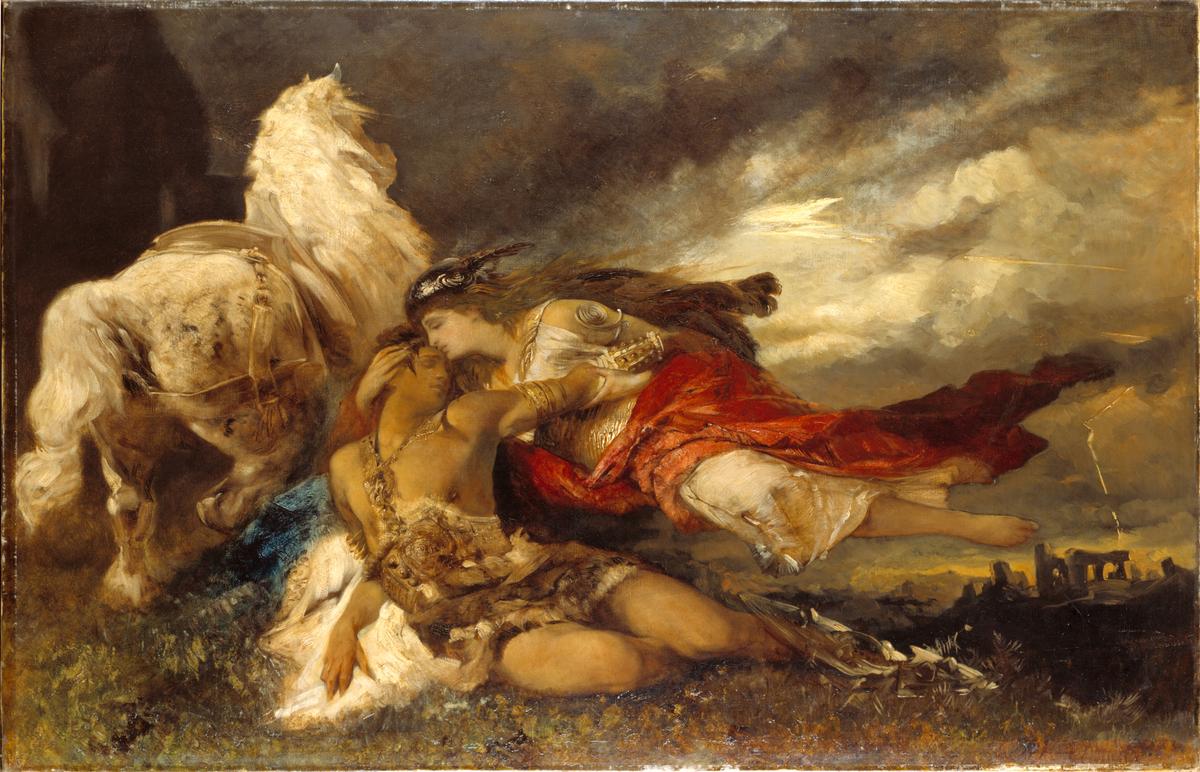
Valkyries were Nordic female warrior-spirits who escorted dead heroes to Valhalla, the afterlife. As he died in battle, the Nordic warrior could rest assured that a Valkyrie would swoop down on her flying horse and carry him off to his reward. With so many heroes dying, there had to be plenty of Valkyries, and indeed, there were at least 25 of them.
Their names were Brynhild, Geironul, Geirskogul, Goll, Gondul, Gunn, Guth, Herfjotur, Hervor, Hild, Hlathguth, Hlokk, Hrist, Mist, Olrun, Randgrith, Rathgrith, Reginleif, Sigrdrifa, Sigrun, Skeggjold, Skogul, Skuld, Svava, and Thruth.
There will be a test.
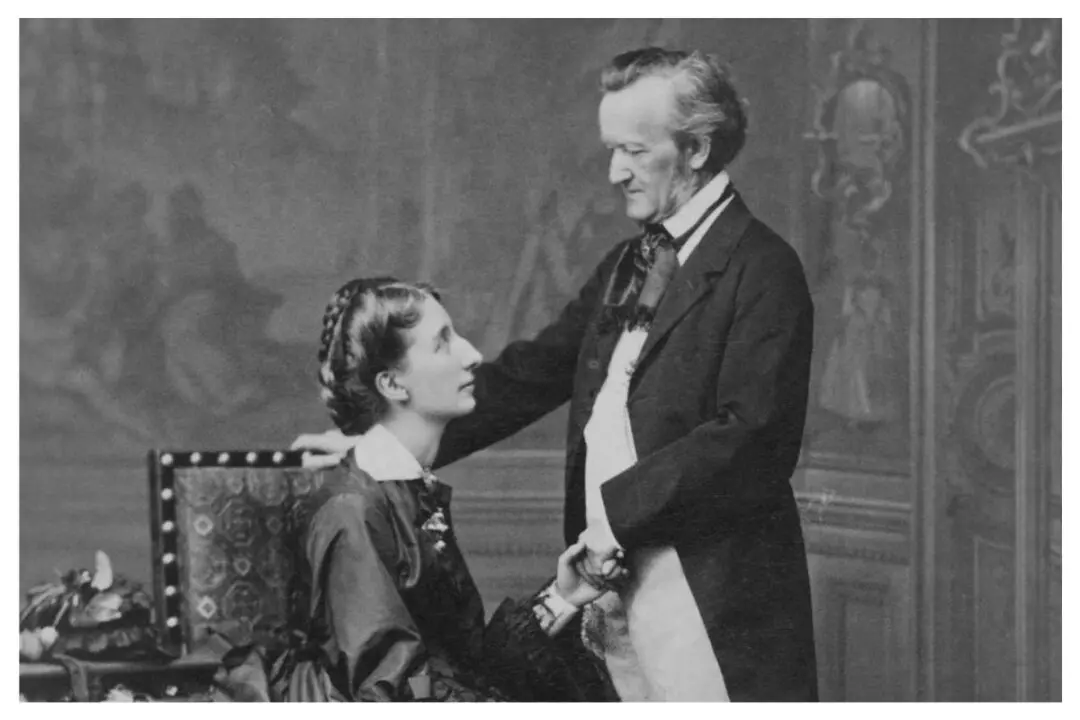
Wagner’s Valkyries
Wagner reduced the Valkyries to nine and made one of them the heroine of his massive operatic tetralogy, “The Ring of the Nibelung.” Brynhild became Brünnhilde, and the association of German opera with horned helmets and massive breastplates was born.Heroes Rising
The popularity of the “Ride of the Valkyries” transcends its use in Wagner’s music-drama. It is a perennial of symphony orchestras, both in classical and pop series. (Listen)
It opens with groups of short, rapid upward-flowing figures in the strings, accompanied by long, tight trills from the upper woodwinds. The bassoons and horns introduce a distinctive rhythm that will form the basis of the famous melody belted out by the horns at 0:21.
It’s the rhythm that makes it. Wagner writes in German over the melody’s first statement: “Emphasize sharply and clearly throughout.” The time signature is 9/8, a so-called “compound rhythm” that makes possible the feeling of a broad, three-beat frame. This is heavy music, as befits the armor-weighted female warriors on their warhorses.
The big-boned tune develops, and at 1:17 enters a quiet phase that almost immediately gives way to a return of the heroic theme. There is a back-and-forth of quiet and loud until at 2:59 the whole thing begins a massive repeat. Who can get enough of such a good thing?
“U.S. troops psyched up on a bizarre musical reprise from the Vietnam war film ‘Apocalypse Now’ before crashing into Iraqi homes to hunt gunmen on Saturday.... With Wagner’s ‘Ride of the Valkyries’ still ringing in their ears and the clatter of helicopters overhead, soldiers rammed vehicles into metal gates and hundreds of troops raided houses in the western city of Ramadi.”