Emotion in music is a huge, controversial subject. Few doubt the power of music to evoke emotions, but disagreements abound about the source of these emotions. The most prominent theory is the materialist view that cultural associations are the sole roots of our responses. We hear a folk song handed down by our ancestors, or the national anthem of our country, and we are stirred.
But pianist Yumeka Nakagawa reminds us that there is more—much more—to music’s emotional content than ethnic or national identity. In a performance of Chopin’s “Raindrop” prelude last month at Warsaw’s 19th International Chopin Piano Competition, Nakagawa revealed the emotional depth of one of the most beloved pieces in the repertoire. Nakagawa was literally moved to tears during her performance, an interpretation that subsequently captured the hearts of classical music lovers around the world.
Music of Hope in the Face of Despair
Frederic Chopin (1810–1849) was born in Poland to a French father and a Polish mother; he proclaimed his national identity as Polish, even though he lived most of his adult life in Paris. Chopin composed Op. 28 primarily while on the island of Mallorca in the winter of 1838 and 1839. He had come to the island for his health which, at age 28, was already on the downslope. The disease that had ravaged him from age 21 was probably tuberculosis, though a modern hypothesis suggests cystic fibrosis underlay it.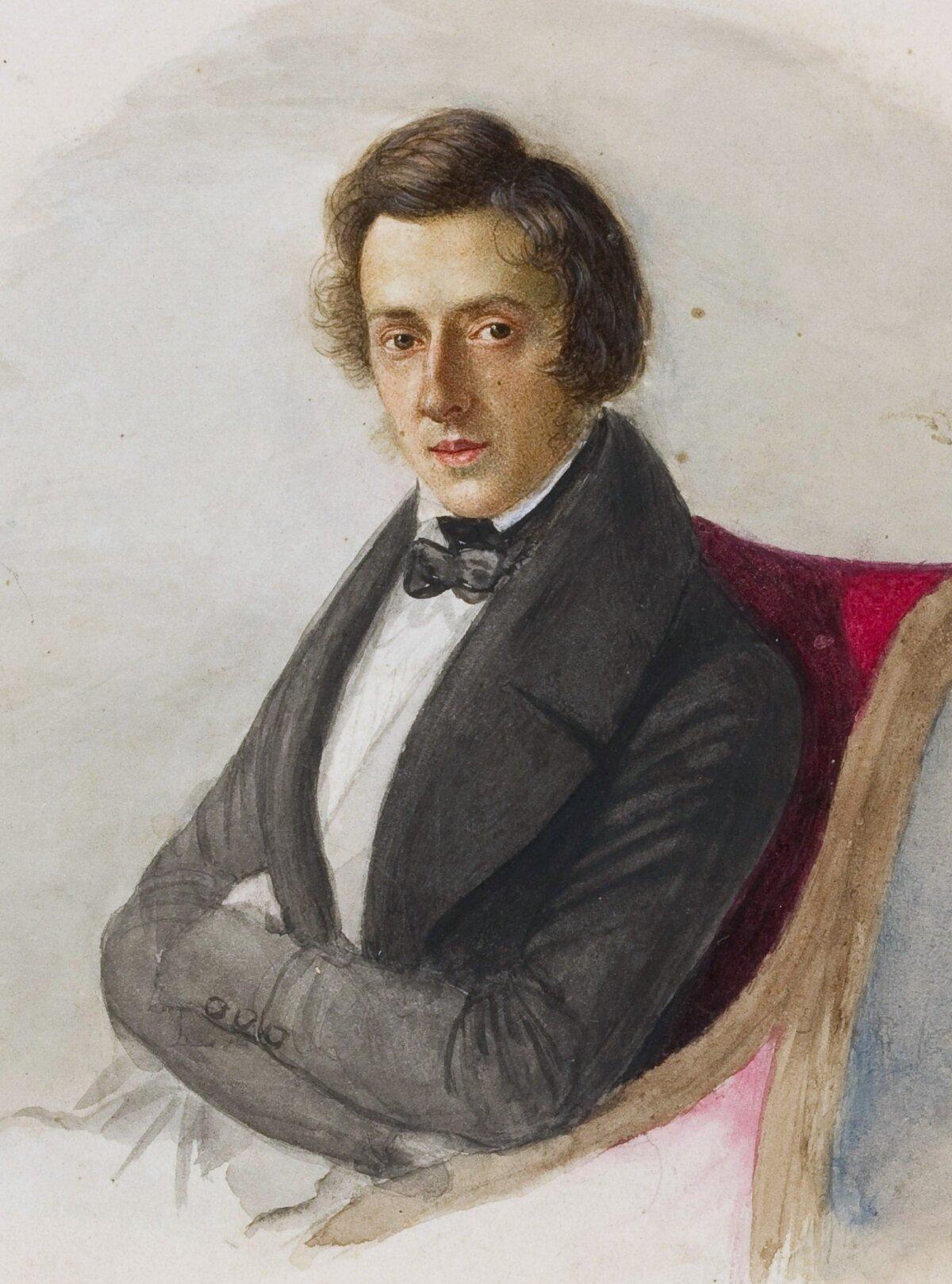
To escape what was predicted to be a particularly harsh Paris winter and assured by acquaintances that that sunny Mallorca was just the thing he needed, Chopin traveled there in the company of his close friend George Sand, a woman novelist with a masculine nom de plume.
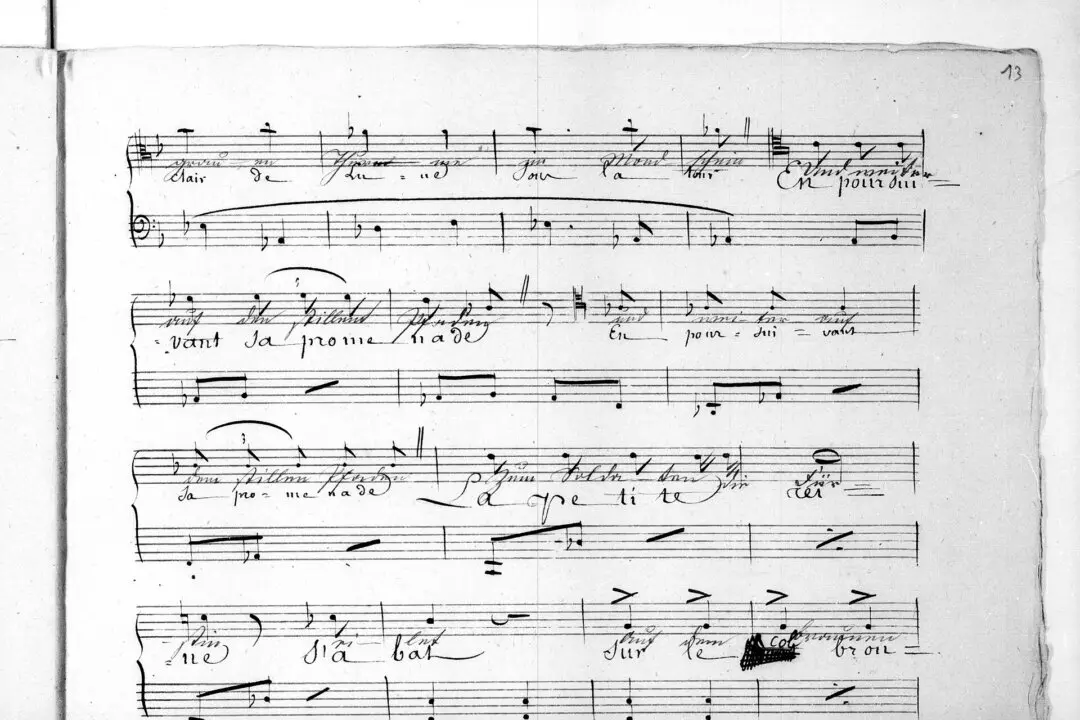
It was a disaster. It rained constantly, and the composer’s health declined rather than improved. Undaunted, Chopin set to work. He’d brought with him a copy of J.S. Bach’s “Well-Tempered Clavier, Vol. I,” the famous set of 24 preludes and fugues in all the keys. Whatever appeal the fugues may have had for him as a pianist, it was as a composer that the preludes alone bore fruit. He ended up composing a set of short works in all the keys, each labeled “prelude,” but without fugues to follow. Since then, “prelude” has come to mean a brief piece encapsulating a single musical idea.
At around six to seven minutes in most performances, the prelude in D-flat major is the longest piece in Op. 28. Frequently performed by itself, it gained the nickname “Raindrop” from the insistent repetition of the A-flat note, which can be heard as imitating gentle raindrops that turn to heavy downpour in the middle section.


Sand wrote of Chopin’s inspiration for this:
The ‘Raindrop’ Prelude
It begins with the simplest melody that falls easily down the notes of a D-flat major triad, then back up again. We hear this repeated, and then at 26:30 we get what in popular music would be called the “bridge,” or measures that take us away from the opening and suggest other keys. At 27:11 it is back to the opening measures which, at 27:43, begin to change from a pleasant, even conforming melody to an oppressive and woeful middle section. The raindrops continue as heavy G-sharps (the same key on the piano as A-flat but with different tonal implications) and explode at 28:23 in darkly triumphant E major.The middle section repeats. Then comes the passage Nakagawa has interpreted as the core of the prelude. From 29:33 to 30:34, a struggle is depicted in which the gentleness of the opening fights to throw off the darkness of the middle. It succeeds at 30:35, but the cost has been great. The struggle is where the tears literally flow, Nakagawa being unable to hold them back. Music shapes experience itself, bringing out the meaning and emotions of human existence.
That a piece of music composed by a Polish-French composer in 1838 can move to tears a Japanese pianist 187 years later is testimony to the emotional richness of Western classical music, transcending time and nationality. And the “Raindrop” is but one small piece in the ocean of classical music that awaits all who are open to it.