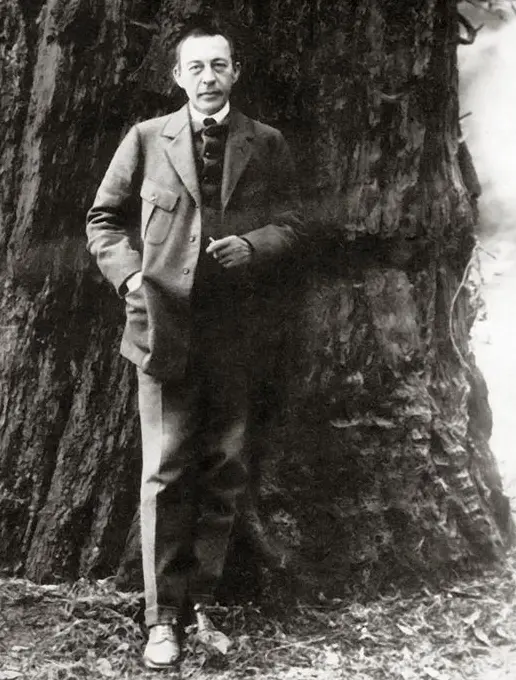
Legend has it that Russian composer Sergei Rachmaninoff awoke one night from a dream and, in the early hours, began the Prelude in C-sharp Minor. Whether true or not, we do know that it came as a fateful burst of inspiration, and its popularity would impose itself onto his life.
Opening with three foreboding chords that represent the tolling of church bells, the piece was later promoted under titles such as “The Bells of Moscow” and “The Day of Judgment.”
The Prelude in C-sharp Minor displays Rachmaninoff’s Romantic style—dark and moody, with intense emotional expression. Written shortly after Rachmaninoff graduated from the Moscow Conservatory, he was 19 when it premiered at the 1892 Moscow Electrical Exhibition, where, among showcases of Russian industrial innovations to auspicious crowds, the Prelude now seems an ominous premonition of the 20th century.
Little did he know at the time, but like the bells of the Kremlin, Rachmaninoff would witness the end of the Russian empire and the twilight of a musical era: His music would be fated to cling to the dying throes of Romanticism while his peers sped into the Modernist age.
Musical Romanticism (around 1820–1910) was an era when music focused on individuality and emotional expression. However, the civil unrest and eventual world wars led to artistic disillusionment, and music began to explore other avenues, no longer as idealistic or optimistic as before.
The Prelude
Today’s recording is stirring and dramatic: Rachmaninoff himself is at the piano.
After the opening three chords, the bells motif is expanded. The first section contains notes played in octaves followed by a series of quieter chords—the sound of ringing bells echoing. The weighty repetitions make way for an agitated middle section, where a frenzy of notes shape a descending chromatic sequence.

The Epilogue
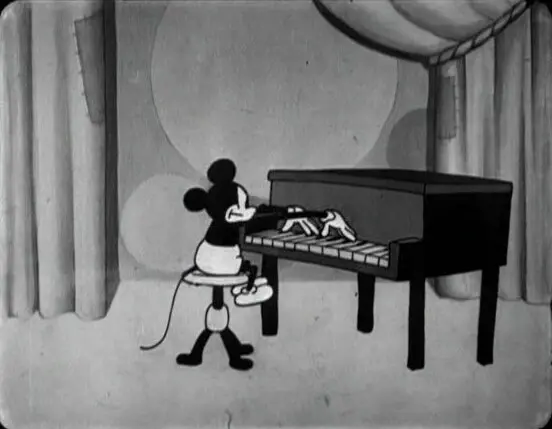
After its premiere, the Prelude in C-sharp Minor quickly became Rachmaninoff’s most popular work. It would stalk him throughout his life; he gained the nickname “ Mr. C-sharp Minor,” and at concerts, audiences would clamor for it, shouting “C-sharp Minor!” while still applauding some other work. He eventually grew to despise the piece, mocking how its popularity spiraled out of his control. Yet though he disliked the public’s obsession with “this damned little prelude,” and repeatedly expressed his regret at composing it, Rachmaninoff was receptive to the Prelude’s various renditions.He admired Ferde Grofé’s arrangement of the prelude for the jazz legend Paul Whiteman, as well as Mickey Mouse’s performance in the animated short “The Opry House.” The composer remarked that “never was [he] more stirred than by the performance of the great Maestro Mouse.”