This copy is for your personal, non-commercial use only. Distribution and use of this material are governed by our Subscriber Agreement and by copyright law. For non-personal use or to order multiple copies, please contact The Epoch Times Reprints.
The palace complex stands on Seraglio Point, a promontory overlooking the Golden Horn at the junction of the Bosphorus Strait and the Sea of Marmara. Set on an elevated, hilly terrain near the water, it occupies one of the highest positions in the area. Covering about 173 acres, the site previously housed the acropolis of ancient Byzantium in Greek and Byzantine periods. Halit Omer/Shutterstock
Sunlight glints off golden domes as tiled walls shimmer in intricate patterns of blue and gold. Sea air moves through fragrant gardens and along worn stone pathways once walked by sultans and their courtiers. This is Istanbul’s Topkapi Palace—an empire’s ambition rendered in architecture.
Originally called the “New Palace,” Topkapi was constructed by Sultan Mehmed II following his conquest of Constantinople in the latter half of the 15th century. Perched high above the Bosphorus Strait and the Golden Horn, its commanding position served both as a strategic fortification and a deliberate declaration of imperial authority. Although expanded and altered over the centuries, the complex retained its architectural grandeur, remaining the enduring symbolic heart of Ottoman power.
As it stands today, Topkapi Palace is a sprawling complex organized into four principal courtyards. Within them lies a labyrinth of interconnected pavilions, audience halls, and more than 400 rooms. The palace’s layout was shaped by a strong respect for privacy and social hierarchy, expressed through screened windows, hidden passageways, and carefully arranged thresholds that limited access at every step. In its design, Topkapi Palace draws upon Islamic, Byzantine, Ottoman, and European design traditions to produce a style of exceptional richness. This blend shows up most clearly in its decoration: vibrant Iznik tilework, finely rendered calligraphic inscriptions, jewel-toned painted panels, and a lively use of Rococo-style gilding that reflects the empire’s evolving artistic dialogue with the West.
Following the dissolution of the Ottoman Empire in 1922 and a government decree issued the following year, Topkapi Palace was transformed from an imperial seat of power into a public institution. Now administered by the Turkish Ministry of Culture and Tourism, the Topkapi Palace Museum houses approximately 65,000 historical artifacts and attracts millions of visitors annually. Its collections span an extraordinary range, from imperial jewels and illuminated manuscripts to sacred relics and objects reflecting the diverse civilizations once encompassed by the Ottoman realm. Recognized as a UNESCO World Heritage Site, Topkapi Palace reflects a rich convergence of artistic and cultural influences shaped over nearly 500 years of history.
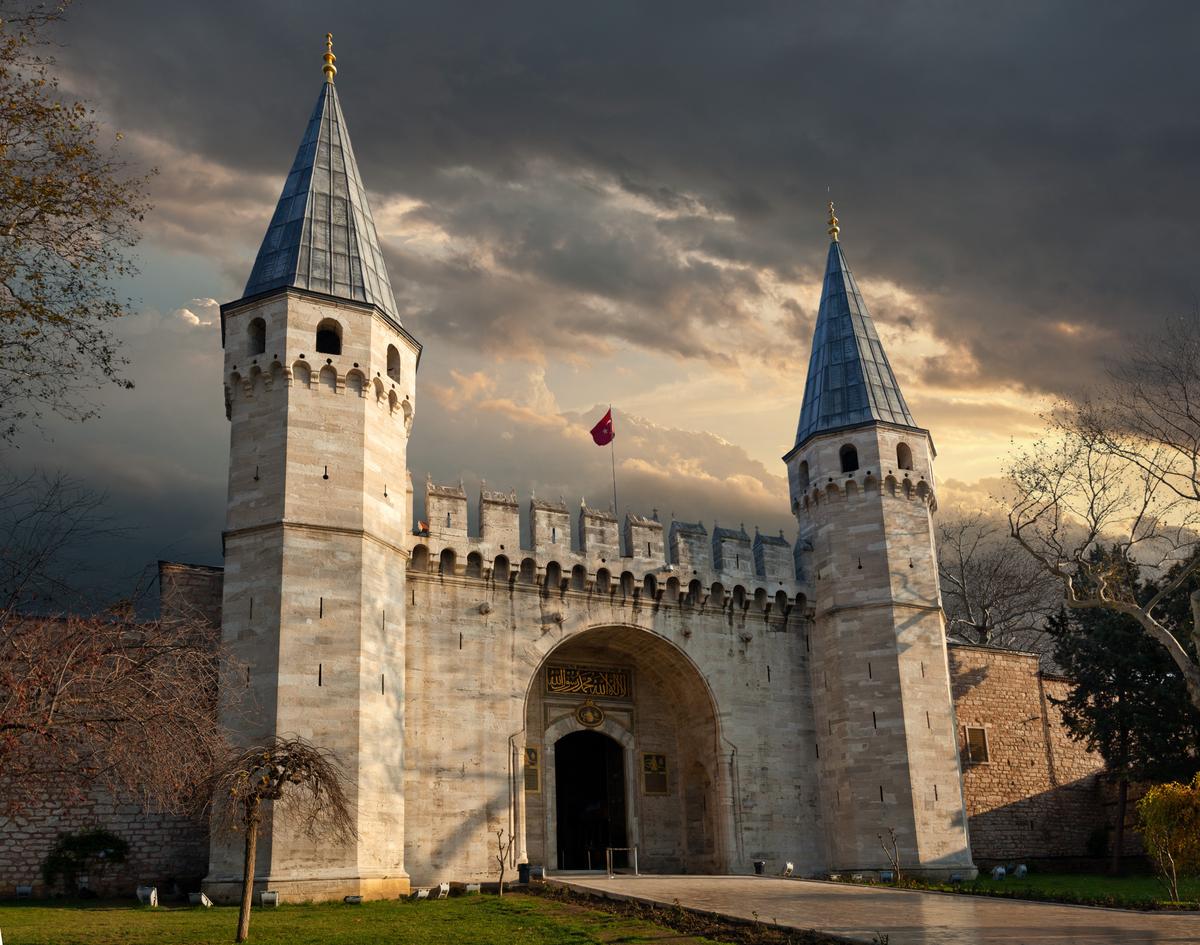
Historically reserved for the sultan and foreign ambassadors, this stately gate now serves as the palace’s main visitor entrance, opening into the First Courtyard. Built in 1478 and later clad in 19th-century marble, it centers on a domed passage adorned with gilded Ottoman calligraphy. Serhat Akavci/Shutterstock
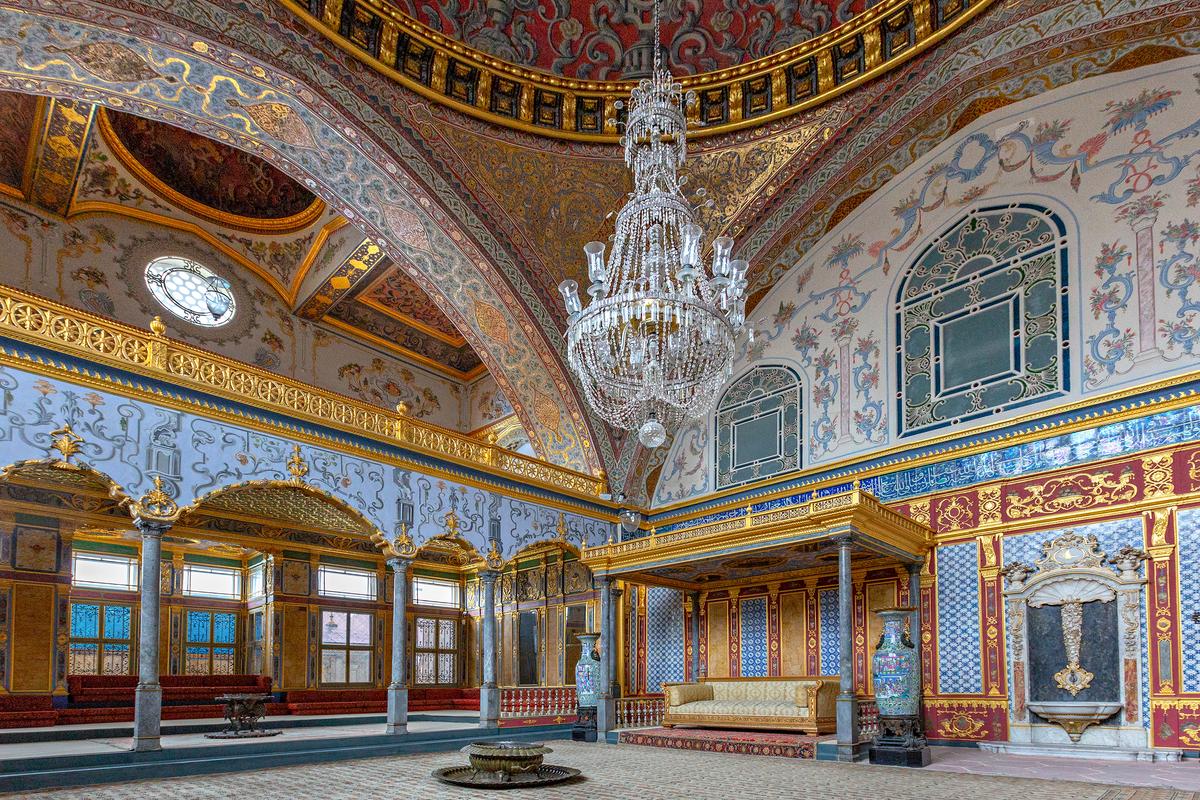
Built in the late 16th century, the Imperial Hall is a grand, ceremonial reception space later enriched in the 18th-century Ottoman Rococo style. It features vivid Delft tiles, painted panels, gilding, and intricate, finely carved woodwork. A massive, richly decorated dome rests on ornate pendentives, curved triangular elements that elegantly transition from a square base to the circular dome. MehmetO/Shutterstock
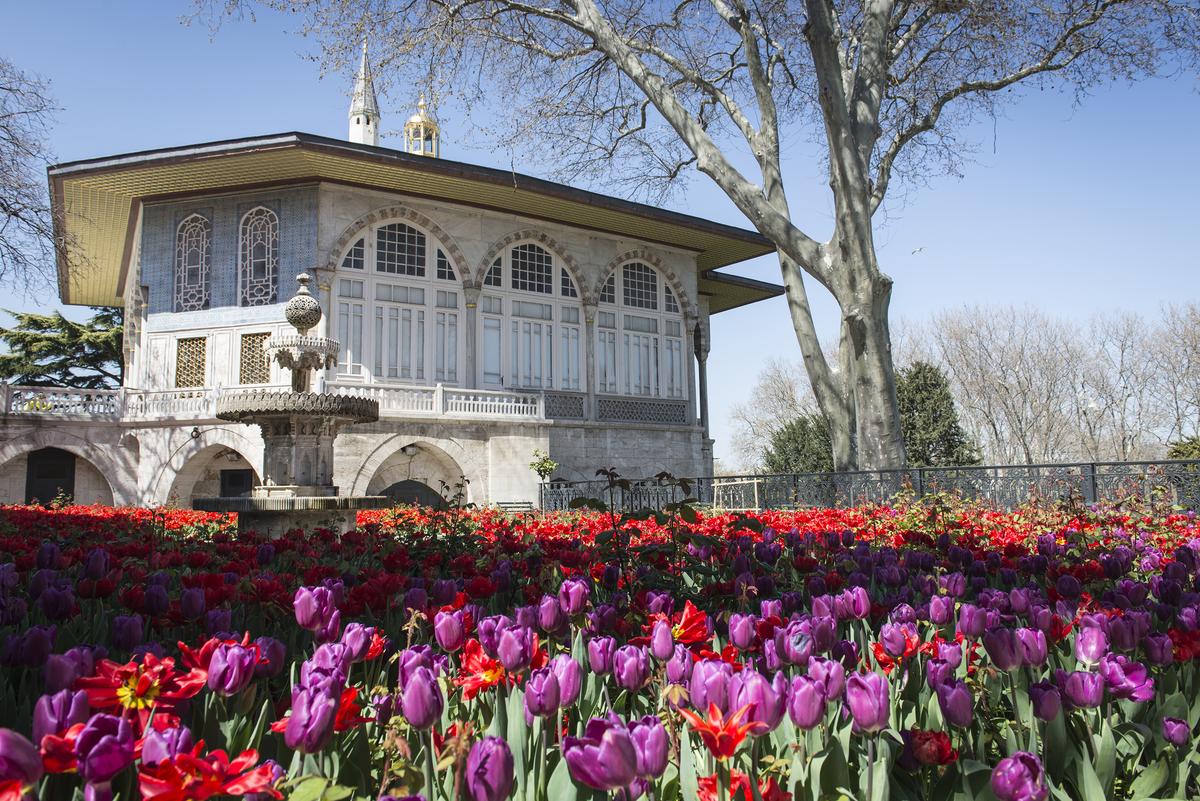
The Fourth Courtyard is centered on the colorful Tulip Garden, filled with Turkey’s national flower. It served as a setting for major ceremonies, including solemn royal accessions, where the sultan publicly affirmed his authority before assembled subjects. Beyond its ceremonial role, the courtyard supported art, literature, and scholarship through its historic library and resident scholars. It also provides visitor access to the Imperial Apartments, including the sultan’s private chambers. Chendongshan/Shutterstock
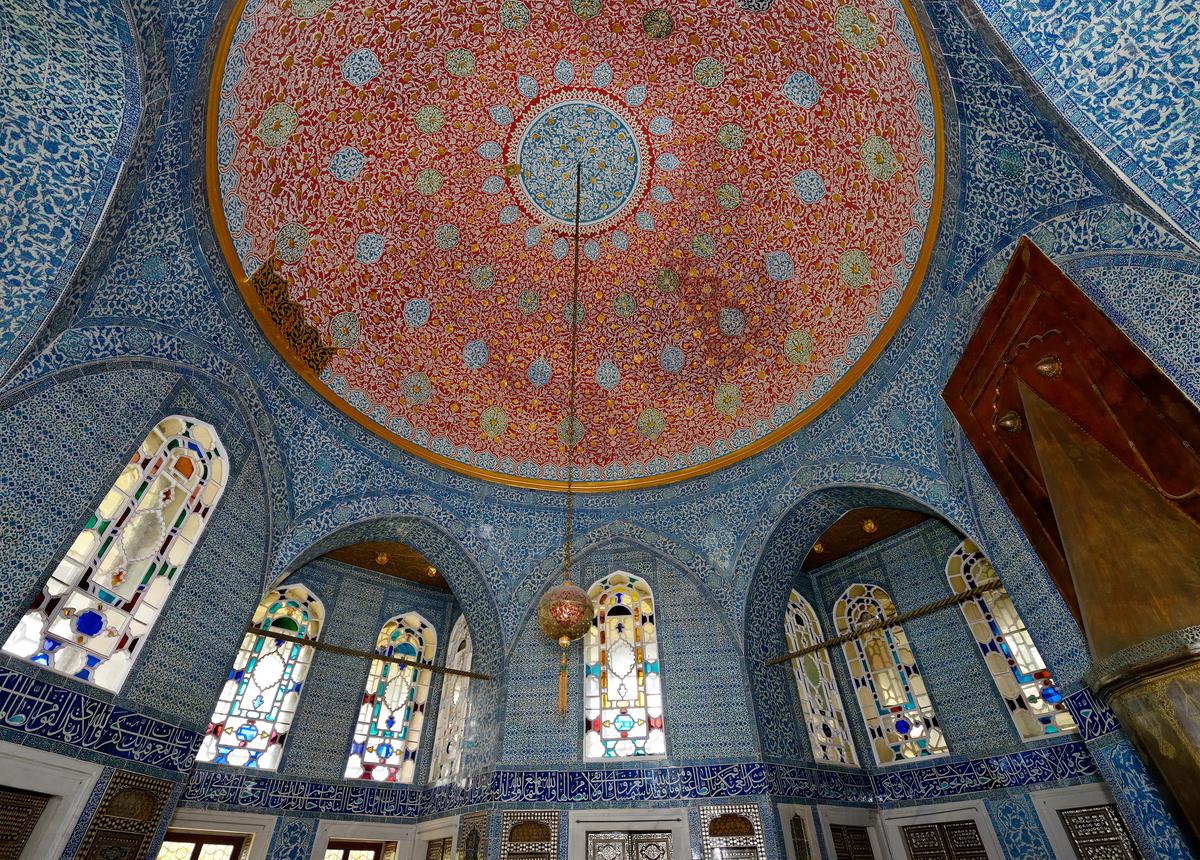
The Baghdad Pavilion was built in the early 17th century to commemorate the Ottoman conquest of Baghdad. It follows a four-iwan plan, with a central domed space and four vaulted halls arranged symmetrically in a cross-axial layout. The domed ceiling is a kaleidoscope of floral and geometric patterns. Reimar/Shutterstock
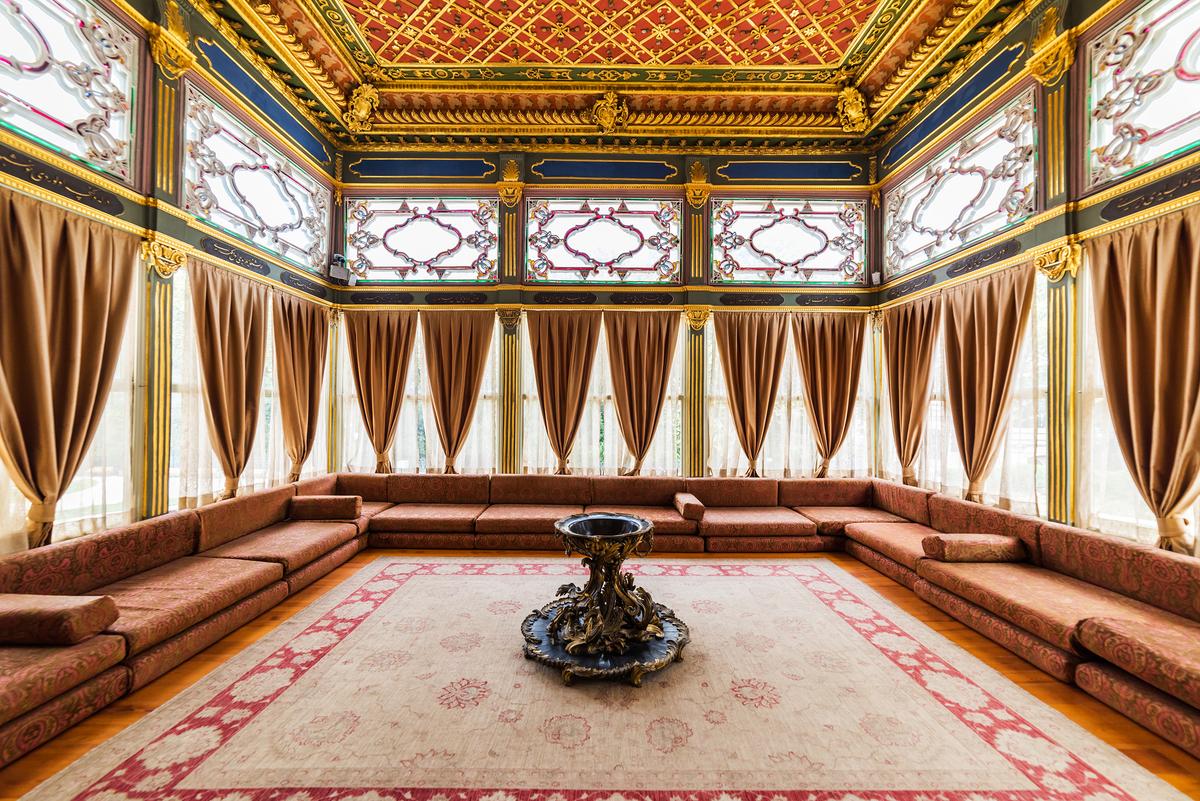
Located in the Fourth Courtyard, the Sofa Pavilion is the only wooden structure in the innermost palace. First built in the late 16th century and later renovated in the 18th century with a whimsical Rococo style, the pavilion blends Ottoman artistic traditions with emerging Western aesthetics. It functioned as an imperial living room where the sultan hosted intimate gatherings, listened to music, and enjoyed poetry with close companions. Resul Muslu/Shutterstock
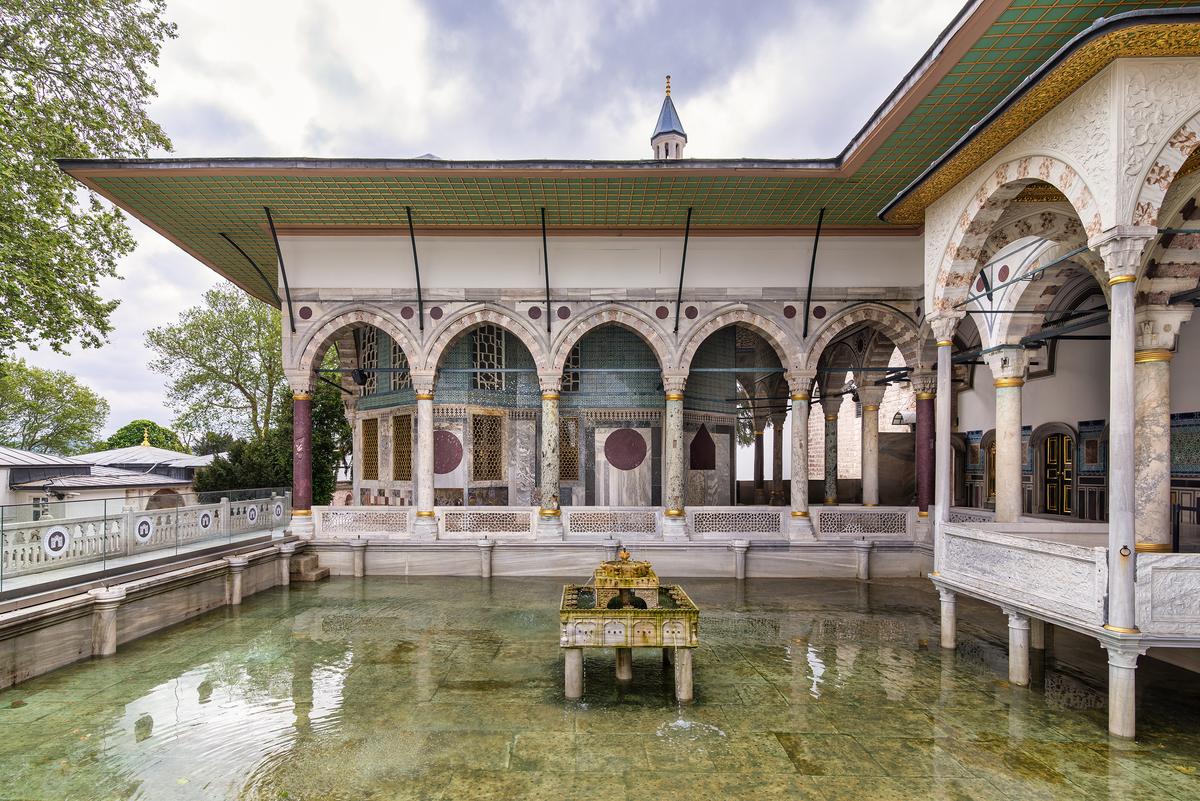
The Iftar Kiosk is a small, open pavilion overlooking the scenic Golden Horn (Inlet of the Bosphorus). It provided a secluded setting for ritual observances, including the breaking of the Ramadan fast, and occasionally hosted ceremonial gift distributions. It is distinguished by an elegant vaulted structure topped with a gilded roof. Halit Sadik/Shutterstock
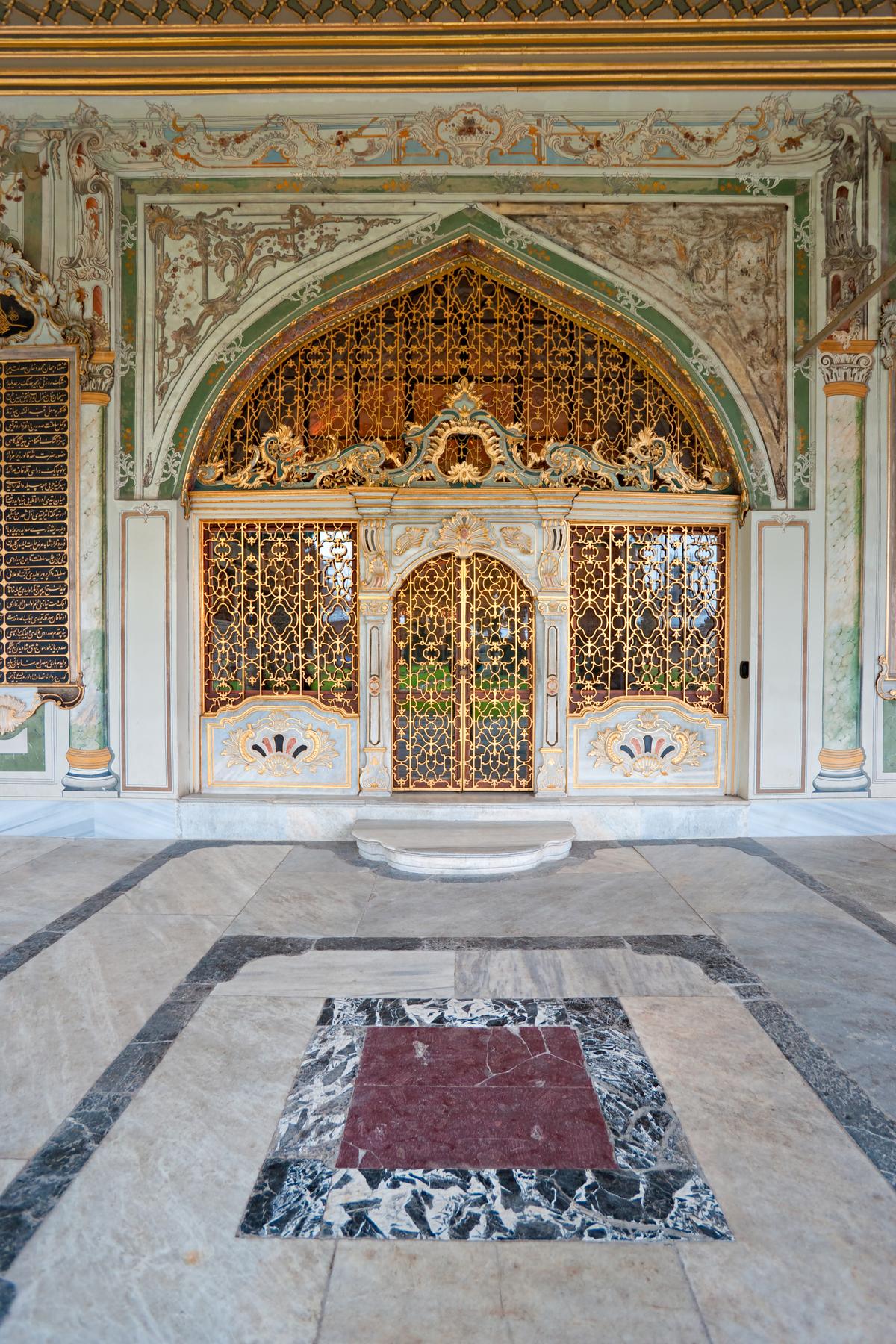
This elaborately decorated exterior entrance to the Imperial Council Hall features gilded grills set within embellished walls. It is approached through a porch supported by polished marble and porphyry pillars and crowned with a green-and-white wooden ceiling enriched with gold detailing. Luciano Mortula - LGM/Shutterstock
What arts and culture topics would you like us to cover? Please email ideas or feedback to [email protected].
Sarah Isak-Goode is a writer and art historian rooted in the Pacific Northwest. Her name—pronounced EYE-zik-good and meaning "good laugh"—hints at the warmth she brings to everything she does. Equal parts scholar and storyteller, Sarah brings the past to life through a distinctly human lens, exploring what connects us across the centuries. Away from her desk, she feeds her curiosity through traveling, painting, reading, and hiking with her dog, Thor.