Different styles of rail fences depend on how the rails are joined to the posts and whether the parts are round, squared, or split. The rails can be joined to the posts in six ways. The easiest method is called a lap joint. A lap joint is where the ends or edges are overlapped and fastened together. This way usually produces a flush or continuous surface.
The basic parts you are going to work with are the rails, posts, footing, and gate. The footing is the material that supports and surrounds the post. The strongest footing is concrete, but you can set the post directly into the ground and surround it with just dirt or gravel. If you live in a cold climate, it is best to use concrete.
Once you have the formula you are going to use, you need to stake out where the fence will go. Stretching string between the stakes can serve as your guideline for installing the posts. Mark the spots as level as you can and at about 1 foot off the ground.
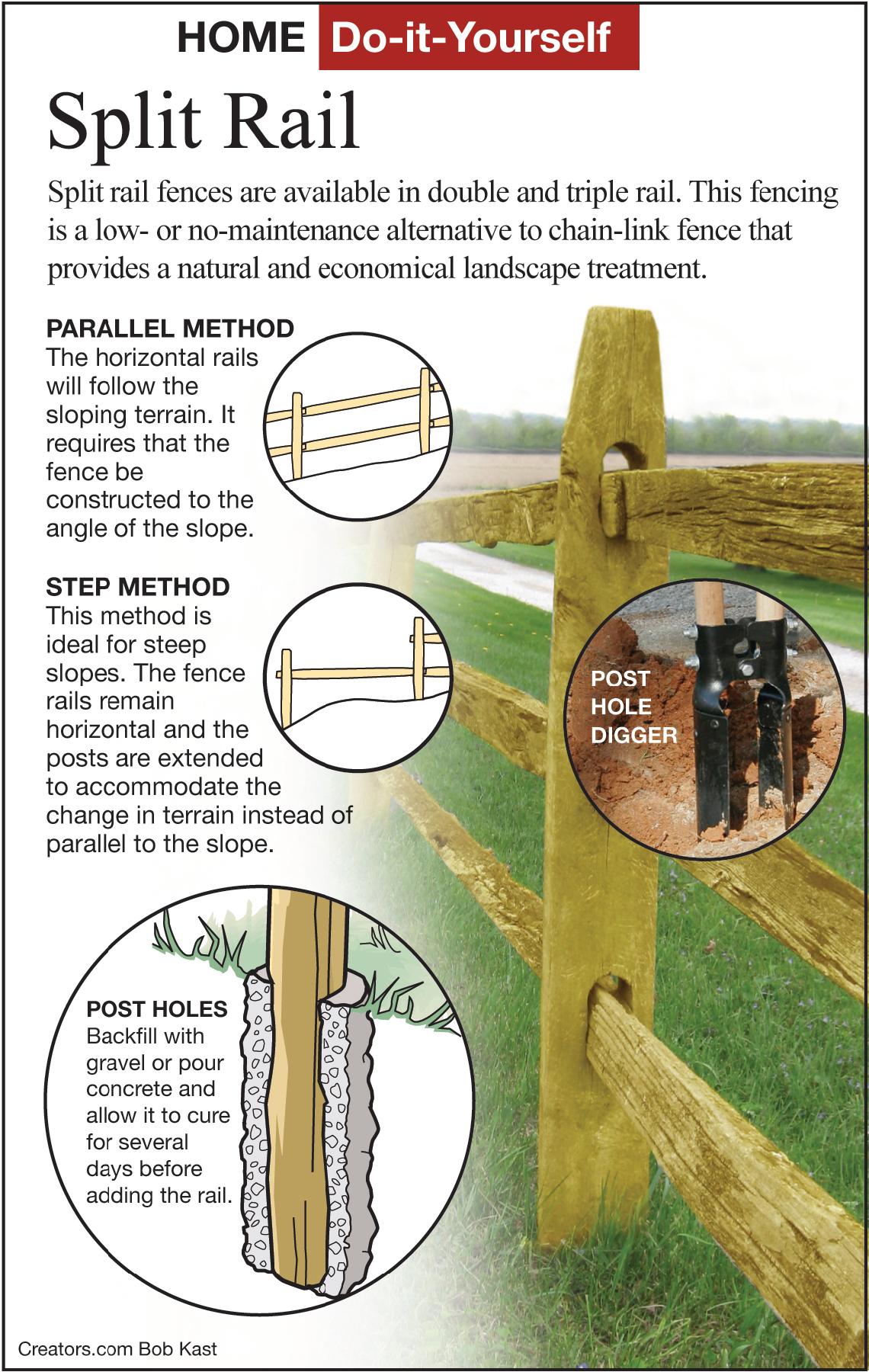
If the fence starts at another fence or house, you will want to come off it at a right angle for the best appearance. When a fence runs down a hill, you can use one of two methods. One method is to have the top of the sections follow the slope of the hill. Another method is to keep the fence level and step the fence down at each section.
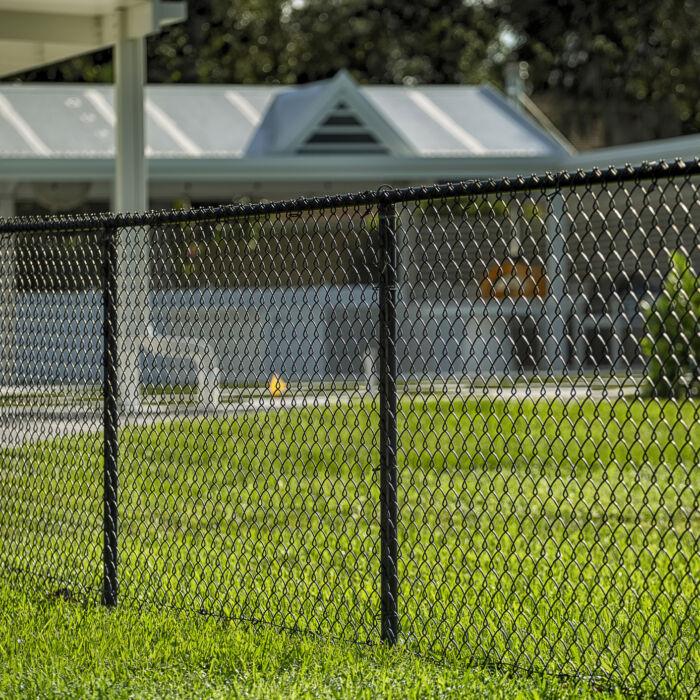
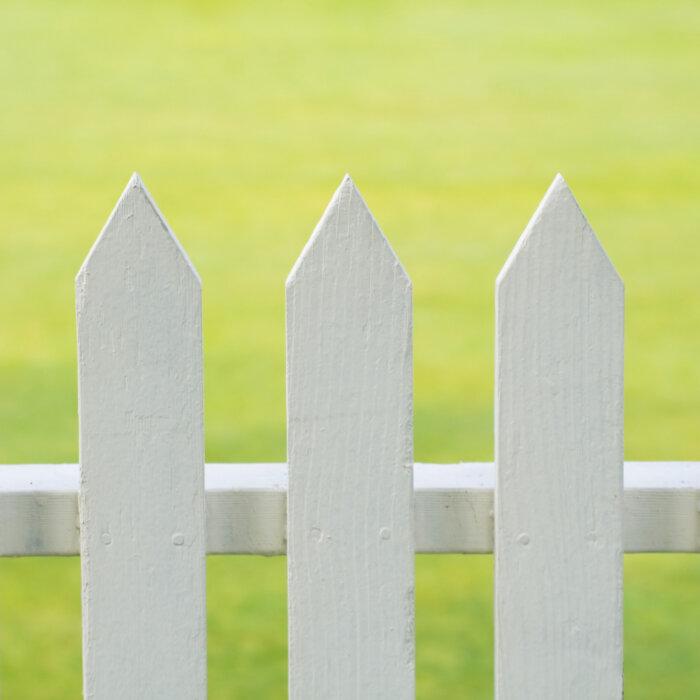
Using a clamshell-type digger is the easiest way to dig the post holes. If you have a lot of holes to dig, consider using a power auger or hiring a professional. Make sure the posts are below the frost line. Check with any building supply outlet or home center for the depth of the frost line in your area. The diameter of the holes should be between 10 and 12 inches.
Place the posts in the holes and backfill them with the dirt, gravel, or concrete. If you select concrete, mix it on the dry side because it will draw moisture from the surrounding soil. Some people even just pour dry concrete around the posts in the holes. Next, attach the rails to the post, again using your chosen method. Brackets or nails should be hot-dipped galvanized or stainless steel to avoid rust stains beneath them.
Because they are low and very open, not all rail fences need gates. If you decide you would like to add some character to your fence, building a gate or adding specialty metal tops or paint are easy ways to do this. Any of these things can make the fence look as if it were built to match your house.