Liberty Hill School was built on a plot of land in East Tennessee, moved, then moved again.
The unusual circumstances surrounding the circa-1900 one-room, log schoolhouse was shared by Devin Simmons—the assistant manager at Fall Creek Falls State Park in Spencer, Tennessee. He was not only born and raised in this hilly area of Tennessee, but his family’s history is intertwined with the land that became the almost 30,000-acre state park straddling two counties on the upper Cane Creek Gorge. Thus, Simmons basically works where he grew up, and he knows the history of Liberty Hill School intimately.
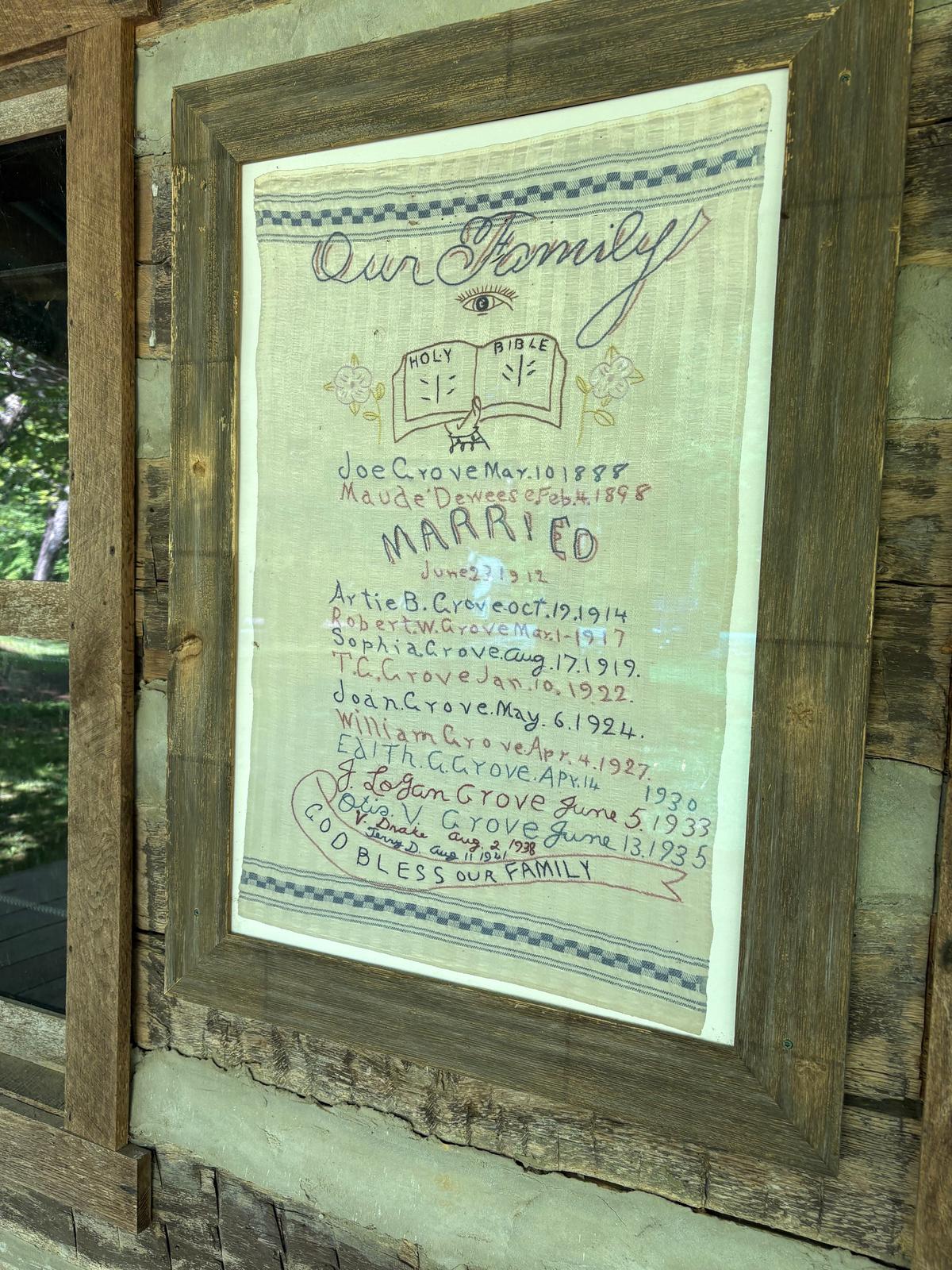
The Grove family's history was intertwined with that of the Liberty Hill School and the hilly Tennessee hills around it. Deena Bouknight
“The schoolhouse operated from the 19-teens into the early [19]20s at the foot of Braden’s Knob on land that is now in the park,” Simmons explained.
“Then the Federal government started buying up the land that would become Fall Creek Falls. A lot of the landowners would also sell the structures that were on the property. So, the family that owned that land that the schoolhouse was on sold it to another family (Groves). Joe Groves broke the cabin down and relocated it to his property a few miles outside what is now the state park on Groves Road. He reassembled it and raised his family of 11 children in the cabin.”
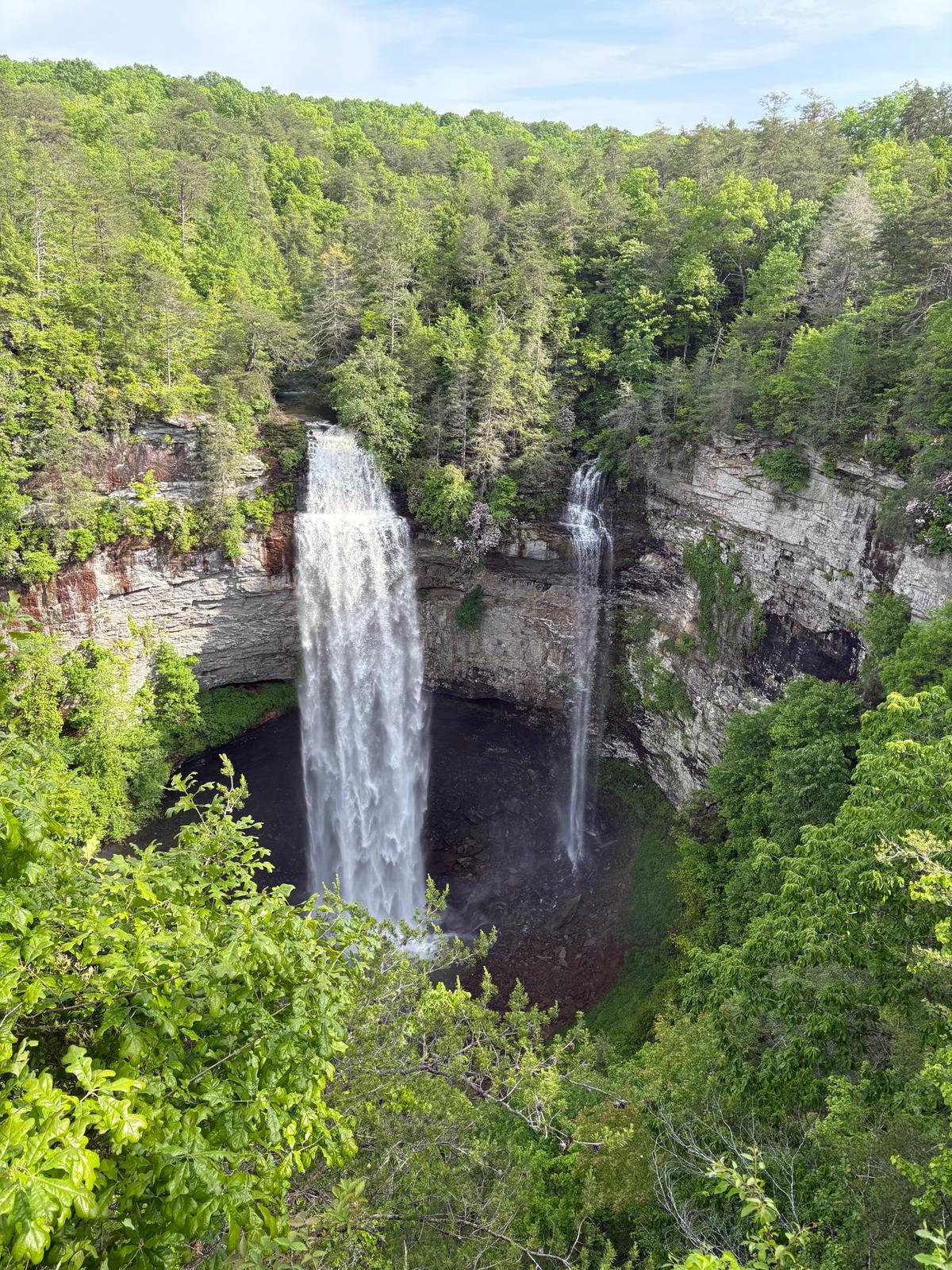
A good portion of the land that makes up Fall Creek Falls State Park was donated by the Groves family in the 1990s. Deena Bouknight
Simmons added that one of the Groves’ sons, Robert, raised in the log schoolhouse-turned-home, was awarded the Navy Cross for “outstanding bravery and leadership” during his service in World War II.
By the mid-1990s, the extended Groves family was trying to figure out what they wanted to do with the log structure, so the Friends of the Fall Creek Falls group facilitated its purchase.
“The schoolhouse was broken down a second time and moved to the north end of the park, where it sits now,” Simmons said. Anyone visiting the park can visit the schoolhouse.
The Schoolhouse
According to a 2005 report in American English, a quarterly periodical by the U.S. State Department, thousands of one-room, rural schoolhouses dotted the American landscape from roughly from the early 1800s to the mid-20th century. Students typically ranged in age from 5 to 20 years old, with a teacher in place who often was part educator, part counselor, and part nurse to the students.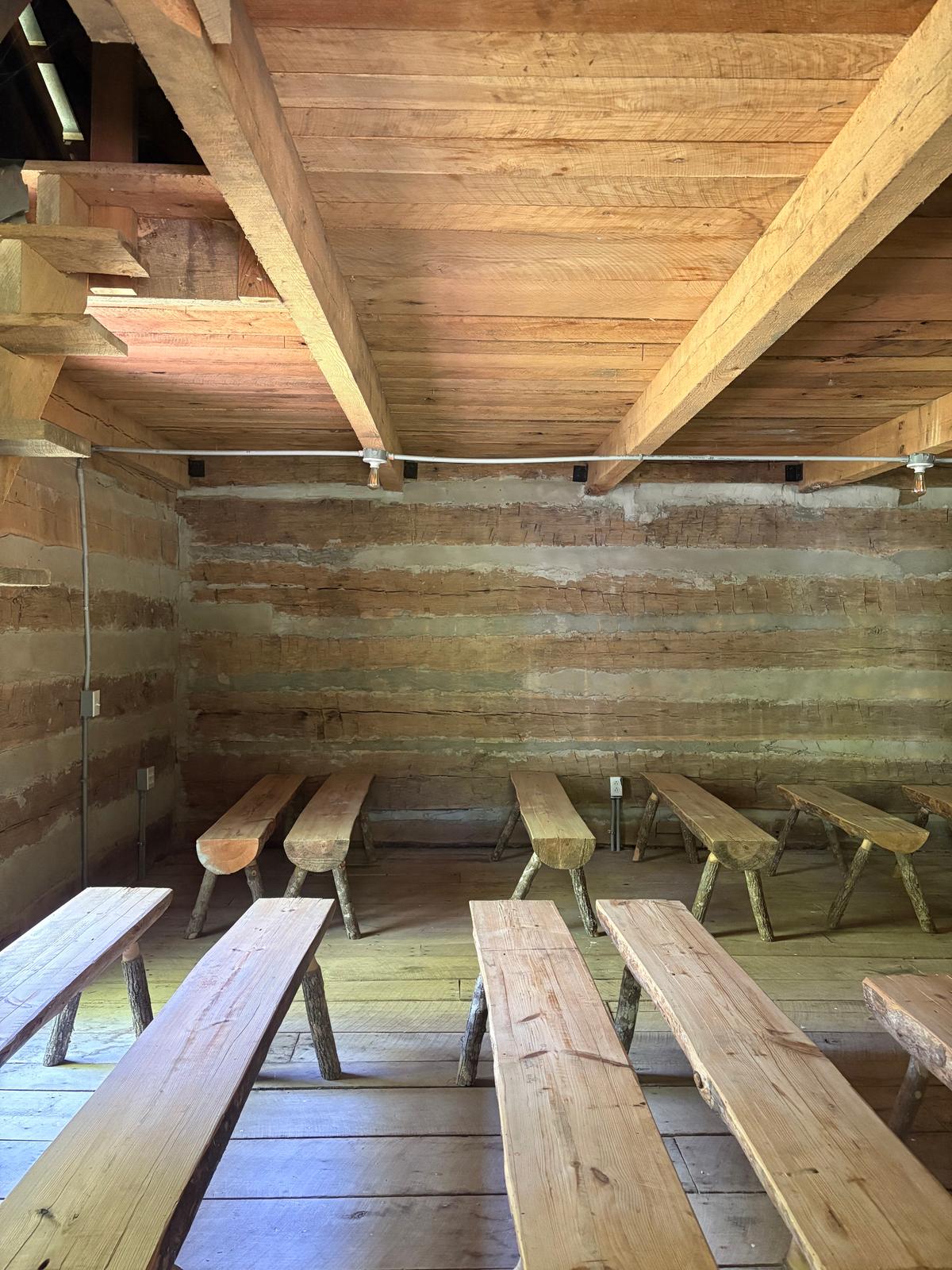
Students in the Liberty Hill School sat on benches in this rough-hewn cabin to learn reading, writing, and arithmetic. Deena Bouknight
Individual families and whole communities often pitched in supplies and labor to build schools. If teachers weren’t from the communities, they moved from outside the community and boarded near the schoolhouse. Older students usually pitched in to help educate younger ones. All students shared duties, including keeping the schoolhouse, grounds, and outhouse clean. Students primarily arrived at one-room schoolhouses on foot, but some rode horses or mules or they were taken there by wagon.
The report stated:
“The little schoolhouse was the scene of many a church service, revival meeting, holiday celebration, box supper, music fest, and quilting bee. Schools hosted drama groups, literary and debate societies, and political meetings. In the South, some became famous as ‘moonlight schools,’ where illiterate adults of all ages and races gathered on moonlit nights to learn to read and write.”
Liberty Hill School fits American English’s description of the goings on at one-room schoolhouses.
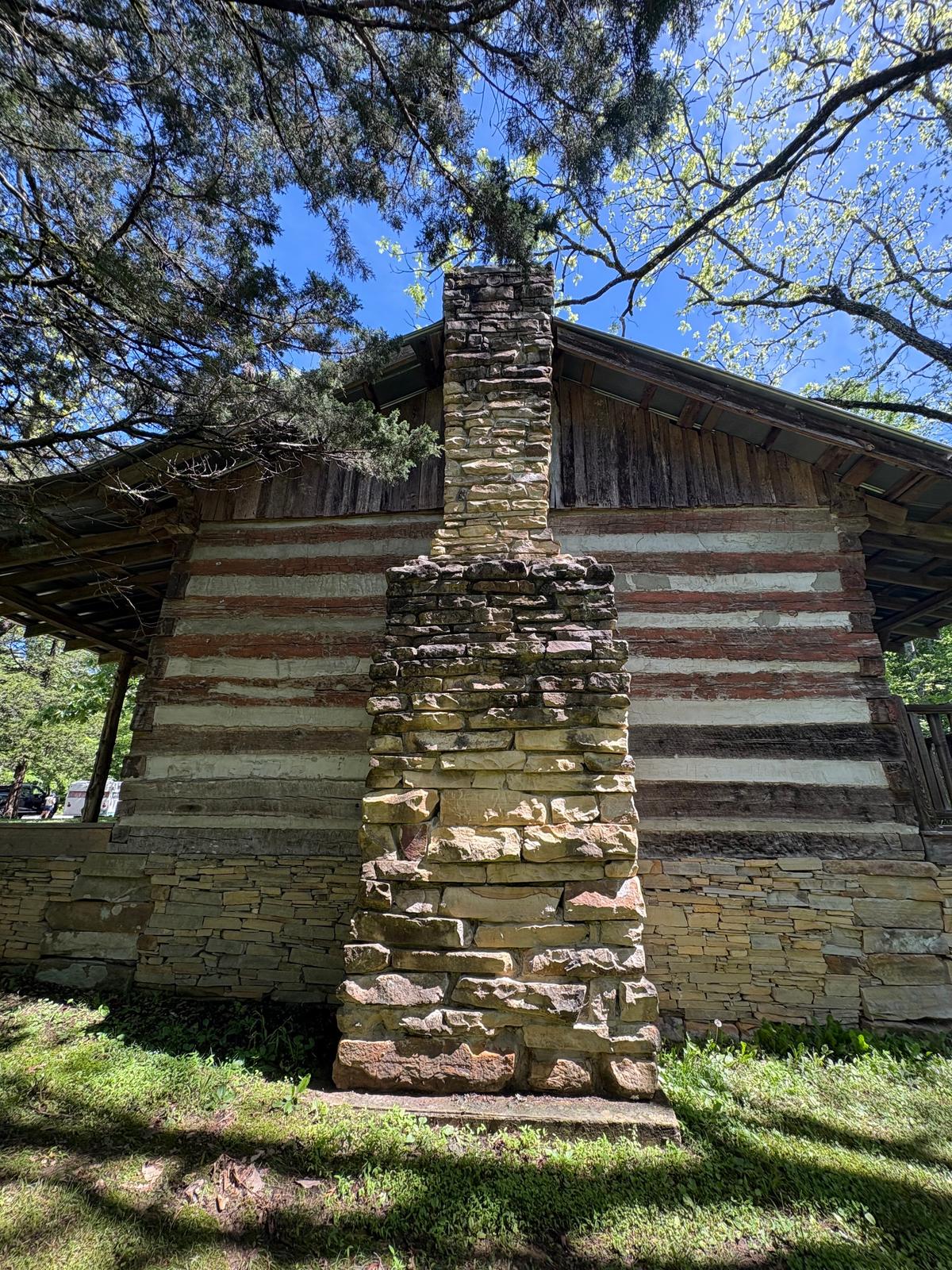
The fireplace in this cabin provided warmth during cold months. Deena Bouknight
Major Modern Changes
By the 1950s, one-room schoolhouses were mostly obsolete. Larger schools to accommodate multiple grades were centrally located in a town, and children were bused in—or their parents drove them to school. The one-room schoolhouses, made characteristically of logs or wood boards, were either torn down and their materials used for other purposes. Or, as was the case of Liberty Hill School, they were disassembled and reassembled on another property. Alternative uses for saved one-room schoolhouses include community centers, storage houses, residences, stores, or museums.Simmons pointed out that Liberty Hill School’s preservation reminds him, as well as visitors, of what transpired in the area before it became Fall Creek Falls State Park. Except for a fire tower, no other historic structures in the state park still stand. Also gone are Simmons’s log house and cotton mill, designed by his great-great-great maternal grandfather and operated by his great-great grandfather. These were situated on the grounds of the current Fall Creek Falls State Park swinging bridge and nature center.
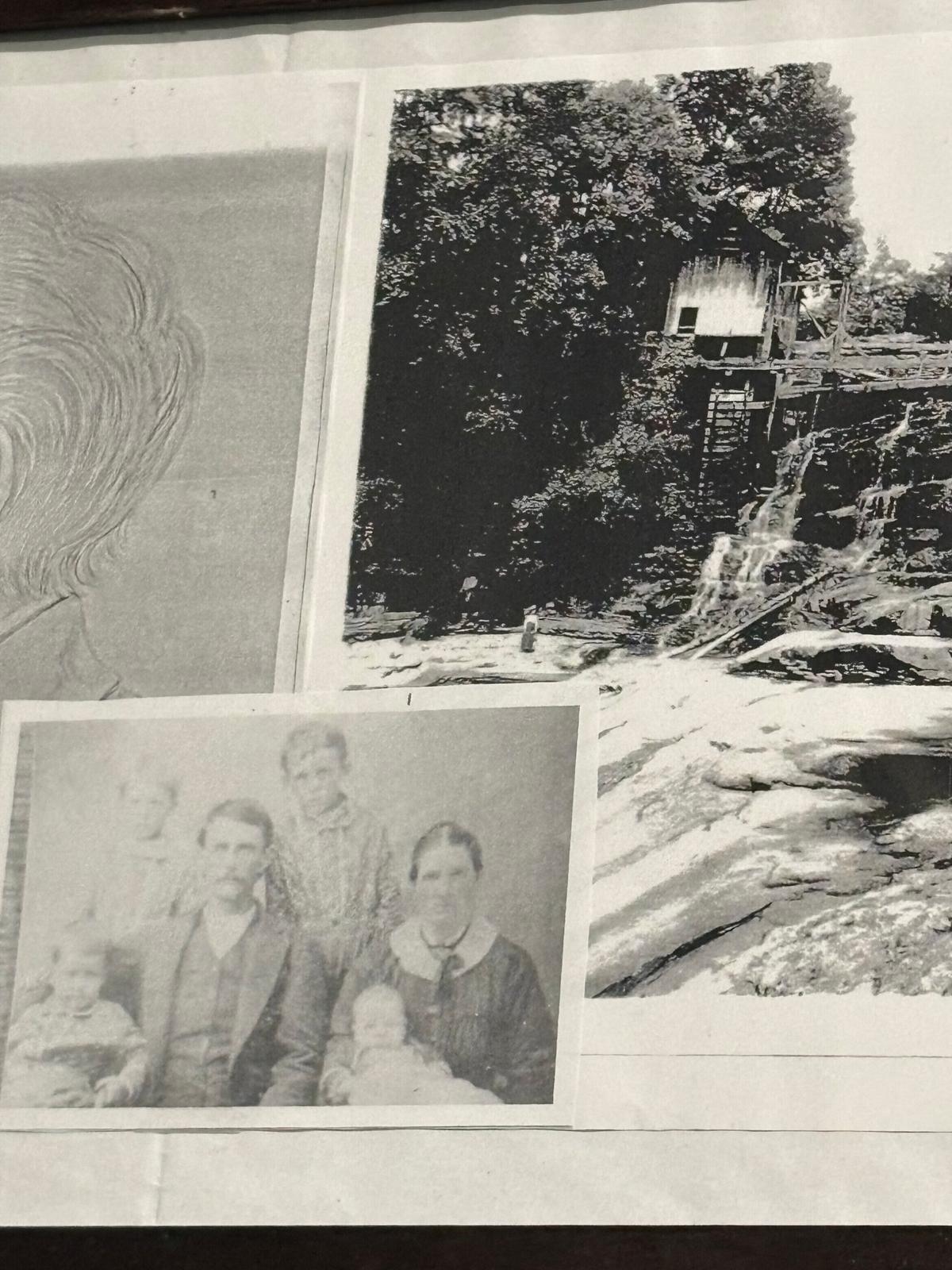
Devin Simmons's great-great grandfather was involved in this Eastern Tennessee community. Deena Bouknight
“My great-great-great grandfather Leonard Hudson Bickford served in the Union Army’s 9th Maine Infantry and moved to Tennessee after the Civil War,” said Simmons, as he pointed to family photos and other historic mementos covering his office walls. He said it was important that people know about the history that took place at Fall Creek Falls State Park, long before it became a draw for outdoor recreation.
What arts and culture topics would you like us to cover? Please email ideas or feedback to [email protected]