Theodore Roosevelt was the most consequential U.S. president of the 20th century. For good or ill, Roosevelt transformed the American presidency from its late-19th-century role as the servant of Congress into the dynamic leadership position of today, setting the nation’s agenda.
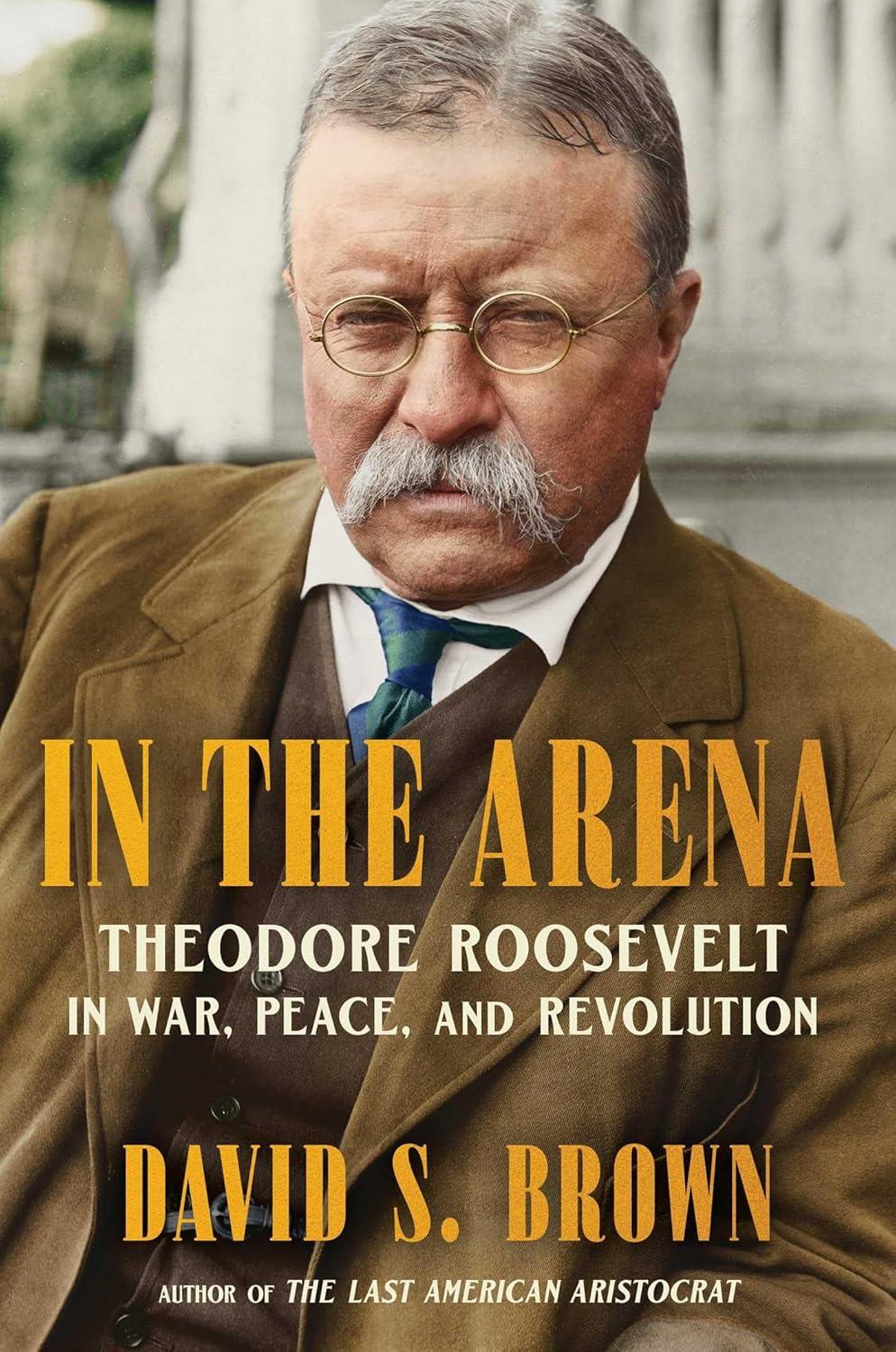
Acclaimed historian David S. Brown thoroughly examines Theodore Roosevelt in his new biography of our 26th president, “In the Arena: Theodore Roosevelt in War, Peace, and Revolution.” In it, Roosevelt is revealed as an American original.
The book covers Roosevelt’s life from his birth to his death without stinting. Brown presents every facet of Roosevelt’s life: as a child, Harvard student, author, elected politician, rancher in Dakota, and family man.
The book also recounts Roosevelt’s time as police commissioner, hunter, explorer, Assistant Secretary of the Navy, soldier, vice-president, president, and post-presidential gadfly. Success in two or three of those positions would be a lifetime achievement for most. For Roosevelt, they always seemed to be just a step to his next big thing.
Civil War Family
The book explores Roosevelt’s relations with his family. Born prior to the Civil War as the son of a Southern belle and a New York City businessman, Roosevelt had family on both sides of the conflict. Two maternal uncles ended up exiled in England due to their involvement with Confederate’s raiding sloops, like the Alabama. Roosevelt worshipped his father and was devastated when he died while Theodore was attending Harvard.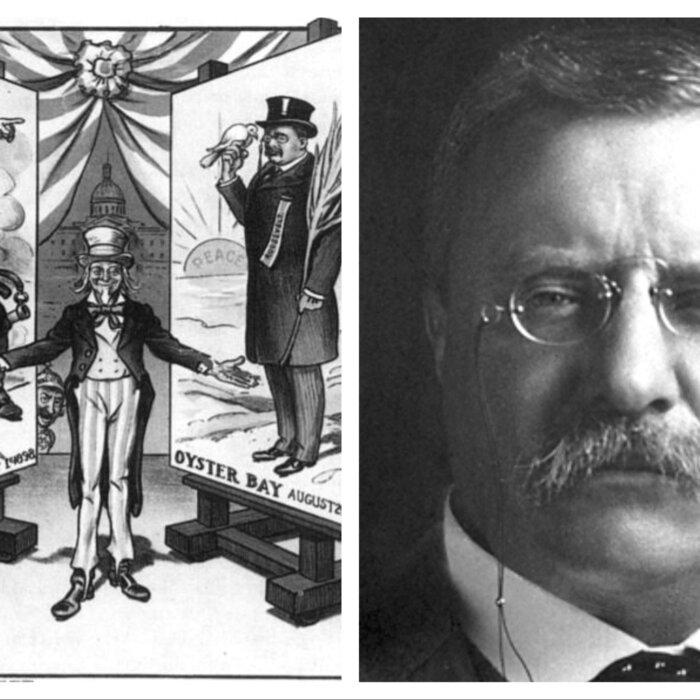

It also looks at his two marriages. The first was to Alice Lee, who died suddenly after four years of marriage. The second was to Edith Carow, a childhood friend. Edith rejected Roosevelt’s first marriage proposal before he married Alice Lee, but she accepted a second after Alice’s death.
Roosevelt had one daughter by Alice and five children with Edith. Roosevelt’s relationships with both wives and his six children, especially his daughter Alice, the sole child of his first marriage, was often stormy.
Equally fascinating is Brown’s examination of Roosevelt’s political career. Roosevelt made waves wherever he went. The charismatic Roosevelt attracted adulation and accumulated enemies.
Political Outsider
Brown reveals Roosevelt as a political outsider in the Republican Party. He defied its establishment, seeking to shake off its complacency. Ironically, many of his career advancements came from Republican rivals seeking to sideline him.He made a name as New York City police commissioner, a job given to him to get him out of Albany. Later, he was given a job as assistant secretary of the Navy to get him out of New York. He used this to help launch the Spanish-American War and his own military career. He became William McKinnley’s running mate because the vice-presidency was seen as a ticket to obscurity. He rose higher after every try.
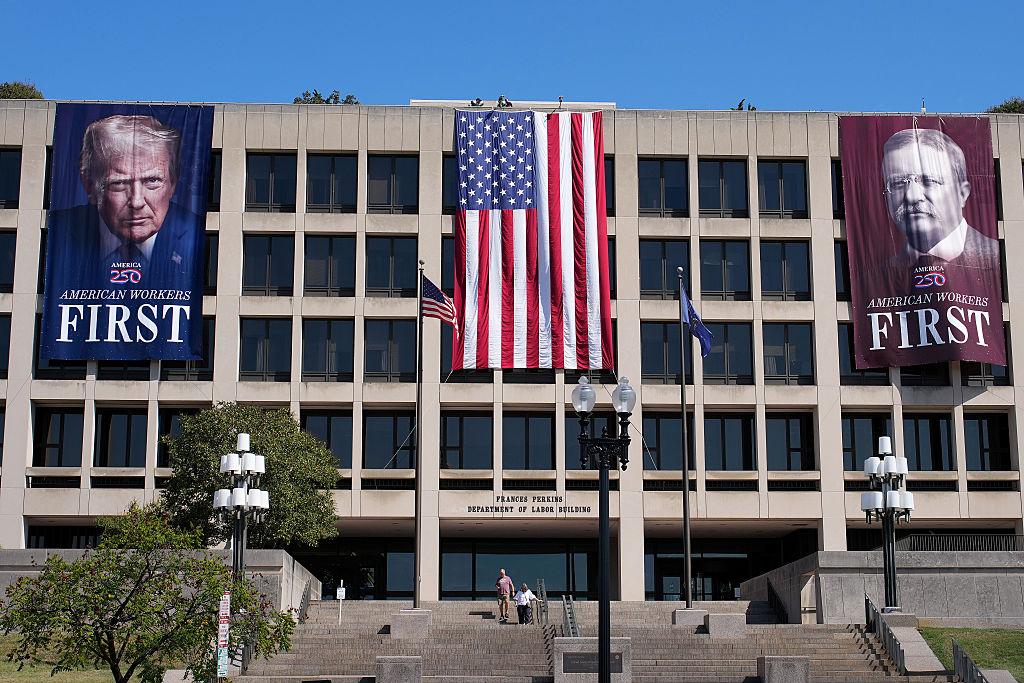
Oddly, as Brown acknowledges, the successor who seems most like Roosevelt is another New York City native, Donald Trump. Both had larger-than-life personalities, simultaneously inducing strong loyalty and total detestation. Both were outsiders who molded their party to their own image. Roosevelt could be obstinate, brash, vindictive, and petty, which are characteristics shared by Trump.
Equally, both attempted to change the American presidency. Roosevelt fostered the modern federal bureaucracy which Trump is trying to trim. Roosevelt also created the imperial presidency, for good or ill. In Roosevelt’s defense, he was attempting to reign in the excesses of big business, not realizing those creating those excesses would be drawn to government instead.
Those seeking a good one-volume biography of Theodore Roosevelt will find what they want with “In the Arena.” While not as comprehensive as Edmund Morris’s 2,528-page Theodore Roosevelt trilogy, Brown’s book is not superficial. It offers the scope of Morris’s work in one-fifth the pages. This shorter presentation also makes it easier for readers to see the big picture and the larger sweep of things, compared to a longer work. Trends are more easily grasped.
Brown is frequently critical of Roosevelt. The criticisms, when they appear, seem merited. He also praises Roosevelt where merited. The result is a balanced biography, neither hagiography nor historical hit-job.