Along with the U.S. Capitol, nothing symbolizes the United States more than the American flag. It goes by many names: the Stars and Stripes, Old Glory, the Star-Spangled Banner. It symbolizes the United States and its values in a single object.
“Old Glory: Iconic Flags and the Stories They Tell of America’s 250-Year History” by Roland Miller celebrates that symbol. It tells the story of the American flag through 50 historic American flags and images of American flags, covering 250 years of history.
The book presents legendary flags of America’s past—the Betsy Ross flag, the flag that flew over Fort McHenry (giving birth to our national anthem), the flag that cradled Lincoln’s head as he lay dying, the flag flown on the battleship Arizona on Dec. 7, and the flag carried to the moon. Each is discussed in a different section of the book.
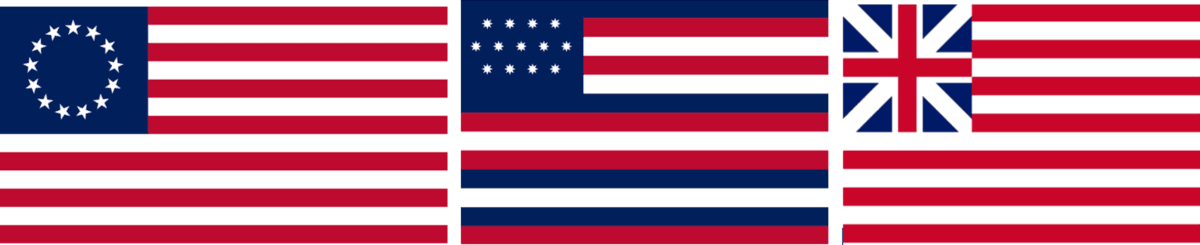
One chapter follows the evolution of banners representing what became the United States between 1765 and 1775. For instance, the 1765 “Liberty Tree” flag was made with eight red-and-white horizontal stripes to protest the Stamp Act.
The author follows with discussions of George Washington’s banner and the Grand Union flag. Washington’s flag was a blue field with 13 white stars. The Grand Union flag combined the stripes of the Liberty Tree flag with the British Union flag in the jack portion of the flag (the flag’s upper inside quarter). When the colonies wanted to separate from Britain the following year, they substituted Washington’s star flag for the Union Jack in the flag.
Miller presents other early American flags. They include the “Don’t Tread on Me” Gadsden flag, which appeared in December 1775, the 1776 Bennington flag, and the 1777 Fort Stanwick flag.


The Gadsden flag, with its coiled snake, was the first ensign flown aboard American warships. The Bennington flag, with stars in an inverted “U” around “76,” flew at the Battle of Bennington. The Fort Stanwick flag wasn’t an official U.S. flag but was thought to be the first flag flown over an American fort in combat.
He also discusses the history of the first official flag, believed designed by Betsy Ross, and legends about its creation. He separates myth from fact; she did make flags for the colonies, although the legend may be overblown. There is truth at the story’s core.

Early Designs
Miller then explores the development of the flag and its early portrayals. As he shows, the original intention was to have one star and one stripe for each state. The famous Fort McHenry flag had 15 stars and 15 stripes. After four more states entered the union, this was dropped. The flag reverted to 13 stripes, with one star for every state. Imagine a flag with 50 stripes. It would appear pink at a distance.Miller points out that until the 48-star flag was adopted in 1912, there was no regulation of the arrangement of stars, only their number. This results in a marvelous collection of star constellations on the flag during those years. He shows several of them, including “Grand Luminary” flags, with the stars arranged to form larger stars.
The book also discusses American flag-adjacent banners. These flags modified the American flag, usually for political reasons. These include the Frémont flag and the suffrage flags. The Frémont flag substituted an eagle in the jack. It was used in a quasi-official military expedition to California when the state was still ruled by Mexico, since at the time it was considered impolitic to carry a U.S. flag. Suffrage flags changed the number of stars, with only as many stars as states that allowed women to vote.
Much of the book is devoted to examining the cultural impact of the flag and the various messages sent displaying or desecrating it. This includes pieces on iconic flag moments in U.S. history, such as the flag-raising at Iwo Jima and the flag flown on the moon. It also discusses the flag as an instrument of protest. It appears that the author approves only of the progressive uses of the flag for protest.
A great deal of the book’s charm lies in its illustrations. Reading the book in electronic format may short-change the reader, especially if your e-reader isn’t in color. Even full-color electronic copies lack the size and visual impact of the printed copy. The printed version allows you to fully appreciate its beauty and majesty.
This is a book worthy of the nation’s 250th anniversary. It’s a celebration of our flag and a reminder of why it’s such a powerful symbol.
Sometimes the flag gets tattered, but as Miller shows, it always represents what is best about America.