“The adherence of the United States to the Monroe Doctrine may force the United States, however reluctantly, in flagrant cases of such wrongdoing or impotence, to the exercise of an international police power.”
The Monroe Doctrine, which was first formulated before Congress by President James Monroe in 1823, was passive in nature. As a nation still growing in strength and in the early stages of westward expansion, the Monroe Doctrine was more of a strongly worded suggestion that European powers no longer attempt to colonize the Western Hemisphere. Over the decades, America’s strength and size grew and, with it, its ability to enforce its will on others, most notably against the Spanish at the end of the 19th century.
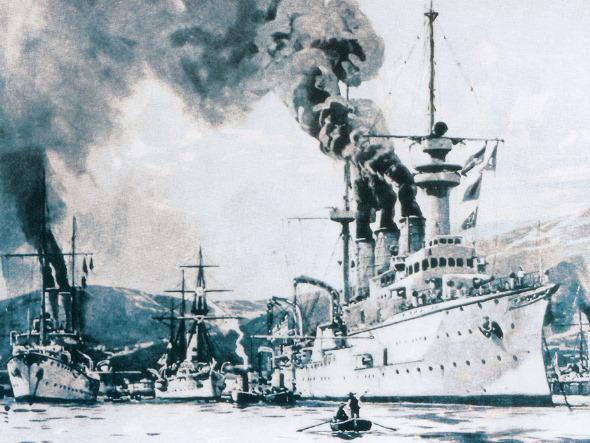
The reason for adding this 20th-century corollary to the 19th-century doctrine was because of ongoing issues between Latin American and European countries, highlighted during the Venezuelan Crisis of 1902–1903.
The Eastern Hemisphere Crisis
The following February another crisis erupted, but this time on the other side of the world in the Eastern Hemisphere. It involved an empire in decline and a nation on the rise, but would eventually lead to the involvement of the United States and Roosevelt.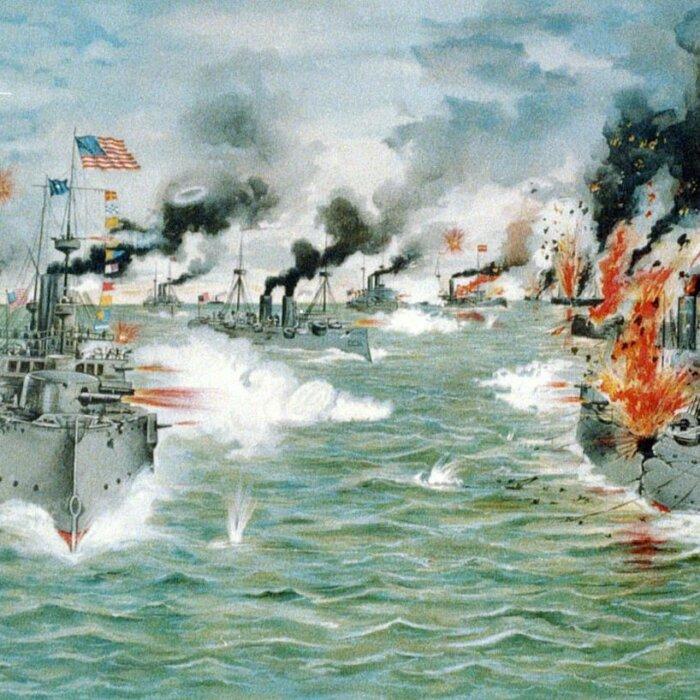
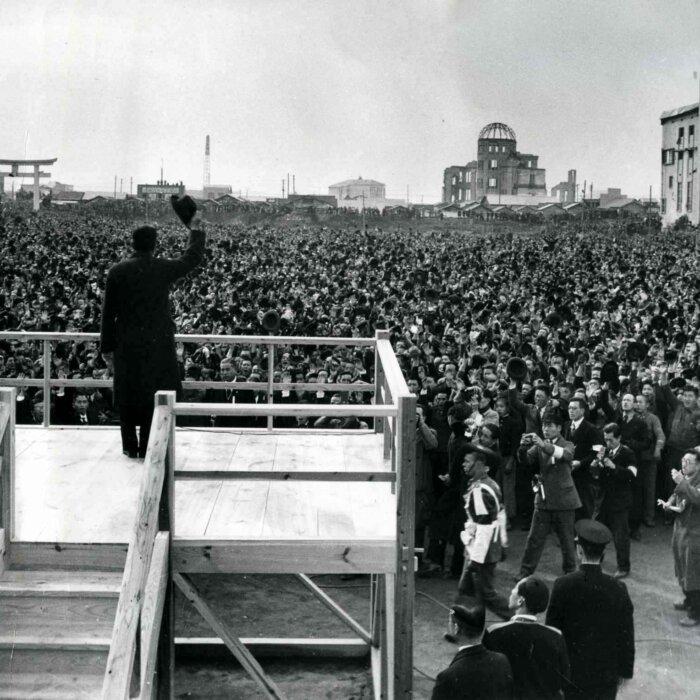
The Sino-Japanese War of 1894–1895 demonstrated how quickly the Japanese were rising as an international power by defeating the crumbling Imperial China. The victory allowed the Japanese to seize Korea, which had long been a tributary state of China; the island of Formosa (today’s Taiwan); and the Liaodong Peninsula in southern Manchuria. Along with these concessions, the Treaty of Shimonoseki required that China pay 200 million taels of silver for war reparations, as well as sign unequal trade agreements.
The results of the war came to the attention of three other imperial powers: France, Germany and Russia. The three collaborated to form the Triple Intervention, ultimately forcing Japan to relinquish its gains outside of Korea. Russia, on the other hand, gained land concessions from China without having to go to war. The concessions were in the areas which had briefly belonged to Japan—northern Manchuria and two ports, Dairen and Port Arthur, on the Liaodong Peninsula.
The Russo-Japanese War
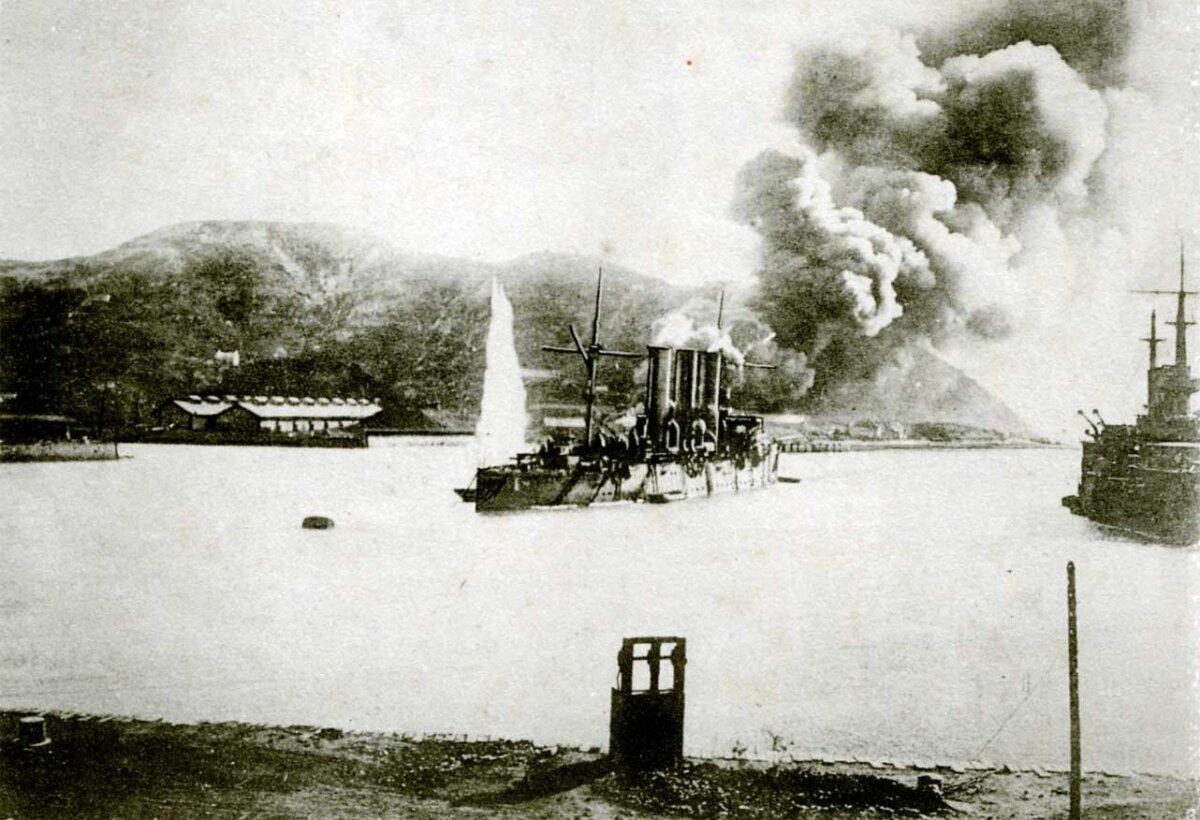
On Feb. 6, 1904, the Japanese severed diplomatic relations with Russia. The following day, Robert McCormick, the U.S. ambassador to Russia, telegrammed Secretary of State John Hay, informing him of the deteriorated Russo-Japanese relations. Although no official reply from Russia had been received by the Japanese, the Russians conveyed they required a “guaranty of Korean integrity, free and unfortified passage through the straits between Korea and Japan, the neutral zone in Korea as already defined, [and] no stipulations concerning Manchuria.” The demands were untenable for Japan. War was in the offing.On Feb. 8, the Japanese navy, led by Adm. Togo Heihachiro, conducted a sneak attack on Port Arthur, the strategic warm-water port Russia gained from China. Simultaneously, the Japanese landed troops in Korea and marched to the Yalu River—the natural border separating Korea from China. The day following this attack, Japan officially declared war on Russia.
In Steps Roosevelt
President Roosevelt, who was a strong proponent of naval power, was torn about the Japanese successes. He was “thoroughly well pleased with the Japanese victory” at Port Arthur which humbled the Russians. A year later, however, he was worried the Japanese empire would expand its sphere of influence into its own national interests, specifically the Philippines, a territory America had obtained after the Spanish-American War. Luckily for the Americans, the Japanese, despite the triumphs, were exhausting their resources beyond their limits.The Japanese requested Roosevelt mediate a peace conference between the two belligerents. In August, Roosevelt hosted diplomats from both countries in Portsmouth, New Hampshire. Aside from the opening ceremonial lunch, Roosevelt was rarely present during the peace negotiations. The Japanese and Russian representatives, mediated by the Americans, centered on two facets: a war indemnity and territory. Japan, as victor, believed Russia should pay the war cost, and that the Sakhalin Island, as well as ports and areas in Manchuria and Korea, should belong to them. The Russians refused to pay any sort of indemnity and wanted to maintain control of the strategic island.
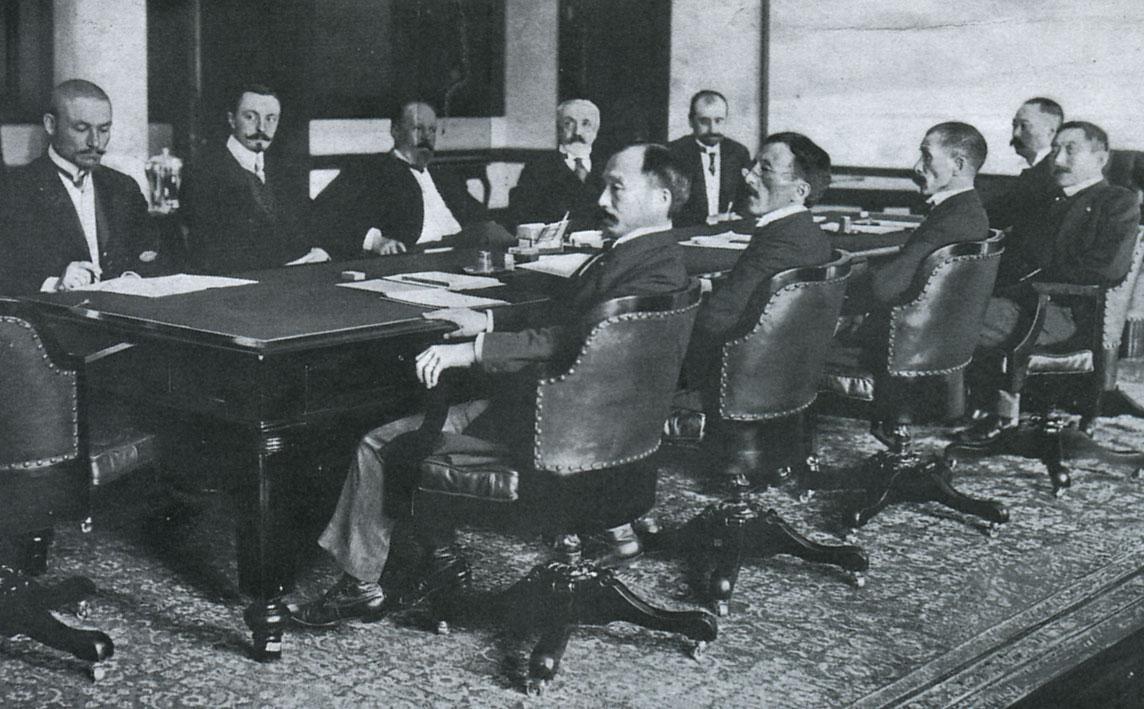
Roosevelt suggested a compromise that Russia “buy back” the northern section of Sakhalin Island. This would enable Russia to maintain its presence in the region and Japan would receive what would ultimately be an indemnity. The Russians refused.
As both countries had exhausted their resources and were practically incapable of continuing the war, the two reached a compromise on Sept. 5, 1905, by signing the Treaty of Portsmouth. The treaty split Sakhalin Island with the Russians taking the north and the Japanese the south. Russia did not have to pay war costs and Japan retained its hold on Korea as well as southern Manchuria, including Port Arthur.
Directions of Three Separate Empires
The Russians and the Japanese had their complaints about the conclusion—the Russians concerning losing half of Sakhalin Island and the Japanese concerning not receiving an indemnity. The war had come to an end, and Roosevelt appeared to be a significant reason for its resolution. It was during this week in history, on Dec. 10, 1906, that Roosevelt was awarded the Nobel Peace Prize “for his role in bringing to an end the bloody war recently waged between two of the world’s great powers, Japan and Russia.” He was the first American to be awarded a Nobel Prize of any kind.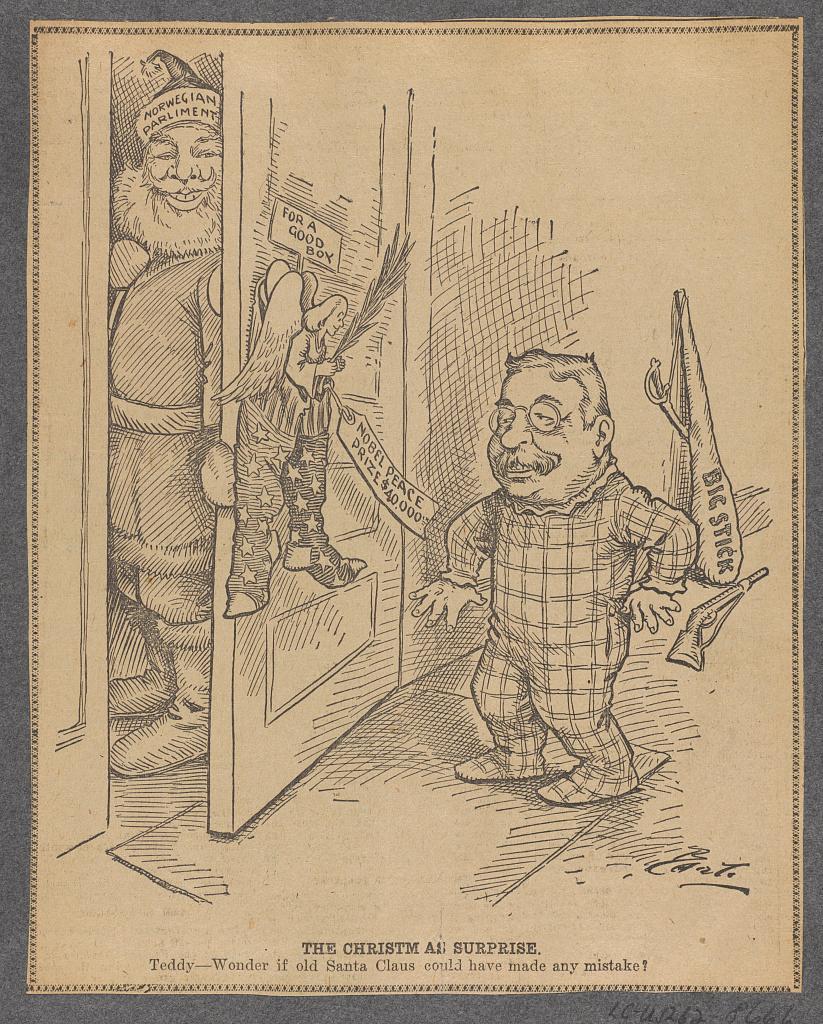
Over the course of the following decade, the Russian Empire continued its decline while Japan continued its rise. By the end of World War I, Imperial Russia had fallen into revolution, which forced it out of the war. Consumed by bloodshed and internal strife, Russia witnessed the murder of the Tsar family and the rise of the Bolsheviks. Japan, on the other hand, as a member of the Allied Powers, found itself a beneficiary of the conflict, where it retained its territorial possessions and gained others. America became a leading global power by the end of WWI, though it quickly retracted into a form of isolationism, preferring a position closer to Washington’s Farewell Address. That position would hold until Japan conducted a familiar move: a sneak attack. Also during this week in history, Imperial Japan thrust America into World War II when it attacked the U.S. naval base at Pearl Harbor (interestingly during another Roosevelt’s presidency).
The results of WWII witnessed Japan’s loss of its territories, including Korea, which was split in half along the 38th parallel. America’s defeat of Japan was total, and the American military occupied Japan from 1945 until 1952. The Russians labeled themselves Soviets, and though allies of the Americans during WWII, the division between democracy and communism gave way to a near 50-year conflict between the two empires called the Cold War.
America’s intervention now reached far beyond the Western Hemisphere as it became the leading power in the world and ultimately took on the role of Roosevelt’s bold description of an “international police power.”