Colonial Newspapers
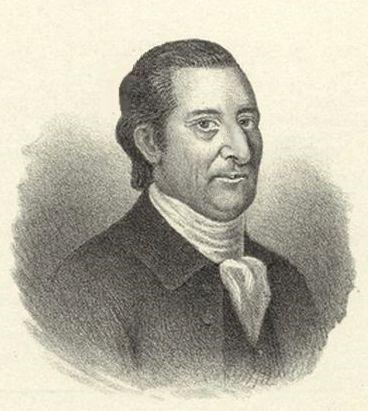
Goddard (1738–1816) was born in New London, Connecticut, but after her father’s death, her mother moved the family to Providence, Rhode Island, to join William. It was in Rhode Island that her entrepreneurial-minded brother founded his first newspaper, the Providence Gazette and Country Journal, in 1762, which also became Providence’s first newspaper. He also became Providence’s postmaster.Shortly after launching the paper, though, William moved to New York in 1765, leaving the paper in the hands of his mother, Sarah, who soon accepted a partner, John Carter, who had been working with Benjamin Franklin and David Hall in Philadelphia.
Moving to Maryland
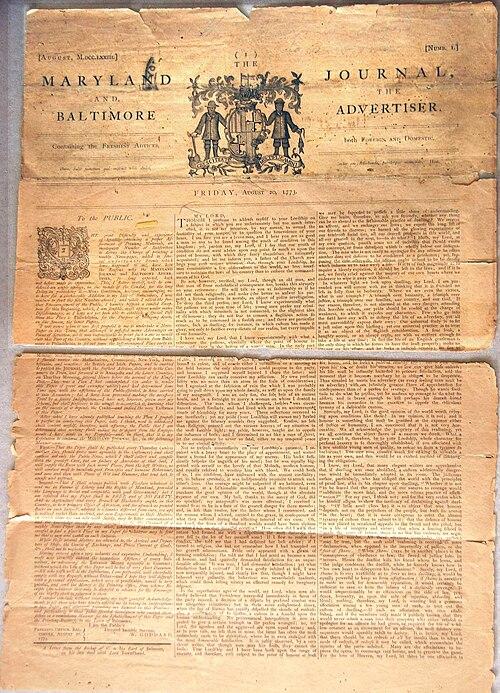
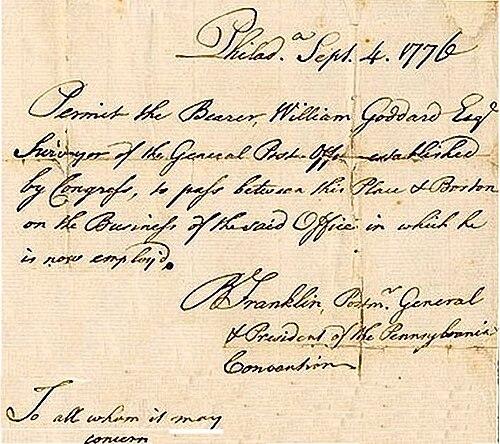
The following year, Sarah and Mary moved to Philadelphia to join William and his fledgling Pennsylvania Chronicle. The Pennsylvania Chronicle was published from a Franklin-owned house. Early in 1770, Sarah died, and William and Mary soon moved to Baltimore, where William started another newspaper, the Maryland Journal, and the Baltimore Advertiser, in 1773. The newspaper was the city’s first.William and Mary were strong supporters of the Patriots. When William left Baltimore, he traveled the colonies to promote his postal service, which stretched from New Hampshire to Georgia. It bypassed the Royal postal service allowing people, especially Patriots, to safely send mail without British interception. He left Mary to operate the newspaper; she controlled the Maryland Journal, and the Baltimore Advertiser from 1774 to 1784, through the entirety of the Revolutionary War.
By this time—having worked as a printer in Providence, Philadelphia, and now Baltimore—Mary had established her reputation as a professional and reliable printer. Reliability at times came at a cost, as she would often pay post-riders out of her own pocket to deliver the paper. Considering the political uproar in the colonies, the British subjects needed to remain abreast of the goings-on. Many of those British subjects, however, would soon become citizens of a new nation.
Printing the Conflict
Mary was consistent and courageous in what she chose to print. The Baltimore paper would print letters to the editor from both the Patriot and the Tory sides, much to the chagrin of the opposing sides. Interestingly, on April 19, 1775, the very day the Revolutionary War officially began with the battles of Lexington and Concord, she published a letter to the editor that stated: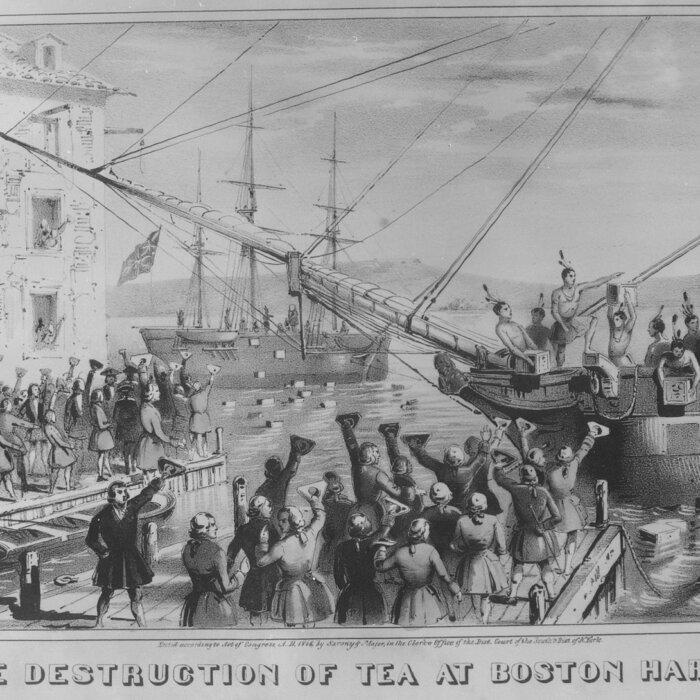
“The British parliament claims a right to tax and bind the Americans in all cases whatsoever, when in reality, a British parliament has no more right to tax an American in anything than they have the right to tax the people in Japan; for by this means you are robbed of the democratical part of the constitution, the very essence of English liberty.”
The common refrain of “no taxation without representation” had now spilled out into open military conflict.
With her experience and reliability, the Continental Congress appointed Mary in July as the first postmaster of Baltimore. In the coming year, the position would also make her the first female postmaster in America. She held this position until 1789.
The Goddard Broadsides
A few months later, in December, the Continental Congress, fearing capture by the invading British, fled Philadelphia to assemble in Baltimore. John Dunlap printed the Declaration of Independence in Philadelphia and distributed the copies, known as the Dunlap Broadsides, throughout the colonies.After a month in Baltimore, the Second Continental Congress ordered on Jan. 18, “That an authenticated copy of the Declaration of Independence, with the names of the members of Congress subscribing the same, be sent to each of the United States, and that they be desired to have the same put upon record.”
Congress chose Mary because of her patriotism and professionalism. These prints became known as the Goddard Broadsides. They were the first prints to be made that heralded the title “The Unanimous Declaration of the Thirteen United States of America,” and they had the signatures of the delegates and the colony from which they hailed (55 of 56 signers were on the broadside, as Thomas McKean, of Pennsylvania, signed the declaration sometime later).
A Determined Printer
In 1779, Mary’s brother, William, returned to Baltimore. In 1784, he took over the operations of the newspaper. It seemed they had a falling out in due course, which apparently was never resolved. Mary, nonetheless, remained Baltimore’s postmaster, and operated her own printing business and bookstore, until she died in 1816.In 1783, the War for Independence officially concluded, and four years later, concerned delegates from across the 13 states convened to form a new constitution. In 1789, the United States Constitution was ratified, and with that ratification came a new postmaster general. Samuel Osgood removed Goddard from her position as Baltimore’s postmaster, stating that the requirements were too demanding for a woman. It was an evidently political move. Appealing to President George Washington, she reminded him how “at her own risque, advanced hard money to defray the Charges of Post Riders for many years, when they were not to be procured on any other terms.”
Washington, however, declined to become involved. Approximately 230 prominent Baltimoreans appealed to the Senate on her behalf, but to no avail.
Goddard continued with her personal business until her death. Upon her death, she freed her one slave, Belinda Starling, leaving her entire estate to her.
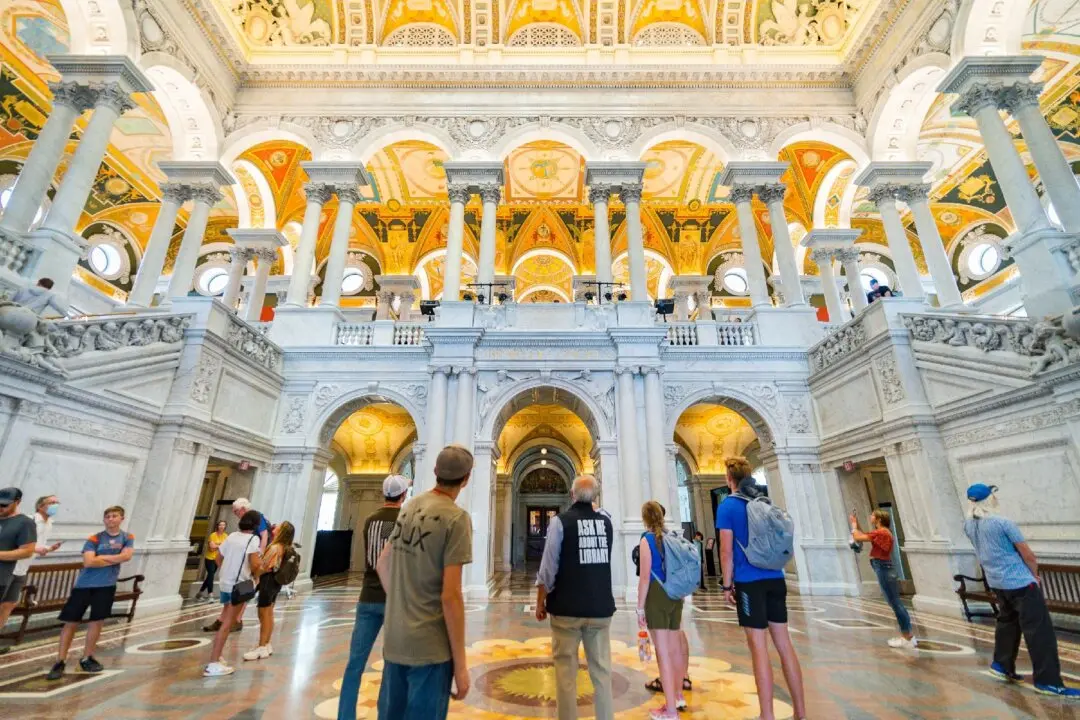
Of the Goddard Broadsides, only about 10 remain in existence. One is in the Library of Congress, and, fittingly, one is located in the Maryland State Archives, as well as the Maryland Historical Society.