LONDON—Around 1638, Carthusian monks in Andalusia commissioned a tremendous 50-foot altarpiece dedicated to the Virgin Mary for their charterhouse, Nuestra Señora de la Defensión, near Jerez de la Frontera, north of Cádiz. Twelve paintings by Francisco de Zurbarán once hung throughout the monumental altarpiece, which is almost the height of a four-story building.
Napoleon’s generals looted the devotional works in the Peninsular War of 1808–1814. According to the Metropolitan Museum of Art in New York City, “the secularization of ecclesiastical property in 1835, made Zurbarán’s paintings better known, but robbed them of their original context and much of their meaning.”
The altarpiece art may be dispersed, but the sacred content of each devotional work remains. The central focus of the altarpiece was Zurbarán’s painting “The Virgin of the Rosary With Carthusians.” In it, awestruck monks gaze heavenward to the enthroned Virgin and the Christ Child. She holds a rosary in one hand and rests the other on a globe, symbolizing the universe. Flowers also direct our gaze up, from Earth to the heavenly realm, and golden cherubs surrounding the holy pair affirm the divine setting.
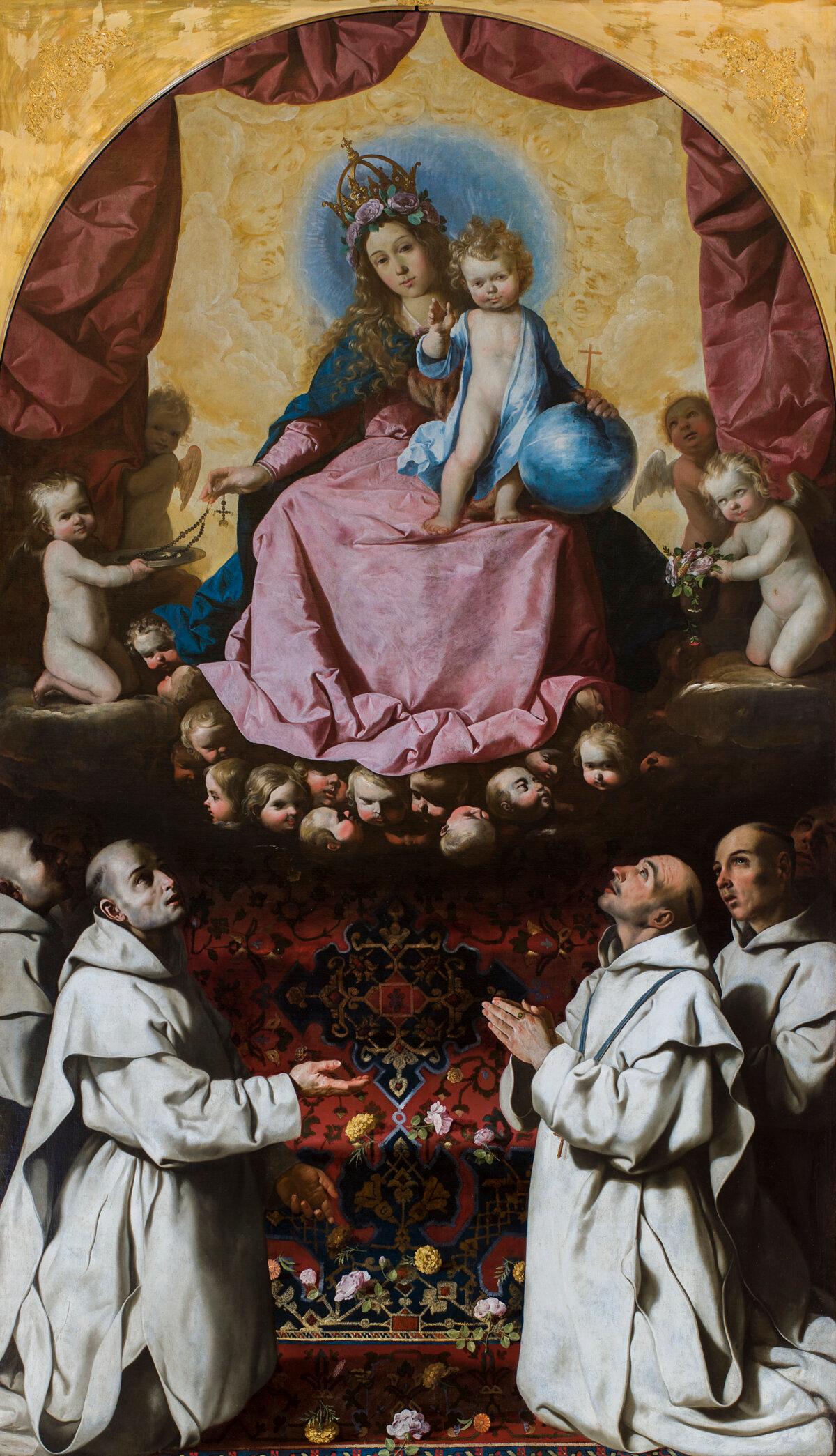
Every element in this divine work epitomizes Zurbarán’s artistic style and virtuosity. His expressive figures reflect his skill at conveying the mundane and the mystical, while the stiff monastic robes, the Virgin’s sumptuous clothing, and still-life elements reflect his deft and fastidious rendering of textures and textiles.
Experts believe that Zurbarán’s “The Virgin of the Rosary With Carthusians,” “Adoration of the Magi,” and “The Circumcision,” once hung together on the third tier of the altarpiece, with the “Virgin of the Rosary” on the central panel. For the first time in nearly 175 years, the three paintings hang together again in the “Zurbarán” exhibition at London’s National Gallery (NG).
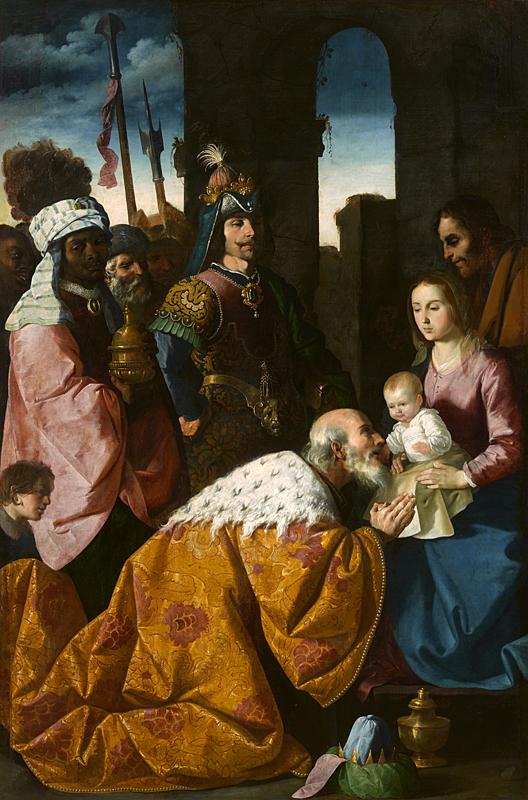
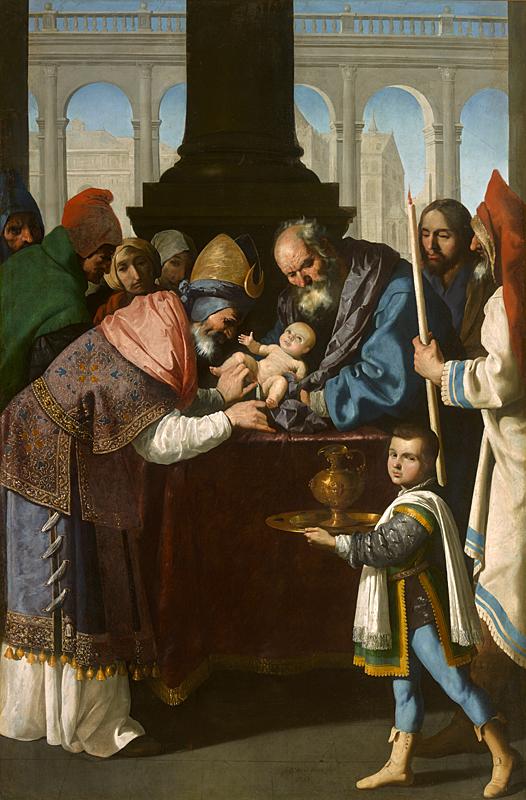
‘Zurbarán’
The exhibition presents the Spanish Golden Age painter like never before. More than 40 works grace seven gallery rooms, including some of the Labors of Hercules for the royal palace, monumental religious commissions, private devotional paintings, and still-life works.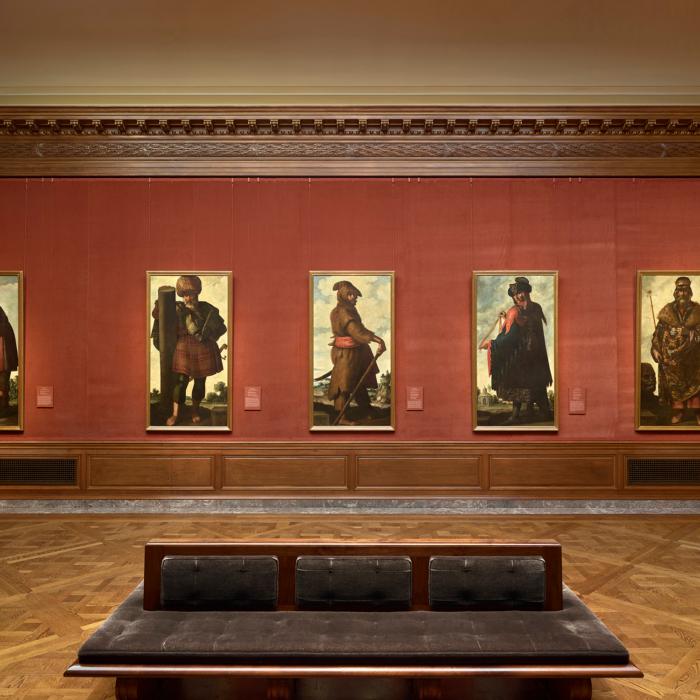
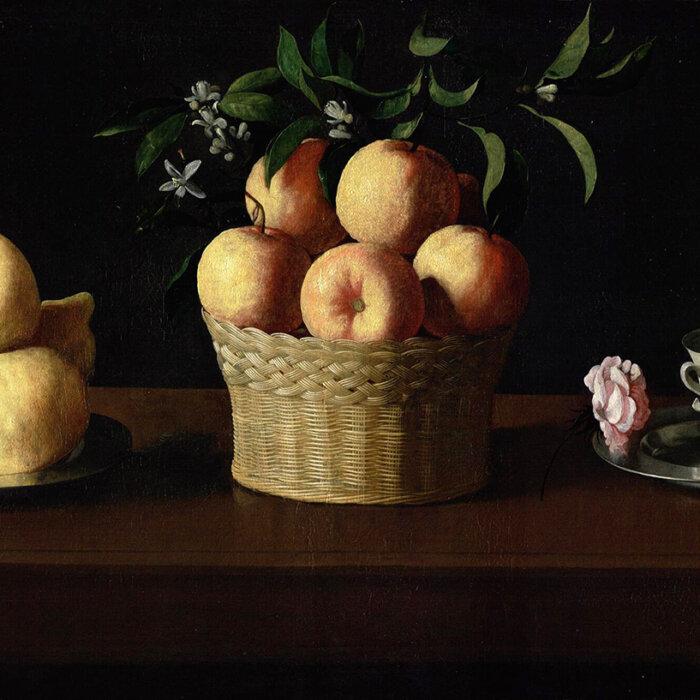
The exhibition includes several rare still-life paintings by Zurbarán’s son, Juan, who is renowned in his own right and was also part of his father’s workshop.
The NG, the Louvre Museum in Paris, and the Art Institute of Chicago organized the exhibition. The London exhibit ends on Aug. 23, and an adapted version of the exhibition opens in Paris on Oct. 7, and then in Chicago next year.
An Elusive Spanish Master
Zurbarán (1598–1664) was born in the small town of Fuente de Cantos in southern Spain, and early on, he had a workshop of artists fulfilling commissions. Sevillan aldermen soon invited Zurbarán to settle in the wealthy seaport city starting in 1629. Seville was an important trading route in Europe and a gateway to the Americas, where missionaries took Zurbarán’s work. His art influenced artists in Spanish South American colonies.In the mid-1630s, he spent a brief stint in Madrid as a court painter for King Philip IV, probably arranged by his friend, the court painter Diego Velázquez. But most of his work was in Seville, where he had a substantial workshop that fulfilled commissions over some three decades.
Zurbarán somewhat eluded the modern-day fame of his fellow Andalusian artist and friend Velázquez. The Spanish court painter earned regal renown. Whereas, commissions that Zurbarán completed for the likes of the hermetic Carthusians never left the confines of their churches, charterhouses, or monasteries.
The Fabric of Saints and the Baroque
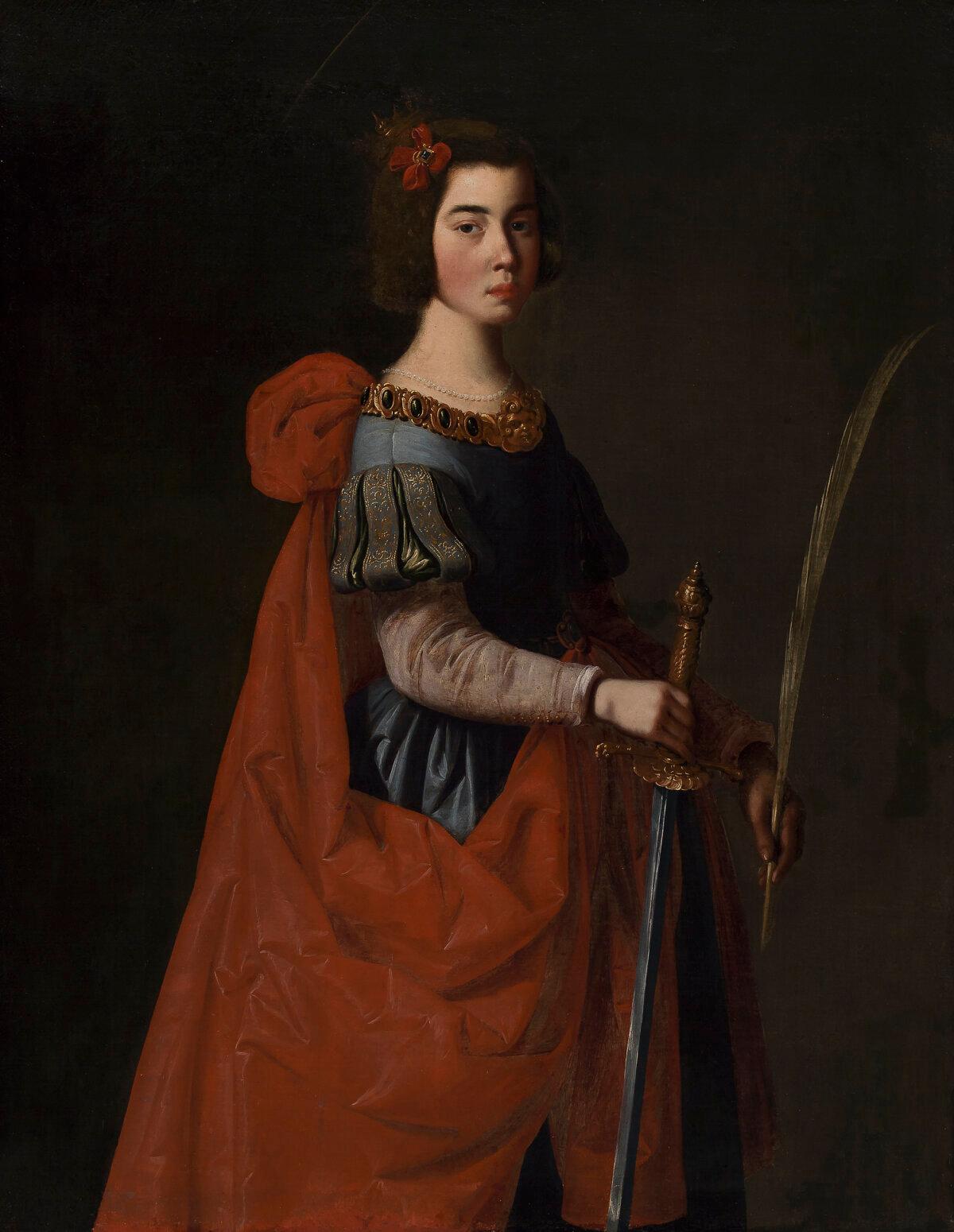
Zurbarán and his contemporaries painted in the baroque style. In “The Arts in Spain,” art historian John F. Moffitt wrote that European baroque artists aimed to “‘delight, instruct, and move.’ They should ‘delight’ their targeted audience with a virtuoso technical handling of artistic media, and, once the attention is captured, the artist should ‘instruct’ the onlooker’s intellect and thereby spiritually ‘move’ him to some desirable moral purpose.”The pictorial narratives of seven saints in The Fabric of Saints gallery room instruct and move the devout viewer closer to God. Zurbarán’s arresting figures fill the pictorial space, each armed with the instruments of their martyrdom. Yet there’s no torturous agony expressed—only grace. Delenda wrote: “By capturing the beauty of these saints, free from any trace of suffering, devotees were reassured of their power as direct intercessors with God.”
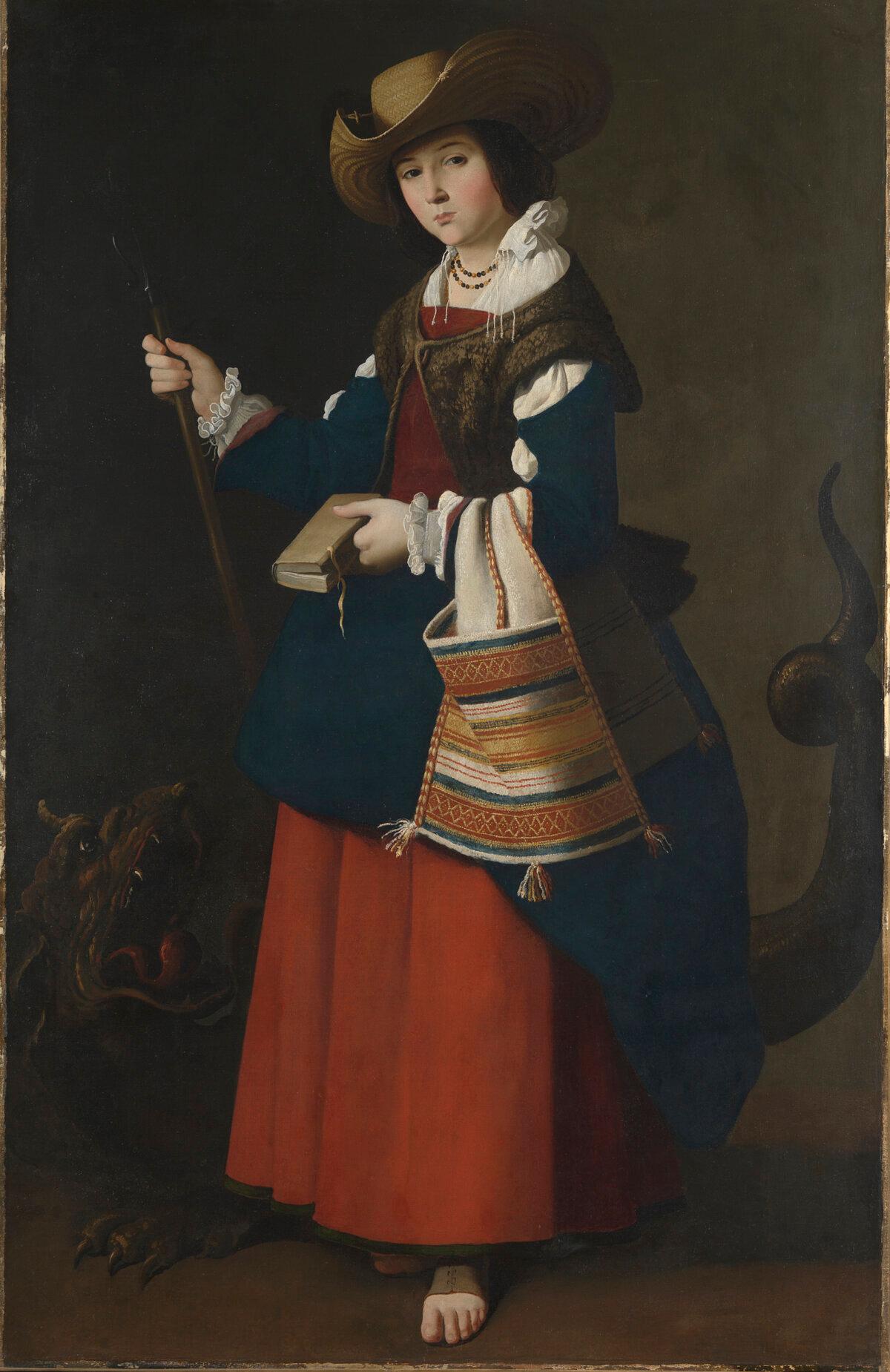
Each of Zurbarán’s saints also exemplifies the artist’s storytelling skills. A maleficent dragon loiters in the shadows in “Saint Margaret of Antioch,” but the shepherdess seems unfazed, directly gazing at the viewer. According to legend, the triumphant Margaret miraculously escaped its belly. Zurbarán used dramatic light and shadow to convey this eternal fight between good and evil. He brilliantly rendered the dragon’s scales, and Margaret’s flushed porcelain skin, straw hat, woolen dress, and intricately woven saddle bag.
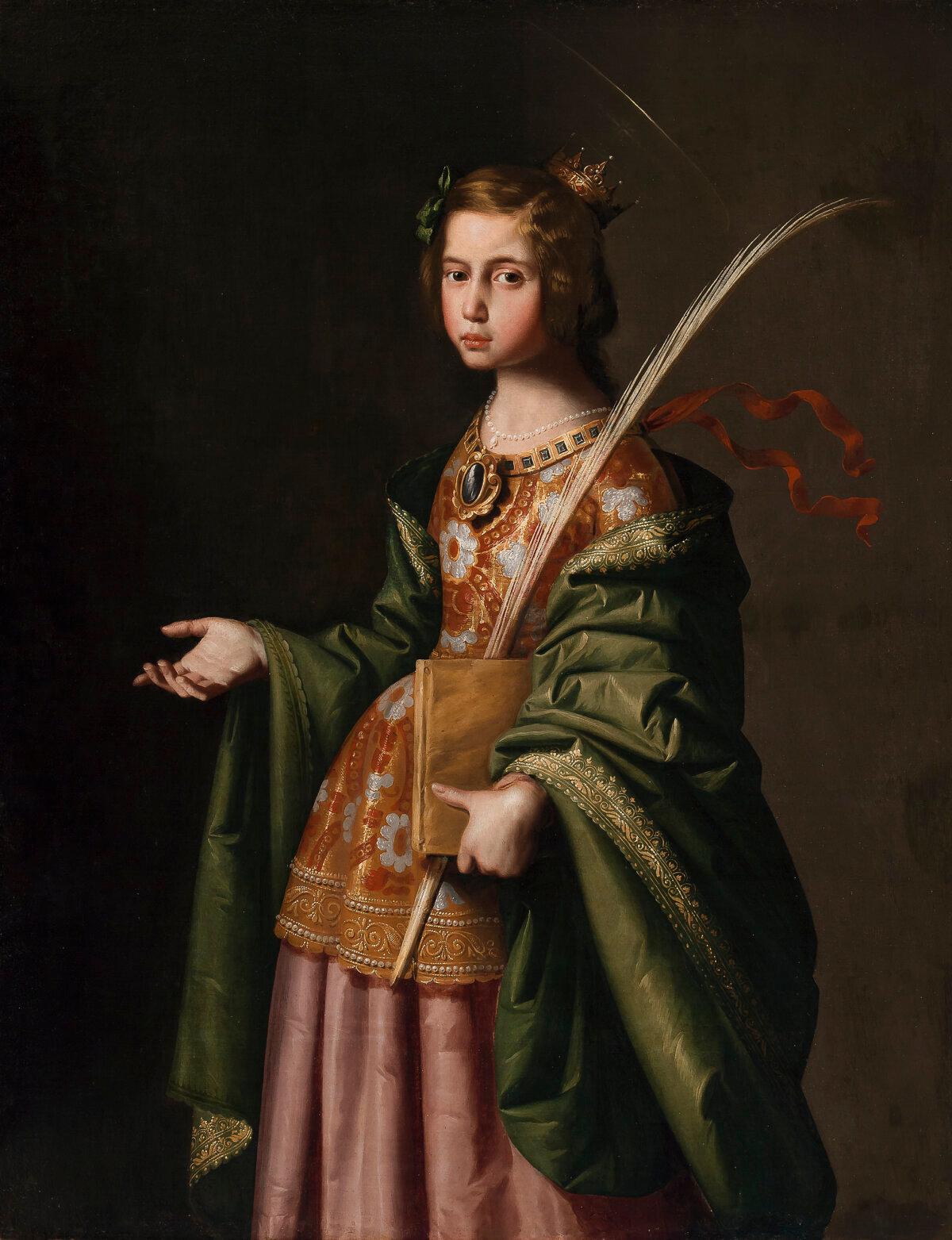
Zurbarán painted “Saint Elizabeth of Thuringia” and “Saint Catherine of Alexandria” as companion paintings, displayed together. The former is a “retrato a lo divino,” a portrait of a person as a saint, depicting the early 14th-century queen of Portugal, probably, as St. Elizabeth. The queen holds the saint’s palm frond and a book, and she wears a flowing green cloak over a rich-red floral bodice trimmed with pearls. A crown denotes her status. In “Saint Catherine of Alexandria,” the infamous torture wheel is absent; instead, Zurbarán has the 4th-century princess holding a sword and a palm frond, wearing a sumptuous silk brocade dress.
Still Life: Still Devotional Works
Only 10 of Zurbarán’s still-life paintings survive. Art scholars laud his earliest still life, “Still Life With Lemons, Oranges and a Rose,” as the epitome of the genre. It is also the only still life that the artist signed and dated in Seville.Zurbarán arranged three still-life components equidistantly apart. Each fruit and flower alludes to Christianity. The cup and saucer of water and the thornless rose represent the purity of the Virgin Mary. (Thorned roses represent Christ’s Passion.) The basket of oranges and the plate of three “lemons” symbolize salvation. (Despite the title, Zurbarán painted citrons in the work, not lemons.)
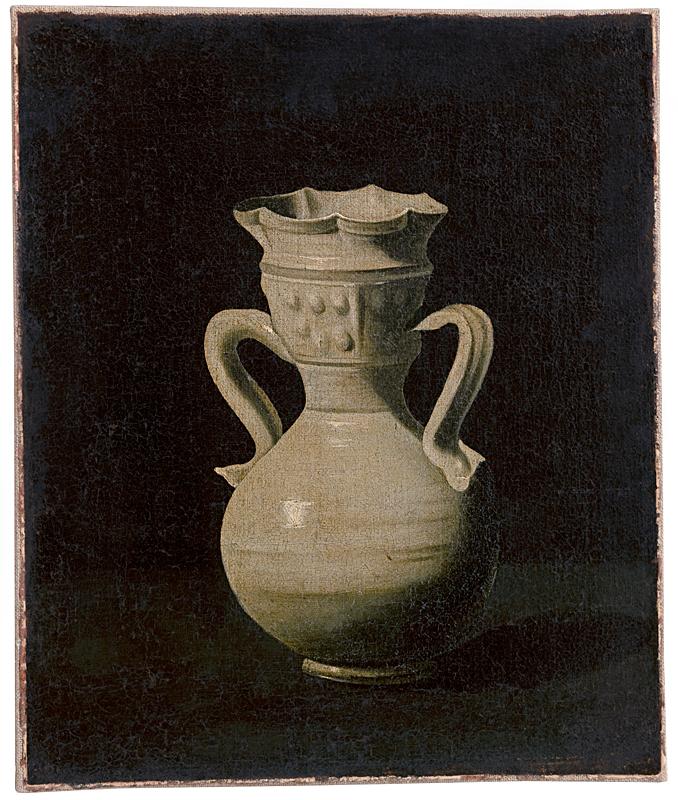
“Still Life With Lemons, Oranges and a Rose” hangs beside a small study of the cup and saucer of water in the painting, rendered in equally exquisite exactitude. Zurbarán executed detailed studies of objects such as this before adding them to full compositions. Similarly, two small studies of alcarrazas (ancient vessels) from a private collection are exhibited for the first time since their attribution to the artist in 2023. Zurbarán included both alcarrazas in “Still Life With Four Vessels,” which hangs between the two works.
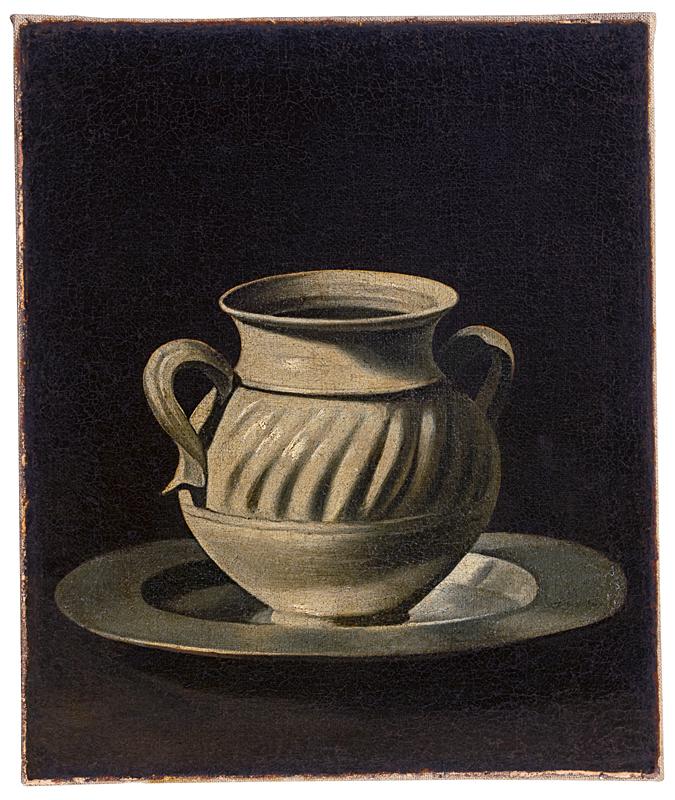
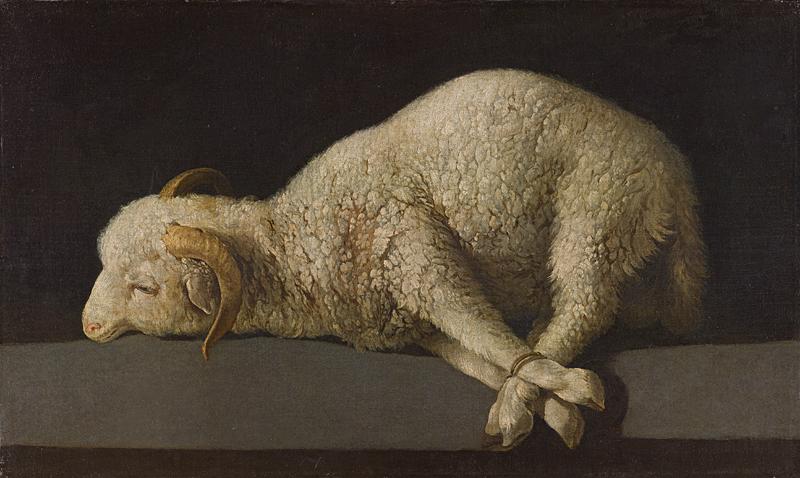
Also on view, Zurbarán’s long-celebrated painting “Agnus Dei,” which depicts a lamb bound ready for slaughter, highlights the artist’s powerful and pioneering compositions. Referencing Christ as the sacrificial lamb of God, Zurbarán transforms the animal into an animated symbol of Christian faith. The popular painting was replicated again and again from its inception.
All these devotional works have long departed their original homes and purpose. But somehow they emit a reverent aura, and whether from Zurbarán’s brush or from the devotees’ prayers, we shall never know.