Faith and paternal love tenderly play out in a trio of Joseph and the Christ Child paintings that Guido Reni created between 1620 and 1640. In each endearing work, Joseph lovingly cradles his son. It’s a universal scene of fatherhood designed to tug at our heartstrings, as empathy pulls us into the painting. Yet these three paintings transcend the earthly father-son bond.
Reni rendered subtle symbols and figurative gestures to inspire awe and to elevate us and each painting to a higher realm. In Reni’s day, people understood the deeper meaning of these compositions, but today we need a little explanation.

Reni painted the earliest of the three works, “San Giuseppe col Bambino (St. Joseph With Child),” around 1625 to 1630. It remains in Reni’s native Italy at the Diocescan Museum of Milan. In the work, a sorrowful Joseph appears deep in thought. Perhaps he’s weighed down by the divine responsibility to keep Christ safe, after God appeared in a vision and told him to flee with his family to Egypt.
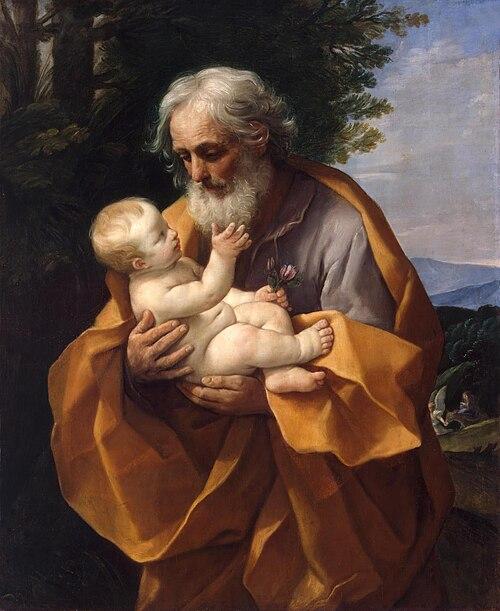
Reni rendered a vignette of the flight into Egypt, with Mary and Christ on a donkey led by an angel, in his 1635 painting “St. Joseph With the Infant Jesus,” in the Hermitage Museum in St. Petersburg, Russia. In the work, Joseph’s looks lovingly at his son, who returns the gaze while reaching for his father’s curly beard. But Christ’s gaze appears sage, and that playful hand gesture resembles a blessing gesture. Christ’s other hand holds what appears to be red roses that symbolize his future martyrdom.
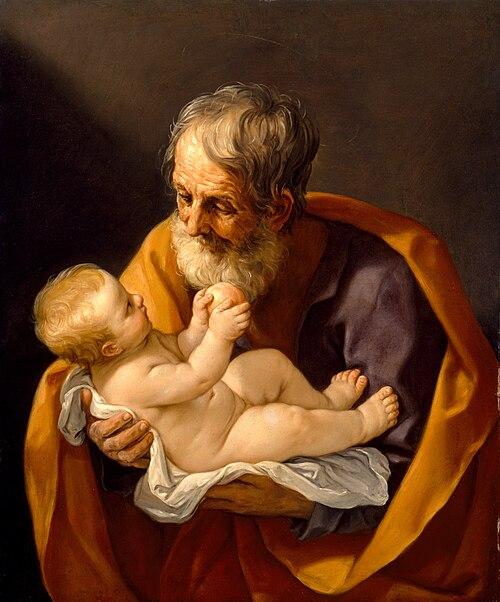
Drama, Realism, and Above All, Awe
Reni’s evocative Joseph and the Christ Child paintings epitomize the baroque style with bold, realistic figures in dynamic compositions, all rendered to evoke religious awe.According to auction house Christie’s, “[The baroque] movement emerged against the backdrop of the Protestant Reformation, with the Catholic church wanting to use arts to reassert its power—they commissioned large-scale, dramatic paintings and sculptures to evoke emotion from the viewer.”
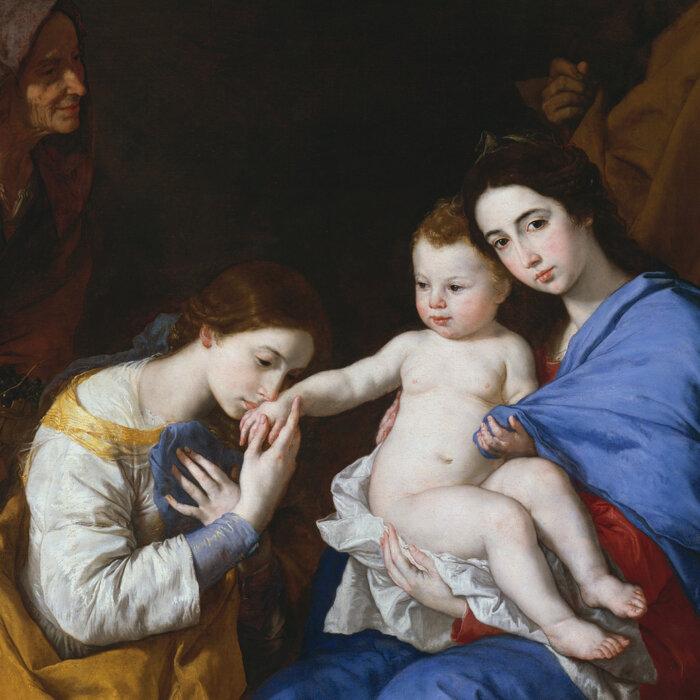
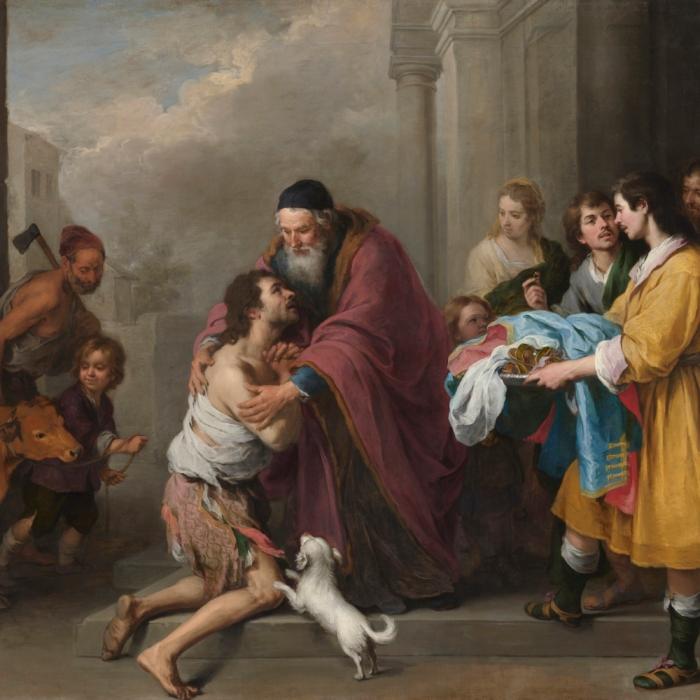
To heighten the emotional impact of their paintings, baroque artists—including Caravaggio, Peter Paul Rubens, and Diego Velázquez—used vibrant colors and “chiaroscuro,” a technique using contrasts of light and dark for theatrical effect.
The Madonna and Child are more commonly depicted than Joseph and the Christ Child. But the art of both subjects were made for the same reason—to aid contemplation and prayer in secular or religious settings.