America has always been defined by its great migration trails. The 19th century had the National Road and the Oregon Trail. In the 20th century, Route 66 was, in John Steinbeck’s words, “The Great Mother Road.” These routes moved Americans west to new homes.
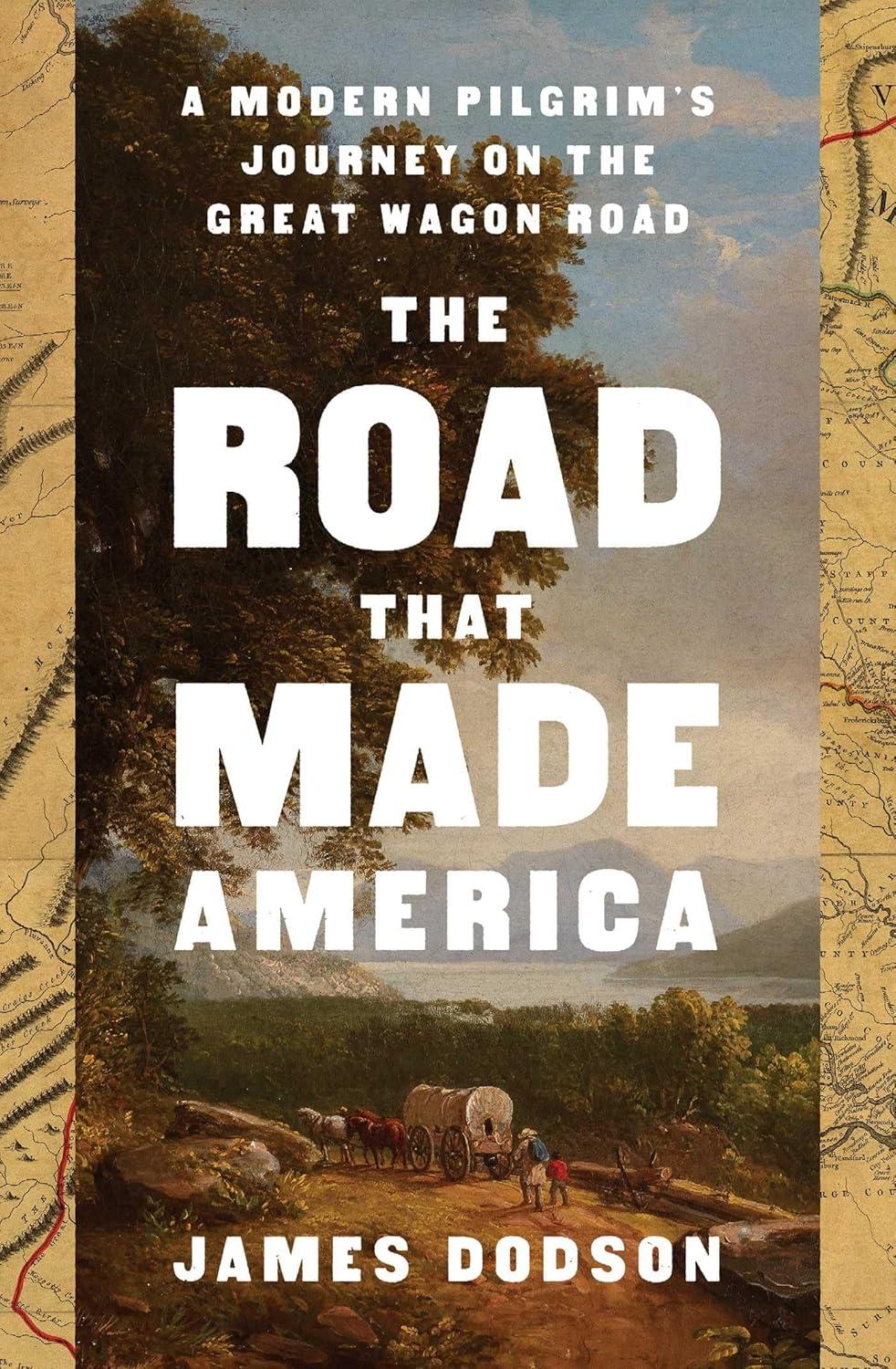
These are well remembered today. Yet the oldest of the great migratory routes, and perhaps the most influential, is largely forgotten today. James Dodson explores this road in his book “The Road That Made America: A Modern Pilgrim’s Journey on the Great Wagon Road.”
From the mid-1700s, it was America’s first great immigration trail and used by the Pennsylvania Dutch, Scots-Irish and other early settlers 300 years ago. The Great Wagon Road ran from Philadelphia to Augusta, Georgia. Later it remained important, serving as the major inland artery of the eastern theater in the American Civil War.
Dodson grew up along the Great Wagon Road, in the Carolinas. His ancestors traveled to the Carolinas along the road, and fought on it during the American Revolution and Civil War. In 2017, hoping to learn more about his ancestors, the history of the road, and maybe a little bit more about himself, he decided to travel the road in an old wagon.
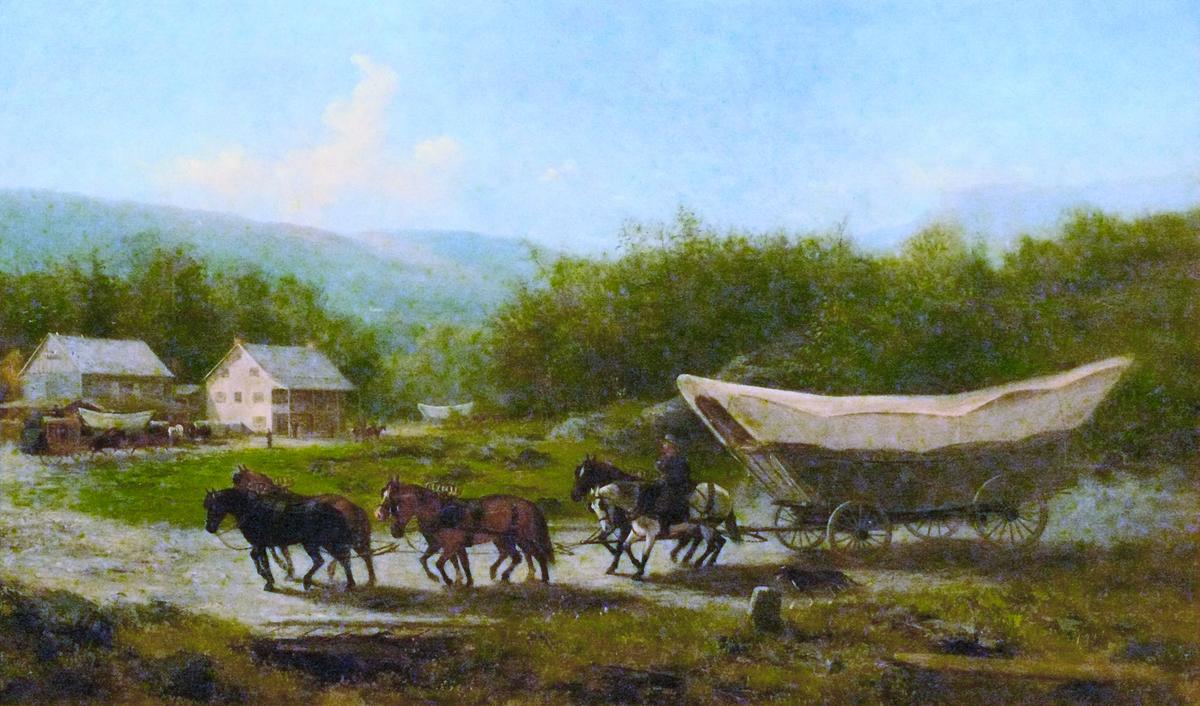
He didn’t ride in a Conestoga wagon pulled by six horses, but a 1994 Buick Roadmaster station wagon with 300 horses under the hood. His journey took five years, punctuated by many stops and restarts, including a long pause during COVID-19.
The Route
Dodson began in Philadelphia, where the Great Wagon Road started. He drove down to its Augusta, Georgia, terminus along what was traditionally accepted as the road’s main route. He then took a different branch of the road back to Charlotte, North Carolina, his home. What resulted was a fascinating mix of history, travelog, and personal reminiscence.

The road in its modern incarnation is a big part of the story. Over time, the original road has been buried under a mixture of national and state highways, city streets, and even country lanes. Originally, it wasn’t paved but was just a dirt path cleared through the wilderness. Much of it followed an old Indian trail called the “Great Warrior’s Path.”
Local History
Dodson explores the history along the road, much of it local and very personal to residents. Some historical accounts date back three centuries, starting with William Penn and the founding of what he hoped to be the Peaceable Kingdom of his Pennsylvania colony in the early 1700s. Other bits are remarkably modern.Dodson describes 20th-century deindustrialization along the road, and his discovery that country singer Patsy Cline grew up in Winchester, Virginia, a town on the Great Wagon Road.
He also examines the results and fallout from historical occurrences along the road. A mélange of events and activities prove grist for him. He describes Native American relations with colonists in the early 18th century, battles during the American Revolution and Civil War, and world-changing inventions like the Conestoga wagon and the McCormick reaper.
Along the Trail
Dodson met many people along the road, including reenactors and historians. He spoke with reenactors for Benjamin Franklin in Philadelphia, a young Daniel Boone in Birdsboro, Pennsylvania, and Civil War and Revolutionary reenactors at battlefields. Others are historians like Civil War expert Gabor Boritt or history enthusiasts like those he met at the Paoli Battlefield near Malvern, Pennsylvania. Many live along the road, like the Amish farmers he visited. Most are fellow travelers, who prove fascinated by his quest to travel the Great Wagon Road.There was a more personal reason for his trip. Dodson wanted to explore his family history, starting with his ancestors who traveled the Great Wagon Road in the 18th century. He wanted to relive the experiences of his grandparents and great-grandparents, and look at his own life from childhood to the present. These included traumatic experiences. As a young adult, the woman he loved was killed in a robbery on the day he was to propose marriage to her. He lays the ghosts of that memory to rest during this trip.