PG-13 | 1h 45m | Drama | 2025
In 2003, the United States-led coalition banned members of Saddam Hussein’s Arab Socialist Ba’ath Party from all Iraqi government jobs, including school teachers. A decade prior, 9-year-old Lamia (Baneen Ahmad Nayyef) and her classmates had to endure their “teacher” Musa (Ahmad Qasem Saywan) and his politicized indoctrination.
As per the regime’s demands, the teacher was required to have his class celebrate their dictator’s birthday. For the festivities, Lamia was the unfortunate student chosen to bake a cake—with the first slice reserved for their teacher, of course.
Lamia’s resulting crisis offers an opportunity to view the Iraqi dictatorship and Hussein’s cult of personality from an innocent child’s perspective, in director-screenwriter Hasan Hadi’s “The President’s Cake.”
For an average Iraqi family, merely buying adequate food in the early 1990s was a daunting challenge. Acquiring ingredients for a cake represented an exorbitant cost, assuming they could even find sufficient sugar, flour, and eggs.
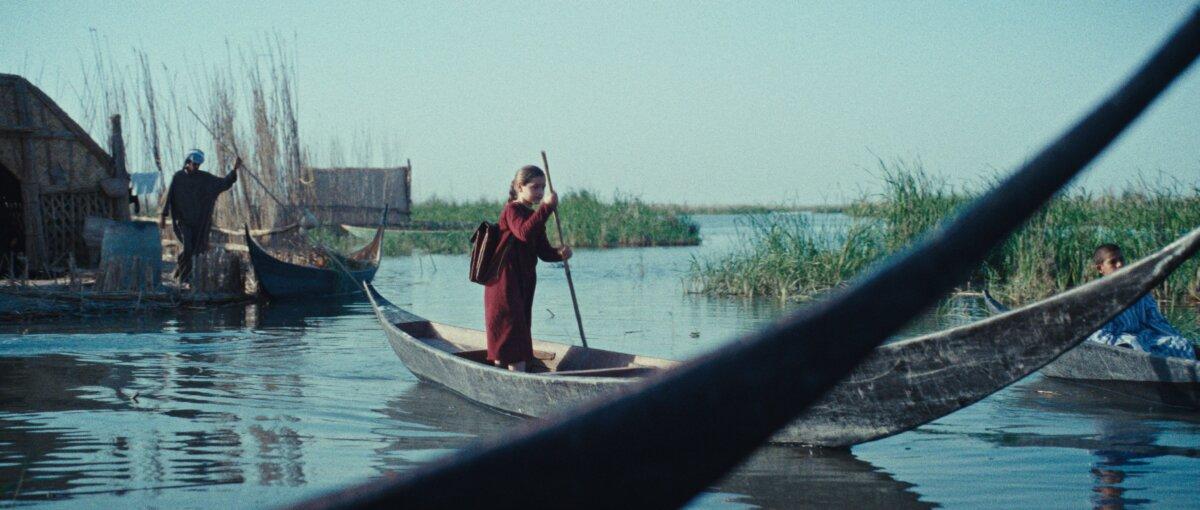
Lamia’s economic and social status rate well below average as a resident of the hardscrabble Mesopotamian Marshes. She is an orphan and lives there with her grandmother, an ailing Bibi (Waheed Thabet Khreibat).
In the Big City
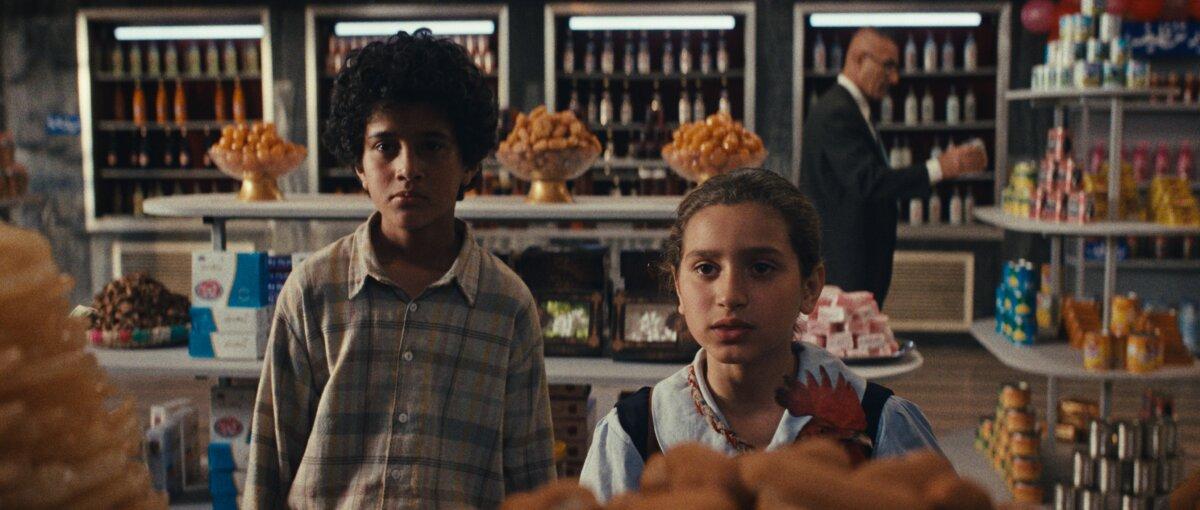
Realizing she can no longer care for Lamia, Bibi takes the girl and her pet rooster “Hindi” to the big city. Bibi hopes to arrange her adoption in a jurisdiction beyond Musa’s influence. However, the young girl rejects her well-intentioned plan, running off into the hostile urban jungle in search of the cake ingredients Lamia believes will allow her to remain with her beloved Bibi.By chance, Lamia finds a needed ally in Saeed (Sajad Mohamad Qasem), a classmate with perhaps even less social standing than her. Except for Lamia, almost everyone shuns the boy because he helps his disabled father (Maytham Mreidi) beg and pick pockets in the city. That means Saeed has some of the street smarts Lamia needs to survive the exploitative and predatory adults they encounter.
Festivities for Tyranny
Not surprisingly, traditional authority figures offer little help because they are preoccupied with Hussein’s festivities. Although not exactly a character, the figure of the Iraqi dictator literally looms large over the film. His likeness is a constant presence on giant posters, portraits, murals, statues, and parade floats. They provide inescapable reminders of the self-glorifying despot, in ways that serve as textbook illustrations of a personality cult.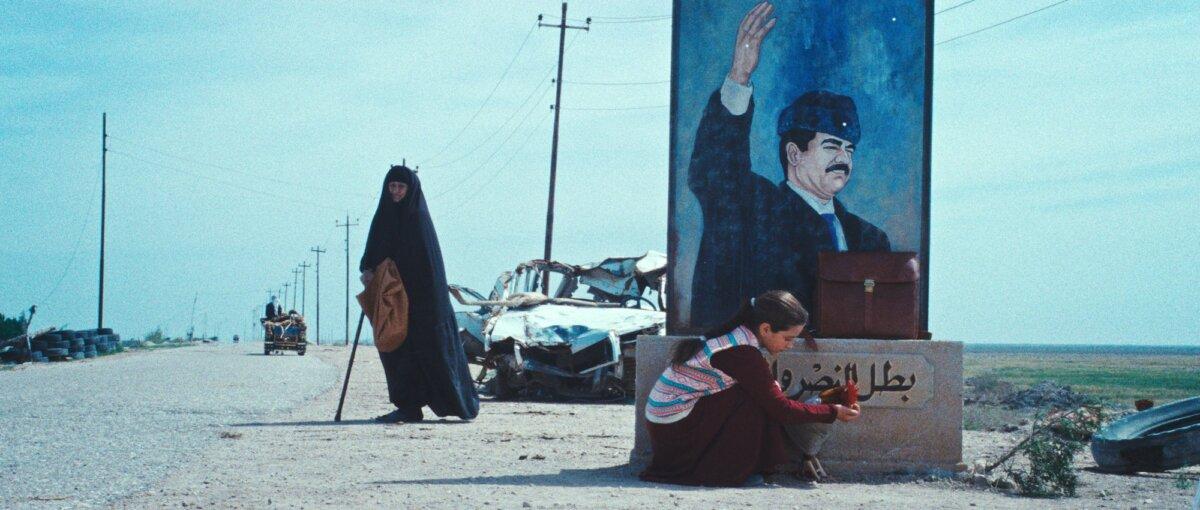
“The President’s Cake” could be thematically compared to “1984.” In terms of tone, it is more closely akin to a film like Vittorio De Sica’s masterwork, “The Bicycle Thief,” especially since they both address harsh economic realities from the viewpoint of a young child. Despite the Ba’ath Party’s socialist ideology, Lamia and Saeed face a truly cutthroat struggle to survive.
Both young coleads also deliver extraordinarily moving and complex performances that deserve a comparison to Enzo Staiola in De Sica’s neorealist classic. Their earnestness and naive vulnerability are heartbreaking.
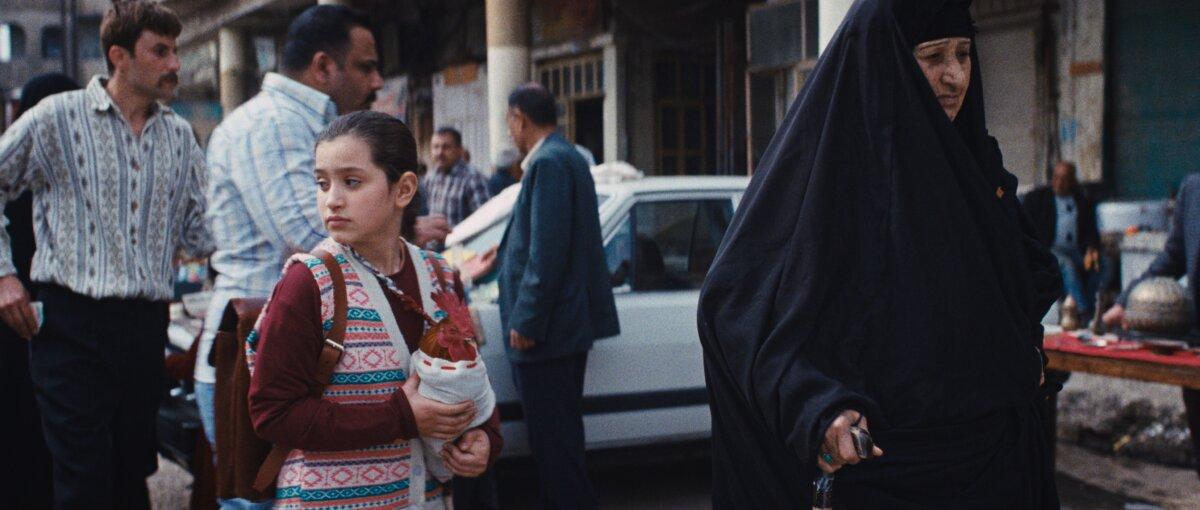
The film also renders a stinging rebuke to Iraqi society. It displays the adult world’s callousness and cynical corruption standing in stark contrast to their dictator’s phony paternalistic image.
Although Hadi largely adopts the children’s points of view, the more mature Khreibat and AlHaj contribute genuinely touching performances. Khreibat’s portrayal of the aged woman’s sudden decline is especially gut-wrenching.
Coming-of-age films are rarely this emotionally devastating. “The President’s Cake” also incisively depicts the casual cruelty of totalitarian regimes, and the surreal absurdity of personality cults. The cake is supposed to be sweet, but the irony throughout Hadi’s film is acridly bitter.
“The President’s Cake” is an excellent film, which deserves awards consideration as Iraq’s official submission for the Academy’s Best International Feature Oscar. Highly recommended, the film first opens in limited release on Dec. 12 to qualify for this year’s Academy Awards, but launches its full-scale theatrical run on Feb. 27, 2026.