This copy is for your personal, non-commercial use only. Distribution and use of this material are governed by our Subscriber Agreement and by copyright law. For non-personal use or to order multiple copies, please contact The Epoch Times Reprints.
At 18 stories, The Plaza currently offers 282 hotel rooms and 181 residential units. The structure’s stark white façade contrasts with neutral and darker-hued buildings surrounding it. The Plaza’s notable feature is its top three floors of a mansard (four-sided and sloping) roof covered in green Ludowici tiles and trimmed in copper. Inspired by French chateau architecture, The Plaza is constructed of marble at its base. The exterior features various architectural details including turrets, balconies, arches, and pitched roofs. The Plaza
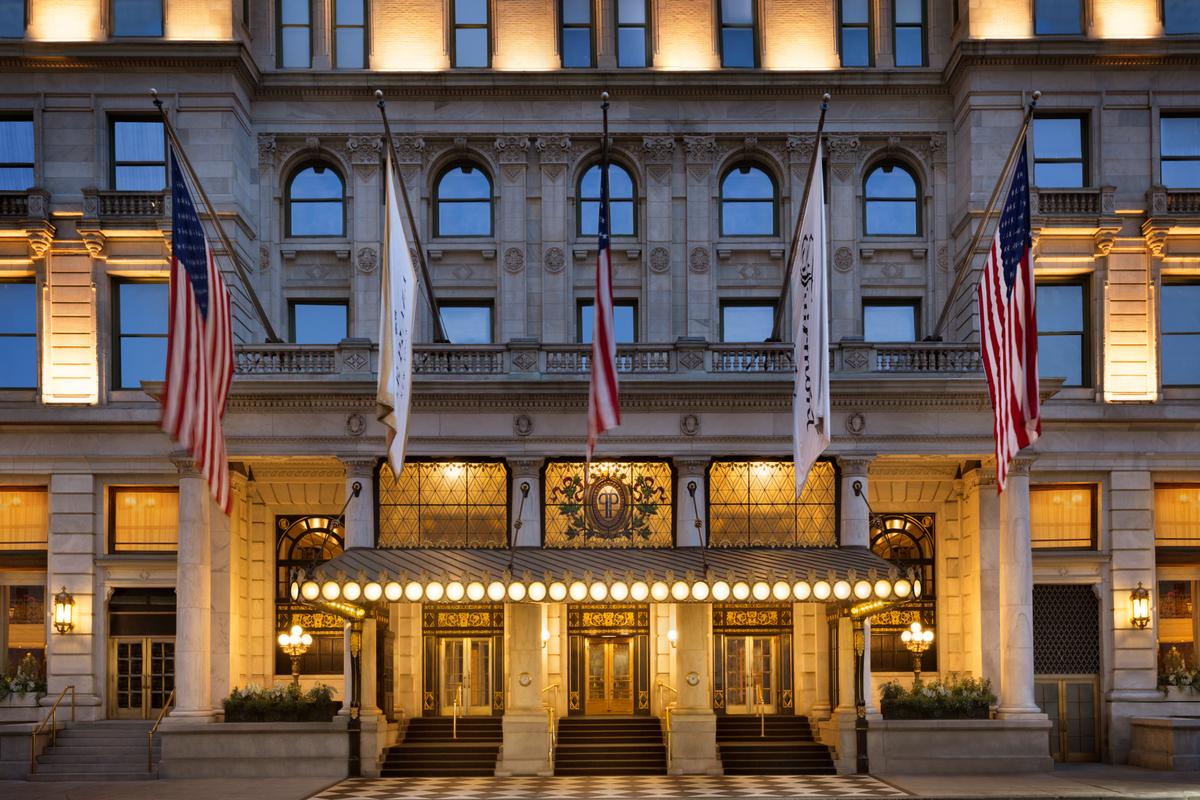
One never forgets one’s first visit to The Plaza in New York City. Its looming 18-story white facade that overlooks a corner of Central Park and Fifth Avenue cannot be missed. Entering one of the three main sets of Fifth Avenue-facing doors, which sit within a columned portico and beneath an embellished marquee, is a high point in architectural, cultural, and design experience.
At the turn of the 20th century, American architect Henry J. Hardenbergh (1847–1918) designed an imposing French Renaissance-style structure with an ornamented mansard roof. Inside, exceptional design details abound, giving The Plaza its distinction as one of the city’s most stellar and luxuriously apportioned sites.
Originally an 800-room hotel, The Plaza opened on Oct. 1, 1907. Because of its historical and architectural significance, The Plaza was added to the National Register of Historic Places in 1978 and was made a National Historic Landmark in 1986.
Today, to a hotel guest, a condominium resident, or a tourist partaking in afternoon tea, The Plaza endures as one of America’s most impressive buildings.
The Plaza’s double-height beaux-arts-style main entrance is underneath a portico supported by six Tuscan-style columns. Above the balustrade balcony are pairs of pilaster (decorative, not free-standing) columns between arched windows. Guests, residents, and visitors enter through shiny brass doors underneath a marquee lit at night. Decorative etched glass, including a stained-glass “P” monogram surrounded by foliage and ribbon, is featured above the marquee. The Plaza
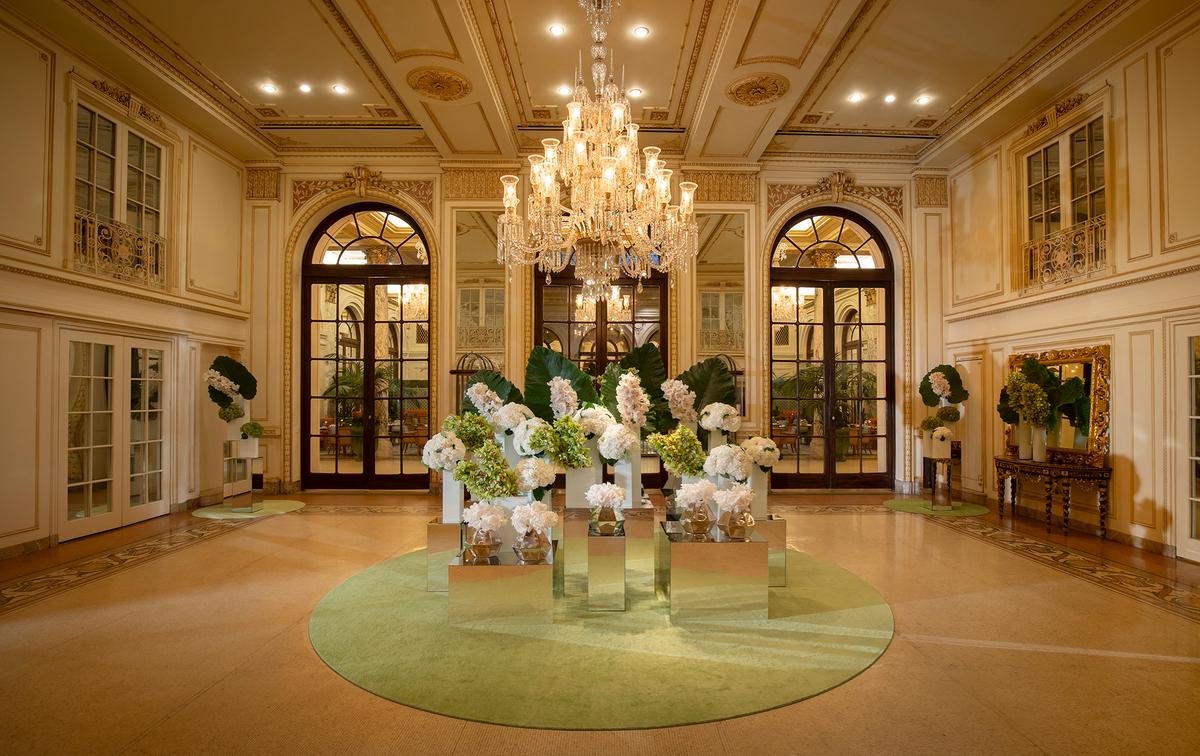
One of two lobbies, the Fifth Avenue lobby contains gold wall-panel trimmings and a gold-leaf pilaster ceiling. A crystal chandelier hangs from the ceiling. Faux balconies overlook the lobby and sport ornate wrought-iron railings. The Plaza
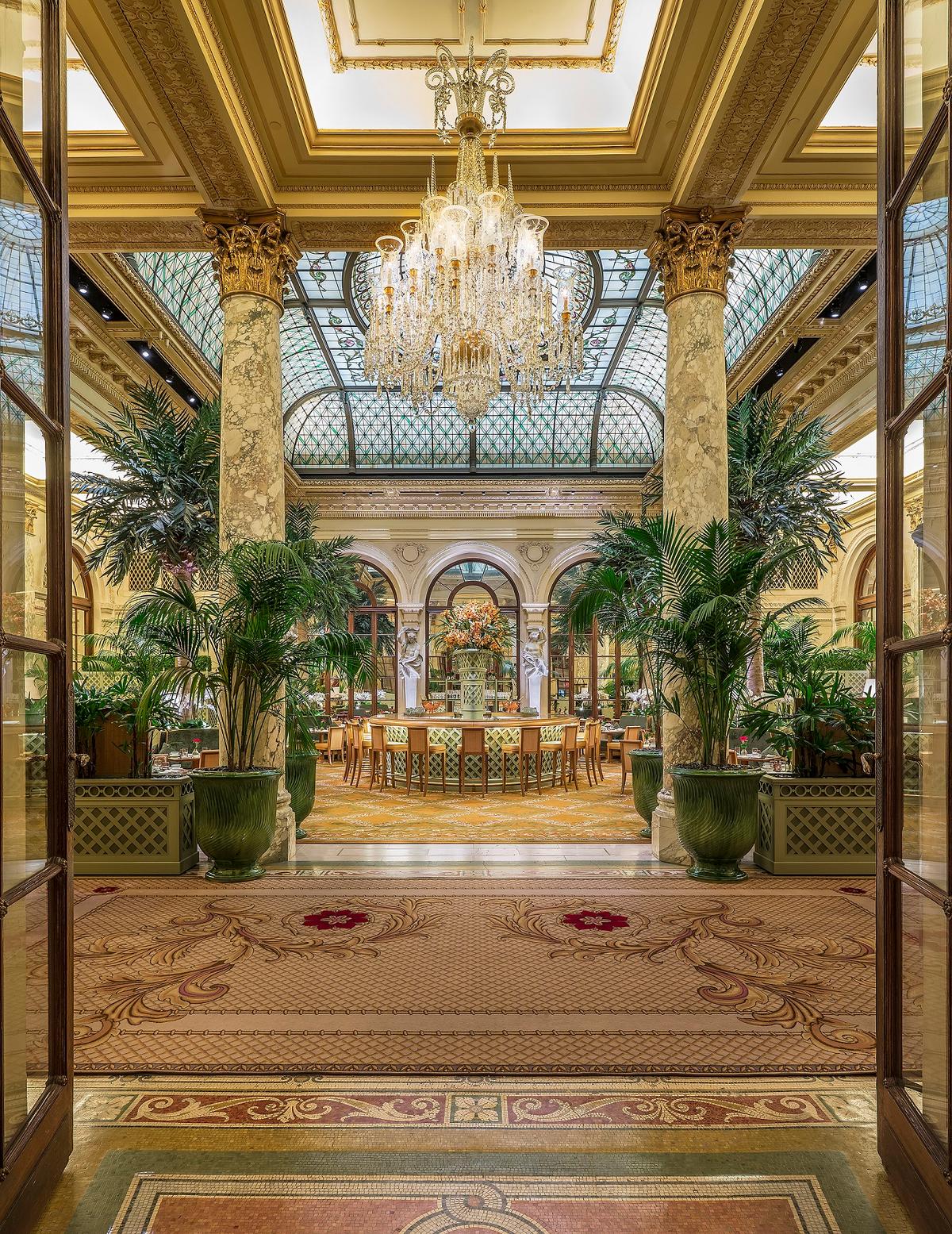
A tray-ceiling entryway, elaborate mosaic-tiled flooring, and towering marble columns with gilded acanthus-leaf capitals sets the stage for entering the Palm Court. This 1,200-square-foot dining area, which features a centerpiece round bar, is one of The Plaza's “wow” factors. The Palm Court’s Gilded Age-inspired ambiance is most evident overhead in the 30-foot-high, 10-ton, stained glass dome. The Plaza
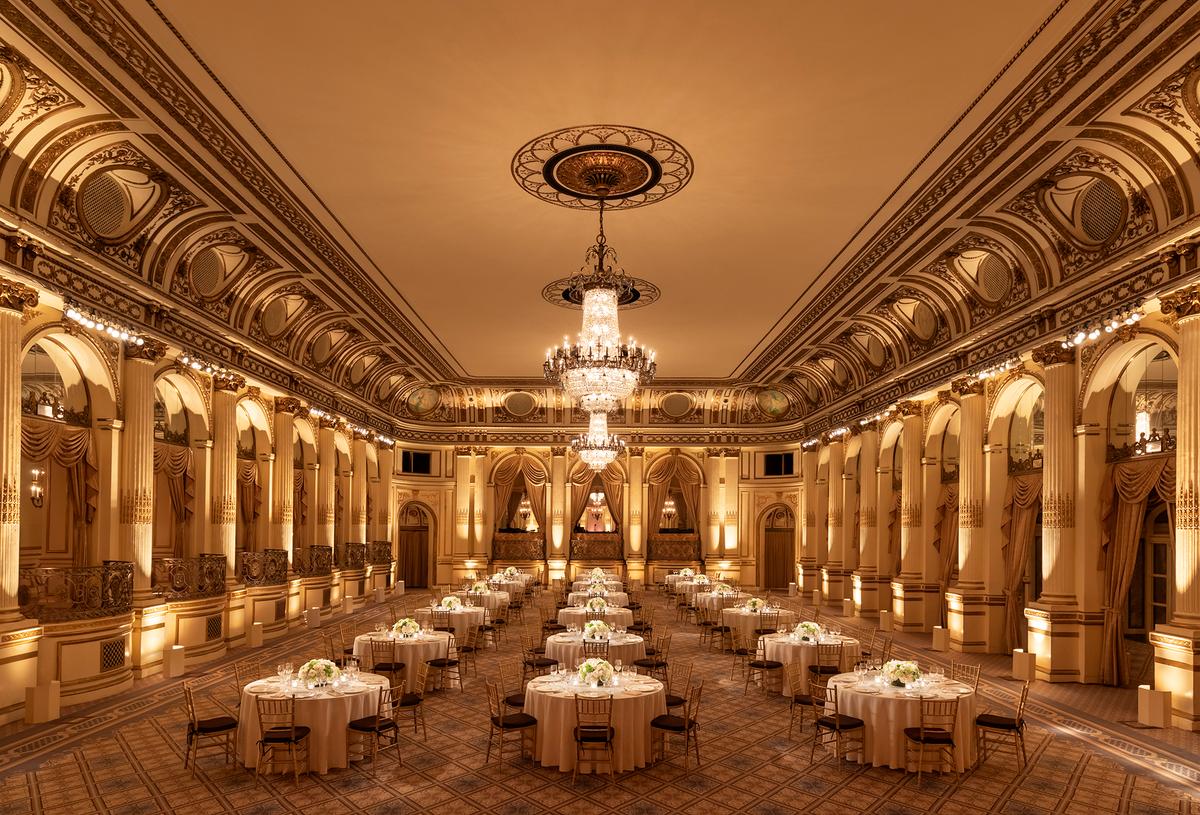
The neoclassical Grand Ballroom at The Plaza was redesigned and renovated in 1929 by the New York City architectural firm Schultze & Weaver. A standout feature of the room is the coved (curved in) ceiling painted by John Smeraldi, an early 20th-century muralist. The ceiling’s sumptuously bedecked “frame,” which includes lunettes (recessed spaces), moldings, and bas-relief decorations, sits atop fluted columns on plinth (square) bases that are adorned with Corinthian capitals. From brass ceiling medallions hang two intricately designed chandeliers. The Plaza
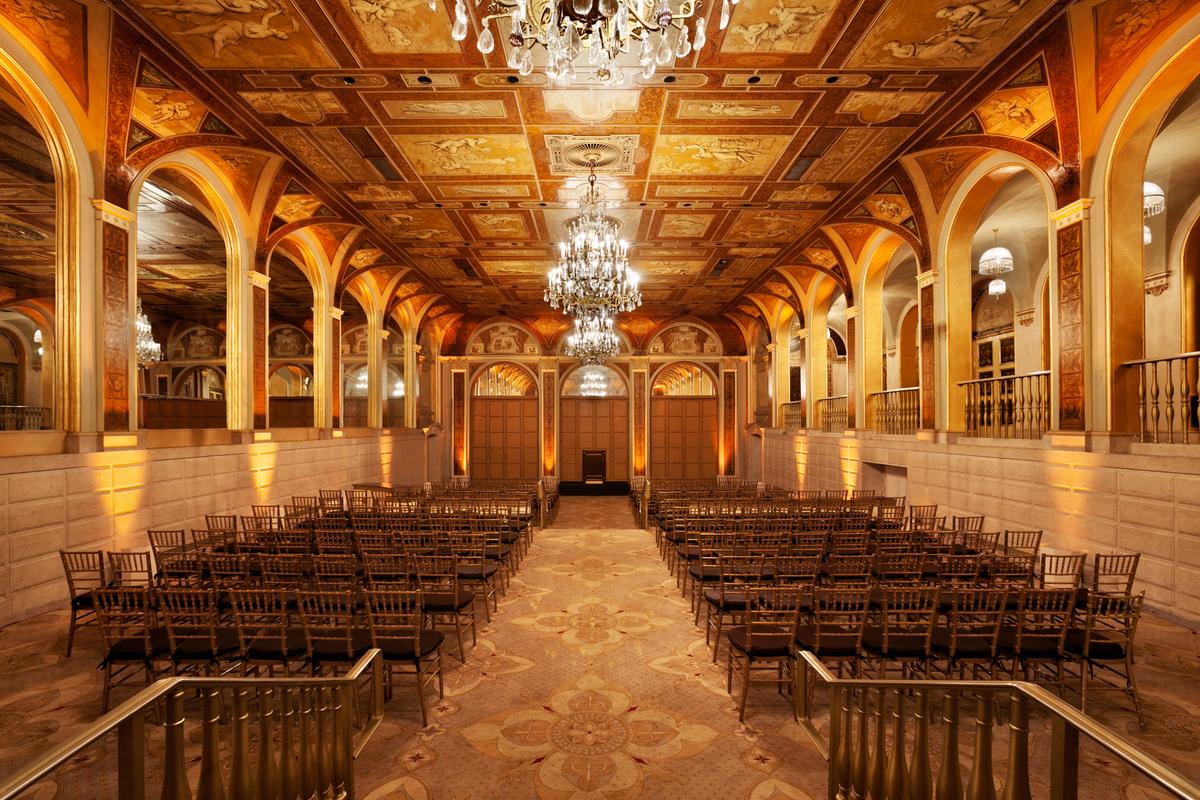
Just below the Grand Ballroom is the Terrace Room, which is available for special events. The space features original chandeliers made by jeweler Harry Winston’s brother, Charles (1888–1942); their designs were inspired by chandeliers in the Palace of Versailles in France. Italian Renaissance-style figural paintings are present in the ceiling panels. Raised on blocks and surrounding the Terrace Room are symmetrically positioned pilaster-flanked blind arches, meaning they are not passageways. Under each arch is a railing with balusters. The Plaza
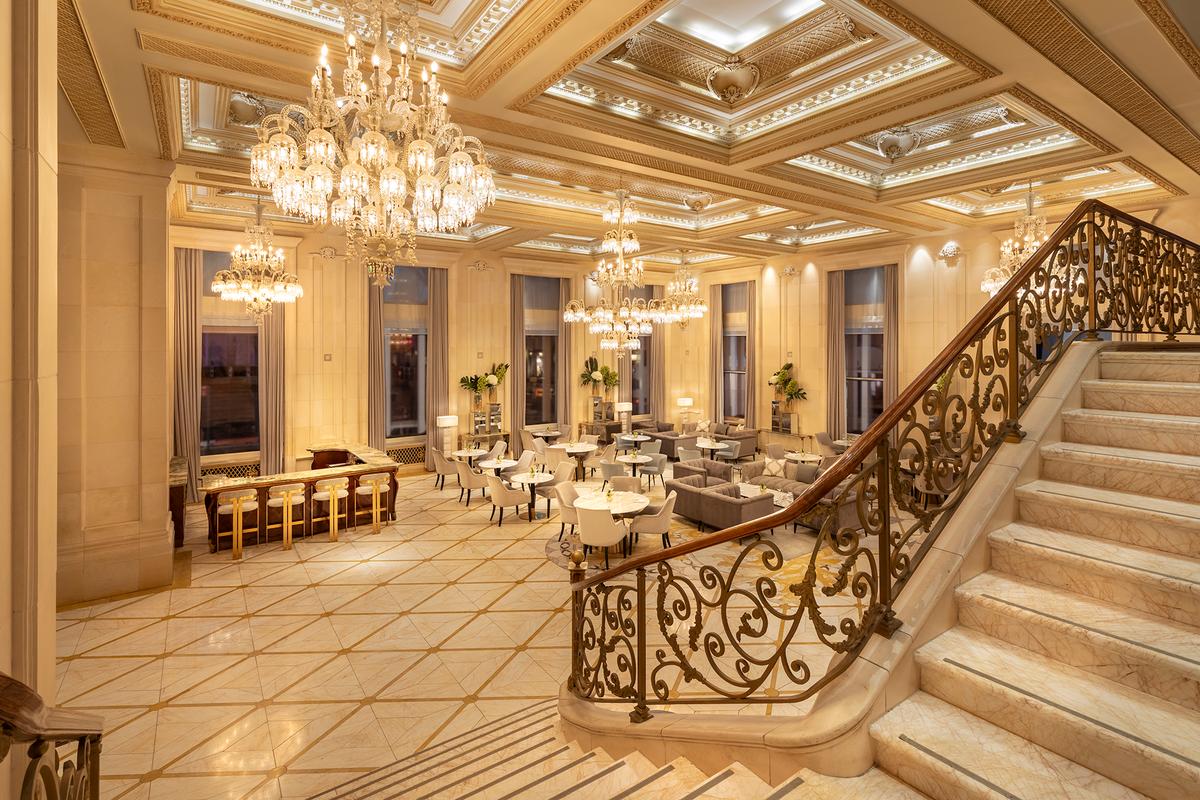
Distinct for its deeply inset coffered and molded ceiling, the Champagne Bar’s more intimate dining experience enables guests to overlook Fifth Avenue and the city’s noteworthy Pulitzer Fountain through floor-to-ceiling windows. Gilded details and extravagantly designed chandeliers make this room sparkle. Located adjacent to The Plaza’s lobby, the Champagne Bar leads to the mezzanine-level corridor via a staircase showcasing scrollwork balusters. The Plaza
What arts and culture topics would you like us to cover? Please email ideas or feedback to [email protected].
A 30-plus-year writer-journalist, Deena C. Bouknight works from her Western North Carolina mountain cottage and has contributed articles on food culture, travel, people, and more to local, regional, national, and international publications. She has written three novels, including the only historical fiction about the East Coast’s worst earthquake. Her website is DeenaBouknightWriting.com